
Loading, please wait...
LOT 0454
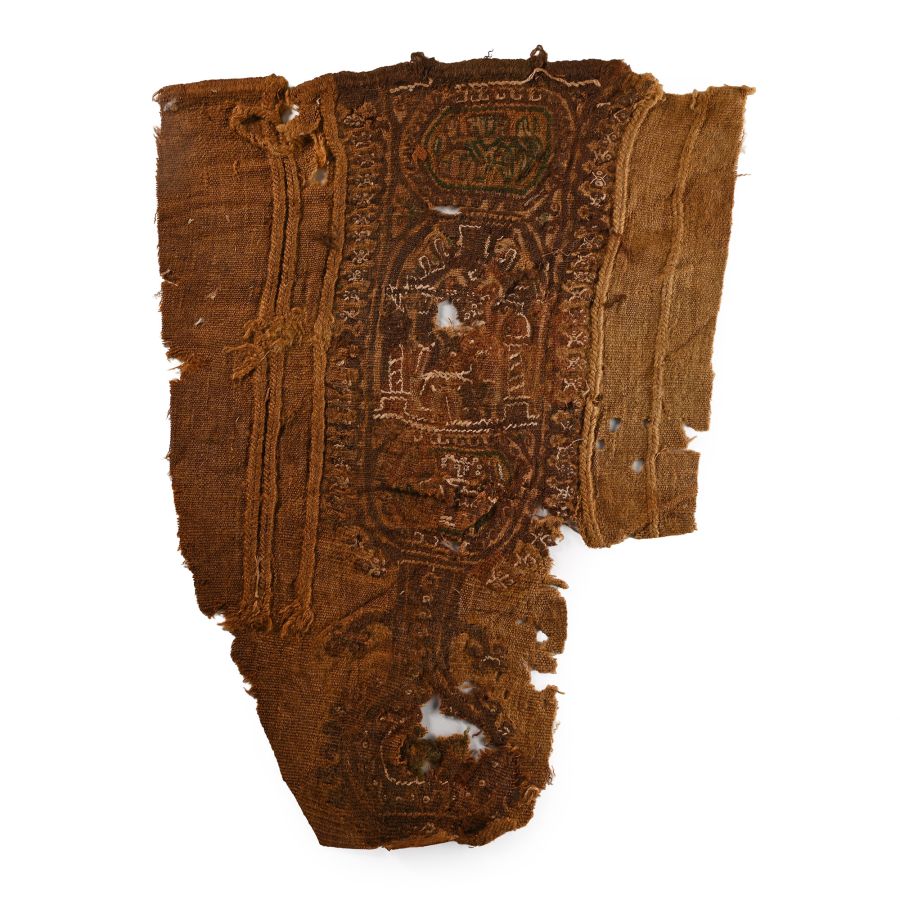
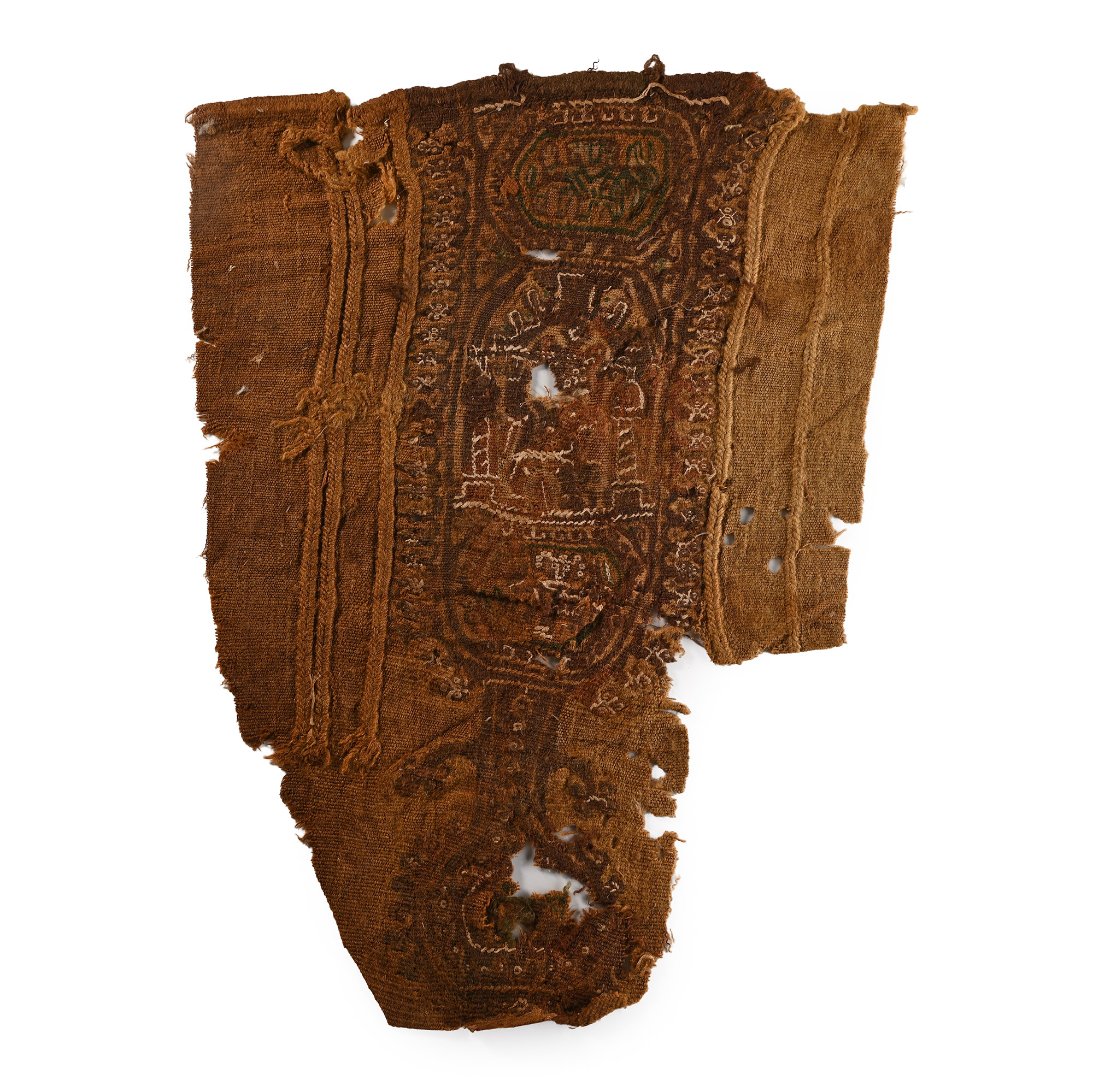
Large Egyptian Coptic Textile Fragment
CIRCA 4TH-8TH CENTURY A.D.
11 7/8 in. (108 grams total including package, 30 cm).
Very large tunic fragment with a clavus connected by a thin band to the orbiculus, in red purple, brown and red granate wool over linen, S torsion, embroidered with three tondos decorated with stylised images of dancers with raised heads and curly hair; crenellated borders. [No Reserve]
ProvenanceAcquired 1970s-1996.
Property of a North American collector.
London collection, 2016.
Cf. Pritchard, F., Clothing culture, Dress in Egypt in the collection of The Whitworth Art Gallery, The University of Manchester, Manchester, 2006, figs.2.3 (a) and 2.3 (b), for similar textiles.
FootnotesThis type of embroidery was typical of tunics and garments characterised by full-length clavi, decorated with either intricate geometric patterns or with a multitude of small figures and animals, often edged with geometric borders and finished with thick, weft-loop fringes or cords.
CONDITIONTimeLine Auctions follows a vetting process to ensure the authenticity and legality of all items, reinforcing our commitment to integrity and responsible trading. Each antiquity, antique, and coin lot undergoes thorough examination by a vetting committee of at least ten external specialists, professional trade association members, scientists, and archaeologists: Our Vetting Process
AUCTIONS:
TimeLine is a leading auction house specialising in antiquities, ancient art, collectables, natural history, coins, medals, and books. Our auctions offer museums, collectors, historians, and enthusiasts the opportunity to acquire unique and historically significant pieces.
-
.jpg)
Egyptian Turquoise Scarab
Late Period, 664-332 B.C.Estimate: £400 - 600 (+bp*)
Opening Bid: £200
Carved in the round with longitudinal piercing, ellipsoid base. 1.21 grams, 15 mm
Ex Belinda Elliston collection, a member of the Egyptian Exploration Society, 1940s onwards. -
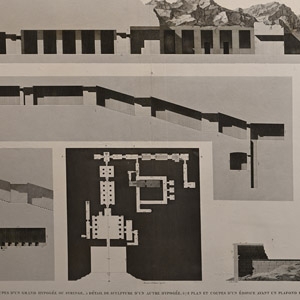
Very Large Egyptian Expedition Lithograph of the Memnonium at Thebes
Early 19th century A.D.Sold for (Inc. bp): £117
Proof etching on laid paper of plate 39 from Vol.II of Description de l'Égypte : ou, Recueil des observations et des recherches qui ont été faites en Égypte pendant l'expédition de l'armée française. entitled Thèbes. Memnonium. Plan et coupes d'un grand hypogée ou syringe. Détail de sculpture d'un autre hypogée. Plan et coupes d'un édifice avant un plafond en form de voûte. 200 grams, 103.5 x 69.5 cm
From the collection of a North American priest. Acquired between 1981-1996. Property of a North American collector.
Produced between February 1802 and 1830 on the orders of Napoleon Bonaparte; published between 1809 and 1828. Just 1,000 copies were distributed to various institutions, printed on laid paper with an 'Égypte ancienne et moderne' watermark. The book is subtitled Recueil des observations et des recherches qui ont été faites en Égypte pendant l’expédition de l’Armée française, publié par les ordres de Sa Majesté l’Empereur Napoléon le Grand (Gathering of observations and discoveries which were made in Egypt during the expedition of the French army, published on the orders of His Majesty the Emperor Napoleon the Great). It was the world's first encyclopedia devoted exclusively to the remains of ancient Egypt. The plates of this book are the first to present the archaeological sites of Thebes (Luxor). -
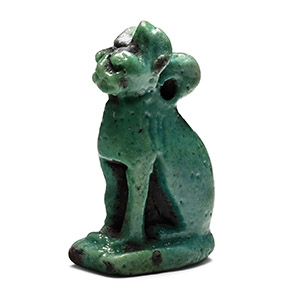
Egyptian Blue Faience Bastet Cat Amulet
New Kingdom, circa 1550-1070 B.C.Sold for (Inc. bp): £715
Modelled seated on a tongue-shaped base, with simple facial detailing and suspension loop to the back. 3.25 grams, 28 mm
Ex London gallery and Belinda Elliston, a member of the Egyptian Exploration Society, 1940s onwards.
In ancient Egypt, the cat was venerated as the sacred animal of the goddess Bastet, whose principal cult centre was Bubastis in the Nile Delta. Although cats were once part of folk practice, their veneration as part of formal cults spread across Egypt during the Late Period. Bastet was closely linked to lion-headed goddesses like Sekhmet, Tefnut, and Pakhet, and the cat itself became associated with solar imagery: the Book of the Dead portrays the sun god as a Great Cat vanquishing Apophis beneath the sacred Ished Tree. The cat could also embody the Eye of the Sun or, more often in Bastet’s case, the Eye of the Moon. Mummified cats were frequently dedicated as votive offerings, and some of their feline-shaped coffins were adorned with finely crafted bronze heads to enhance their divine likeness.
