
Loading, please wait...
LOT 0407
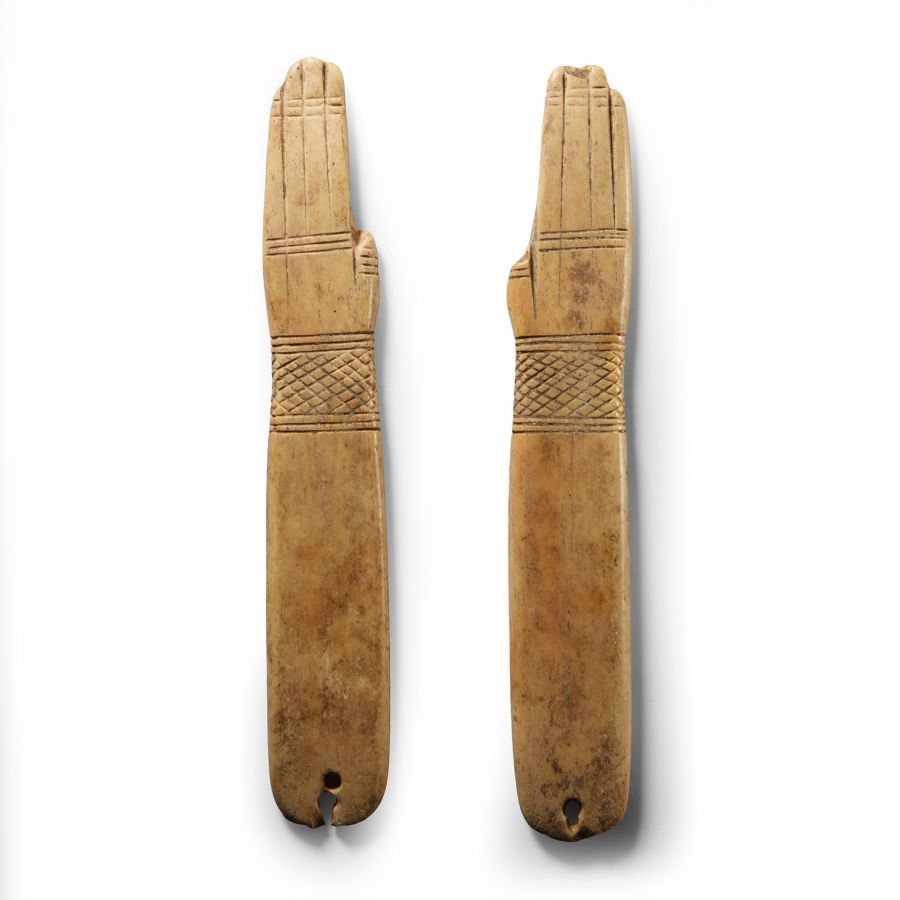
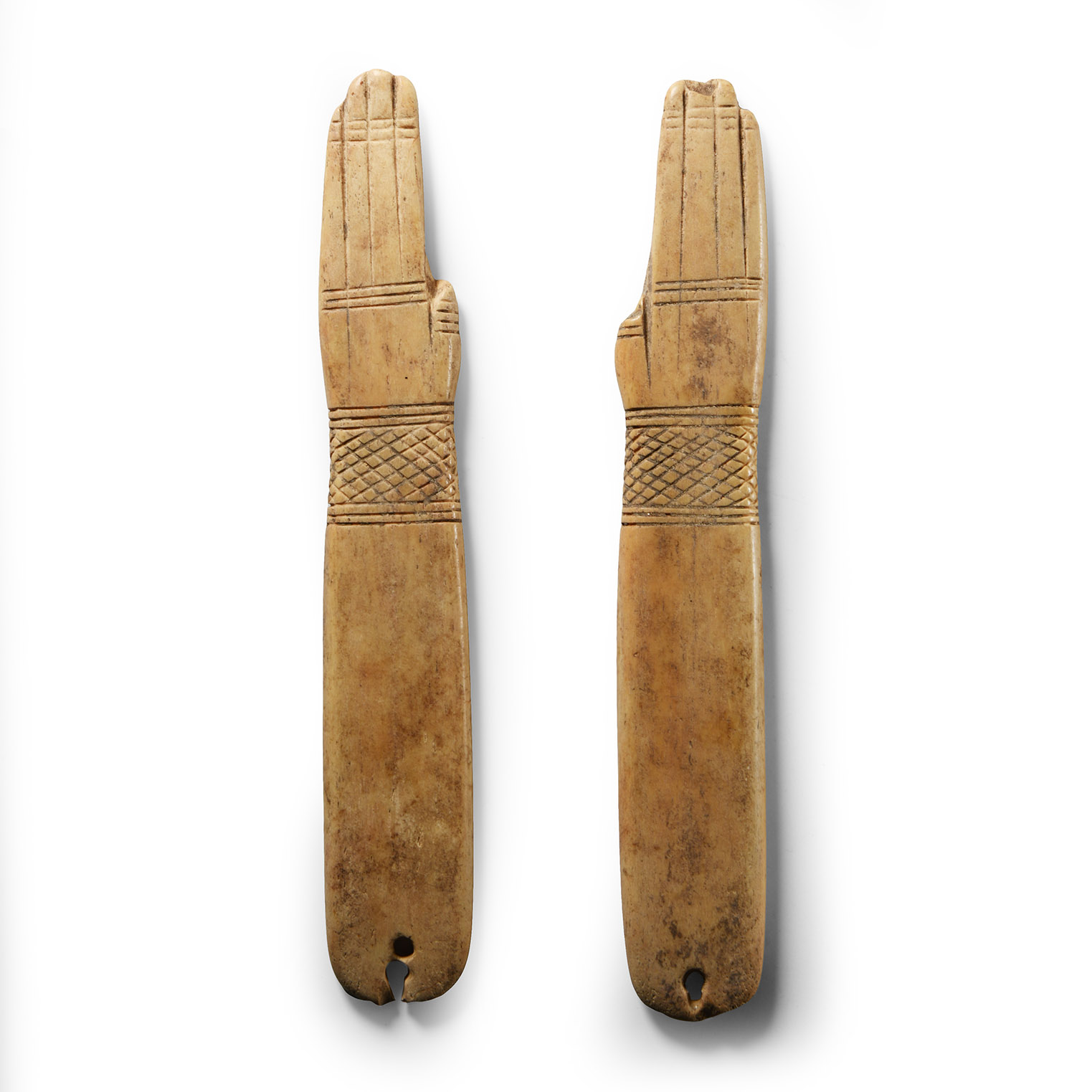
Large Egyptian Bone Doll's Arms
COPTIC, CIRCA 5TH-8TH CENTURY A.D.
6 1/4 in. (80 grams total, 16 cm each).
Matched pair, carved with creases to the fingers, hatched cuff at the wrist, pierced at the shoulder. [2]
ProvenanceEx London, UK collection, 1990s.
CONDITIONTimeLine Auctions follows a vetting process to ensure the authenticity and legality of all items, reinforcing our commitment to integrity and responsible trading. Each antiquity, antique, and coin lot undergoes thorough examination by a vetting committee of at least ten external specialists, professional trade association members, scientists, and archaeologists: Our Vetting Process
AUCTIONS:
TimeLine is a leading auction house specialising in antiquities, ancient art, collectables, natural history, coins, medals, and books. Our auctions offer museums, collectors, historians, and enthusiasts the opportunity to acquire unique and historically significant pieces.
-
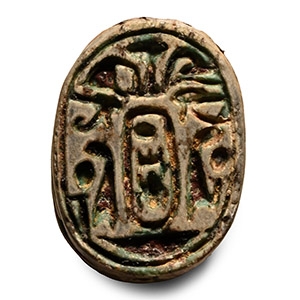
Egyptian Steatite Scarab for Thutmose III
New Kingdom or later, circa 1334-332 B.C.Estimate: £400 - 600 (+bp*)
Opening Bid: £175
Underside with cartouche of Pharaoh Thutmose III (Men-kheper-Re). 3.85 grams, 20 mm
Ex North London gentleman's collection, 1990s. Property of a Cambridgeshire, UK, gentleman.
The popularity of this great Egyptian pharaoh was such that his name appeared on scarabs during his reign and into the Late Period. -
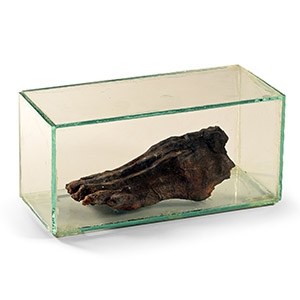
Foot of an Egyptian Mummy
Late Period, 664-332 B.C.Sold for (Inc. bp): £3,640
Preserved left foot from a mummy with bones (calcaneus and navicular) visible at the rear, phalanges; mounted in a sturdy glass display case. 753 grams total, 21.2 x 9.2 x 10 cm including box
Acquired from a licenced dealer in Cairo, Egypt, prior to 1975. On loan to Walton Primary School as an educational exhibit circa 2001. Property of a private collector, Walton on the Naze, UK.
Please note that this item is for collection only. -
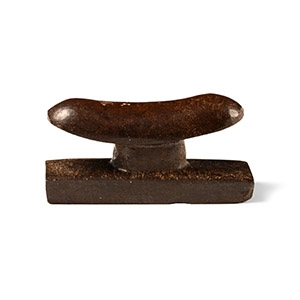
Egyptian Hardstone Head Rest Amulet
Late Period, 664-332 B.C.Sold for (Inc. bp): £143
Carved miniature headrest with rectangular base. 5.74 grams, 26 mm
Old French collection. Acquired from Hotel des Ventes, Drouot, Paris, France, early 2000. From the collection of Mr D. Property of a French collector.
The headrest, or weres amulet, was placed under the mummy's head to protect it from damage and ensure the deceased's rebirth.
