
Loading, please wait...
LOT 0450
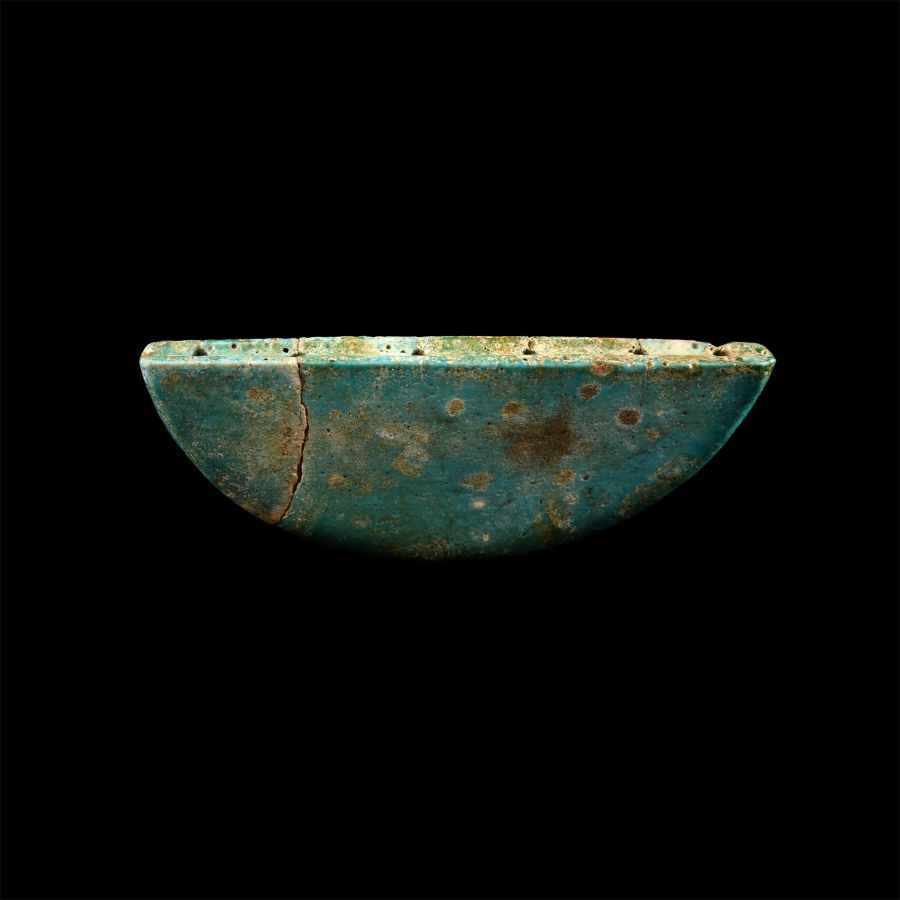
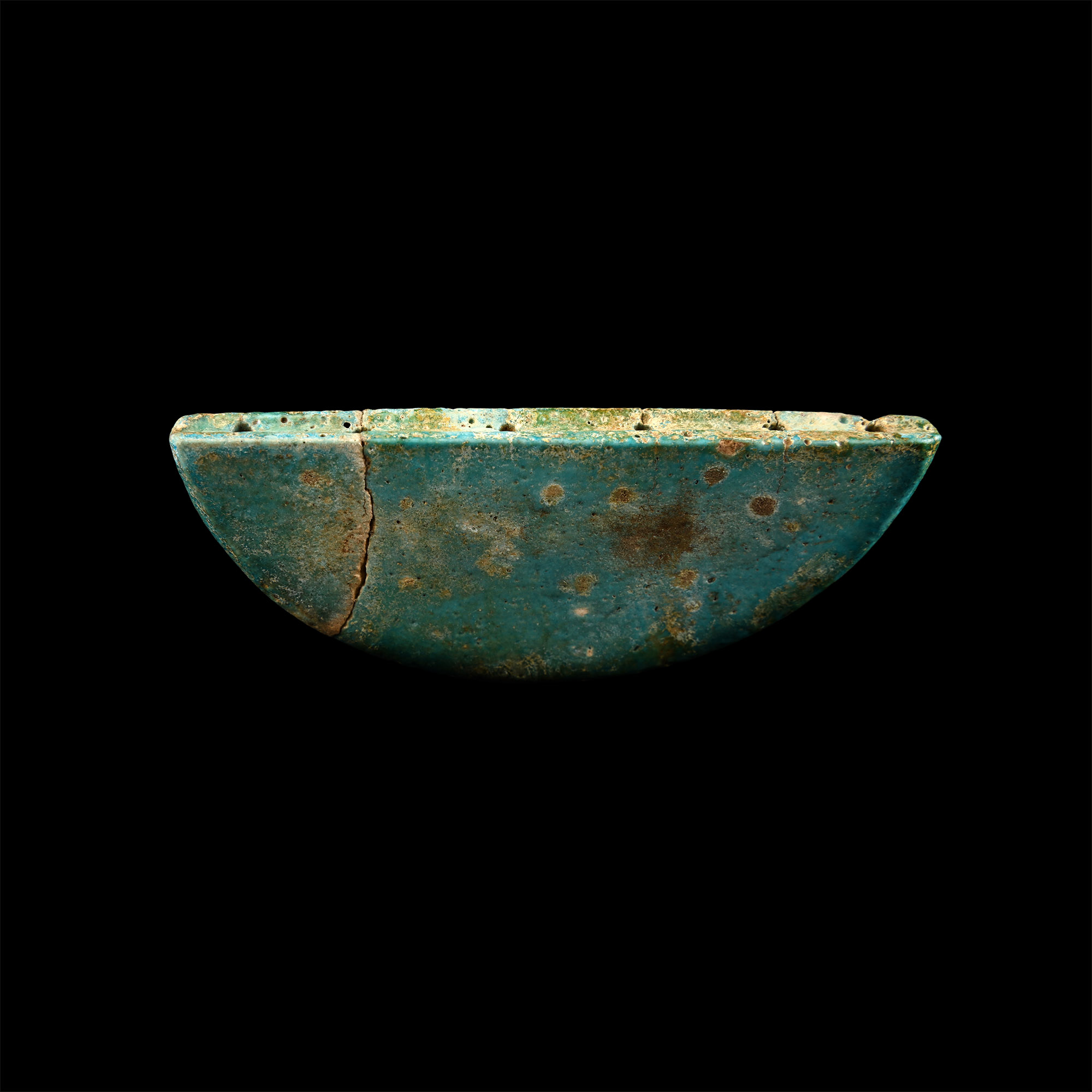
Large Egyptian Blue Glazed Solar Bead
1ST MILLENNIUM B.C.
3 1/4 in. (24 grams, 82 mm wide).
Flat and crescent-shaped with transverse piercings to the reverse; an end spacer for a multi-strand necklace. [No Reserve]
Provenancewith Archaeologia, Switzerland, before 1983.
Ex private North American collection.
London private collection, 2016.
TimeLine Auctions follows a vetting process to ensure the authenticity and legality of all items, reinforcing our commitment to integrity and responsible trading. Each antiquity, antique, and coin lot undergoes thorough examination by a vetting committee of at least ten external specialists, professional trade association members, scientists, and archaeologists: Our Vetting Process
AUCTIONS:
TimeLine is a leading auction house specialising in antiquities, ancient art, collectables, natural history, coins, medals, and books. Our auctions offer museums, collectors, historians, and enthusiasts the opportunity to acquire unique and historically significant pieces.
-
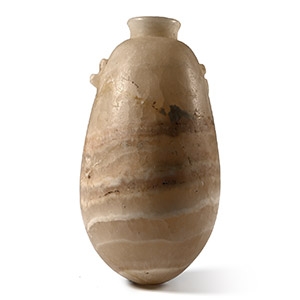
Egyptian Alabaster Alabastron
Late Period, 664-332 B.C.Estimate: £700 - 900 (‡+bp*)
Opening Bid: £350
Ovoid jar with a rounded base, concave shoulders and flared neck; remains of lug handles, restored. 332 grams, 14 cm
Acquired in the mid 1980s-1990s. Private collection, Switzerland, thence by descent. Private collection, since the late 1990s. -
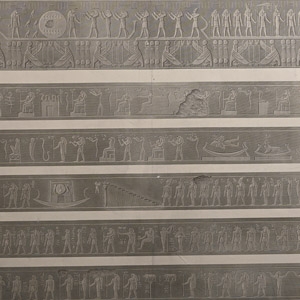
Very Large Egyptian Expedition Lithograph of Reliefs at the Grand Temple of Edfu
Early 19th century A.D.Sold for (Inc. bp): £156
Proof etching on laid paper of plate 58 from Vol .I of Description de l'Égypte : ou, Recueil des observations et des recherches qui ont été faites en Égypte pendant l'expédition de l'armée française. entitled Edfou (Apollinopolis magna) Frises sculptées dans l'intérieur du portique du grand Temple, Autres sculptures du portique. 258 grams, 105.5 x 68.5 cm
From the collection of a North American priest. Acquired between 1981-1996. Property of a North American collector.
Produced between February 1802 and 1830 on the orders of Napoleon Bonaparte; published between 1809 and 1828. Just 1,000 copies were distributed to various institutions, printed on laid paper with an 'Égypte ancienne et moderne' watermark. The book is subtitled Recueil des observations et des recherches qui ont été faites en Égypte pendant l’expédition de l’Armée française, publié par les ordres de Sa Majesté l’Empereur Napoléon le Grand (Gathering of observations and discoveries which were made in Egypt during the expedition of the French army, published on the orders of His Majesty the Emperor Napoleon the Great). It was the world's first encyclopedia devoted exclusively to the remains of ancient Egypt. The plates of this book are the first to present the archaeological sites of Thebes (Luxor). The Temple of Horus at Edfu in Upper Egypt is one of the best preserved in the country, and its walls feature significant religious and mythological scenes. -
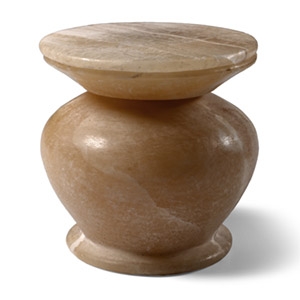
Egyptian Travertine Kohl Jar and Lid
Middle Kingdom-early New Kingdom, 12th-early 18th Dynasty, circa 1985-1479 B.C.Estimate: £1,200 - 1,700 (‡+bp*)
Opening Bid: £667
Piriform vessel with flared foot and wide rim, discoid lid with raised central panel to verso. 355 grams, 65 mm
Ex Galerie Nefer, Zurich, Switzerland. with Galerie Rhéa, Zurich, Switzerland.
