
Loading, please wait...
LOT 0516
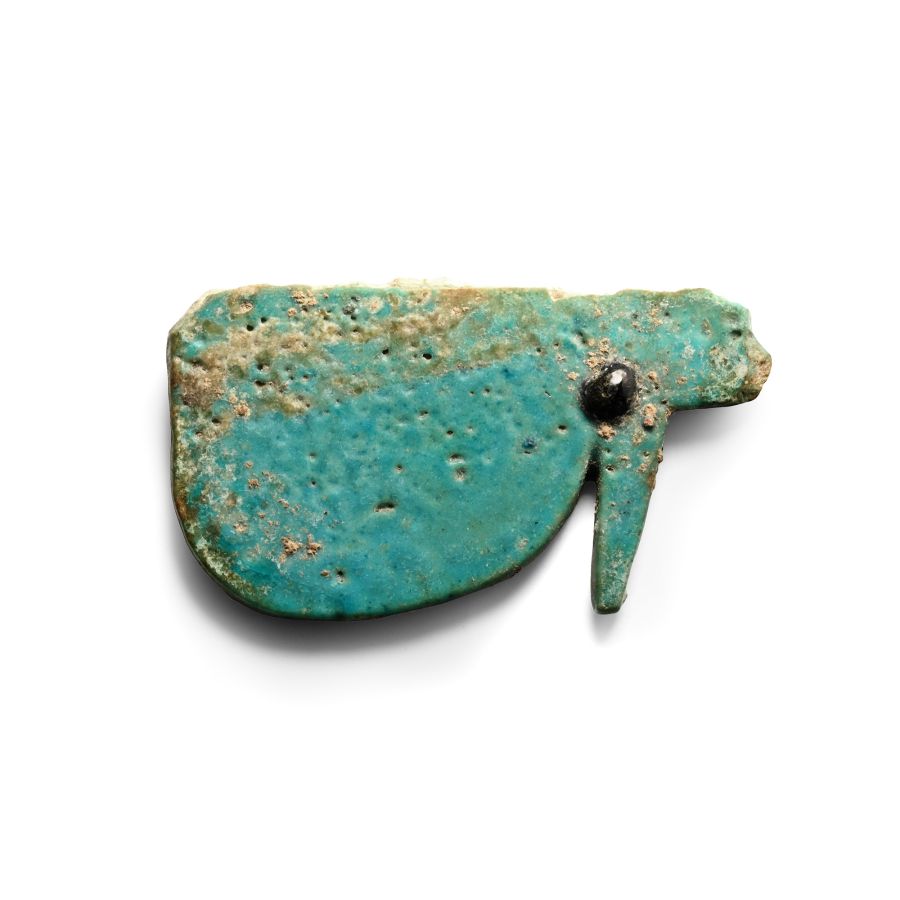
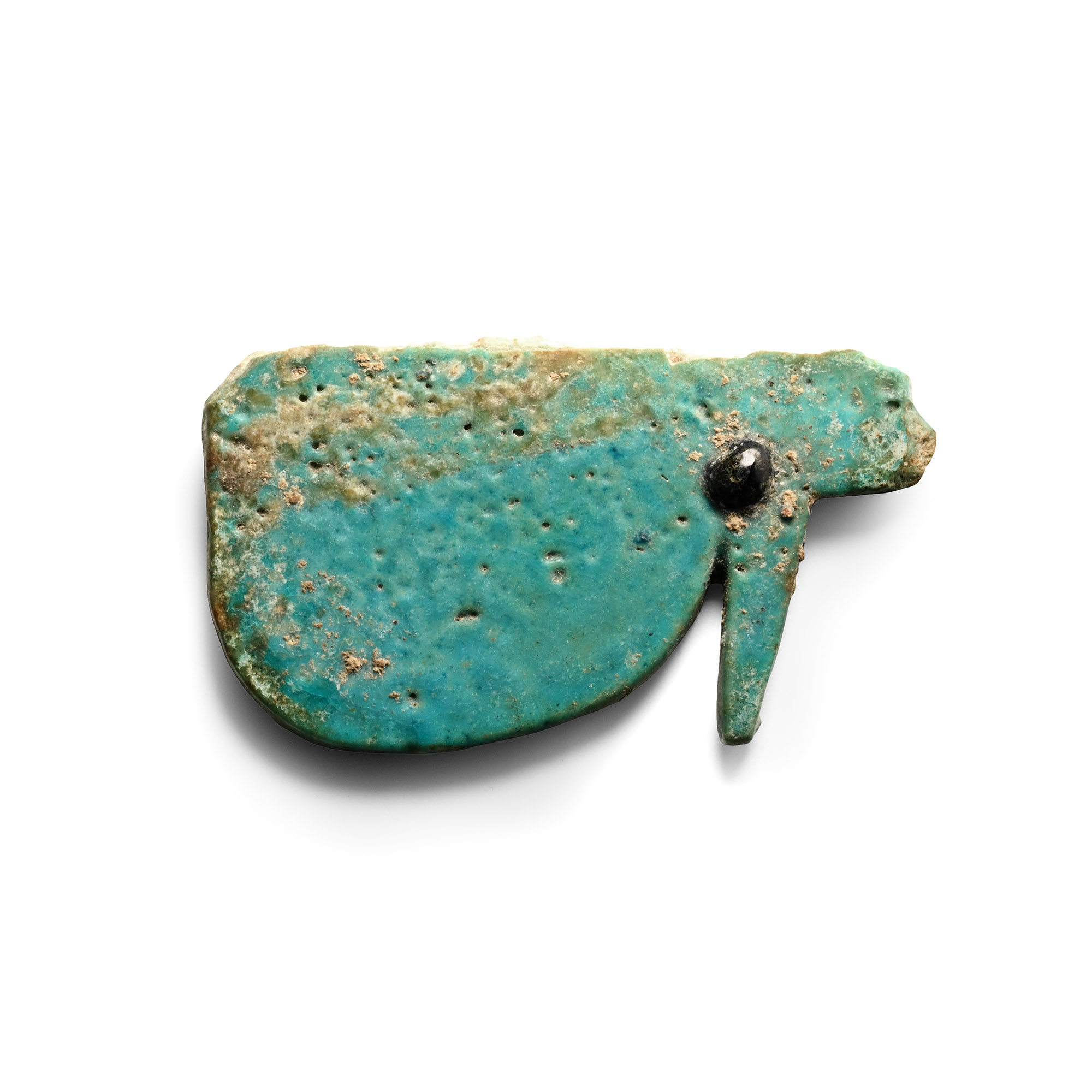
Large Egyptian Blue Glazed Eye of Horus Amulet
LATE PERIOD, 664-332 B.C.
2 1/4 in. (11 grams, 59 mm).
Wedjat amulet with applied black detailing to the pupil; upper edge absent. [No Reserve]
Provenancewith Archaeologia, Switzerland, before 1983.
Ex private North American collection.
London private collection, 2016.
Cf. Andrews, C., Amulets of Ancient Egypt, London, 1994, pl.46, for type.
CONDITIONTimeLine Auctions follows a vetting process to ensure the authenticity and legality of all items, reinforcing our commitment to integrity and responsible trading. Each antiquity, antique, and coin lot undergoes thorough examination by a vetting committee of at least ten external specialists, professional trade association members, scientists, and archaeologists: Our Vetting Process
AUCTIONS:
TimeLine is a leading auction house specialising in antiquities, ancient art, collectables, natural history, coins, medals, and books. Our auctions offer museums, collectors, historians, and enthusiasts the opportunity to acquire unique and historically significant pieces.
-
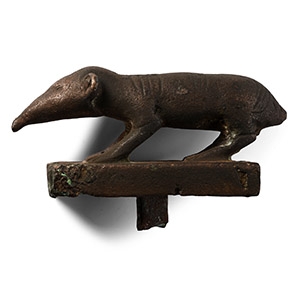
Egyptian Bronze Figure of a Shrew
Late-Ptolemaic Period, 664-30 B.C.Sold for (Inc. bp): £715
Modelled in the round in a crouching pose on a rectangular base with an attachment peg. 145 grams, 73 mm
From the collection of a gentleman, acquired on the London art market in the 1990s.
This figure most likely comes from a shrew coffin or votive statuette. The dwarf shrew (Crocidura nana) and Flower’s shrew (Crocidura floweri) were among many animal species buried in dedicated cemeteries across various parts of Egypt. Ironically, these tiny creatures symbolised Horus in his raptor-headed form — a figure who, in reality, would have preyed upon them. Shrews were associated with Khenty-irty, the “seeing-and-blind god,” due to their ability to navigate darkness. It may be possible to read the shrew’s symbolism as that of seeking light in darkness, representing the Egyptian belief in the deceased’s journey through the hours of the night before rebirth at dawn. Radiographic analysis of a bundle containing about twenty-one shrews shows that they were dried whole, with no evisceration, preserved by being ‘pickled’ in natron. -
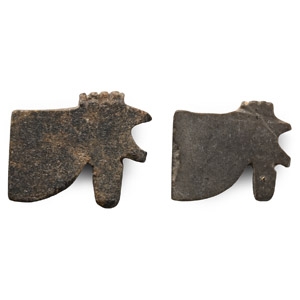
Egyptian Eye of Horus Amulet Pair
Late Period, 664-332 B.C.Sold for (Inc. bp): £59
Two amuletic beads in the shape of the wedjat-eye, one with a notched suspension bar. 4.69 grams total, 19.5-23 mm
with Archaeologia, Switzerland, before 1983. Ex private North American collection. London private collection, 2016. -
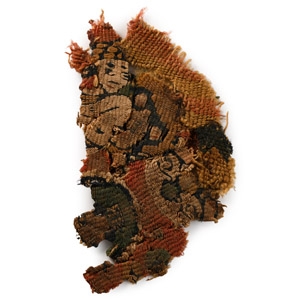
Egyptian Coptic Textile Fragment
Circa 7th-8th century A.D.Sold for (Inc. bp): £72
A fragment of an orbiculus in linen and red, brown, yellow and blue wool, S torsion, embroidered with an image of a putto with vine leaves around the head, surrounded by tondos ornamented with vegetal embroidery. 11 grams total including package, 78 mm
Acquired 1970s-1996. Property of a North American collector. London collection, 2016.
This is a fragment from a tunic decoration, usually forming part of a double band on a red background, decorated with a series of motifs related to the Dionysian cult: usually depicting cherubs, fish, heads, palmettes, and figures of dancing puttoes within the orbiculi. The decorative motifs on these tunics were usually arranged vertically and horizontally.
