
Loading, please wait...
LOT 0050
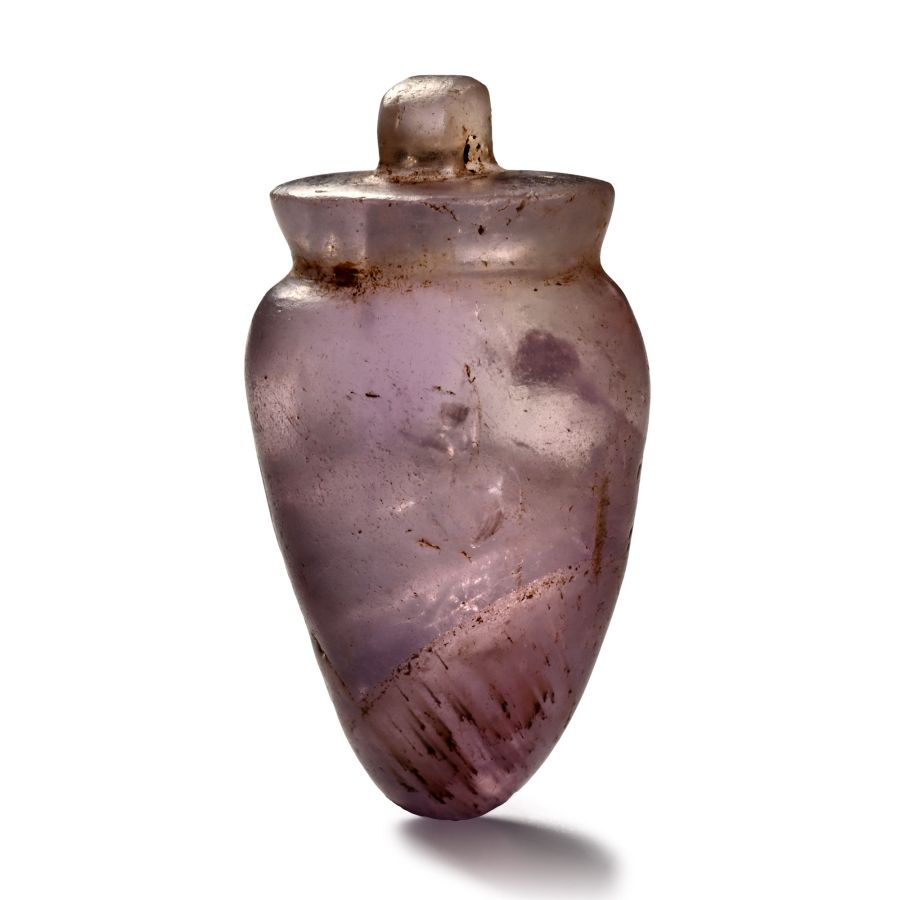
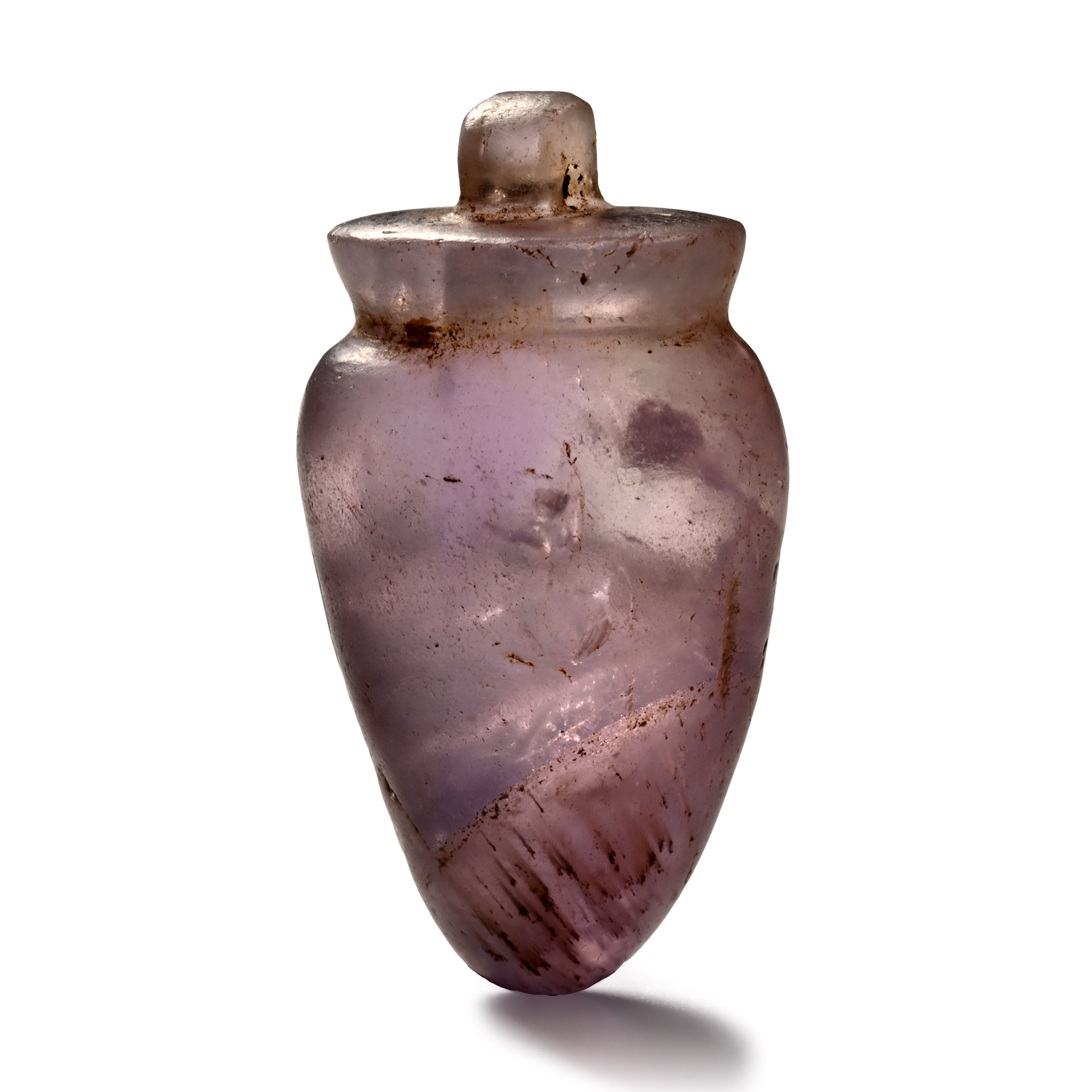
Large Egyptian Amethyst Heart Amulet
LATE PERIOD, 664-332 B.C.
1 1/4 in. (8.79 grams, 31 mm).
Carved in the round with integral suspension loop.
ProvenanceFrom early 20th century Home Counties, UK, collection.
This lot is accompanied by an illustrated lot declaration signed by the Head of the Antiquities Department, Dr Raffaele D'Amato.
According to ancient Egyptian beliefs, the heart (ib) was considered the centre of intelligence, emotions, and behaviour. It was also believed to store an individual's memories. During the Weighing of the Heart ceremony in the afterlife, the heart could speak on behalf of the deceased and account for their lifetime of actions before Osiris. For this reason, heart amulets were placed on the mummy to safeguard the organ and ensure a favourable outcome during judgment.
CONDITIONTimeLine Auctions follows a vetting process to ensure the authenticity and legality of all items, reinforcing our commitment to integrity and responsible trading. Each antiquity, antique, and coin lot undergoes thorough examination by a vetting committee of at least ten external specialists, professional trade association members, scientists, and archaeologists: Our Vetting Process
AUCTIONS:
TimeLine is a leading auction house specialising in antiquities, ancient art, collectables, natural history, coins, medals, and books. Our auctions offer museums, collectors, historians, and enthusiasts the opportunity to acquire unique and historically significant pieces.
LOT 0050
Large Egyptian Amethyst Heart Amulet
Estimate £600 - 800€700 - 930 (for guidance only)$810 - 1,080 (for guidance only)
-
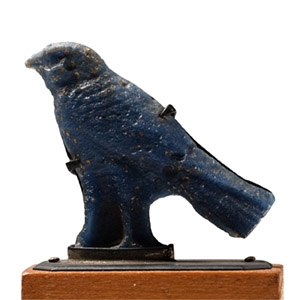
Egyptian Blue Glass Bird Inlay
Ptolemaic Period, circa 332-30 B.C.Sold for (Inc. bp): £624
Modelled in the half-round with low-relief hatched detailing; perching on a D-section base; mounted on a silver support and a wooden display stand. 18 grams total, 55 mm including stand
with Jean-Phillipe Mariaud de Serres, Paris, France. Private collection, London, UK, acquired from the above in 1992. This lot is accompanied by an illustrated lot declaration signed by the Head of the Antiquities Department, Dr Raffaele D'Amato.
The falcon inlay possibly symbolises Horus, the god of the sky, war, and protection. Horus was one of the most significant and widely worshipped gods in ancient Egyptian mythology. His importance spans multiple facets of Egyptian religion, including kingship, protection, the sky, and the sun. Depicted in various human and animal forms, Horus played a vital role in Egyptian cosmology, especially as the protector of the Pharaoh and as a representation of divine authority. -
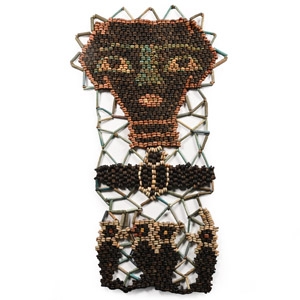
Egyptian Faience Mummy Bead Face Mask with Sons of Horus
Ptolemaic Period, 332-30 B.C.Sold for (Inc. bp): £312
Restrung; a netted beadwork panel of annular and tubular glazed composition beads in blues, greens, black, cream and red-brown colours, depicting a mummy face mask with false beard, a scarab with extended wings below, the 'Four Sons of Horus’ beneath the scarab, joined together with areas of open netting of tubular beads. 145 grams, 32 cm high
Acquired 1990s. Ex Mariaud des Serres, Paris, France. This lot is accompanied by an illustrated lot declaration signed by the Head of the Antiquities Department, Dr Raffaele D'Amato.
The 'Four Sons of Horus' protected the internal organs of the deceased. Depicted from left to right: the falcon-headed Qebhesenuef protected the intestines; human-headed Imsety, the liver; baboon-headed Hapi, the lungs; jackal-headed Duamutef, the stomach. -
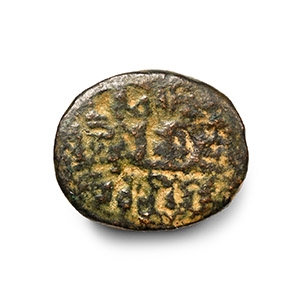
Phoenician Inscribed Bronze Scaraboid Seal
Late 1st millennium B.C.Sold for (Inc. bp): £52
Plain domed body pierced longitudinally, inscribed underside. 8.9 grams, 17 mm
Ex London, UK, gentleman, 1990. This lot is accompanied by an illustrated lot declaration signed by the Head of the Antiquities Department, Dr Raffaele D'Amato.
Although it is difficult to make out for certain, the outer design appears to be composed of the 'a-n-r' hieroglyphs. The signs do not form a word and are thought to have been a decorative device used by Asiatic scarab makers, employing recognisably Egyptian hieroglyphs.
