
Loading, please wait...
LOT 0760
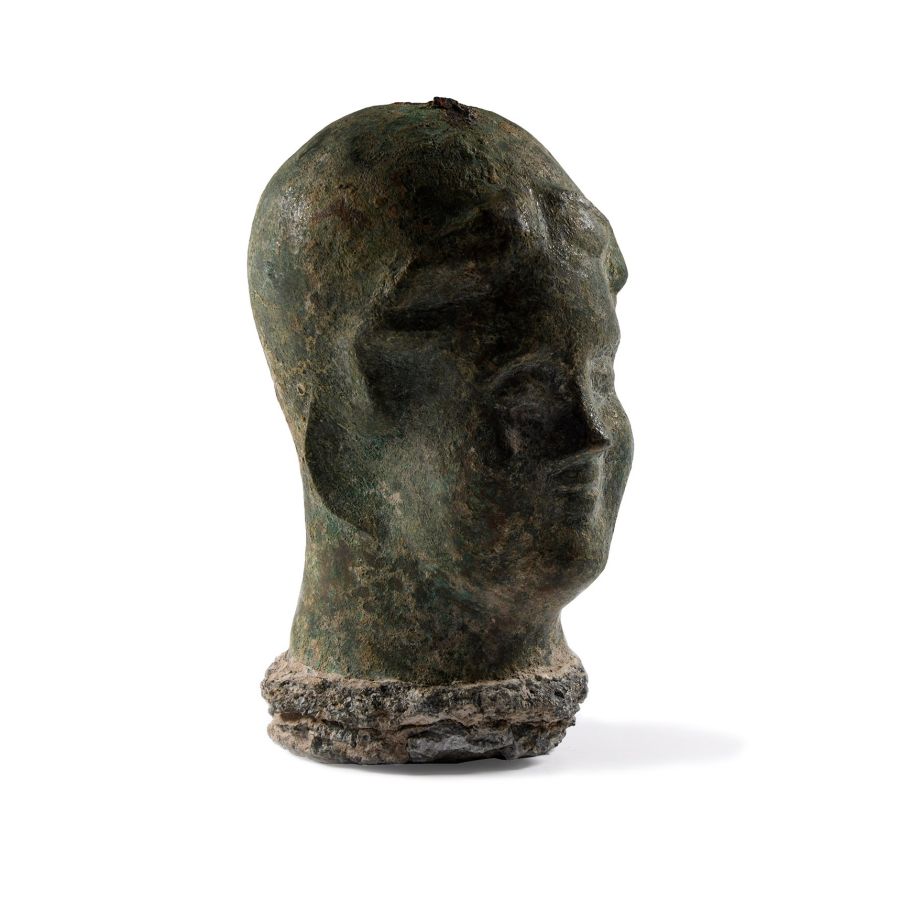
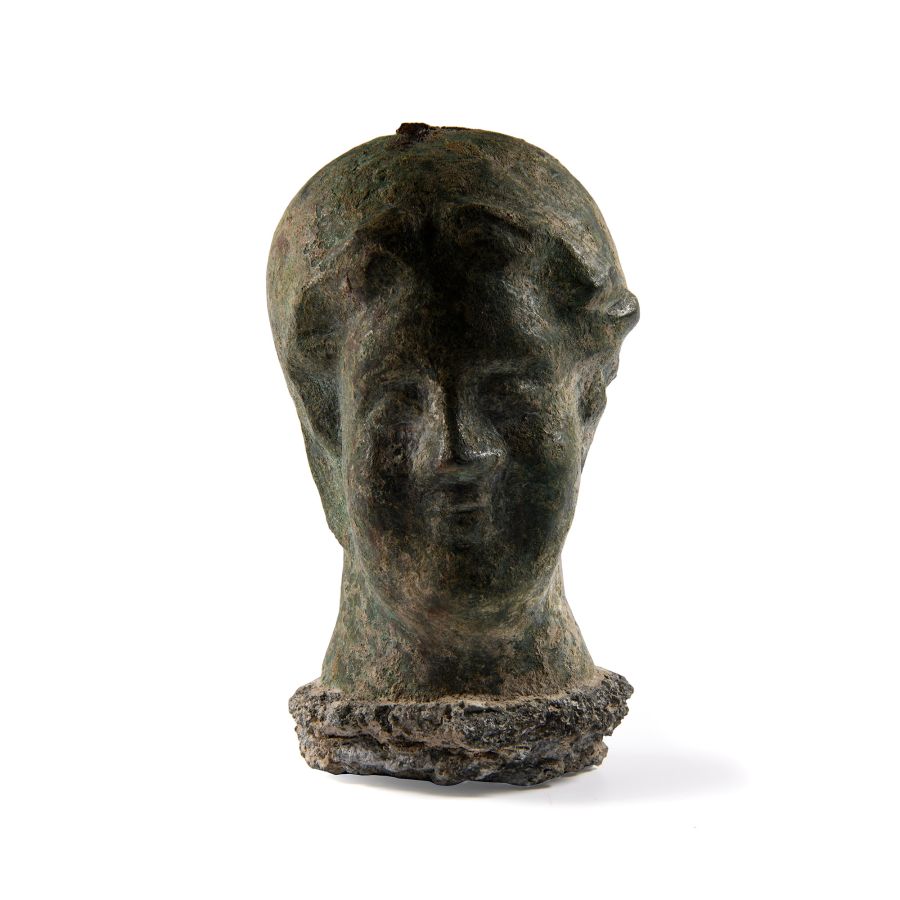
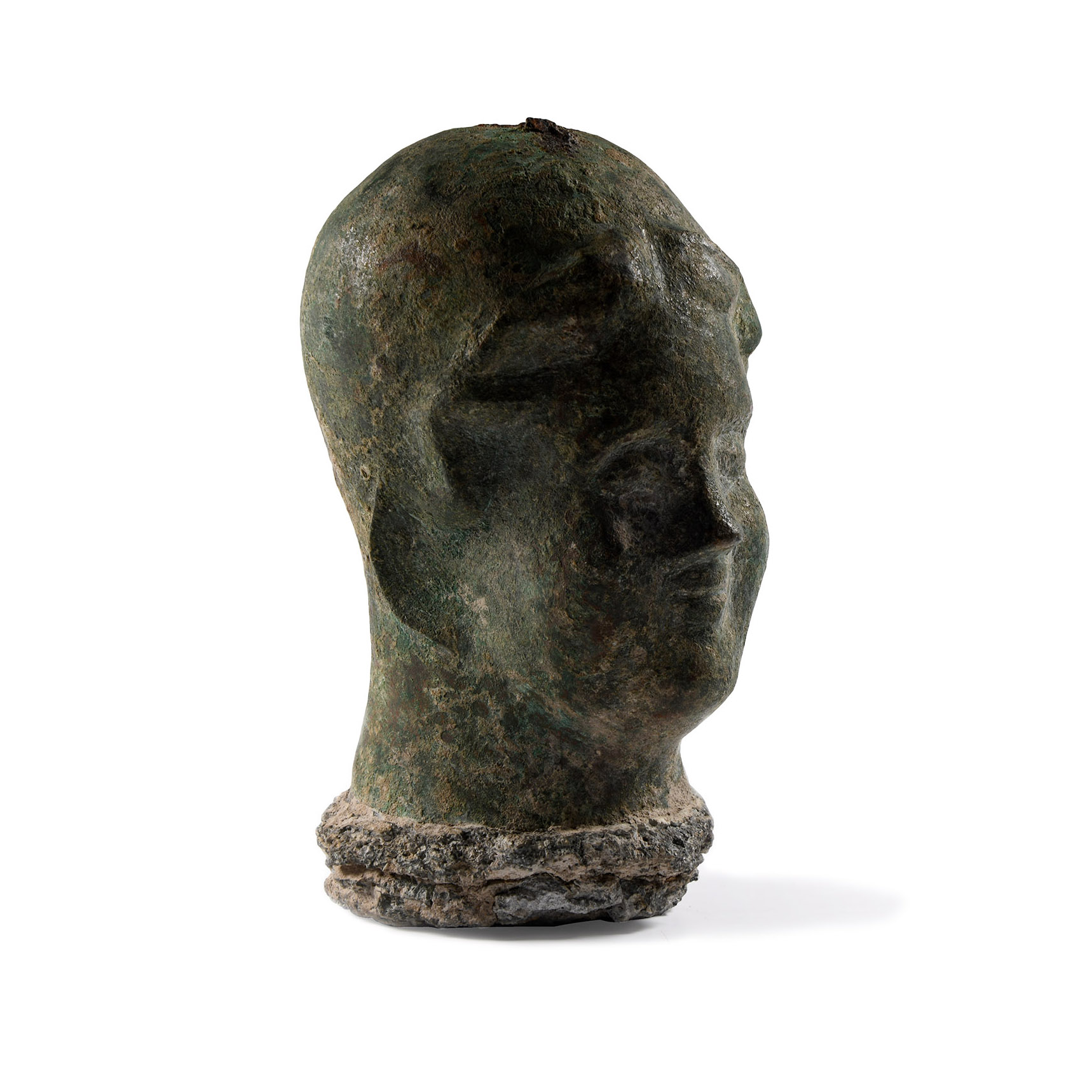
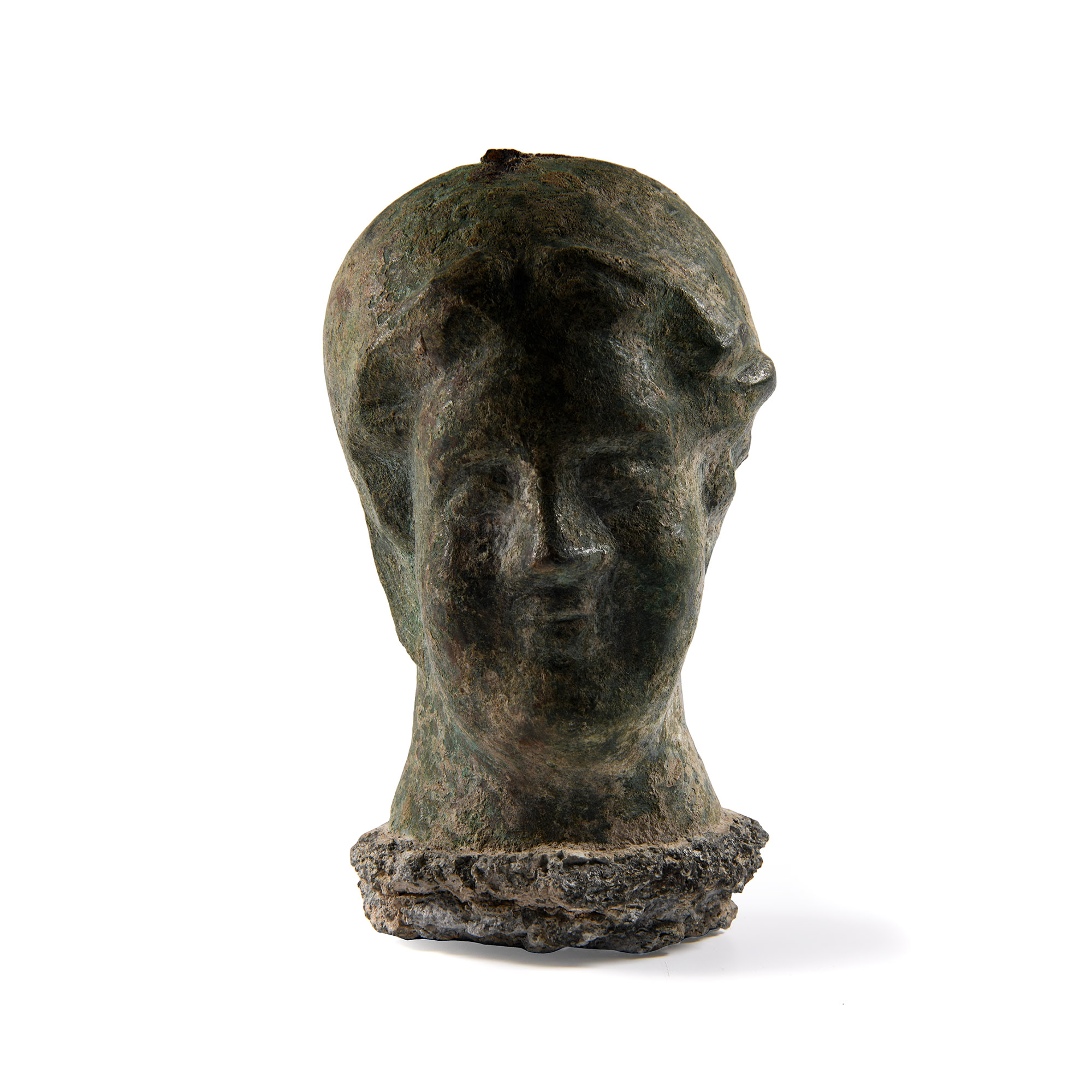
Large Eastern Roman Bronze Bust-Shaped Steelyard Weight
CIRCA 3RD-4TH CENTURY A.D. OR LATER
5 1/4 in. (4.2 kg, 13.5 cm high).
Modelled in the round as a facing female with head turned slightly right, with semi-naturalistic facial detailing and dressed hair; lead-filled.
ProvenanceAcquired 1990s-early 2000s.
East Anglian private collection.
See Biddle, M. & Henig, M., A Jupiter temple (?) outside the west gate of Venta Belgarum and the development of Winchester’s western suburb, London, 2018; Allason-Jones, L. & Miket, R., Catalogue of Small Finds from South Shields Roman Fort, Gloucester, 1984.
FootnotesSteelyard weights in the form of human or deities' faces were not uncommon in the Roman period (see SWYOR-DA4426, OXON-4391B5, HAMP-BD4D67 and NARC-7A7B81 on the PAS). These were generally filled with lead and had iron or copper suspension loops projecting from the top of the head.
CONDITIONTimeLine Auctions follows a vetting process to ensure the authenticity and legality of all items, reinforcing our commitment to integrity and responsible trading. Each antiquity, antique, and coin lot undergoes thorough examination by a vetting committee of at least ten external specialists, professional trade association members, scientists, and archaeologists: Our Vetting Process
AUCTIONS:
TimeLine is a leading auction house specialising in antiquities, ancient art, collectables, natural history, coins, medals, and books. Our auctions offer museums, collectors, historians, and enthusiasts the opportunity to acquire unique and historically significant pieces.
LOT 0760
Large Eastern Roman Bronze Bust-Shaped Steelyard Weight
Sold for (Inc. bp): £715
-
Roman Bronze Military Plate Brooch
2nd-3rd century A.D.Sold for (Inc. bp): £52
With openwork body formed of volute scrolls; pin-lugs and catchplate to the reverse. 8.2 grams, 31 mm
Ex German art market, 2000s. Acquired from an EU collector living in London. From the collection of Surrey, UK, gentleman. -
Roman Enamelled Bronze Vessel Lid
2nd-4th century A.D.Sold for (Inc. bp): £9,100
With carinated body and gently inverted lower rim, circumferential frieze displaying 'yellow' and red champlevé enamelled flower heads within foliate roundels, alternating with stylised amphoras and volute scrolls creating heart shapes set against a rich blue field; central projecting stem with hexagonal plate, ornamented with a central domed flower head, amphora and foliate motifs surrounding; two suspension lugs with loops to the perimeter of the lower rim; repaired. 435 grams, 15 cm wide
Acquired from Ariadne Galleries Inc, New York, 30 October 2003. This lot has been checked against the Interpol Database of stolen works of art and is accompanied by search certificate no.11622-198955.
Champlevé is a decorative technique which involves cutting cells into a metal surface and filling the void with enamel, using the raised metal borders between the cells to create the design outline. -
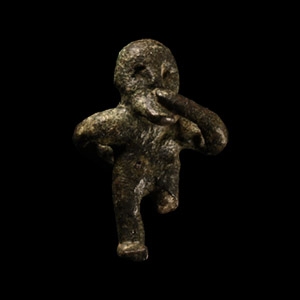
Roman Bronze Bearded Grotesque Statuette
Circa 3rd century A.D.Sold for (Inc. bp): £117
Modelled standing nude with left hand covering the mouth and right hand on the buttocks. 8.72 grams, 27 mm
From a collection acquired on the UK art market from various auction houses and collections mostly before 2000. From an important Cambridgeshire estate; thence by descent.
