
Loading, please wait...
LOT 0614
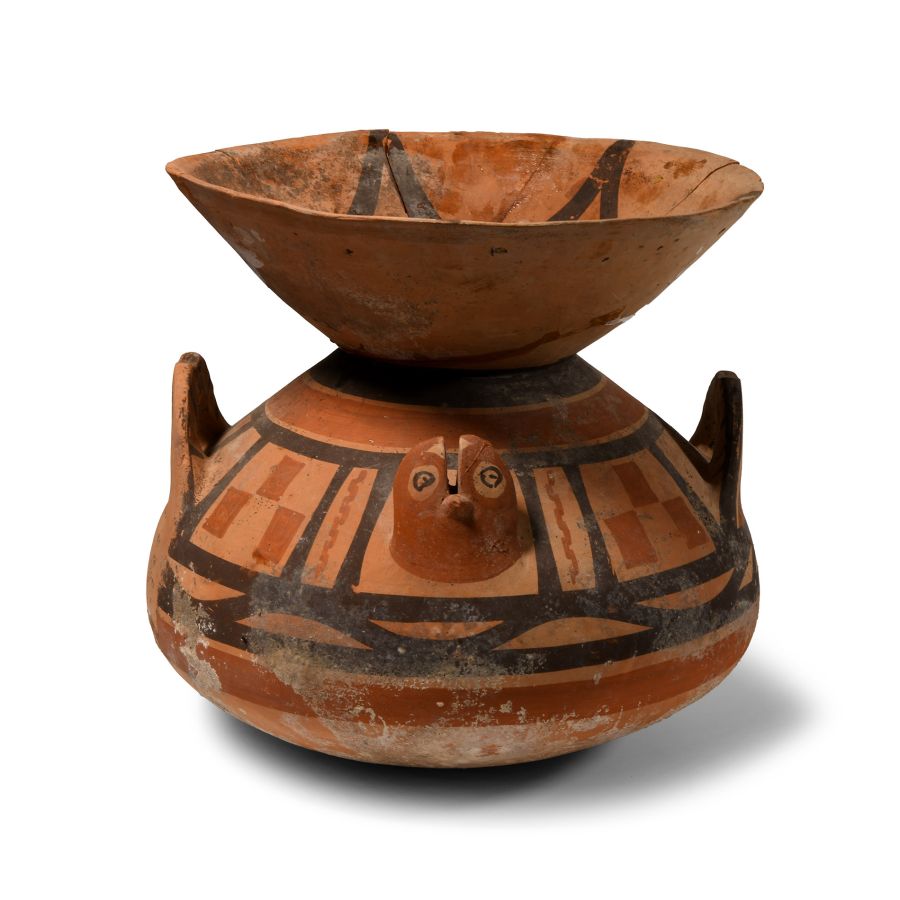
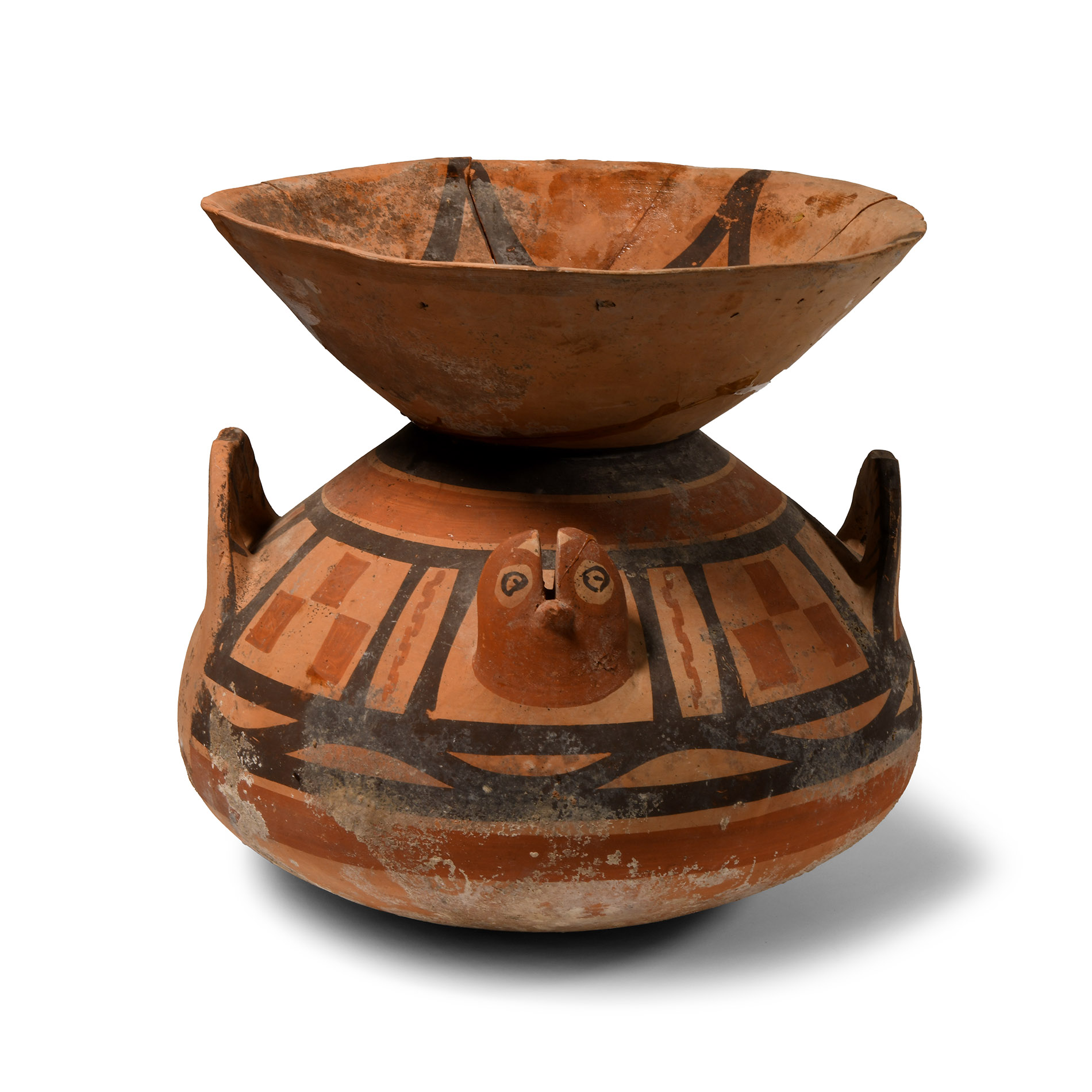
Large Daunian Painted Terracotta Olla
CIRCA 5TH-4TH CENTURY B.C.
10 7/8 in. (2.5 kg, 27.5 cm high).
Broad squat body with painted bands to the shoulder and two vertical loop handles, broad conical mouth, two lateral tabs with bird-head detailing; repaired. [No Reserve]
ProvenanceFrom a collection acquired on the UK art market from various auction houses and collections mostly before 2000.
From an important Cambridgeshire estate; thence by descent.
TimeLine Auctions follows a vetting process to ensure the authenticity and legality of all items, reinforcing our commitment to integrity and responsible trading. Each antiquity, antique, and coin lot undergoes thorough examination by a vetting committee of at least ten external specialists, professional trade association members, scientists, and archaeologists: Our Vetting Process
AUCTIONS:
TimeLine is a leading auction house specialising in antiquities, ancient art, collectables, natural history, coins, medals, and books. Our auctions offer museums, collectors, historians, and enthusiasts the opportunity to acquire unique and historically significant pieces.
-
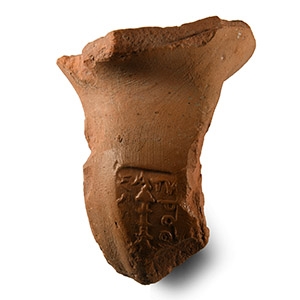
Greek Terracotta Amphora Handle Fragment with Stamp by Manufacturer Satyros for the Magistrate Thrasonos
Circa 3rd-2nd century B.C.Sold for (Inc. bp): £72
With rectangular stamp possibly bearing the names 'ΣΑΤΥΡΟ (SATYROS) Θ[ράσωνος] (Thrasonos)', and short handled trident to left. 130 grams, 80 mm
Acquired 1960s-1990s. From the late Alison Barker collection, a retired London barrister.
The legend of the stamp usually comprises three elements, in full or abbreviated form: a) the name of a magistrate whose purpose was to date the amphora. In our case possibly Θράσωνος b) the name of the “fabricant” (manufacturer), who played a part in the production of the amphora (here SATYROS), c) ethnic element indicating the production’s place (maybe, here, associated with the the Θ of Θράσωνος, Knidos). -
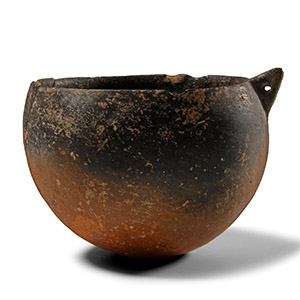
Cypriot Redware Dipper Cup
Middle Bronze Age I-II, circa 2000-1750 B.C.Sold for (Inc. bp): £312
Hemispherical in form with spur to the rim, pierced for attachment; repaired. 277 grams, 12 cm wide
Ex Peter Negus collection (1920-2012), a prolific collector who worked in the insurance industry for most of his life. His wife worked for Coutts Bank for many years and they shared an enormous passion for natural history, geology and archaeology, amassing a collection. He was a member of the Geologists’ Association for over 50 years, acting as Treasurer from 1979 to 1988. Acquired from Bonhams, London, 26 October 2007, no.354 (part). From an important Cambridgeshire estate; thence by descent. Accompanied by copies of the relevant Bonhams catalogue pages and an old identification tag. -
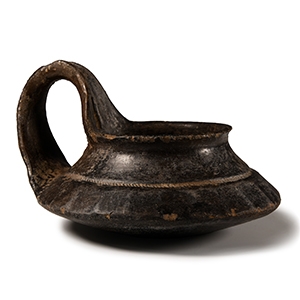
Villanovan Terracotta Impasto Kyathos
8th-7th century B.C.Sold for (Inc. bp): £338
Blackware vessel with carination to the squat body, deep shoulder and rolled rim, low foot, single upstanding strap handle to the rear with split at the junction with the mouth. 286 grams, 14 cm wide
Ex Haynault Ventes Publiques Auction, Uccle, Belgium, 21 September, 2021, no.30. Property of a South Australian private collector, with collection reference 21.102. Accompanied by a collector's catalogue page including description and image.
Villanovan culture is often regarded as the earliest phase of Etruscan civilisation in the Iron Age.
