
Loading, please wait...

LOT 0613
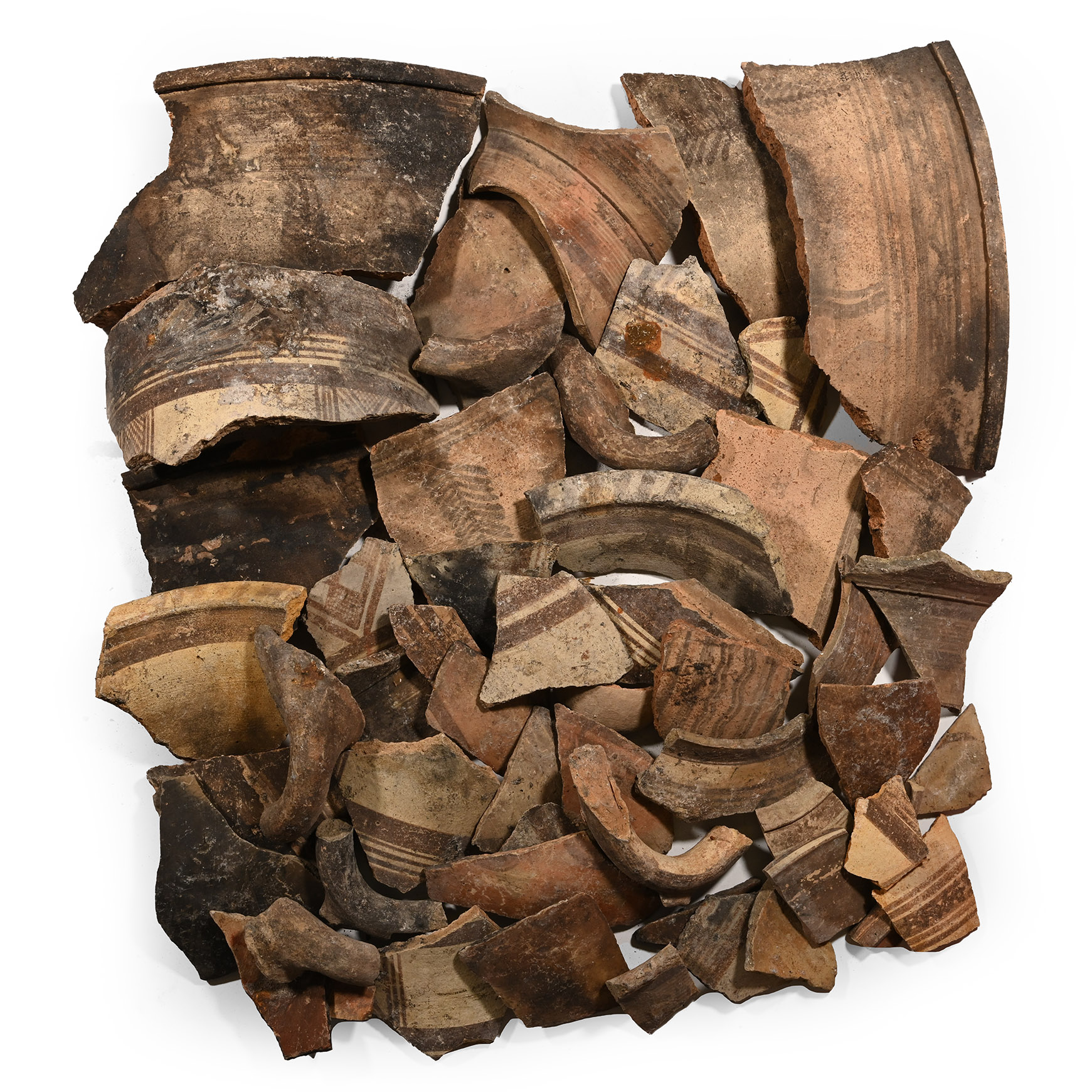
Large Cypriot Terracotta Vessel Fragments
IRON AGE, CYPRO-GEOMETRIC, 950-850 B.C.
3/4 - 11 3/4 in. (10 kg total, 1.9-30 cm).
Including rim and sidewall fragments, handles and painted band detailing. [64, No Reserve]
ProvenanceFrom a collection acquired on the UK art market from various auction houses and collections mostly before 2000.
From an important Cambridgeshire estate; thence by descent.
TimeLine Auctions follows a vetting process to ensure the authenticity and legality of all items, reinforcing our commitment to integrity and responsible trading. Each antiquity, antique, and coin lot undergoes thorough examination by a vetting committee of at least ten external specialists, professional trade association members, scientists, and archaeologists: Our Vetting Process
AUCTIONS:
TimeLine is a leading auction house specialising in antiquities, ancient art, collectables, natural history, coins, medals, and books. Our auctions offer museums, collectors, historians, and enthusiasts the opportunity to acquire unique and historically significant pieces.
-
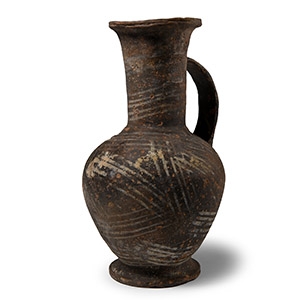
Cypriot Brown Ware Base-Ring Terracotta Jug
Late Bronze Age, circa 1450-1200 B.C.Sold for (Inc. bp): £221
Comprising a piriform body and flared base with outer thickened rim, collar to the shoulder attached to a tall neck gently flaring to an everted rim, single strap handle. 504 grams, 22 cm
From a collection acquired on the UK art market from various auction houses and collections mostly before 2000. From an important Cambridgeshire estate; thence by descent. -
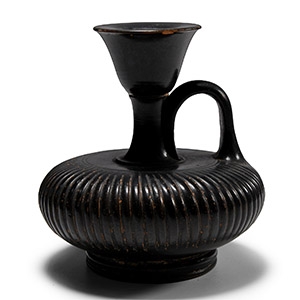
Greek Black-Glazed Ribbed Lekythos
Apulian, 4th-3rd century B.C.Sold for (Inc. bp): £351
With squat segmented body and gusseted basal ring, trumpet-shaped spout with loop handle to the rear. 248 grams, 12 cm
Believed to be acquired in the 1970s-1980s, thence by descent. English private collection. -
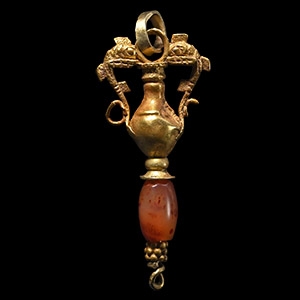
Hellenistic Gold Dolphin Amphora Pendant
2nd-1st century B.C.Estimate: £500 - 700 (+bp*)
Opening Bid: £250
Formed as an amphora with dolphin handles, oblate carnelian bead below with granulated collar; loop and suspension ring above. 2,2 grams, 32 mm
Ex property of a late Japanese collector, 1970s-2000s.
