
Loading, please wait...
LOT 1966
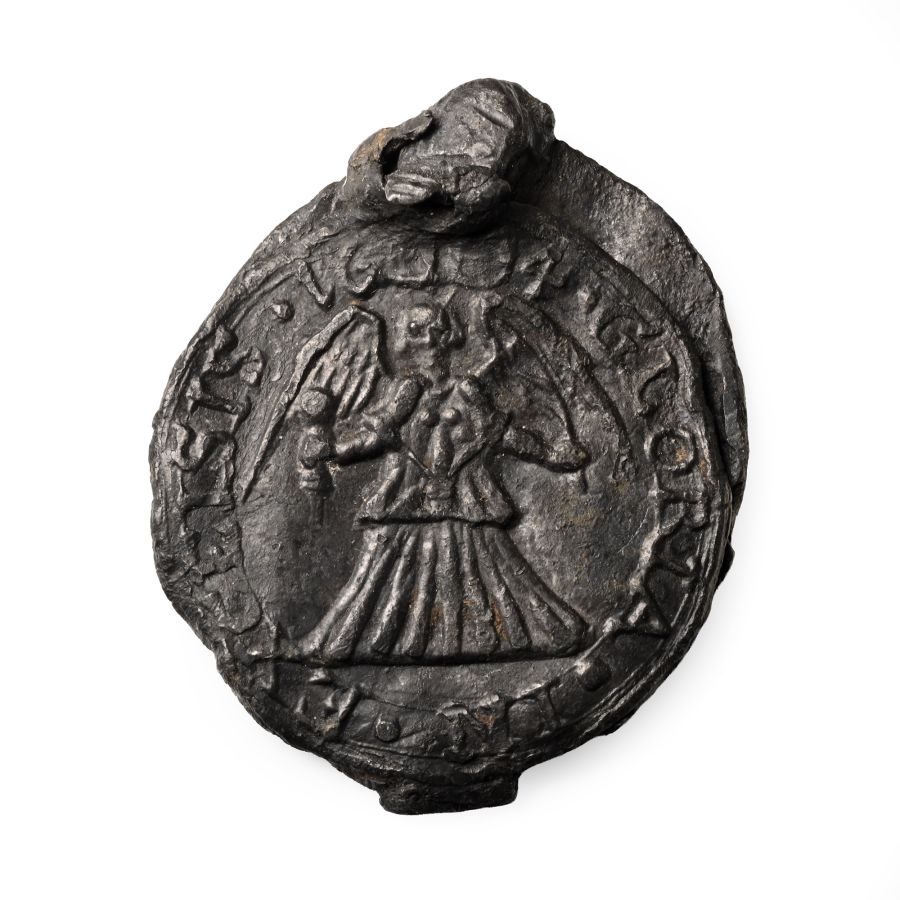
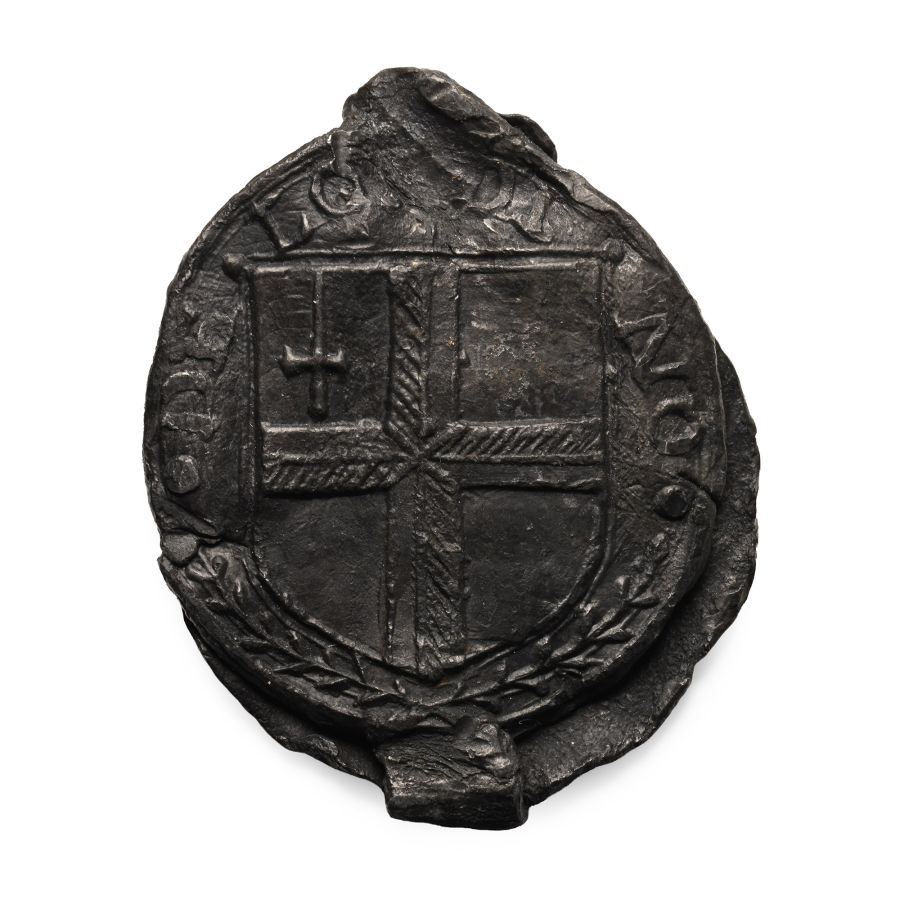
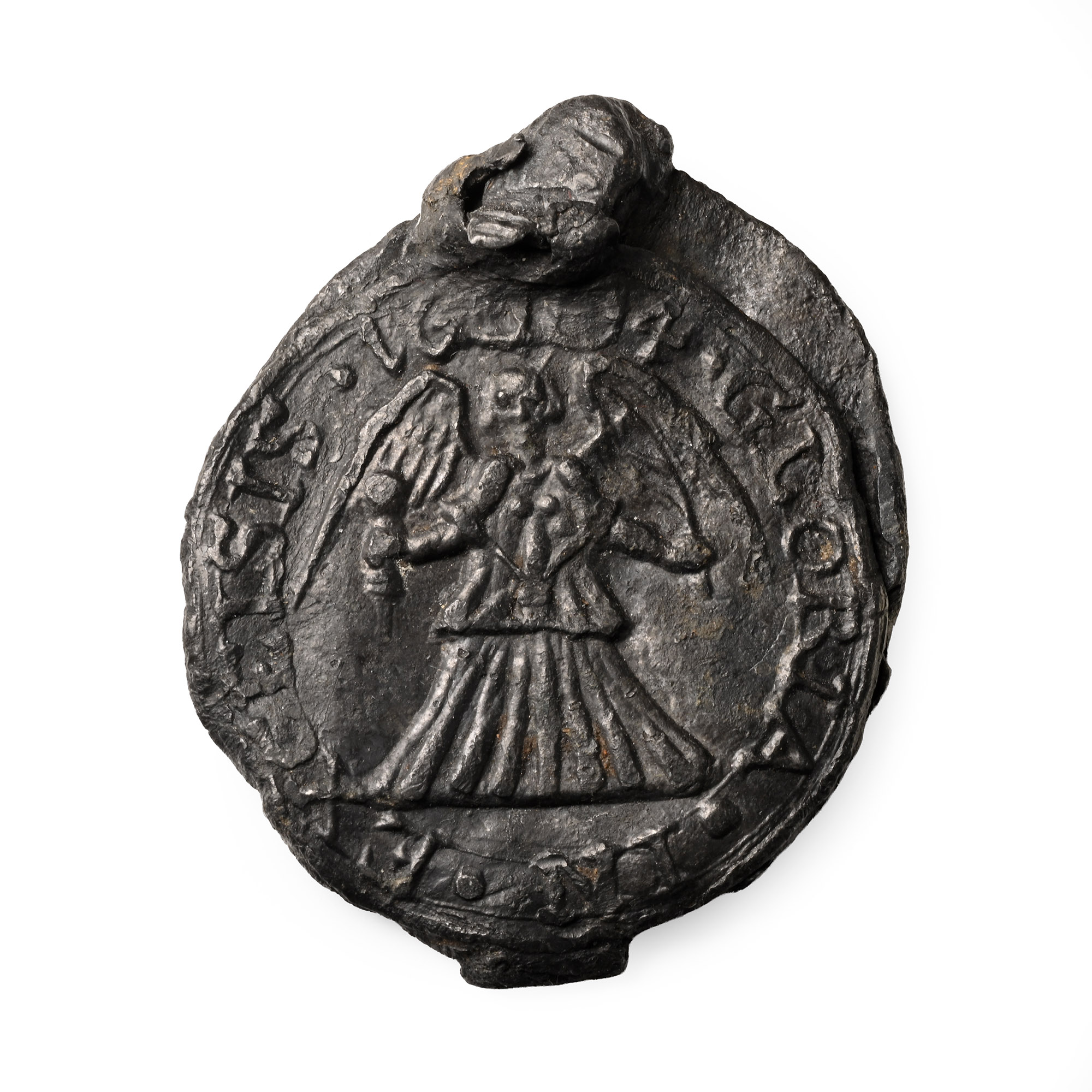
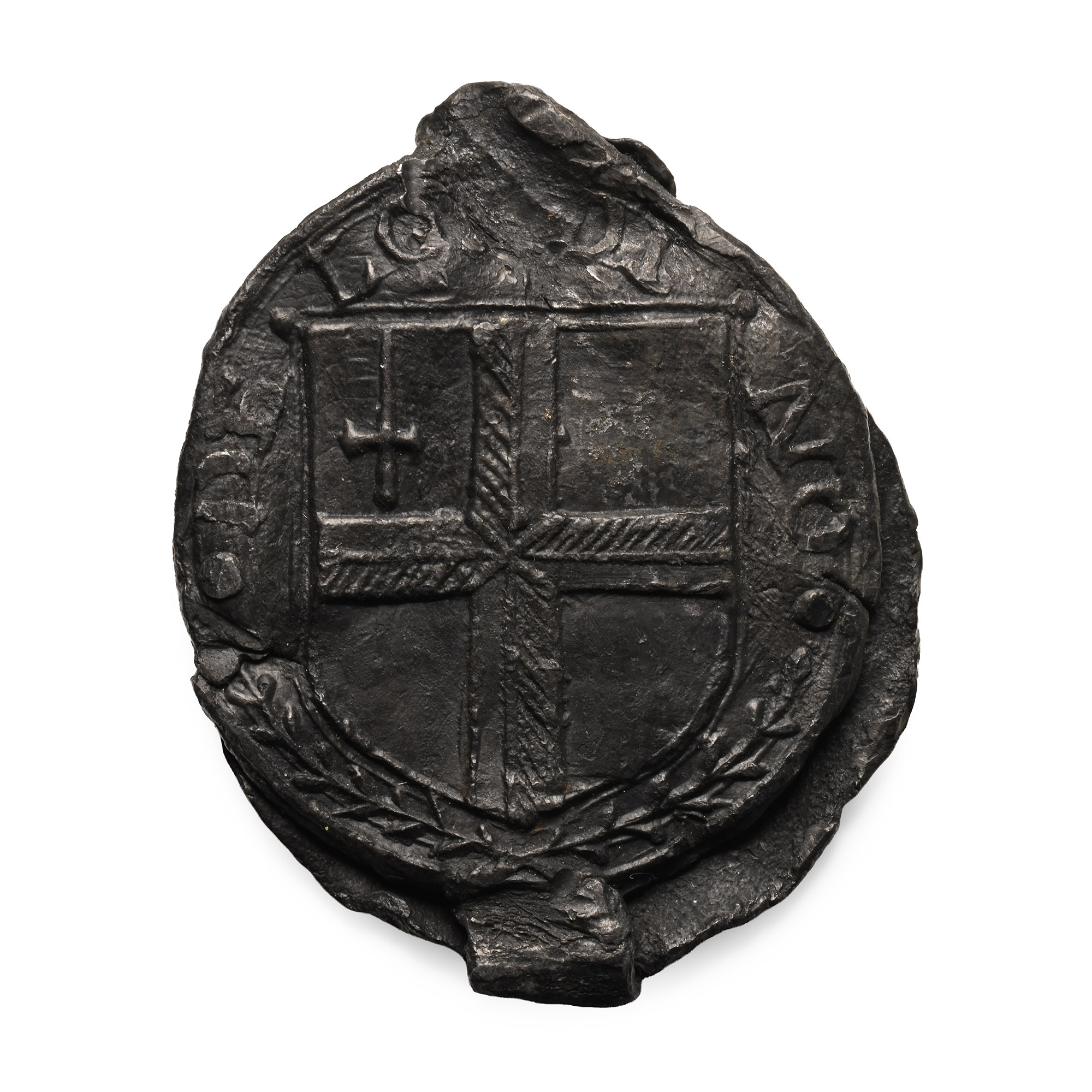
Large Commonwealth Period Lead Seal
MID 17TH CENTURY A.D.
2 in. (37.4 grams, 49 mm).
Lead bag-seal comprising two roundels joined by a short strap; onverse - heater shield with cross and sword (arms of London) and legend 'DE LONDINO' (from London); reverse with winged angel and border with legend '+ GLORIA IN EXCELSIS 16[..]' (glory in the heavens) and date. [No Reserve]
ProvenanceEx P Chapman collection, 1980s-1990s.
CONDITIONTimeLine Auctions follows a vetting process to ensure the authenticity and legality of all items, reinforcing our commitment to integrity and responsible trading. Each antiquity, antique, and coin lot undergoes thorough examination by a vetting committee of at least ten external specialists, professional trade association members, scientists, and archaeologists: Our Vetting Process
AUCTIONS:
TimeLine is a leading auction house specialising in antiquities, ancient art, collectables, natural history, coins, medals, and books. Our auctions offer museums, collectors, historians, and enthusiasts the opportunity to acquire unique and historically significant pieces.
-
Russian Orthodox Bronze Travel Icon with Saint George
Circa 1700 A.D.Sold for (Inc. bp): £140
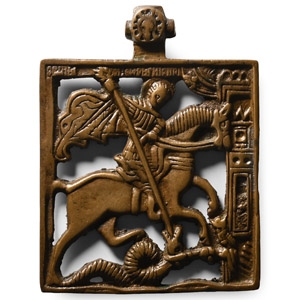
Showing Saint George on horseback, dispatching the dragon with a spear thrust; the Saint dressed in a soft cuirass and seated on a high-ended saddle secured by breast, rump, and belly straps; on the right, the walls of Trebisonda and on the bottom right the princess; Old Slavic inscription on the top, reciting Saint George of Cappadocia (Свято́й Гео́ргий Каппадоки́йский); at the top, the Christ Mandylion inscribed inside a cross. 71 grams, 87 mm
Acquired from Chris Martin-Zakheim, Iconastas, 5 Piccadilly Arcade, London SW1. From the private collection of a West London, UK, gentleman, formed since the early 2000s.
According to the Christian tradition, Saint George would have lived between the end of the 3rd century and the beginning of the 4th century: born into a noble Christian family, he became an officer in the Roman army and was then named a prefect by Diocletian. But when the same emperor decided to resume the persecutions, Saint George became a victim despite his important political rank. His role in the development of the faith is so important that he is included among the Great Martyrs of the Eastern Church and his fight against the dragon becomes a symbol par excellence of the fight for good which defeats evil. -
The 'Schooner Douro' Shipwreck Bronze Manilla Currency Bracelet
19th century A.D.Sold for (Inc. bp): £33
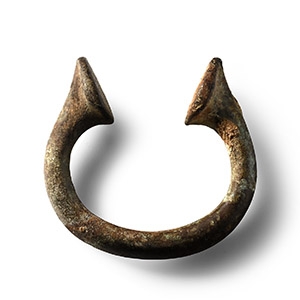
Comprising a round-section penannular body and trumpet-shaped terminals; accompanying collector's handwritten note 'Schooner Douro trading from England > Puerto > Sudan (slaver) carrying manillas and beads, armoury and baled goods. Wrecked off Gt. Creberweshan Rock, Isles of Scilly 1943. All hands loss [sic].' 88 grams, 60 mm
From the old private collection of a retired UK gentleman; his collection formed in the 1990s. -
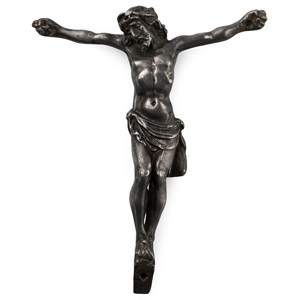
Post Medieval Silver-Coloured Metal Corpus Christi
19th-20th century A.D.Sold for (Inc. bp): £26
Modelled with outstretched arms and head turned to his right, back straight and feet resting on a block with hole for attachment. 81 grams, 10.8 cm high
Found Speen near Donning Castle, West Berkshire, UK, between Friday 1st January 2010 - Saturday 1st January 2011.
