
Loading, please wait...
_900x900.jpg "Large Chinese Terracotta Horse")
_200x200.jpg "Large Chinese Terracotta Horse")
.jpg "Large Chinese Terracotta Horse")
LOT 1991
Large Chinese Terracotta Horse
17TH-19TH CENTURY A.D.
18 1/2 in. (5.9 kg, 47 cm wide).
Advancing horse modelled in the round with one foreleg raised, detailed bridle, crupper and other harness, textured saddlecloth; painted detailing.
ProvenanceEx West Country, UK, collection, 1980-1990s.
This lot has been checked against the Interpol Database of stolen works of art and is accompanied by a search certificate number no.12155-217876.
TimeLine Auctions follows a vetting process to ensure the authenticity and legality of all items, reinforcing our commitment to integrity and responsible trading. Each antiquity, antique, and coin lot undergoes thorough examination by a vetting committee of at least ten external specialists, professional trade association members, scientists, and archaeologists: Our Vetting Process
AUCTIONS:
TimeLine is a leading auction house specialising in antiquities, ancient art, collectables, natural history, coins, medals, and books. Our auctions offer museums, collectors, historians, and enthusiasts the opportunity to acquire unique and historically significant pieces.
-
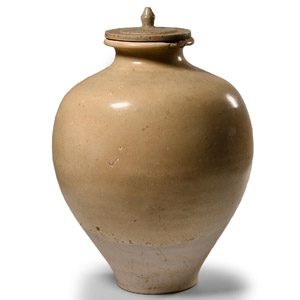
Chinese Tang Glazed White Ware Jar with lid
Tang Dynasty, 618-907 A.D.Sold for (Inc. bp): £312
Piriform in profile with broad mouth and rolled rim, cream glaze; discoid lid with knop handle. 2.84 kg, 32 cm including lid
Ex West Country, UK, collection, 1980-1990s. -
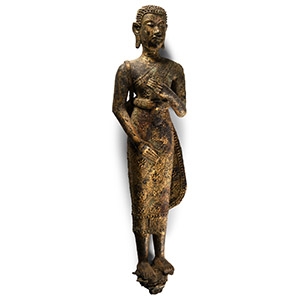
Thai Gilt Bronze Standing Buddha Statue
Circa 19th-20th century A.D.Sold for (Inc. bp): £182
Modelled in the round standing wearing paridhana robe and with bumpa vessel slung on a strap to the right shoulder. 1.77 kg, 33.2 cm
From a collection acquired on the UK art market from various auction houses and collections mostly before 2000. From an important Cambridgeshire estate; thence by descent. -
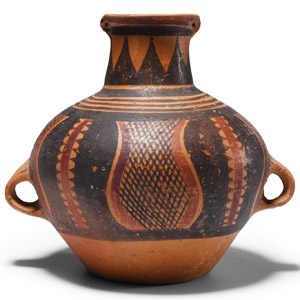
Chinese Neolithic Painted Miniature Jar
Yangshao Culture, circa 4th-3rd millennium B.P.Sold for (Inc. bp): £650
Squat in profile with lateral loop handles below the equator, broad shoulder, tubular neck with rounded rim; painted ornament including reserved vandykes to the neck, concentric rings, tongue-shaped hatched panels. 316 grams, 15.2 cm wide
From a collection acquired on the UK art market from various auction houses and collections mostly before 2000. From an important Cambridgeshire estate; thence by descent.
