
Loading, please wait...
LOT 2047
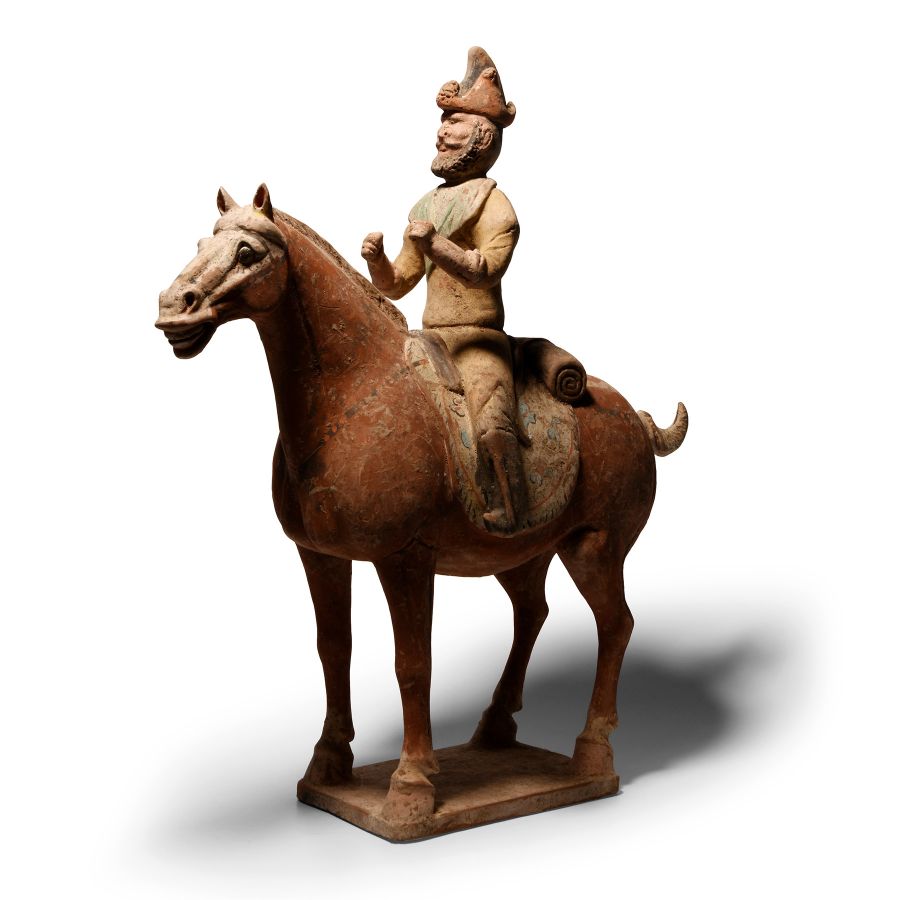
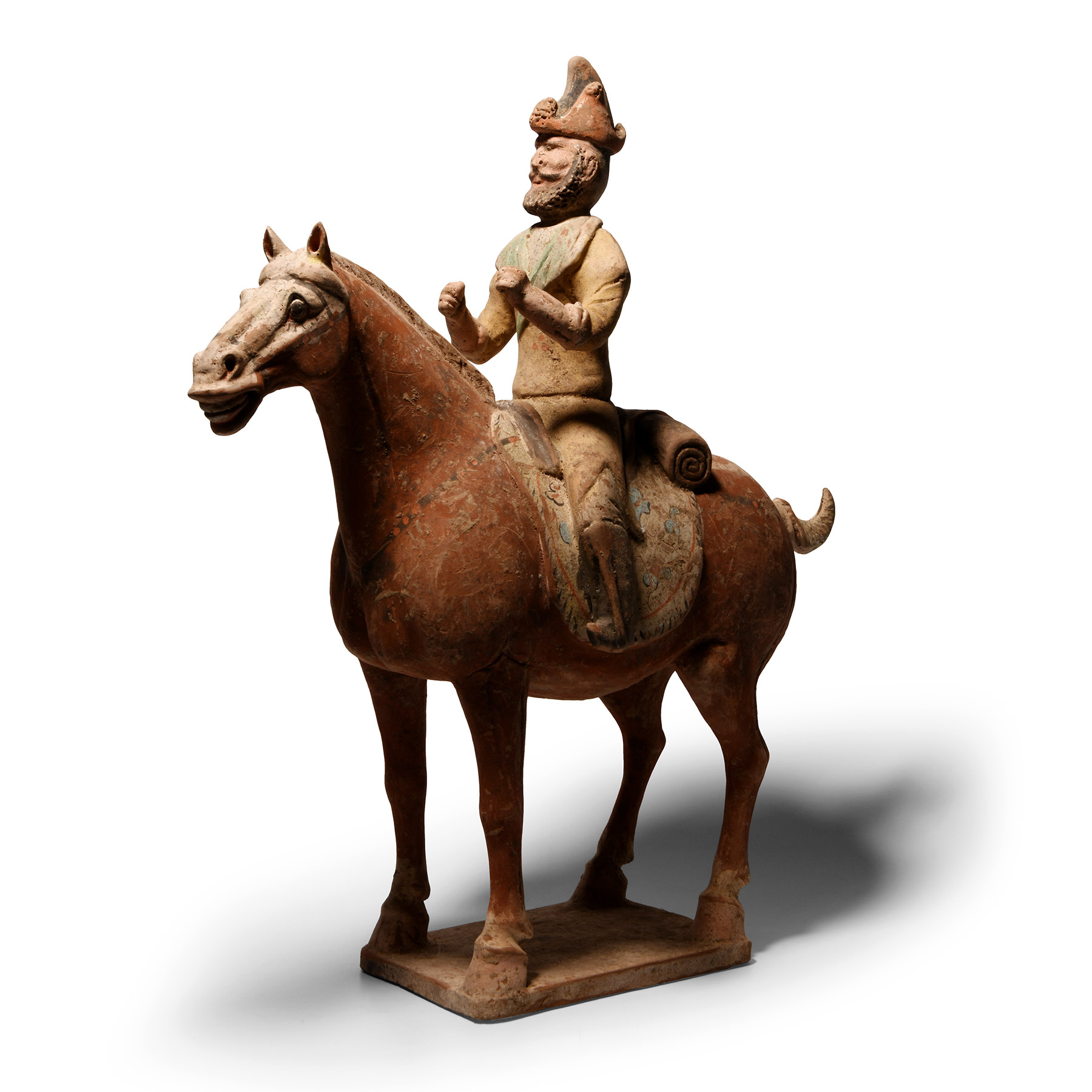
Large Chinese Tang Terracotta Hunter on Horseback
TANG DYNASTY, 618-907 A.D.
17 1/2 in. (3.95 kg, 44.5 cm high).
The horse modelled standing on a rectangular base, the rider positioned to hold the reins, wearing a hat and with a rolled blanket fastened behind him; polychrome motifs to the rider's garment and horse's saddle cloth.
ProvenanceEx Cotswold, UK, collection, 1970-1990.
Accompanied by an original Oxford Authentication thermoluminescence analysis report no.C122f83.
This lot has been checked against the Interpol Database of stolen works of art and is accompanied by search certificate number no.203480.
Cf. The Metropolitan Museum, New York, accession number 1991.253.7a, b, for a broadly comparable example.
CONDITIONTimeLine Auctions follows a vetting process to ensure the authenticity and legality of all items, reinforcing our commitment to integrity and responsible trading. Each antiquity, antique, and coin lot undergoes thorough examination by a vetting committee of at least ten external specialists, professional trade association members, scientists, and archaeologists: Our Vetting Process
AUCTIONS:
TimeLine is a leading auction house specialising in antiquities, ancient art, collectables, natural history, coins, medals, and books. Our auctions offer museums, collectors, historians, and enthusiasts the opportunity to acquire unique and historically significant pieces.
-
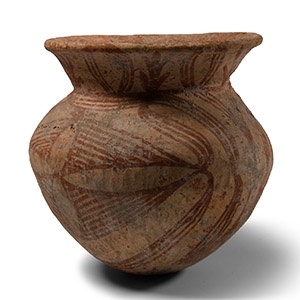
Ban Chiang Period Painted Vessel
Middle Period, 900-300 B.C.Sold for (Inc. bp): £104
Globular jar with large flared mouth, decorated with dense series of hatched spiral motifs. 430 grams, 14 cm wide
From a collection acquired on the UK art market from various auction houses and collections mostly before 2000. From an important Cambridgeshire estate; thence by descent. -
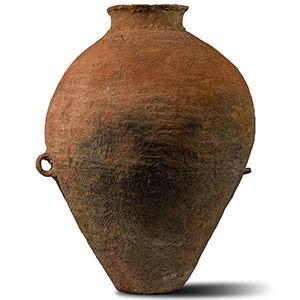
Very Large Chinese Neolithic 'Leather Look' Amphora
3rd-2nd millennium B.C.Sold for (Inc. bp): £91
With piriform body and trumpet-shaped mouth, two loop handles to the equator; hatching to the shoulder and ring of pricking below the neck. 12.6 kg, 58 cm
From a collection acquired on the UK art market from various auction houses and collections mostly before 2000. From an important Cambridgeshire estate; thence by descent. -
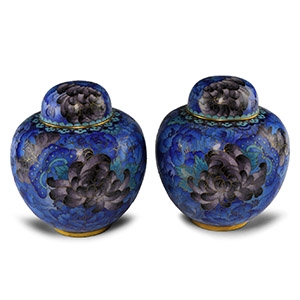
Chinese Turquoise Cloisonne Lidded Vessel Pair
20th century A.D.Sold for (Inc. bp): £338
A matched pair of blue and turquoise cloisonné enamel ceramic jars, each with domed lid and gilt detailing. 1.5 kg total, 16cm
Fine condition.
Ex Italian collection; acquired 1970s.
