
Loading, please wait...
LOT 0166
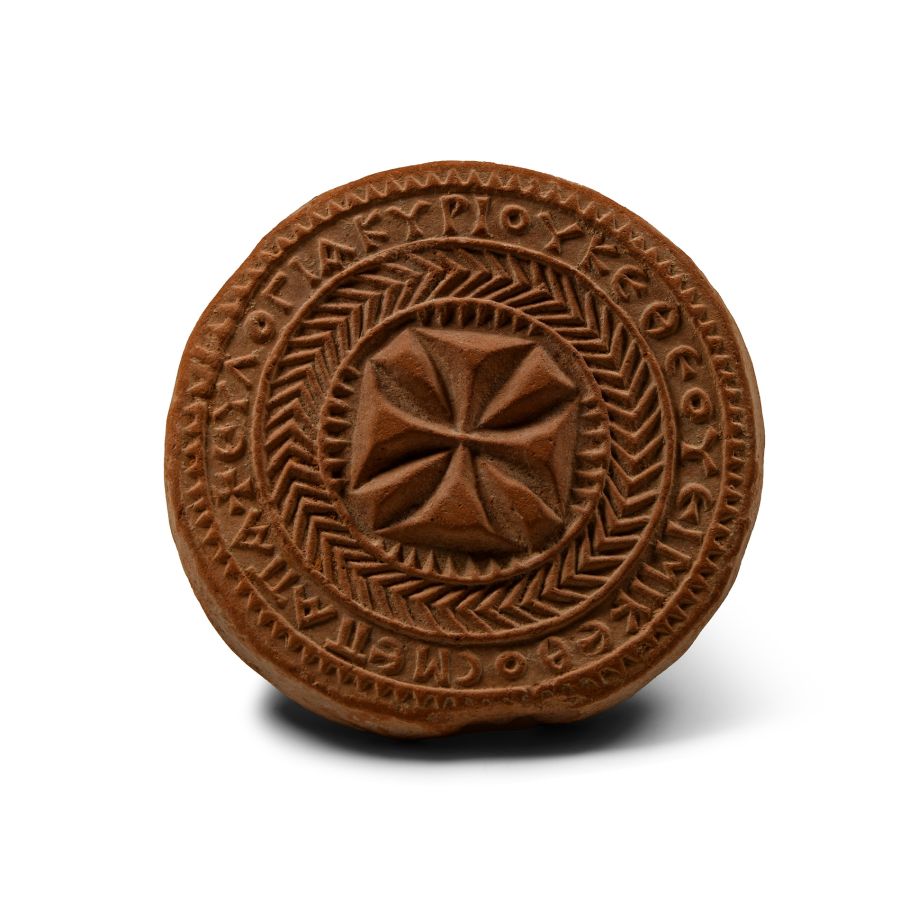
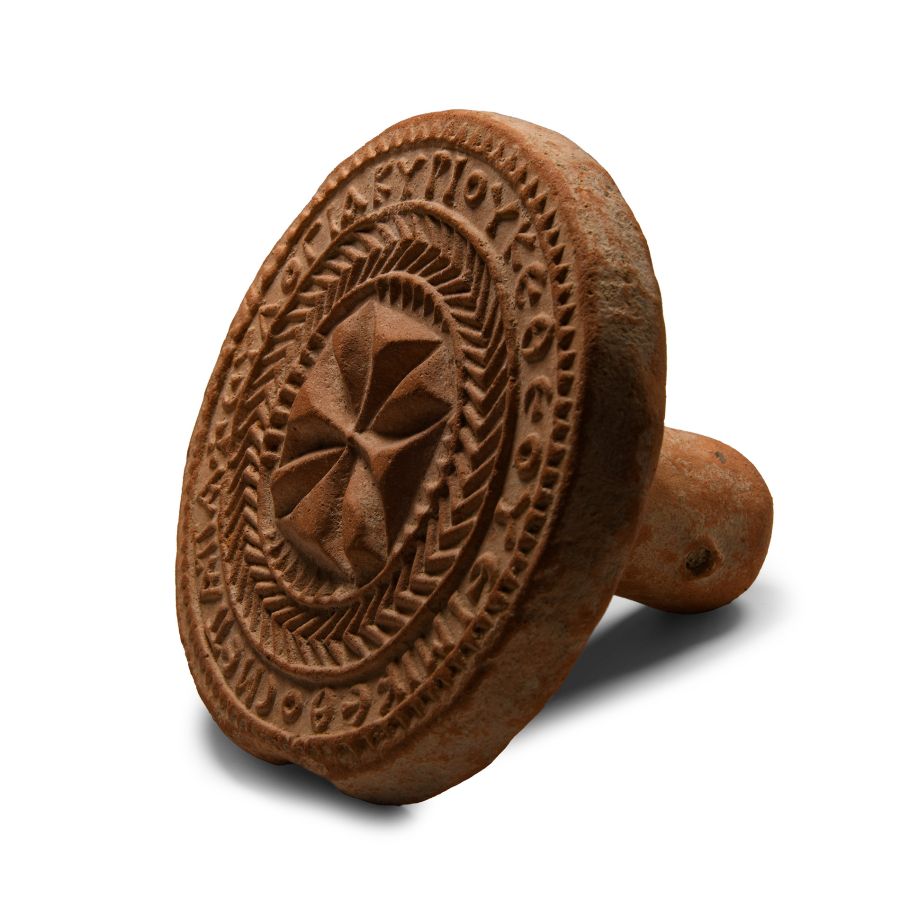
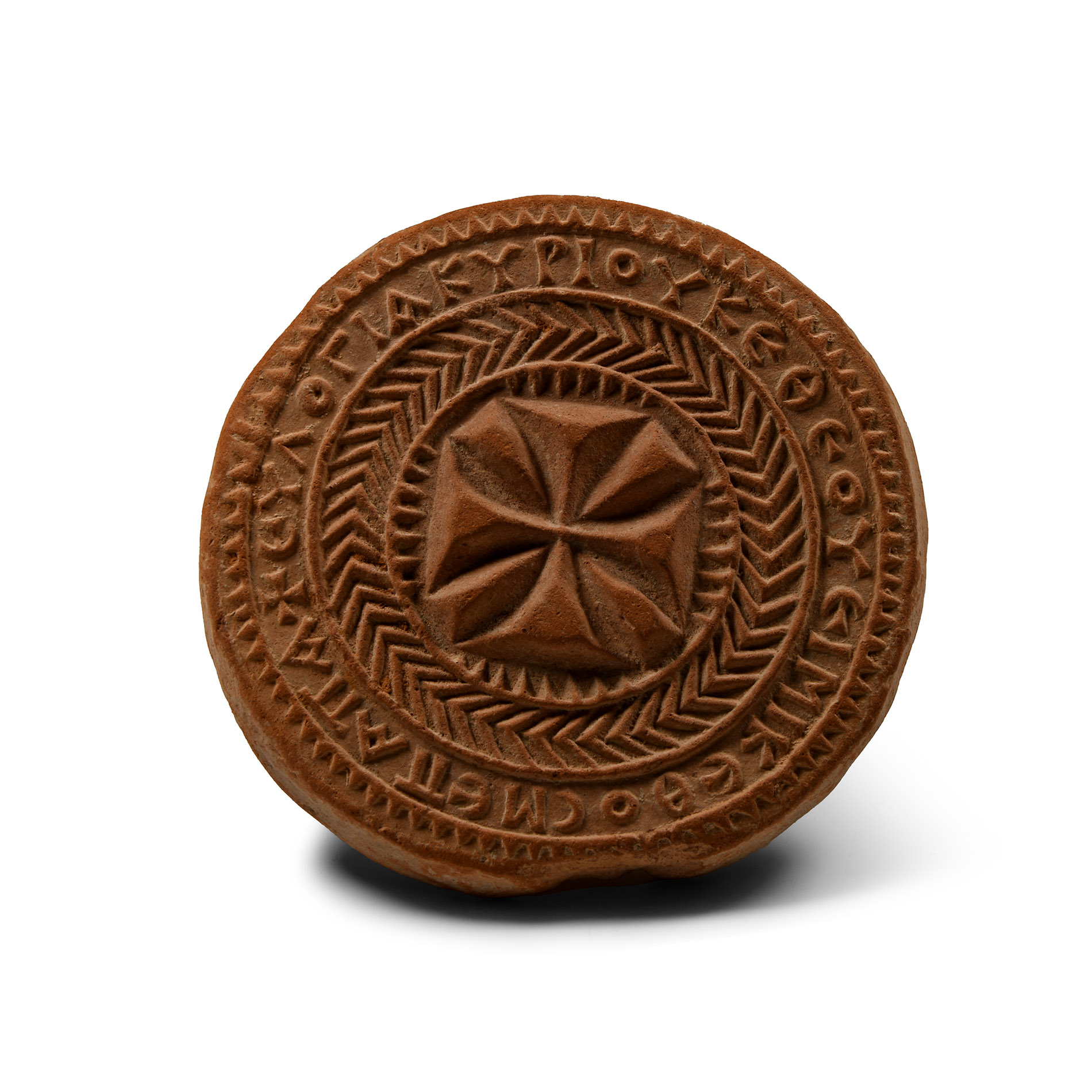
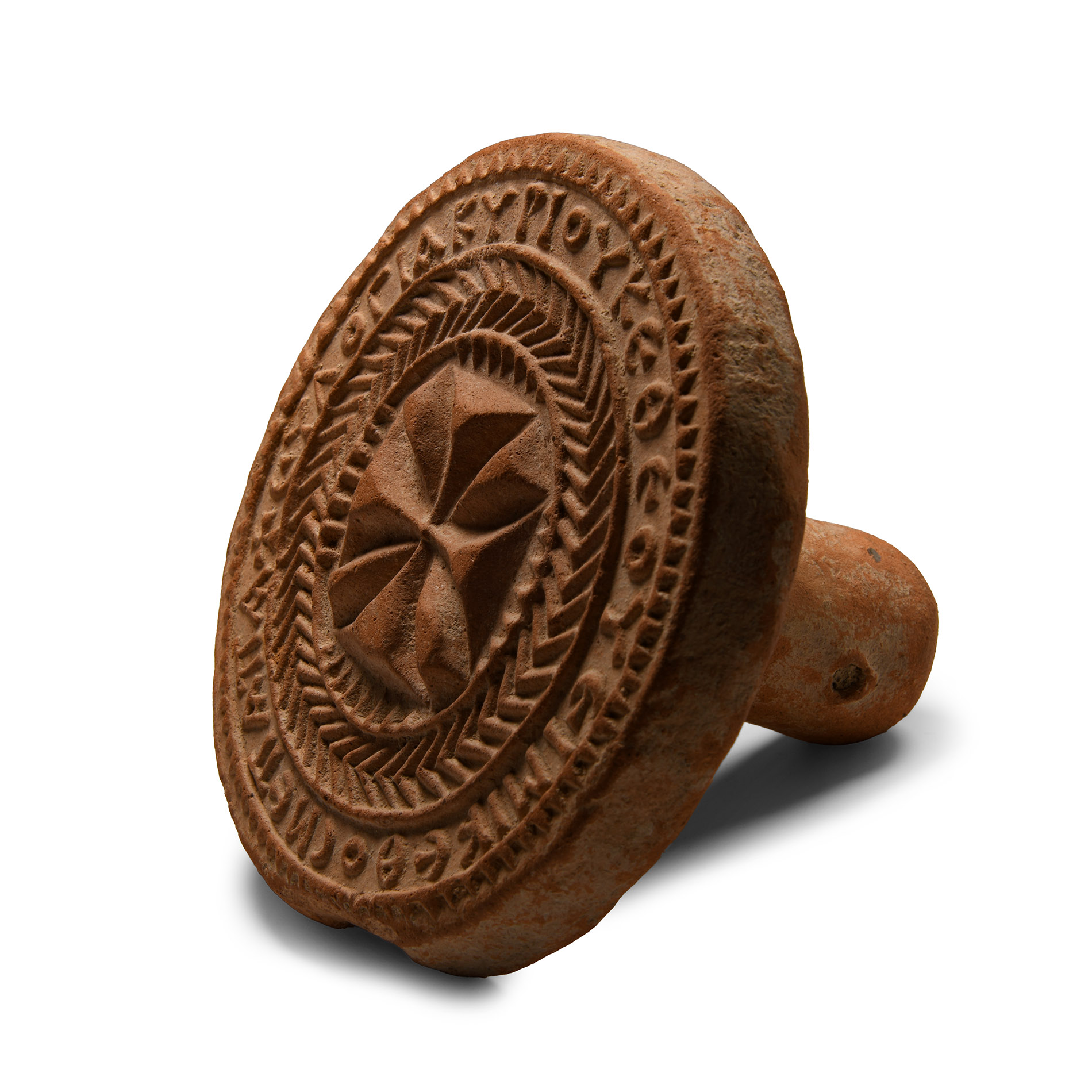
Large Byzantine Terracotta Bread Stamp
CIRCA 10TH-11TH CENTURY A.D.
5 in. (495 grams, 12.6 cm wide).
Discoid in plan with integral stub handle; central Maltese cross with herringbone ring and epigraphic band, radiating dentilled rim; the inscription '+ ΕΥΛΟΓΙΑ ΚΥΡΙΟΥ ΚΕ ΘΕΟΥ ΕΙΜΙ ΚΕ ΘΟC ΜΕ ΠΑΠΑ' (With the blessing of Lord and God I am with the Father).
ProvenanceFrom the collection of Sir Daniel Donohue [1919-2014] and the Countess Bernardine [1904-1968], Los Angeles, USA; the collection was assembled in the 1950-1960s, but before March 1968.
with Bonhams, London, 13 April 2011, no.310 (part).
Accompanied by a copy of the relevant Bonhams catalogue pages.
Accompanied by a copy of an Art Loss Register certificate no.S00120713.
This lot has been checked against the Interpol Database of stolen works of art and is accompanied by a search certificate number no.12109-218144.
The cross is surrounded by a zig-zag frieze enclosed within a long inscription in medieval Greek, this confirms the use of the seal in a liturgical context. The practice of preparing bread for Holy Eucharist and Antidoron is still in use in the churches of the East.
CONDITIONTimeLine Auctions follows a vetting process to ensure the authenticity and legality of all items, reinforcing our commitment to integrity and responsible trading. Each antiquity, antique, and coin lot undergoes thorough examination by a vetting committee of at least ten external specialists, professional trade association members, scientists, and archaeologists: Our Vetting Process
AUCTIONS:
TimeLine is a leading auction house specialising in antiquities, ancient art, collectables, natural history, coins, medals, and books. Our auctions offer museums, collectors, historians, and enthusiasts the opportunity to acquire unique and historically significant pieces.
-
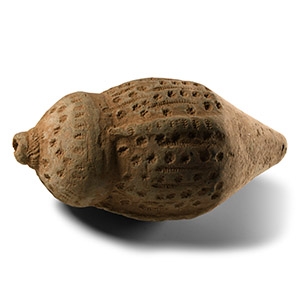
Turco-Mongol 'Greek Fire' Ceramic Fire Bomb or Hand Grenade
14th century A.D.Sold for (Inc. bp): £130
Piriform body with impressed hatched bands to the shoulder and upper body, domed filler-hole, intended to be filled with explosive liquid and wick, used as a hand grenade. 802 grams, 18 cm
From a specialist collection of militaria, London, UK, collected 1990s onwards.
; the shape finds correspondence with a fire grenade in the Kars Museum, no.14.09.2009. Apart from the use of siphons or manual flame-throwers called cheirosiphona, special corps of Roman soldiers employed terracotta grenades, in the form of small jars, abundantly evidenced in archaeological excavations. They were called μεσαία kακαβιά or κυτροκακάβια where the former had a bulbous shape and the latter a more cylindrical form. -
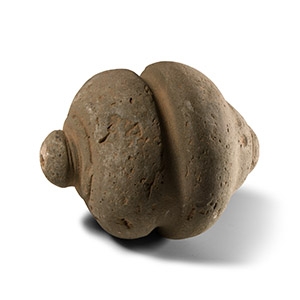
Byzantine 'Greek Fire' Ceramic Fire Bomb or Hand Grenade
9th-11th century A.D.Sold for (Inc. bp): £156
Piriform body with gusset to the equator, domed filler-hole, intended to be filled with explosive liquid and wick, used as a hand grenade. 431 grams, 10.6 cm
From a specialist collection of militaria, London, UK, collected 1990s onwards. Accompanied by an academic paper by military specialist Dr Raffaele D'Amato, dated 15 July 2019 and titled 'Eastern Roman Empire - Greek Fire Bomb or Hand Grenade (μεσαίον kακάβιον) 9th-11th century AD'.
Apart from the use of siphons or manual flame-throwers called cheirosiphona, special corps of Roman soldiers employed terracotta grenades, in the form of small jars, abundantly evidenced in archaeological excavations. They were called μεσαία kακαβιά or κυτροκακάβια where the former had a bulbous shape and the latter a more cylindrical form. -
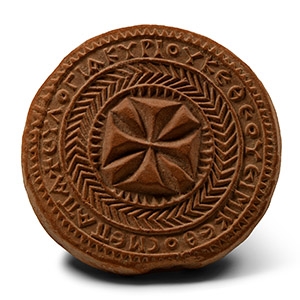
Large Byzantine Terracotta Bread Stamp
Circa 10th-11th century A.D.Sold for (Inc. bp): £5,720
Discoid in plan with integral stub handle; central Maltese cross with herringbone ring and epigraphic band, radiating dentilled rim; the inscription '+ ΕΥΛΟΓΙΑ ΚΥΡΙΟΥ ΚΕ ΘΕΟΥ ΕΙΜΙ ΚΕ ΘΟC ΜΕ ΠΑΠΑ' (With the blessing of Lord and God I am with the Father). 495 grams, 12.6 cm wide
From the collection of Sir Daniel Donohue [1919-2014] and the Countess Bernardine [1904-1968], Los Angeles, USA; the collection was assembled in the 1950-1960s, but before March 1968. with Bonhams, London, 13 April 2011, no.310 (part). Accompanied by a copy of the relevant Bonhams catalogue pages. Accompanied by a copy of an Art Loss Register certificate no.S00120713. This lot has been checked against the Interpol Database of stolen works of art and is accompanied by a search certificate number no.12109-218144.
The cross is surrounded by a zig-zag frieze enclosed within a long inscription in medieval Greek, this confirms the use of the seal in a liturgical context. The practice of preparing bread for Holy Eucharist and Antidoron is still in use in the churches of the East.
