
Loading, please wait...
LOT 0167
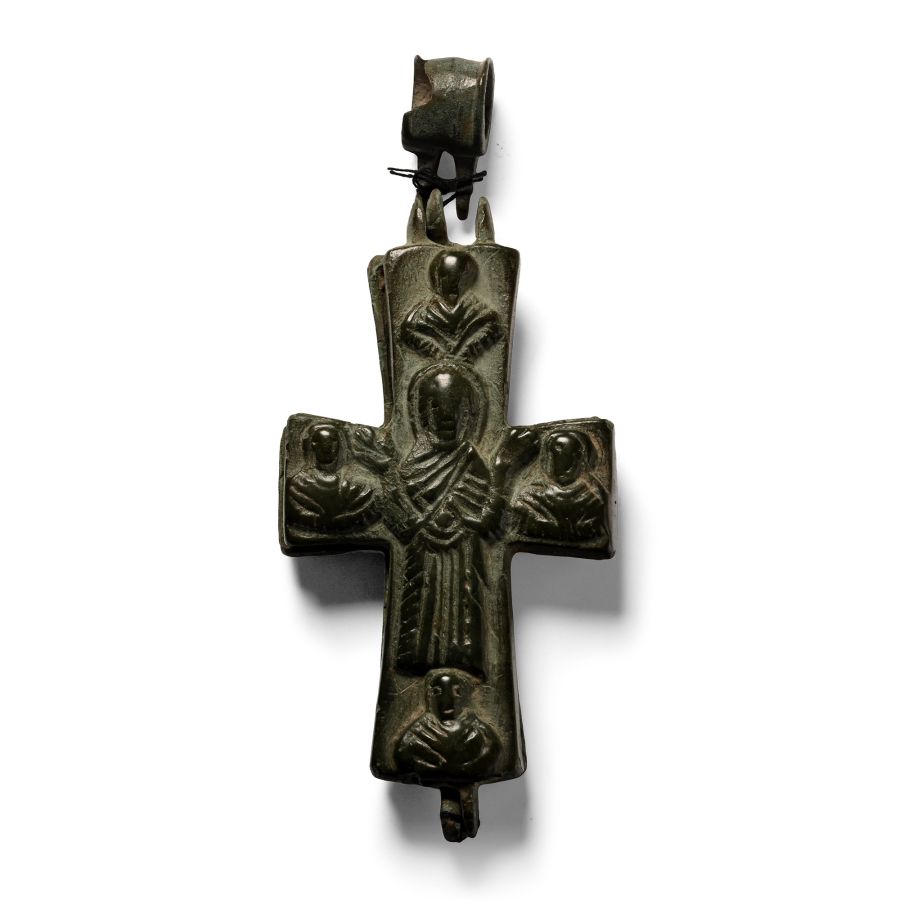
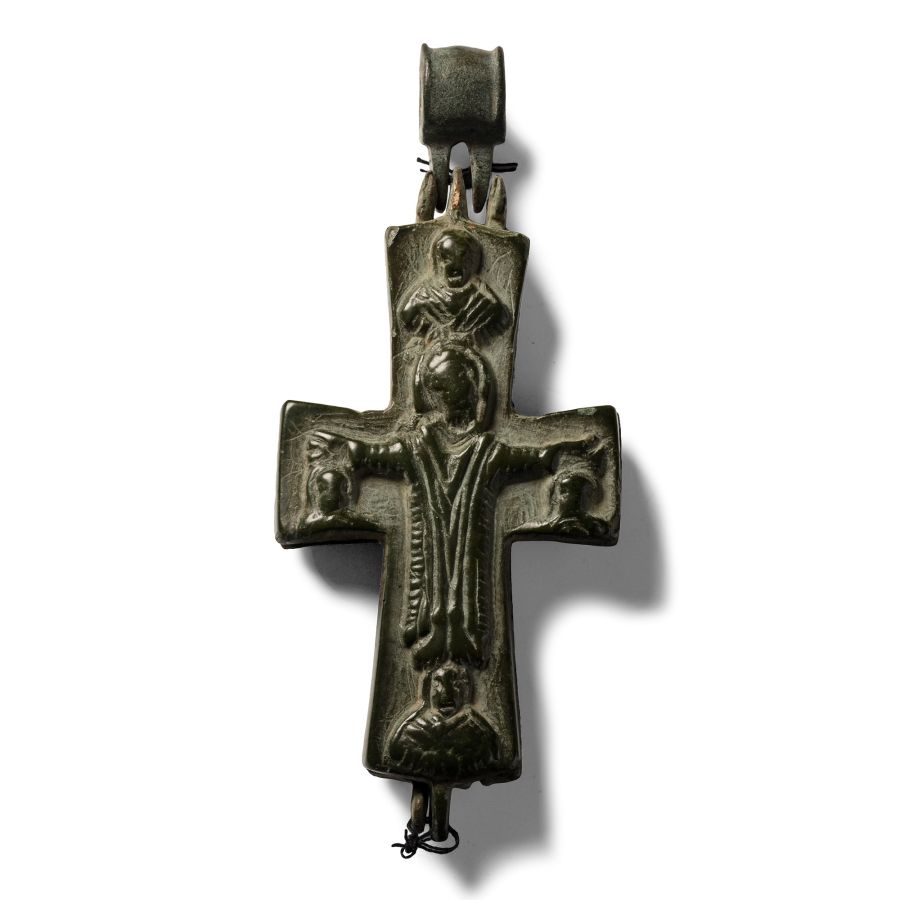
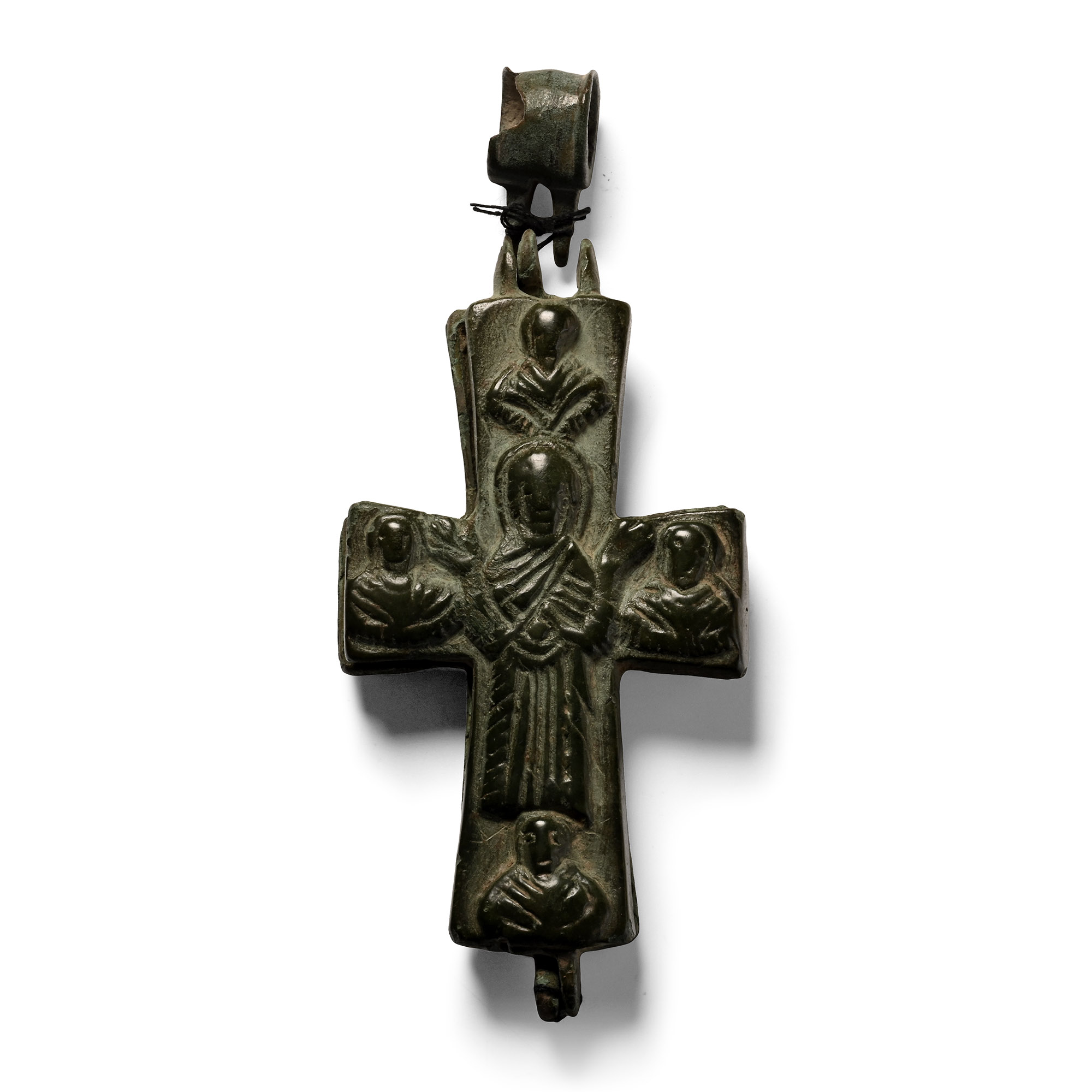
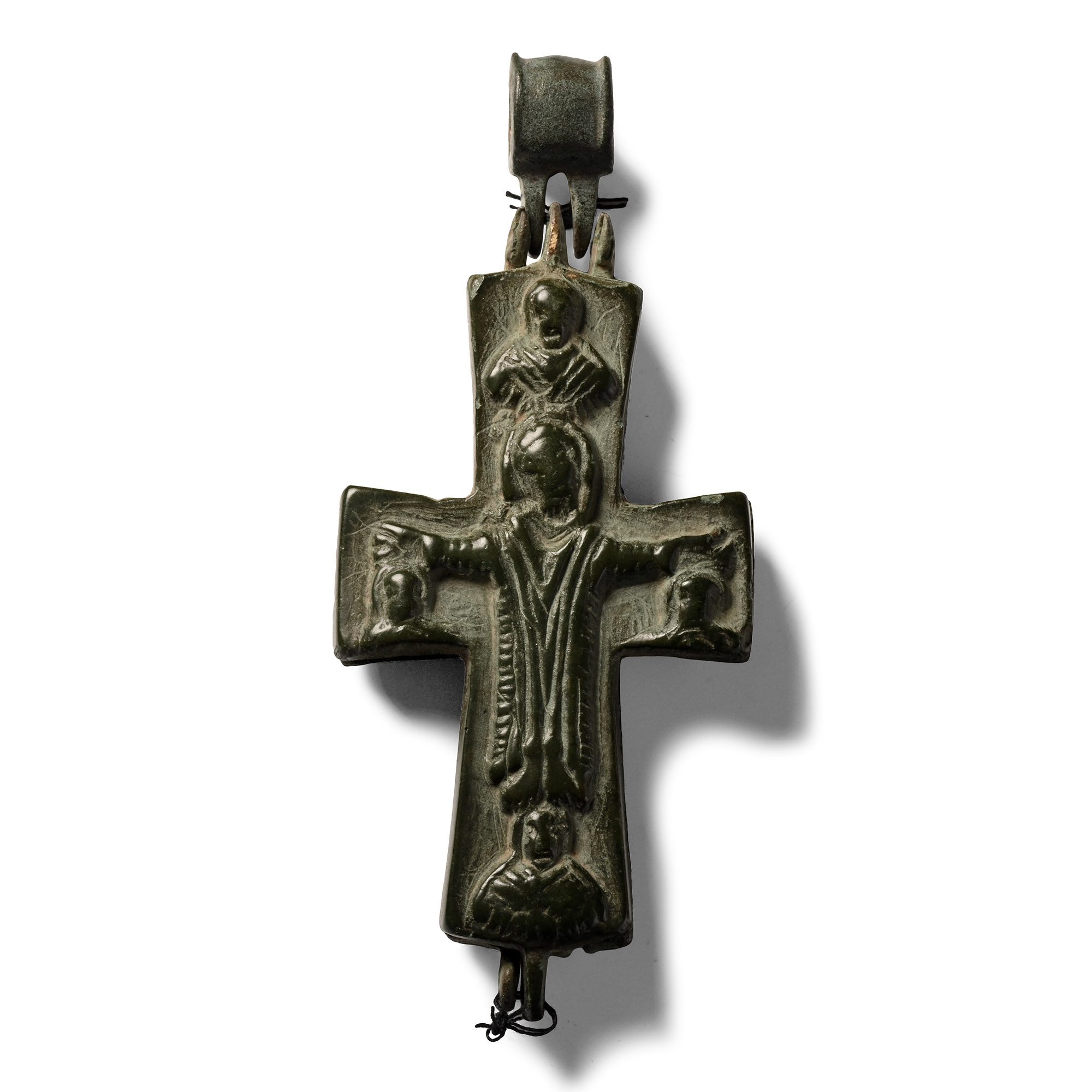
Large Byzantine Bronze Reliquary Cross Pendant
CIRCA 900-1200 A.D.
3 3/4 in. (49 grams, 94 mm).
Enkolpion with hinged suspension bar, each face with nimbate robed figure in orans pose with four busts surrounding.
ProvenanceEx DRG Coins and Antiquities, Bishops Stortford, Essex, UK.
From the private collection of a West London, UK, gentleman, formed since the early 2000s.
Accompanied by a handwritten ticket.
Cf. Wamser, L., Die Welt von Byzanz - Europas Östliches Erbe, München, 2004, item 258, for type.
CONDITIONTimeLine Auctions follows a vetting process to ensure the authenticity and legality of all items, reinforcing our commitment to integrity and responsible trading. Each antiquity, antique, and coin lot undergoes thorough examination by a vetting committee of at least ten external specialists, professional trade association members, scientists, and archaeologists: Our Vetting Process
AUCTIONS:
TimeLine is a leading auction house specialising in antiquities, ancient art, collectables, natural history, coins, medals, and books. Our auctions offer museums, collectors, historians, and enthusiasts the opportunity to acquire unique and historically significant pieces.
-
Byzantine Terracotta Token with Inscription
Circa 6th-8th century A.D.Sold for (Inc. bp): £130
D-shaped in section with impressed legend to the flat face 'AΘHNA' (Athens). 20 grams, 74 mm
Ex important Christian collection, 1970s. -
Byzantine Bronze Ring with Saint and Crosses
Circa 11th-12th century A.D.Sold for (Inc. bp): £221
With D-section hoop, ellipsoidal bezel, intaglio facing nimbate figure holding a cross in each hand, possibly depicting Saint John the Baptist. 10.34 grams, 25.59 mm overall, 17.88 mm internal diameter (approximate size British P, USA 7 1/2, Europe 16.23, Japan 15)
German collection before 2000. Collection of Mr D.H. formed in UK, from the EU art market. Ex property of a Surrey gentleman. -
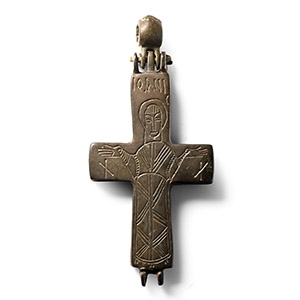
Byzantine Bronze Reliquary Cross Pendant
Circa 9th century A.D.Sold for (Inc. bp): £468
Enkolpion with hinge and large suspension loop; obverse with nimbate robed figure in orans pose with cross beneath each wrist, inscription 'IOANIC' ('John'); reverse with similar nimbate robed figure in orans pose with inscription 'MPXC' (Mary mother of Christ). 25.2 grams, 76 mm
Ex C.J. Martin, UK. From the private collection of a West London, UK, gentleman, formed since the early 2000s. Accompanied by a handwritten ticket.
