
Loading, please wait...
LOT 1525
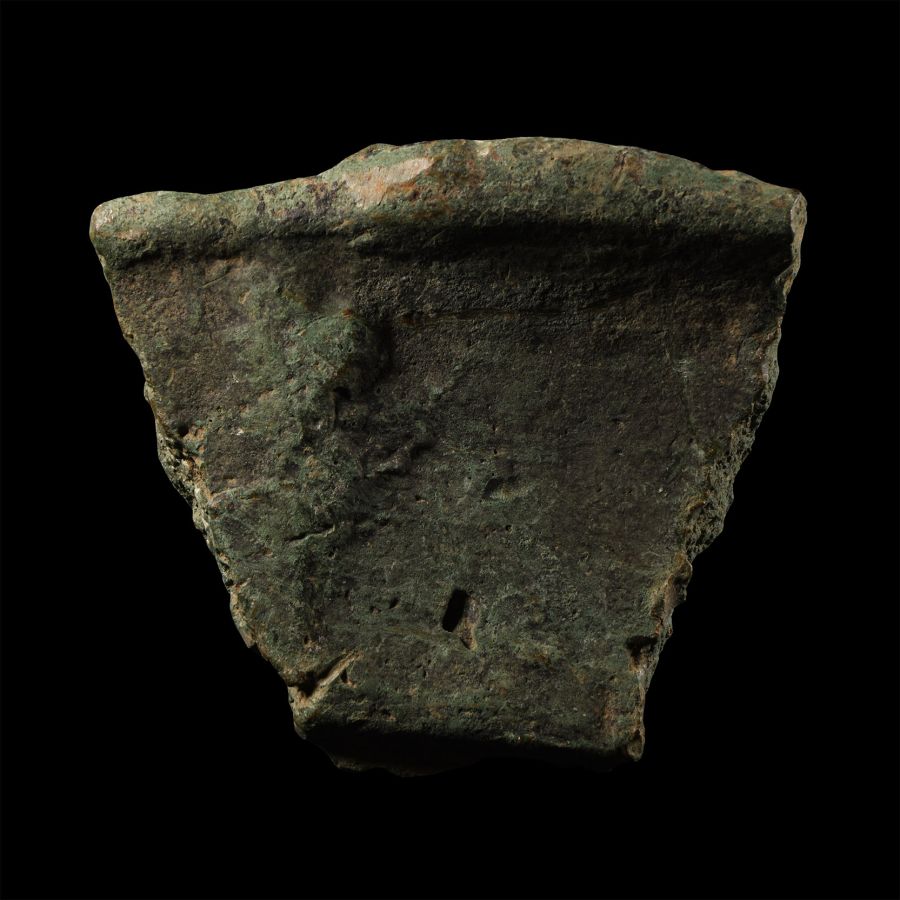
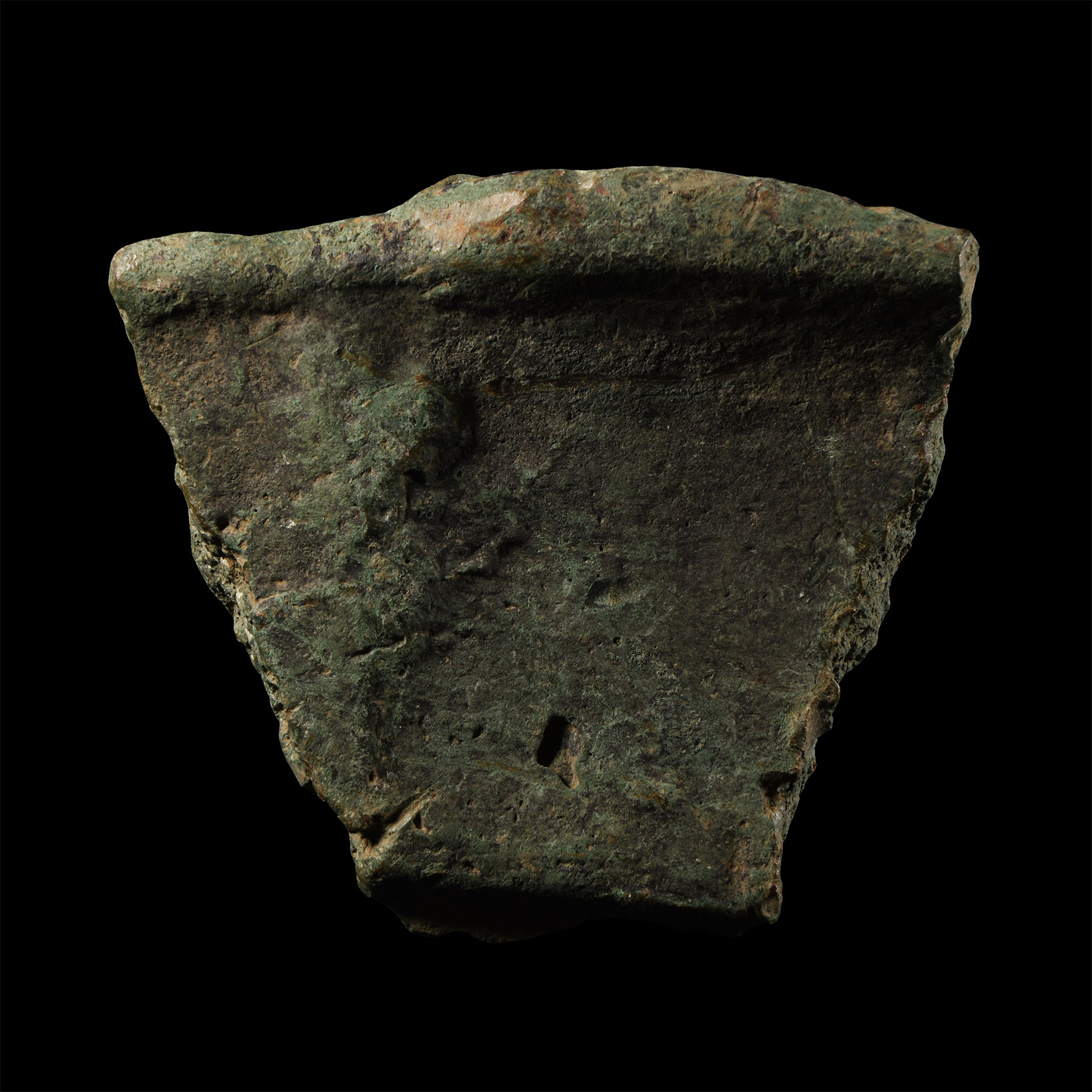
Large Bronze Age Foundry Hoard Ingot
2ND-1ST MILLENNIUM B.C.
4 1/4 in. (1.73 kg, 10.7 cm wide).
Irregular bronze ingot fragment with lip to one curved edge. [No Reserve]
ProvenanceFamily collection since before 2000.
Ex property of a gentleman collector, Munich, Germany.
Cf. similar (but smaller) items in a Bronze Age founder's hoard from Suffolk recorded with the British Museum's Portable Antiquities Scheme (PAS) under reference no.SF-C98115.
CONDITIONTimeLine Auctions follows a vetting process to ensure the authenticity and legality of all items, reinforcing our commitment to integrity and responsible trading. Each antiquity, antique, and coin lot undergoes thorough examination by a vetting committee of at least ten external specialists, professional trade association members, scientists, and archaeologists: Our Vetting Process
AUCTIONS:
TimeLine is a leading auction house specialising in antiquities, ancient art, collectables, natural history, coins, medals, and books. Our auctions offer museums, collectors, historians, and enthusiasts the opportunity to acquire unique and historically significant pieces.
-
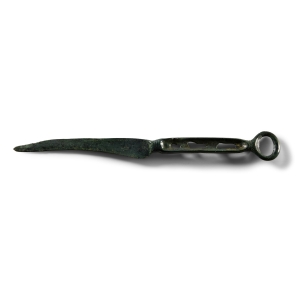
Bronze Age Knife with Looped Pommel
Circa 800-100 B.C.Estimate: £800 - 1,000 (+bp*)
Opening Bid: £425
Comprising a flat, gently curving single-edged blade with pointillé decoration to the upper edge, the flat ridge with hatched panels extending to the integral openwork handle, a loop to the end, the handle recessed to accept organic inserts. 49.1 grams, 21.5 cm
Numisart collection, Munich, Germany, circa 1995. Acquired in the 2000s. From the private collection of John Lawton, Surrey, UK. Accompanied by a copy of a previous catalogue information page.
The knife is reminiscent of the late Bronze Age- early Iron Age sickle blades, which developed in the falcata blade, a type of short sword used by the Celts in the Iberian peninsula. A falcata was a single-edged blade with an inward curve, allowing both momentum and thrust when used. -
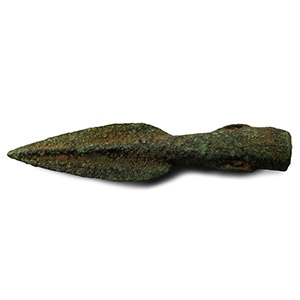
British Bronze Age Basal-Looped and Socketed Spearhead
1800-1500 B.C.Sold for (Inc. bp): £156
A substantial leaf-shaped blade with lozenge-section midrib, small lateral loop to the base of each blade with lozengiform plaque; chip to socket. 93 grams, 12.9 cm
Found near Langley, Norfolk, UK. -
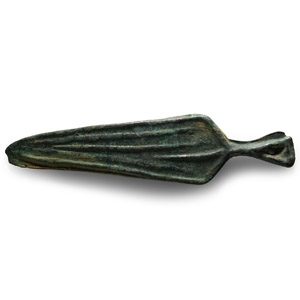
Bronze Age Votive Sword Amulet
2nd-1st millennium B.C.Sold for (Inc. bp): £111
A dagger-shaped pendant with pierced pommel, broad ribbed blade. 37.5 grams, 12.3 cm
Private collection formed in the 1990s. Acquired from a London gallery. Property of an Essex gentleman.
