
Loading, please wait...
LOT 1523
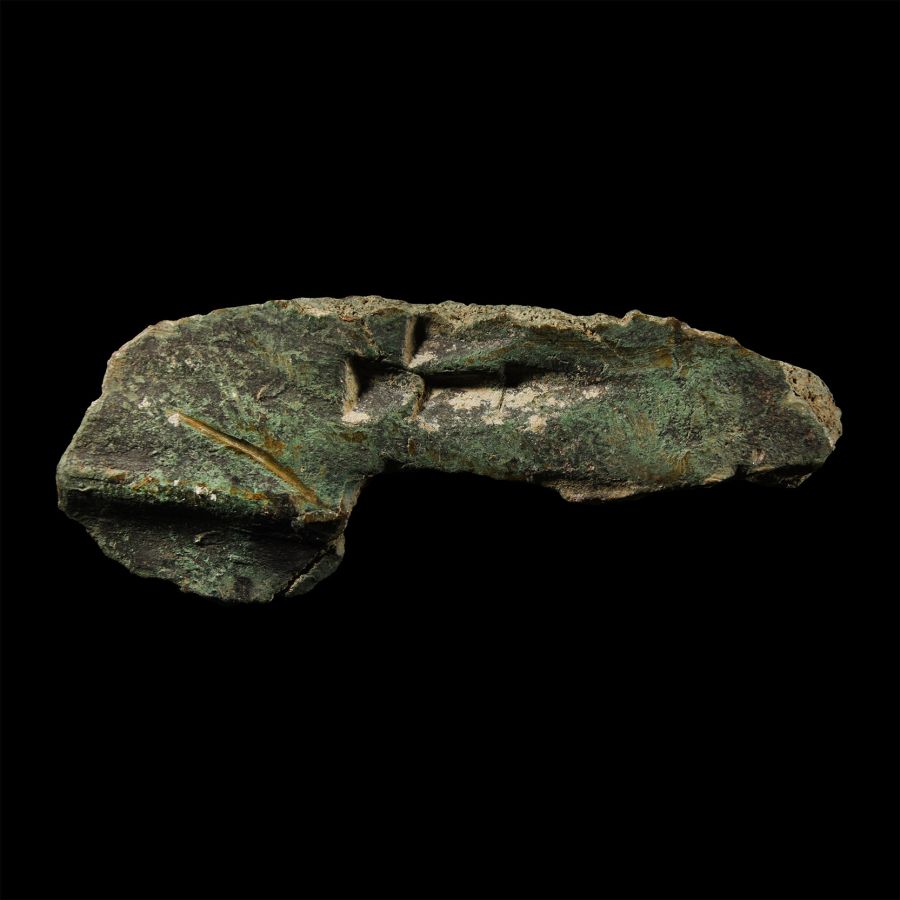
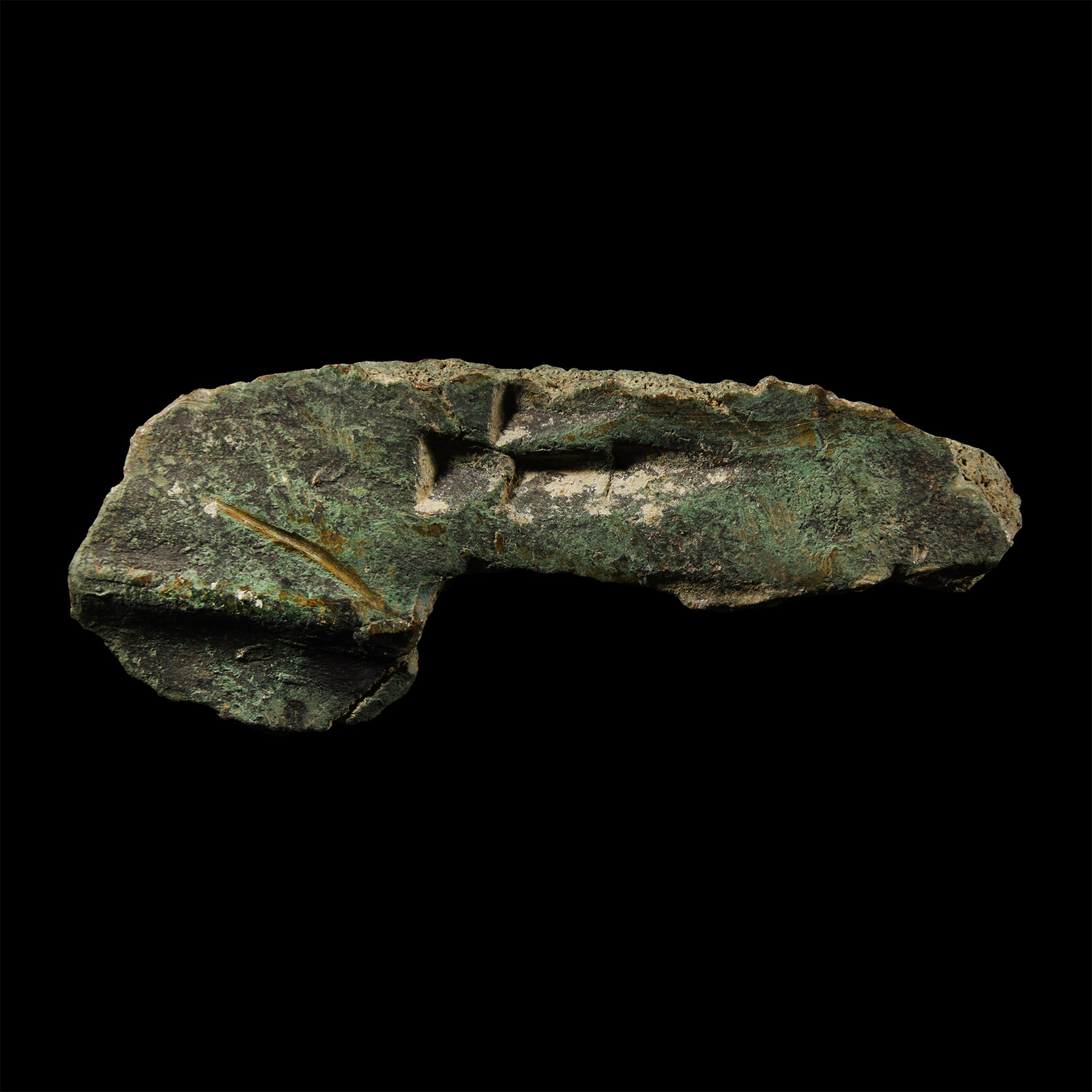
Large Bronze Age Foundry Hoard Ingot
2ND-1ST MILLENNIUM B.C.
5 5/8 in. (577 grams, 14.4 cm).
Irregular ingot fragment from a founder's hoard with carination and triangular scars to one face. [No Reserve]
ProvenanceFamily collection since before 2000.
Ex property of a gentleman collector, Munich, Germany.
Cf. similar items in a Bronze Age founder's hoard from Suffolk recorded with the British Museum's Portable Antiquities Scheme (PAS) under reference no.SF-C98115.
CONDITIONTimeLine Auctions follows a vetting process to ensure the authenticity and legality of all items, reinforcing our commitment to integrity and responsible trading. Each antiquity, antique, and coin lot undergoes thorough examination by a vetting committee of at least ten external specialists, professional trade association members, scientists, and archaeologists: Our Vetting Process
AUCTIONS:
TimeLine is a leading auction house specialising in antiquities, ancient art, collectables, natural history, coins, medals, and books. Our auctions offer museums, collectors, historians, and enthusiasts the opportunity to acquire unique and historically significant pieces.
-
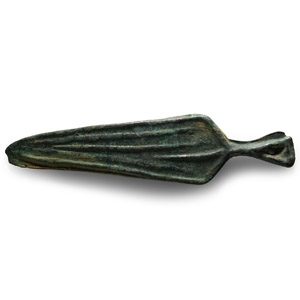
Bronze Age Votive Sword Amulet
2nd-1st millennium B.C.Sold for (Inc. bp): £111
A dagger-shaped pendant with pierced pommel, broad ribbed blade. 37.5 grams, 12.3 cm
Private collection formed in the 1990s. Acquired from a London gallery. Property of an Essex gentleman. -
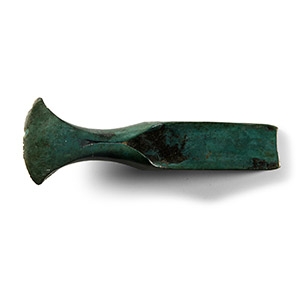
Bronze Age Palstave Axehead
Circa 1500 B.C.Estimate: £400 - 600 (+bp*)
Opening Bid: £200
With a flared blade and a long flat-section shank. 173 grams, 12.4 cm
Numisart collection, Munich, Germany, 1990. Acquired in the 2000s. From the private collection of John Lawton, Surrey, UK. Accompanied by a previous illustrated catalogue page. -
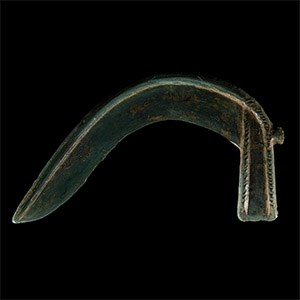
Bronze Age Sickle
2nd millennium B.C.Estimate: £400 - 600 (‡+bp*)
Opening Bid: £200
Of crescentic form with parallel raised ribs to the outer edges at the base, lateral spur to neck. 130 grams, 17.7 cm
Acquired one the Austrian art market, 2000. Ex Mr N.C. collection European private collection.
