
Loading, please wait...
LOT 0273
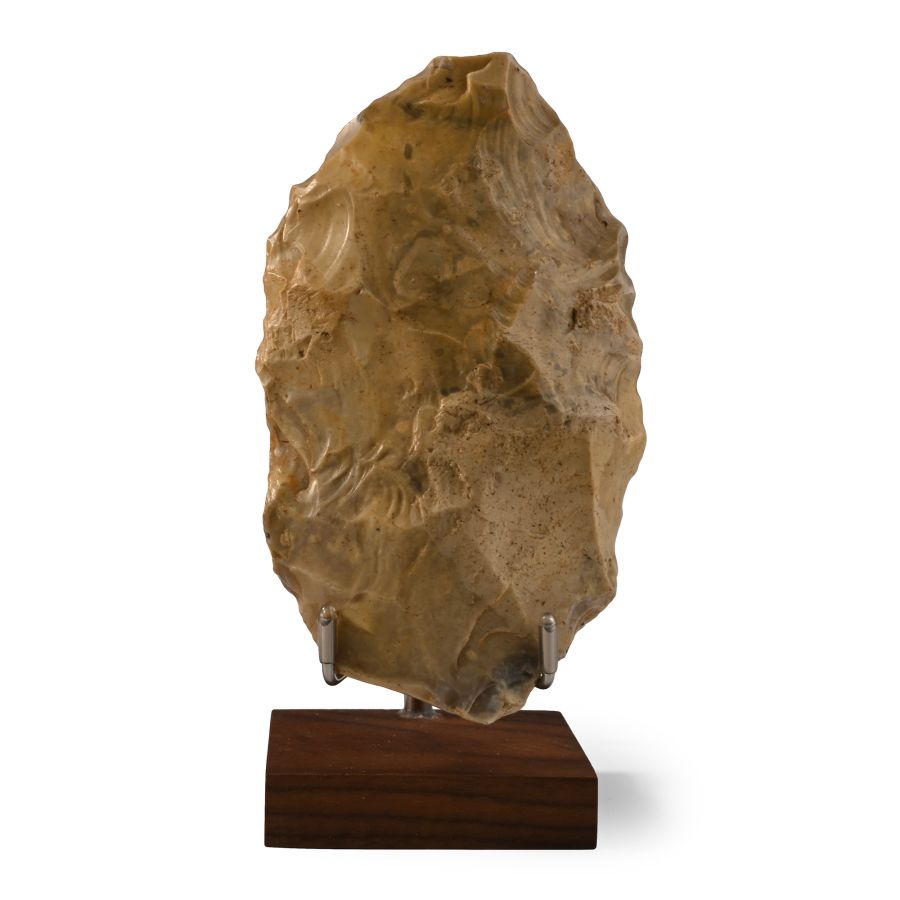
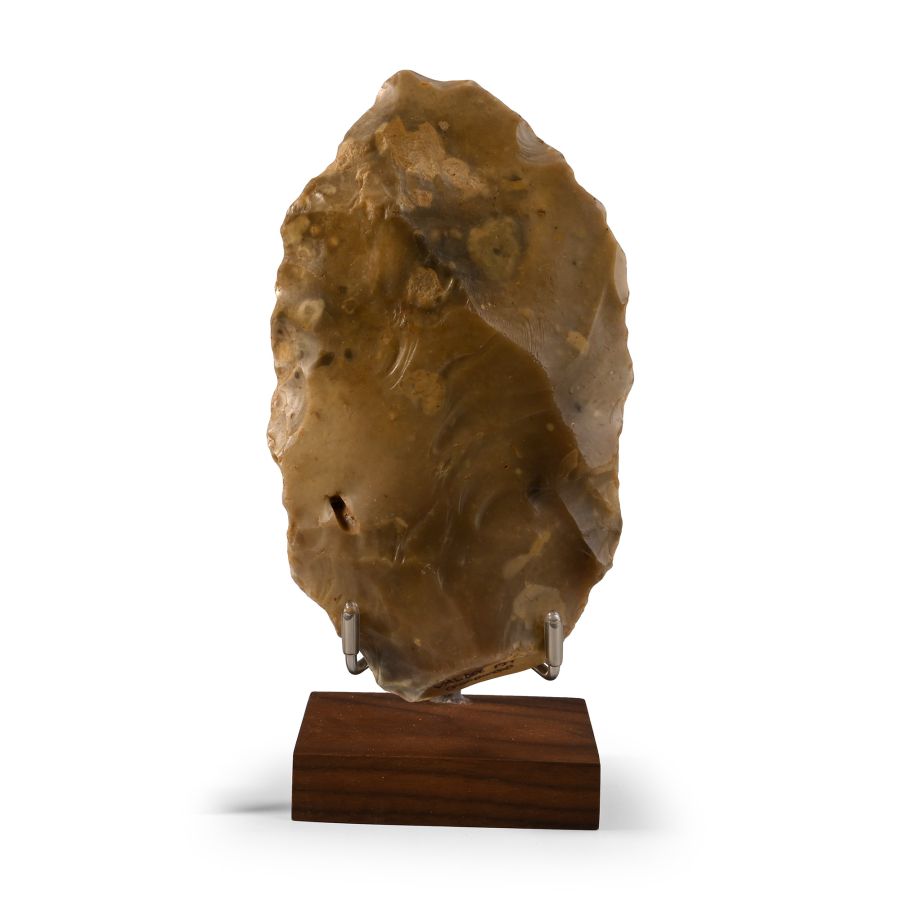
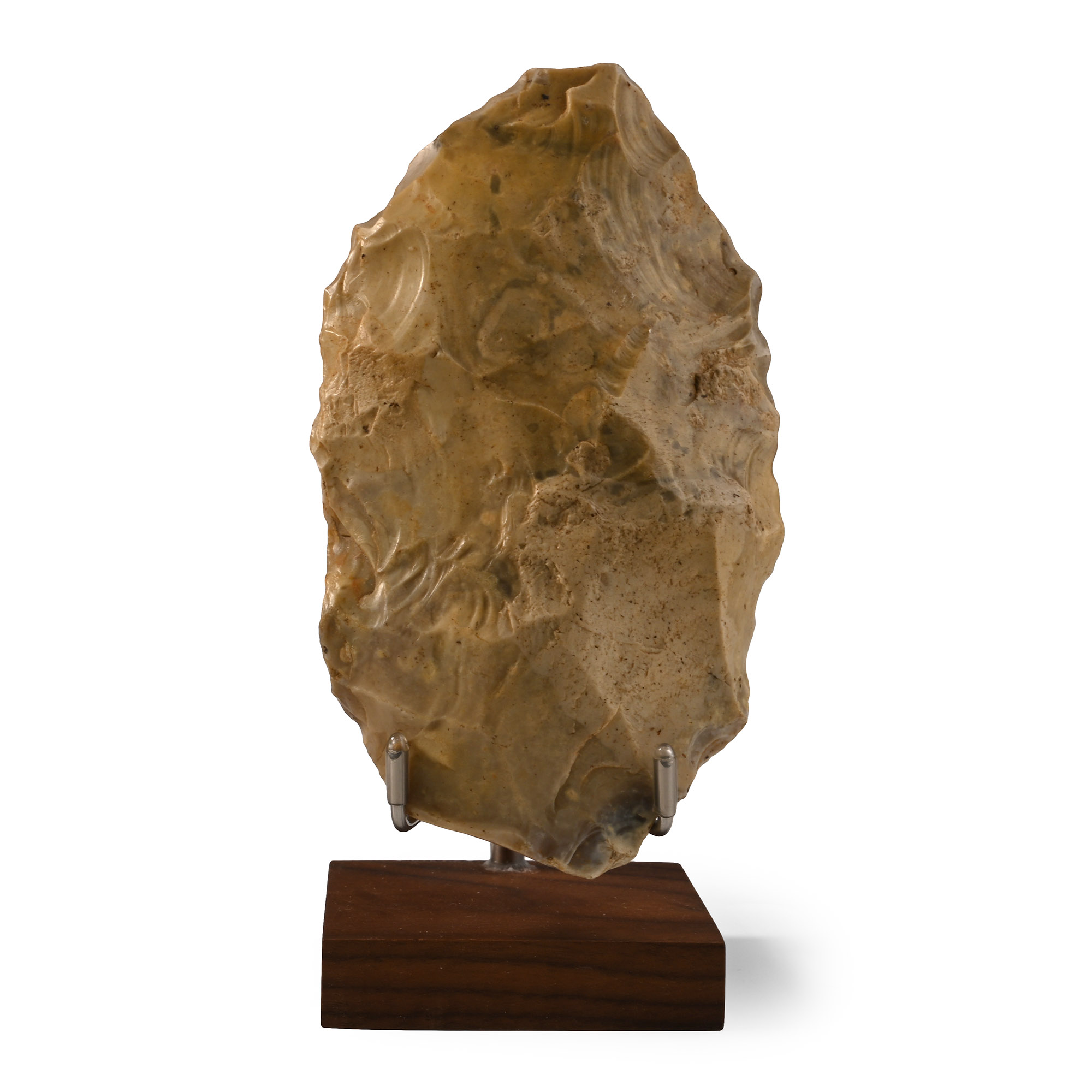
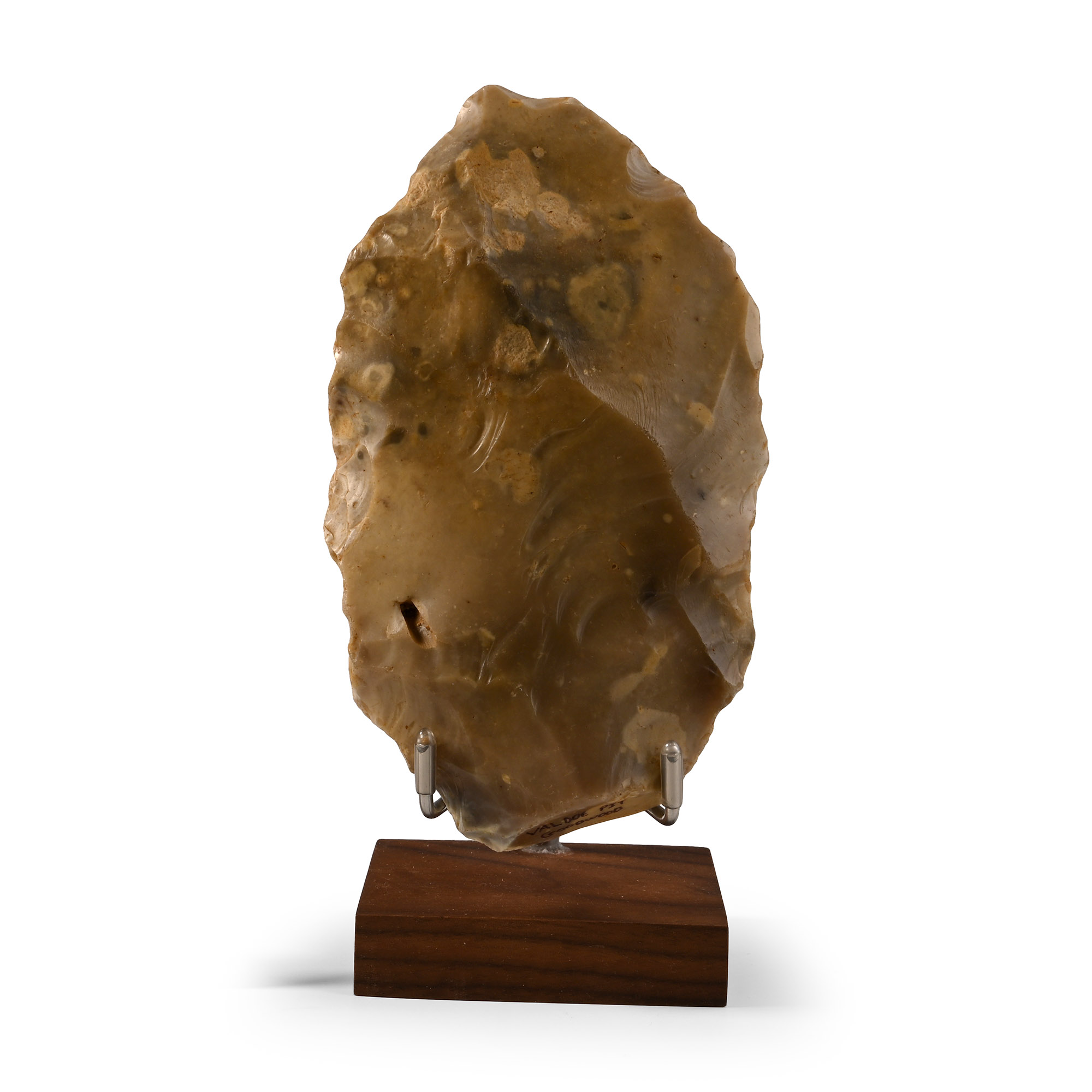
Large British Stone Age Flint Handaxe
PALAEOLITHIC PERIOD, CIRCA 550,000-300,000 B.P.
5 3/8 in. (6 in.) (329 grams, 13.6 cm (388 grams total, 15.4 cm including stand)).
Leaf-shaped in profile with broad cutting edge; mounted on a custom-made stand.
ProvenanceFound Valdoe Pitt, Goodwood, UK.
Found by John Sharp in the 1980s, former well known archeologist and member of the Lithic Society.
Inherited by Mr J S and sold privately in the 2020s.
TimeLine Auctions follows a vetting process to ensure the authenticity and legality of all items, reinforcing our commitment to integrity and responsible trading. Each antiquity, antique, and coin lot undergoes thorough examination by a vetting committee of at least ten external specialists, professional trade association members, scientists, and archaeologists: Our Vetting Process
AUCTIONS:
TimeLine is a leading auction house specialising in antiquities, ancient art, collectables, natural history, coins, medals, and books. Our auctions offer museums, collectors, historians, and enthusiasts the opportunity to acquire unique and historically significant pieces.
-

British Stone Age Flint Knife from Farnham
Neolithic Period, circa 6,000 B.P.Sold for (Inc. bp): £169
Leaf-shaped in plan with broad rounded butt, some cortex. 14.9 grams, 58 mm
Found Farnham, Kent, in 1901. From the collection of Captain Streatfield who helped to fund the archaeology excavations at Farnham, Kent. After Captain Streatfield passed away in the 1940s, his collection was sold at auction. -

French Stone Age 'Gravettian' Long Crested Blade
Upper Palaeolithic Period, circa 35,000-25,000 B.P.Sold for (Inc. bp): £20
Triangular in section with curvature along the full length of the blade. 56 grams, 13.3 cm
Found Dordogne, France. Ex M G Georgen collection. Mr Georgen built up a large collection during the mid 1900s and was sold at auction after his death. -
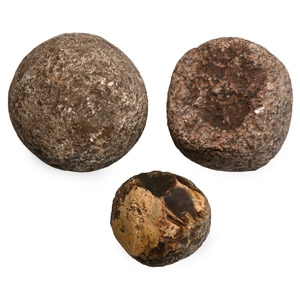
Stone Age Grinding Stone Group
Neolithic Period, 6th-4th millennium B.P.Sold for (Inc. bp): £26
Three circular grinding stones, one nearly spherical, the other two spherical with a flat side. 505 grams total, 42-58 mm
From the private family collection of a lady, UK; acquired in Germany mid 20th century.
Artefacts made using grinding tools included shovel-like tools, stone axes, bracelets, and chisels. Because these tools were ground, they required considerable time to be done. In Europe, grinding tools are closely linked to the Neolithic Age, while Levantine grinding tools only appeared during the Mesolithic Period II (Natufian culture).
