
Loading, please wait...
LOT 0238
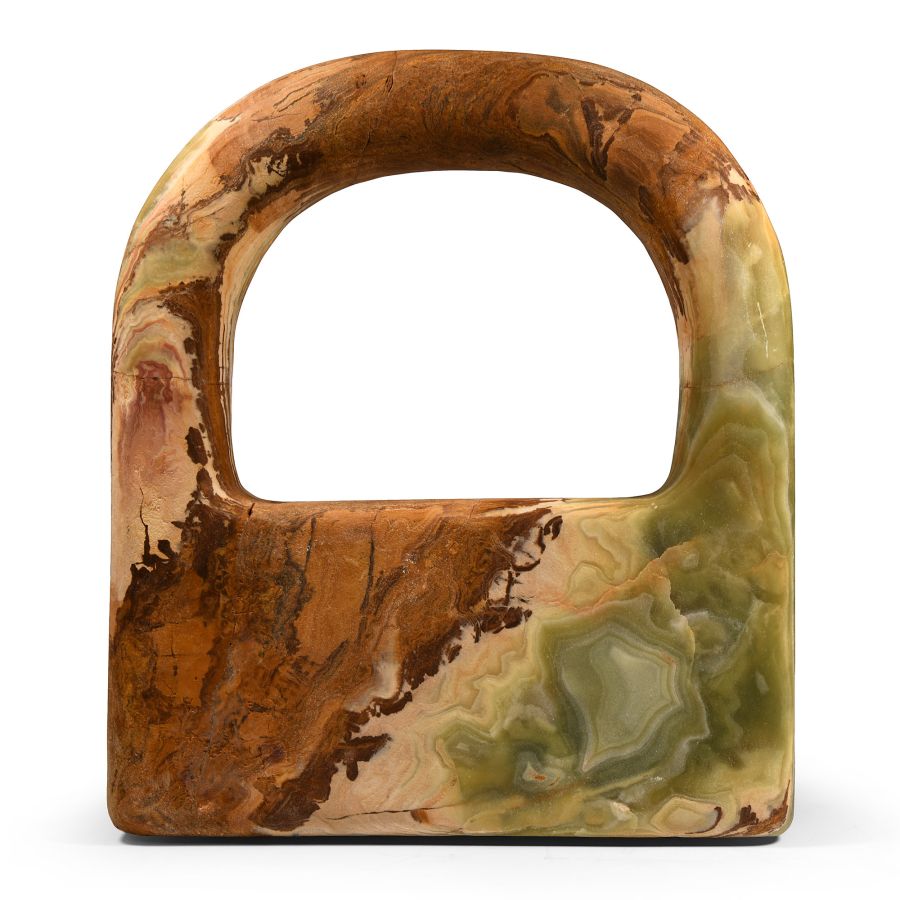
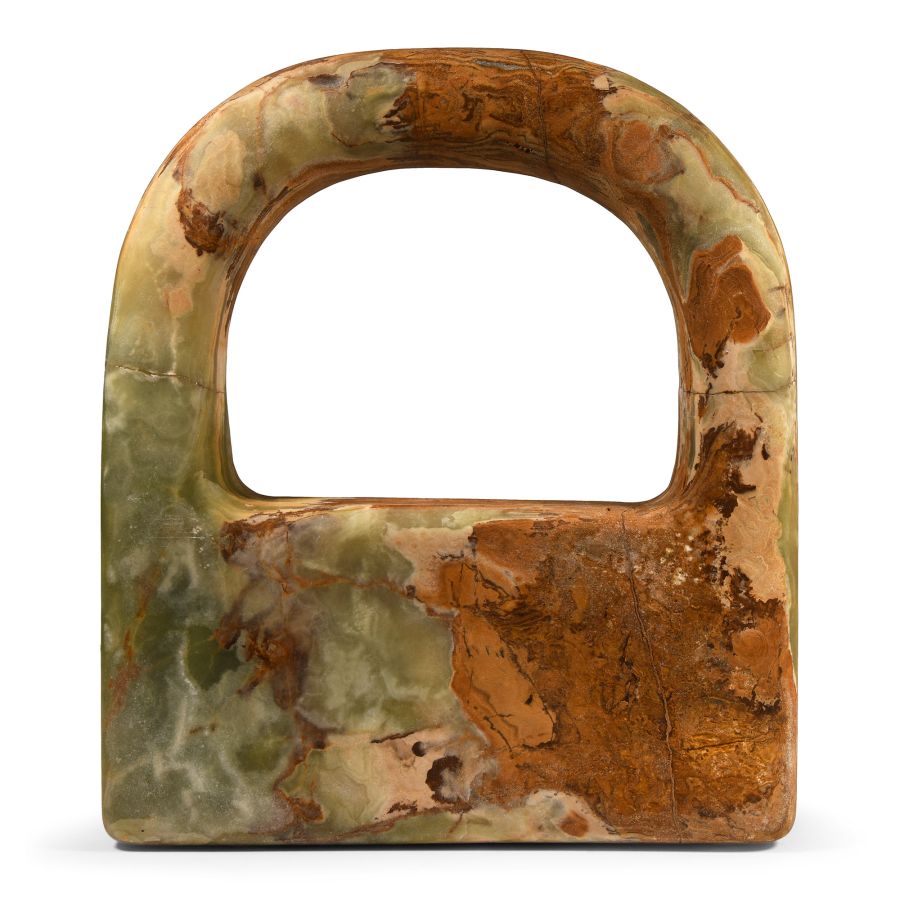
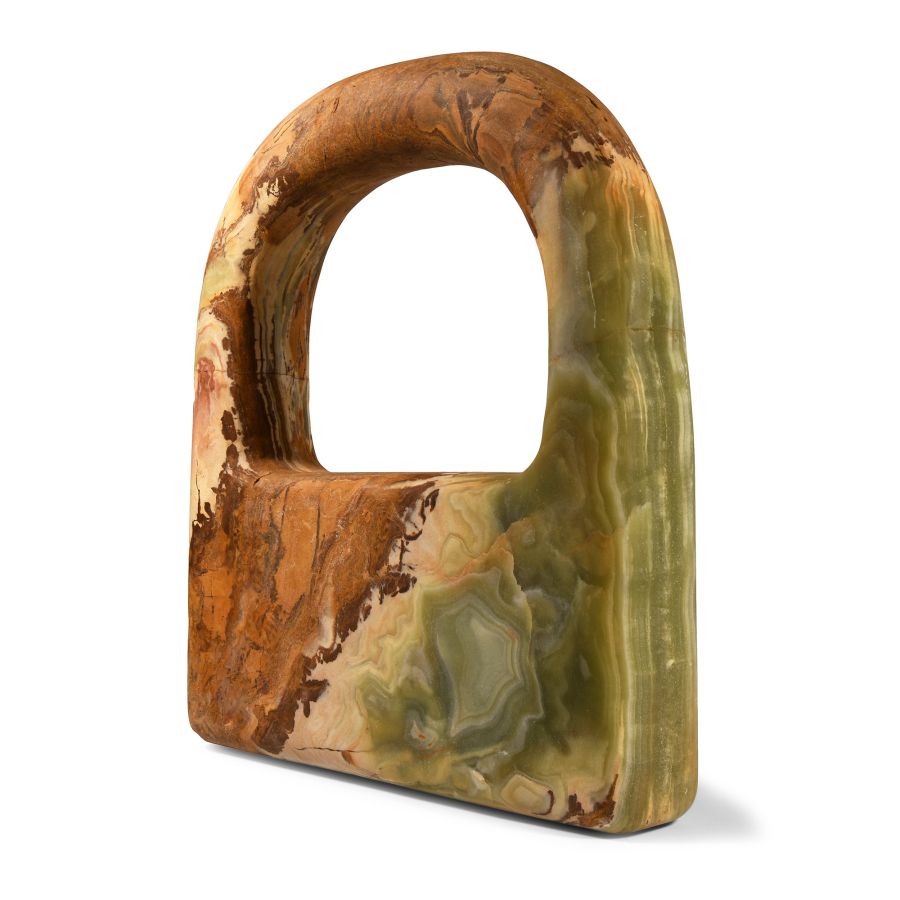
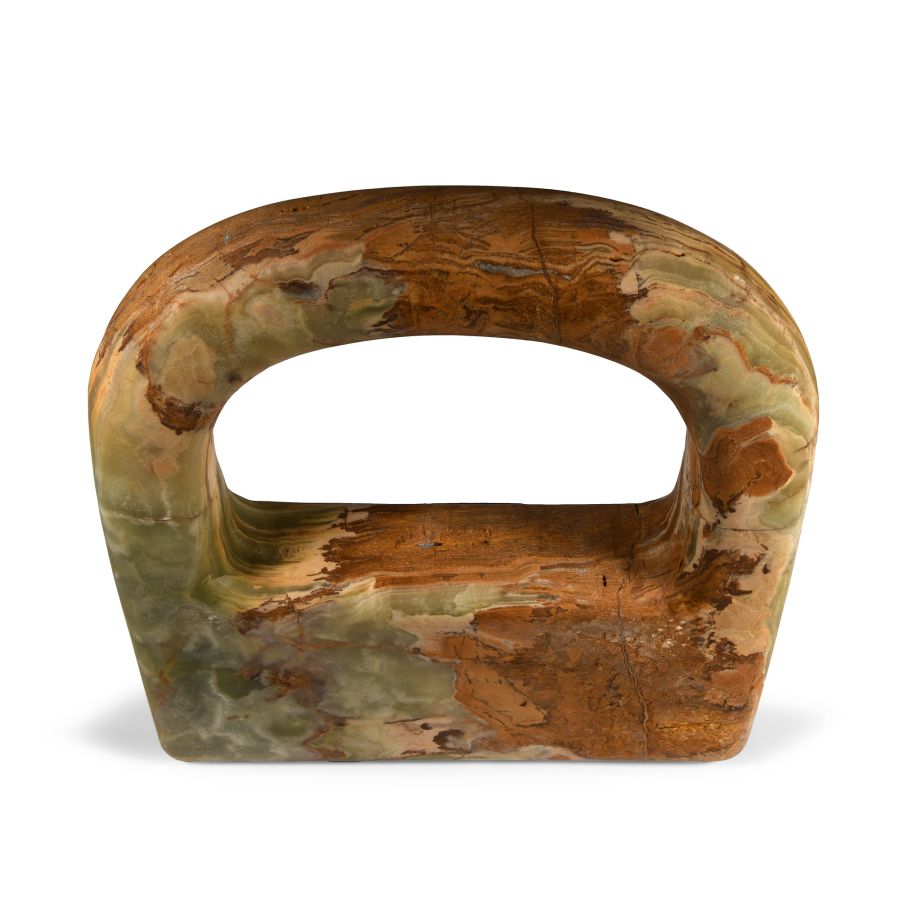
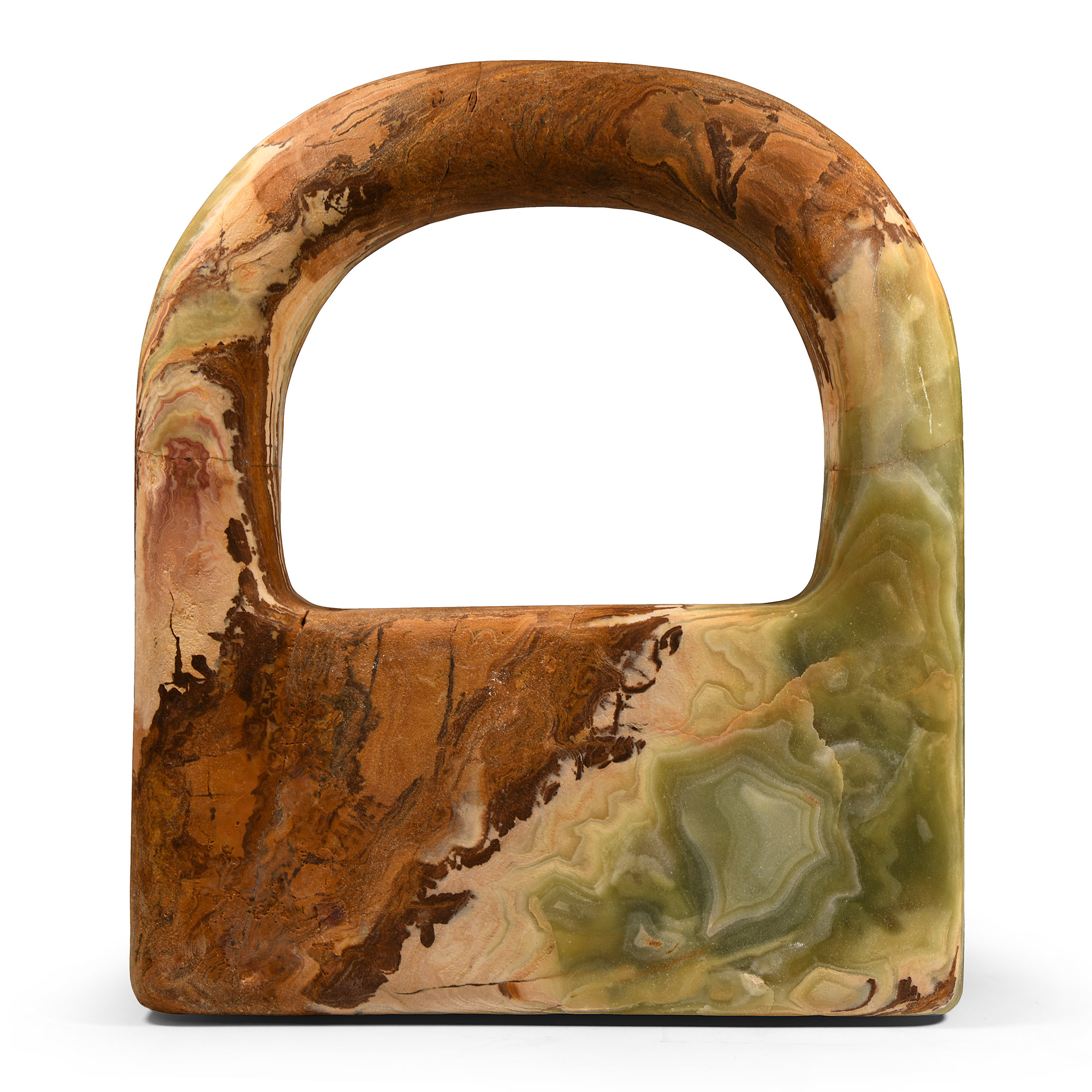
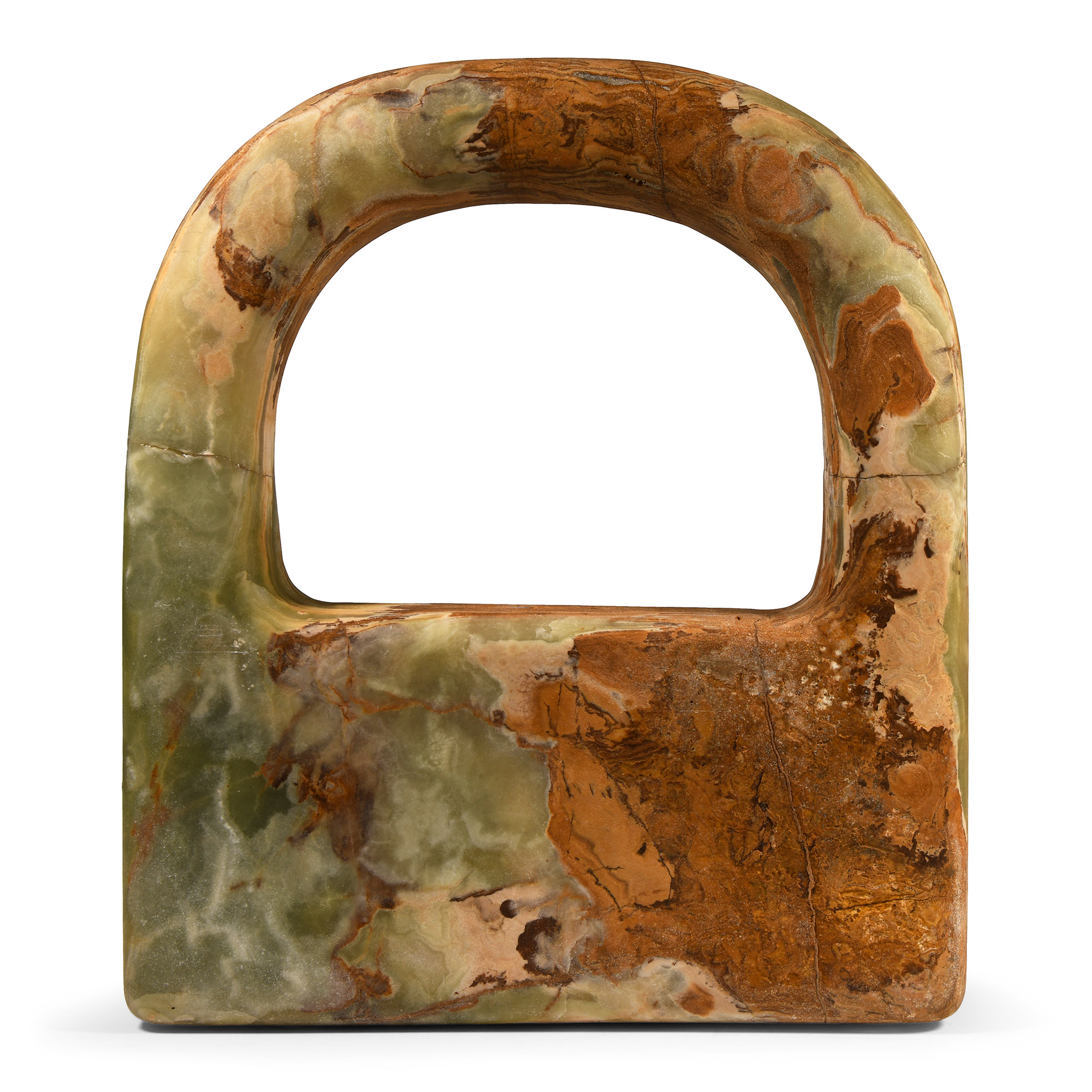
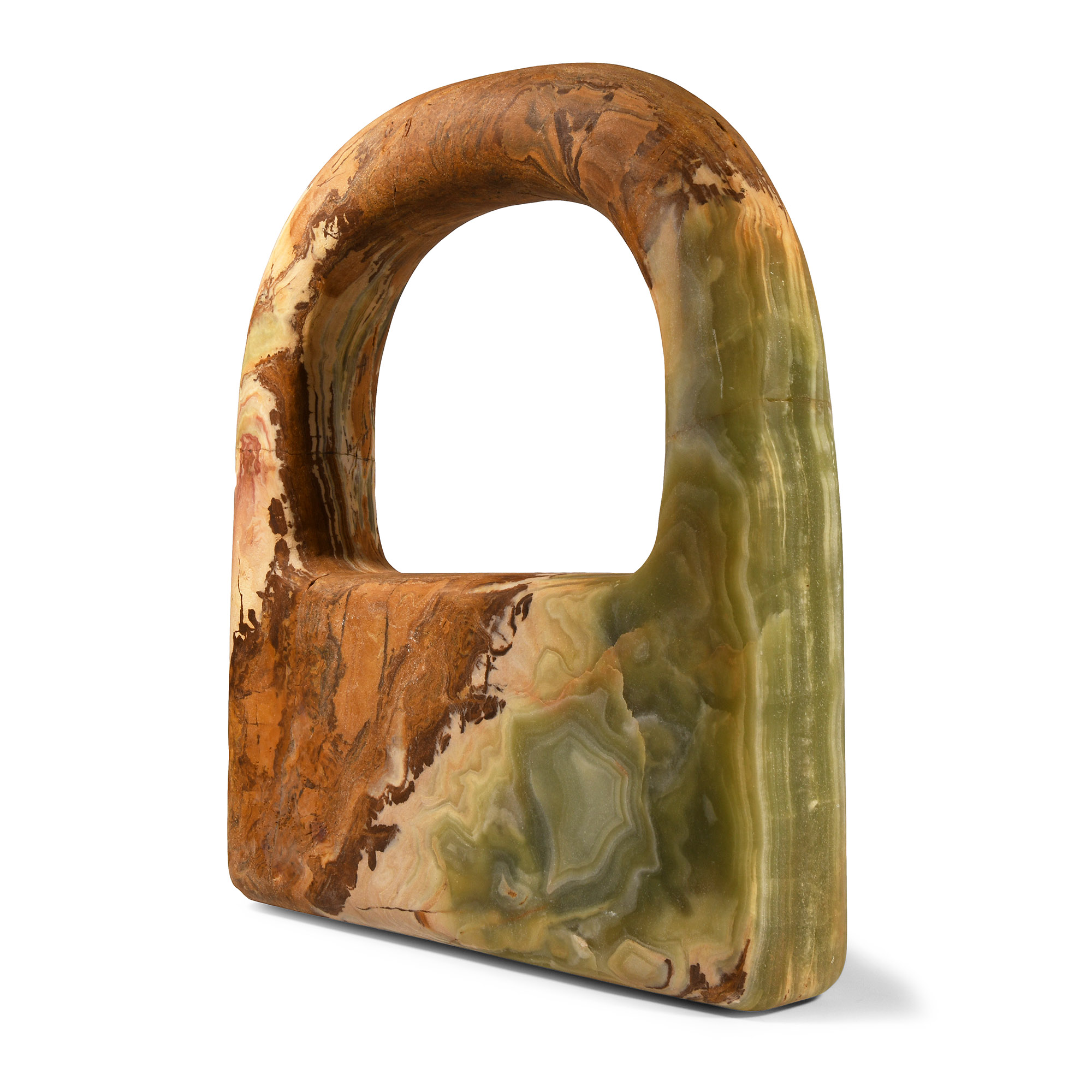
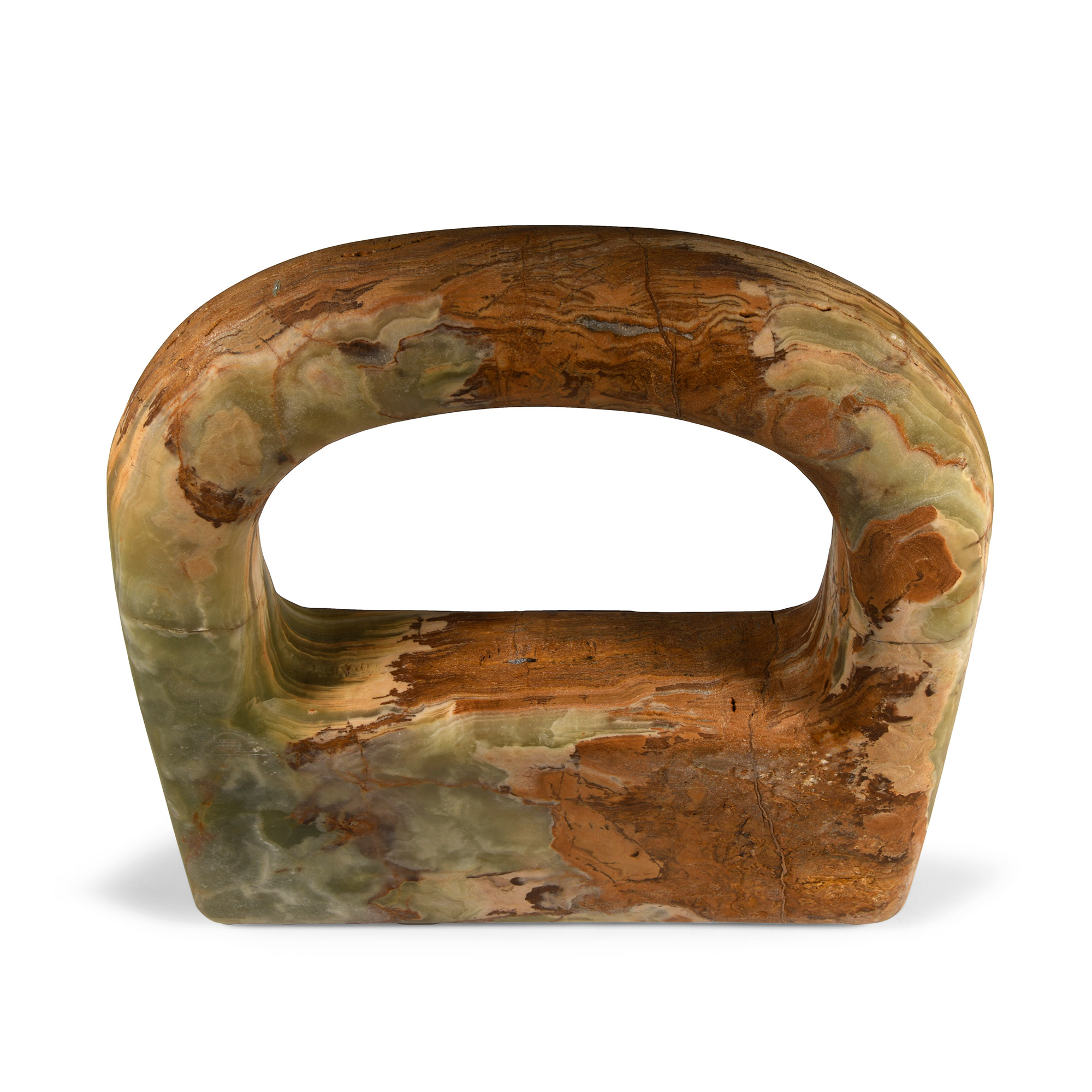
Large Bactrian Green Onyx 'Hand-Bag' Weight
CIRCA LATE 3RD-EARLY 2ND MILLENNIUM B.C.
14 in. (11.6 kg, 35.5 cm).
Substantial mottled green and tan weight with arched handle; repaired.
Provenancewith Gallery Rosen Ancient Art, Tel Aviv, 1968.
Property of a London gentleman.
This lot has been checked against the Interpol Database of stolen works of art and is accompanied by a search certificate number no.12261-218639.
See Vidale, M., Treasures from the Oxus: The Art and Civilisation of Central Asia, London, 2017, pp.44-51, figs.41-45, for a variety of stones and different shapes; for a very similar example cf. Christies, London, 27 July 2020, lot 11 (sold for £25,000.00).
FootnotesAmong the most iconic intercultural style objects are the so-called 'lock' or 'hand bag' weights. These were probably not weights at all, but were likely badges of high office, carried to indicate authority. Similar objects have been found throughout Mesopotamia, the islands of the Persian Gulf, on the Iranian steppe, as well as the Indus Valley.
CONDITIONTimeLine Auctions follows a vetting process to ensure the authenticity and legality of all items, reinforcing our commitment to integrity and responsible trading. Each antiquity, antique, and coin lot undergoes thorough examination by a vetting committee of at least ten external specialists, professional trade association members, scientists, and archaeologists: Our Vetting Process
AUCTIONS:
TimeLine is a leading auction house specialising in antiquities, ancient art, collectables, natural history, coins, medals, and books. Our auctions offer museums, collectors, historians, and enthusiasts the opportunity to acquire unique and historically significant pieces.
LOT 0238
Large Bactrian Green Onyx 'Hand-Bag' Weight
Estimate £7,000 - 9,000€8,120 - 10,440 (for guidance only)$9,450 - 12,150 (for guidance only)
-
.jpg)
Western Asiatic Stone Stamp Seal and Amulet Collection
1st millennium B.C.Sold for (Inc. bp): £104
Comprising: a pillow-shaped carnelian amulet pierced through the notched upper edge, hatched panels to both faces; a triangular-section stamp seal displaying ring-and-dot motifs and a possible animal figure; a plano-convex stamp seal bearing a geometric motif; a square-shaped lapis lazuli amulet engraved with a horned quadruped standing right. 19.4 grams total, 12-24 mm
Collected since the 1970s. Ex Everitt collection, acquired by descent 2017. -
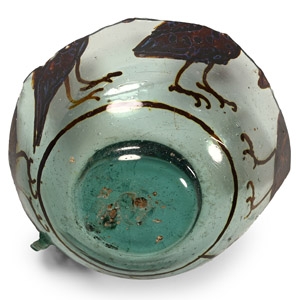
Western Asiatic Fatimid Painted Glass Bowl Fragment with Birds
12th century A.D.Sold for (Inc. bp): £169
Pontil base of a pale blue-aqua glass vessel; painted frieze of opposed perching birds, interposed floral motifs. 51.1 grams, 87 mm
From the collection of Mr N.A., Brussels, 1970s. -
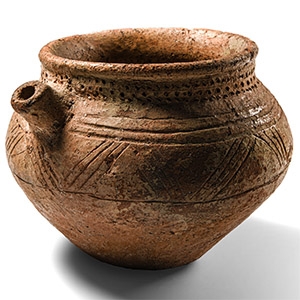
Mesopotamian Terracotta Pouring Vessel
3rd millennium B.C.Sold for (Inc. bp): £520
Formed as a pouring vessel with carinated body and short cylindrical spout, neck decorated with three concentric bands of pricked dots, incised bands below, combed chevrons to the equator featuring three raised knops to the rear. 438 grams, 11.8 cm wide
Acquired in Europe before 1990.
