
Loading, please wait...
LOT 0229
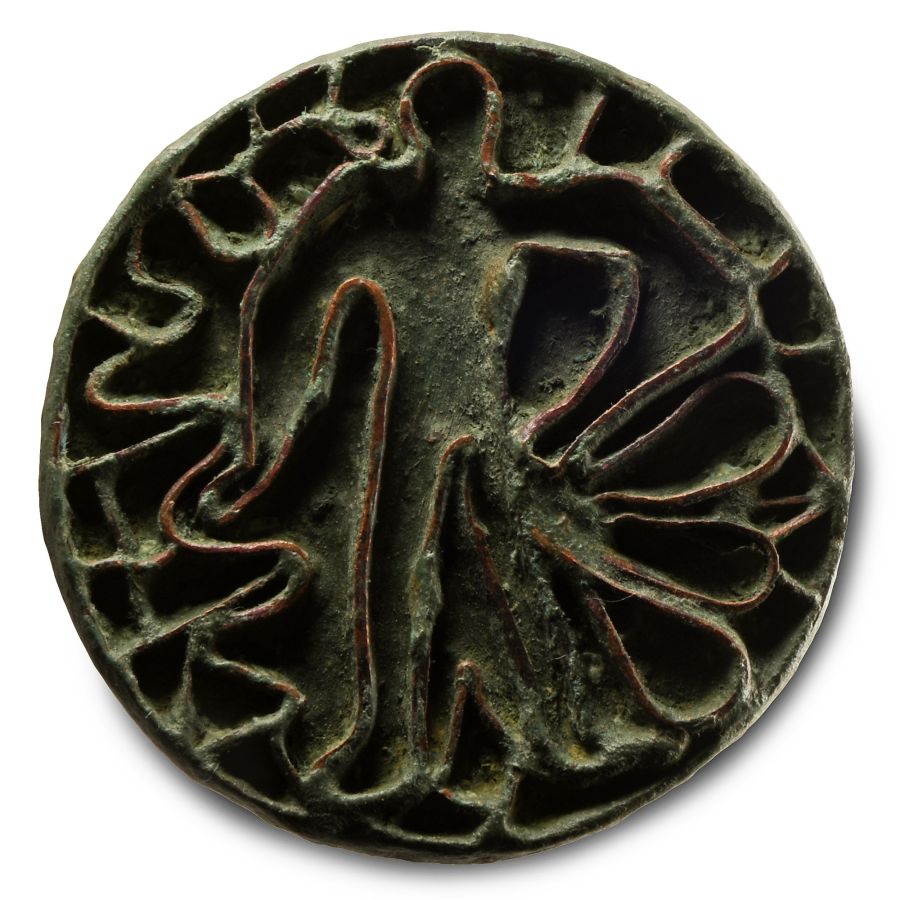
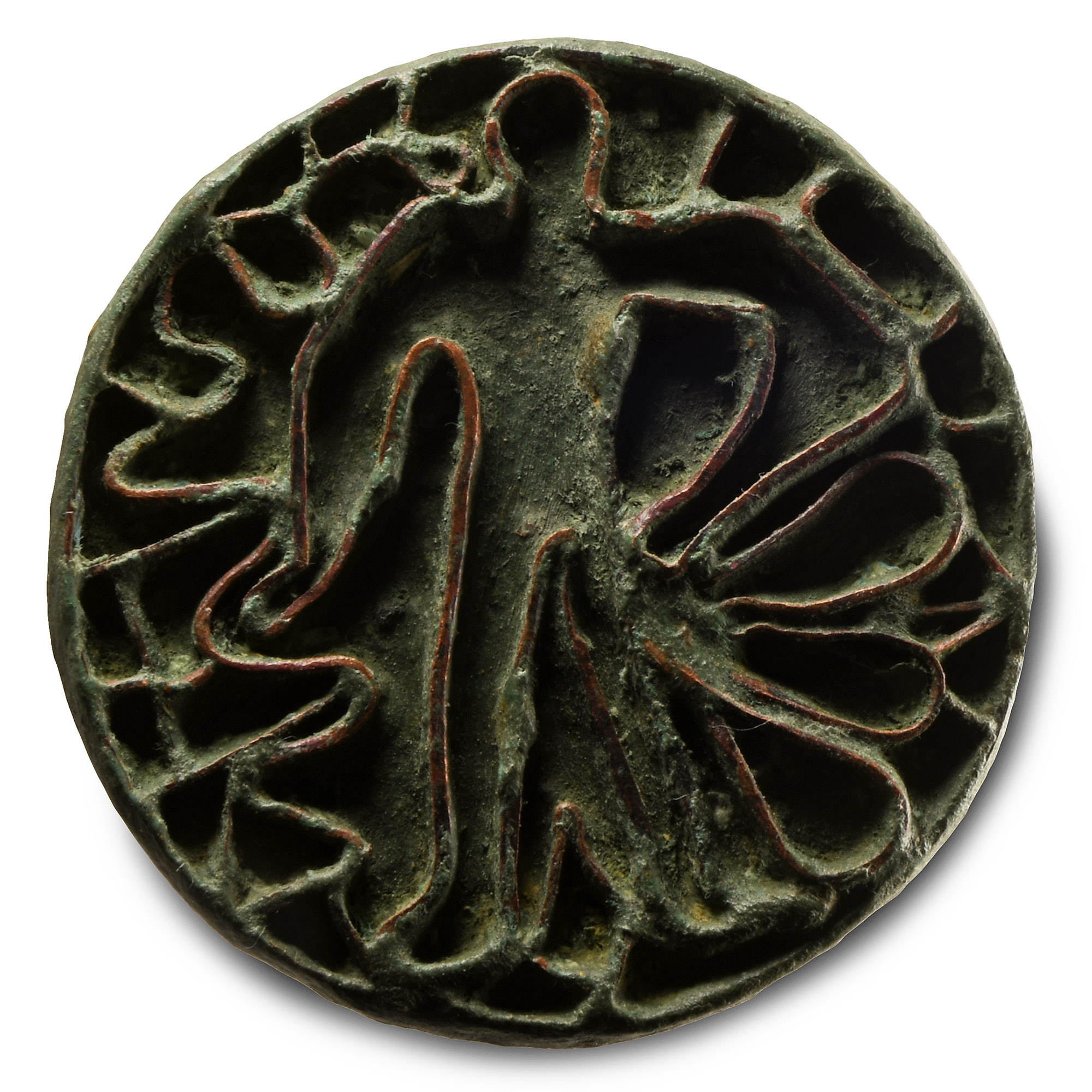
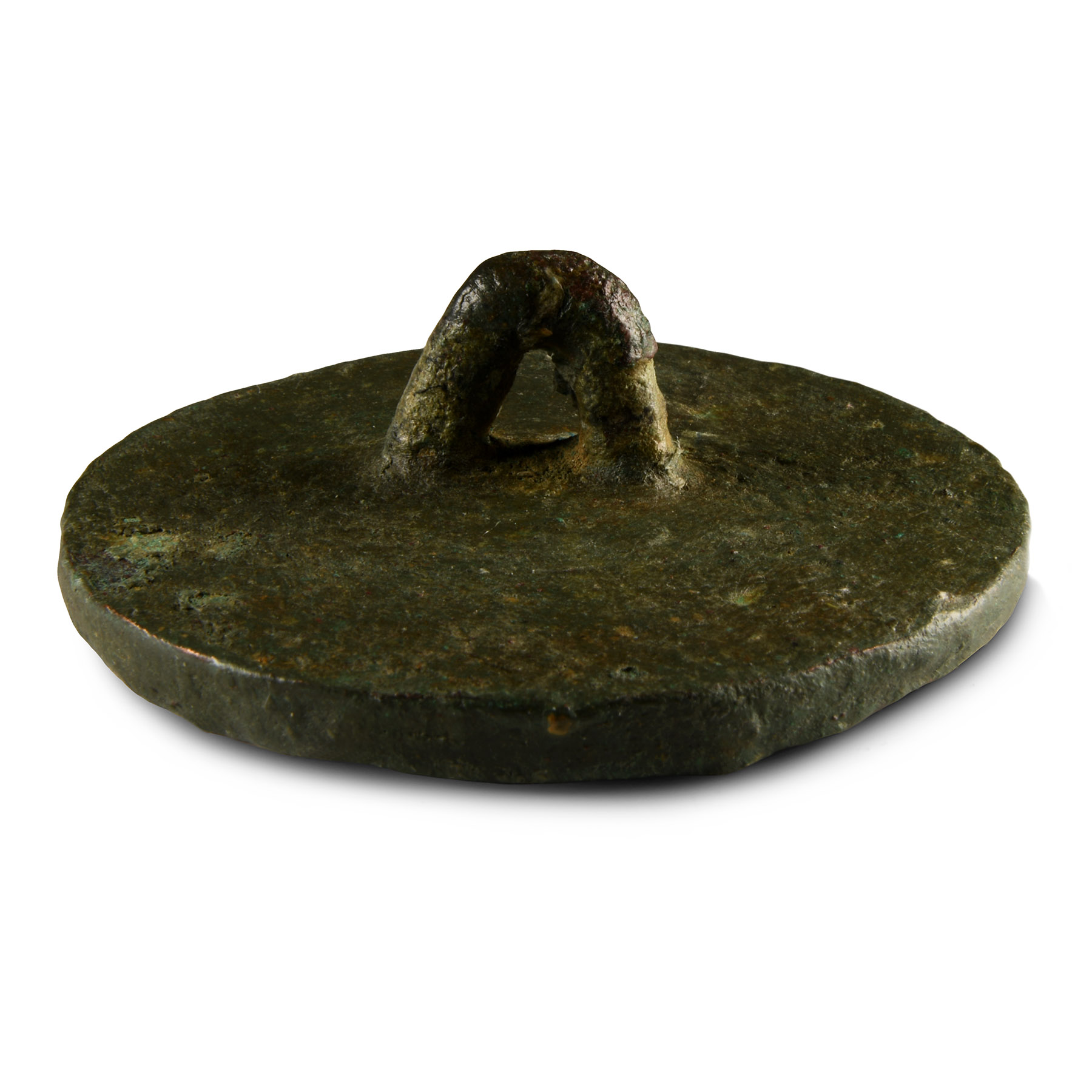
Large Bactrian Copper Stamp Seal with Standing Figure
3RD MILLENNIUM B.C.
2 7/8 in. (102 grams, 74 mm).
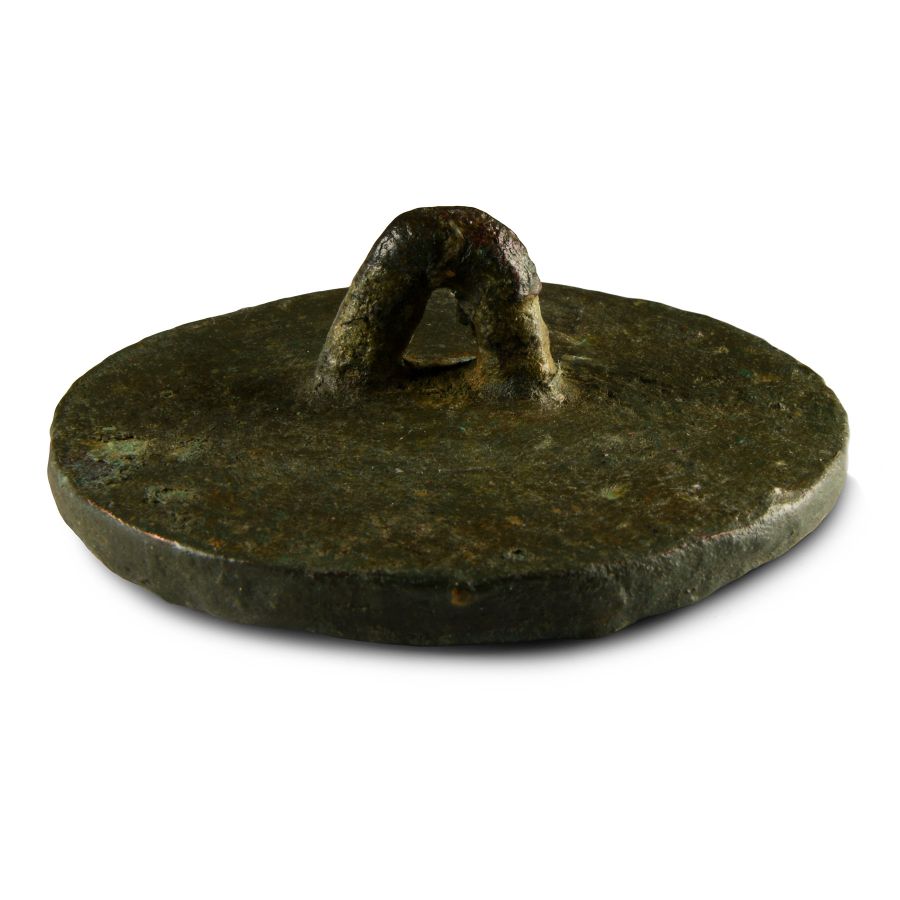
Discoid in plan with U-shaped handle, the obverse divided into cells forming an image of a standing figure within a meandering border.
Provenancewith a London, UK gallery 1971-early 2000s.
CONDITIONTimeLine Auctions follows a vetting process to ensure the authenticity and legality of all items, reinforcing our commitment to integrity and responsible trading. Each antiquity, antique, and coin lot undergoes thorough examination by a vetting committee of at least ten external specialists, professional trade association members, scientists, and archaeologists: Our Vetting Process
AUCTIONS:
TimeLine is a leading auction house specialising in antiquities, ancient art, collectables, natural history, coins, medals, and books. Our auctions offer museums, collectors, historians, and enthusiasts the opportunity to acquire unique and historically significant pieces.
-
Bactrian Gold Pendant
1st millennium B.C.Estimate: £200 - 300 (+bp*)
Opening Bid: £100
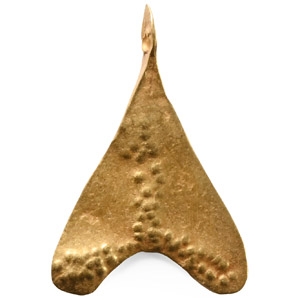
Shaped as an insect with heart-shaped wings, head formed as suspension loop; punched decoration to the wings. 0.78 grams, 21 mm
Acquired 1980-2015. Ex Abelita family collection. -
Mesopotamian Carnelian Cylinder Seal with Winged Horse
Circa 7th century B.C.Estimate: £400 - 600 (+bp*)
Opening Bid: £200
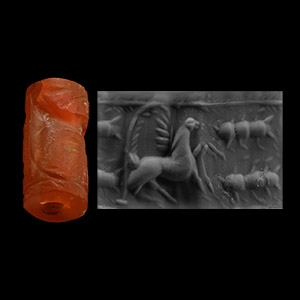
With intaglio frieze depicting a winged horse with one foreleg raised facing two smaller beasts among trees; supplied with a museum-quality impression. 1.81 grams, 16 mm
Ex London, UK, collection, before 1988. Accompanied by a previous catalogue information slip. -
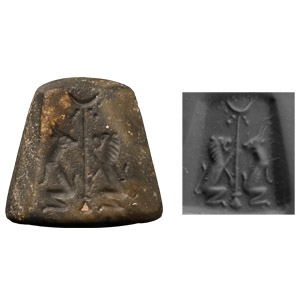
Neo-Babylonian Bifacial Stone Stamp Seal with Animals
Circa 600-500 B.C. or laterEstimate: £300 - 400 (+bp*)
Opening Bid: £150
Trapezoidal in profile with transverse piercing, one lateral face with intaglio scene of a rampant lion and an ibex looking backwards, staff between with crescent finial; underside with scene of a triumphant hero in a pleated gown with one arm raised, grasping the horn of a bull and with one foot placed on its rump, crescent moon above; supplied with a museum-quality impression. 16.4 grams, 25 mm
From the property of late Mr SM, London, UK, 1969-1999, thence by descent.
