
Loading, please wait...
LOT 0209
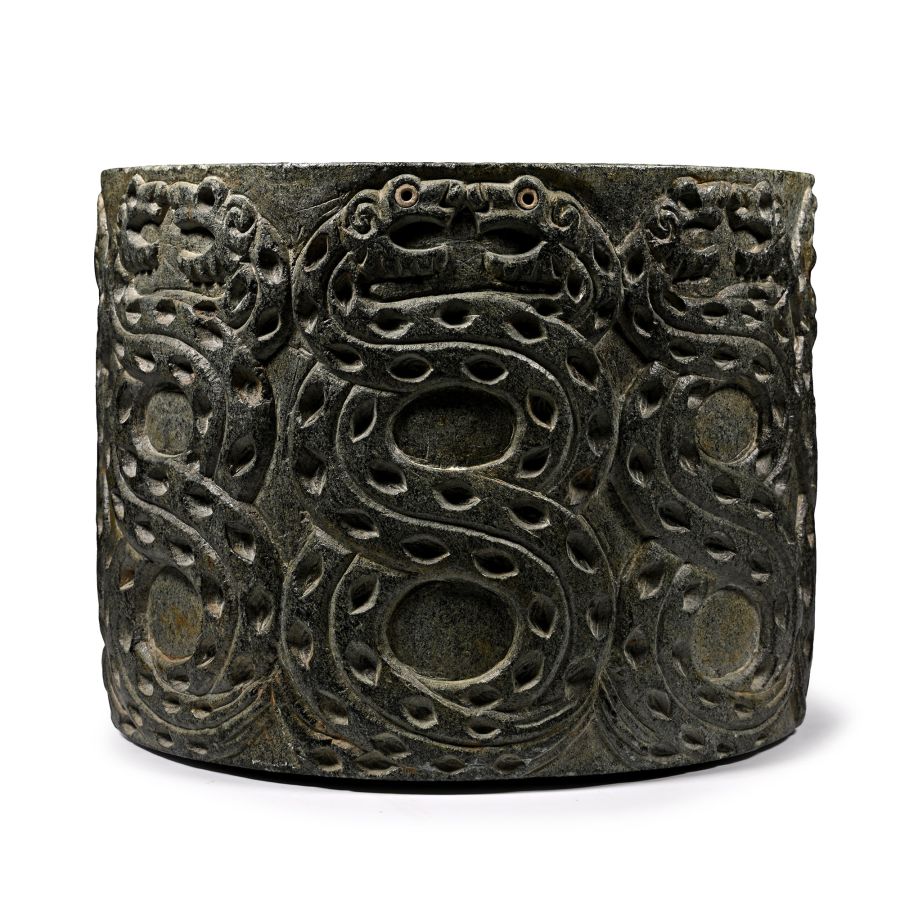
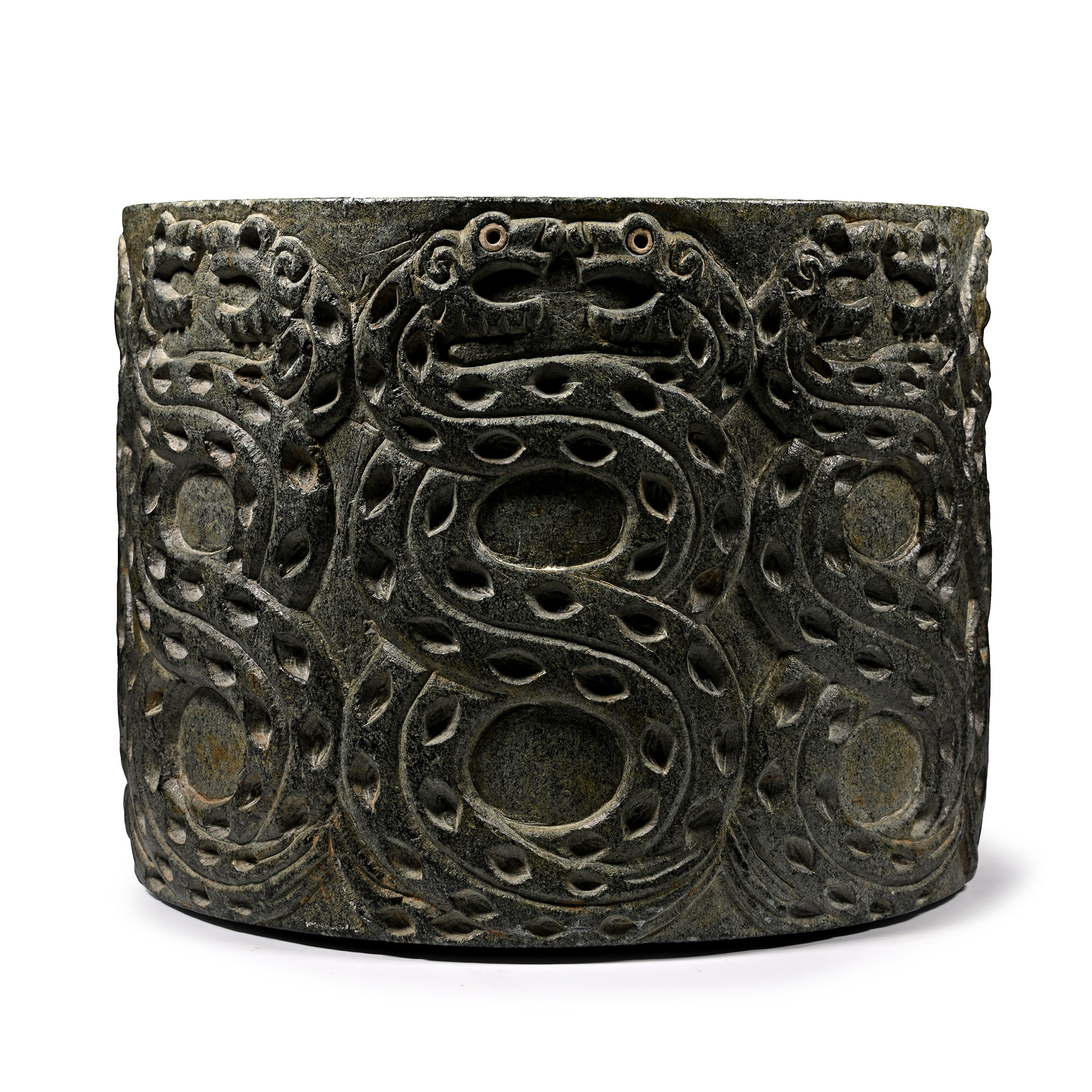
Large Bactrian Black Chlorite Vessel with Opposing Pairs of Serpents
3RD MILLENNIUM B.C.
7 in. (2 kg, 18 cm wide).
Drum-shaped vessel with reserved frieze to the outer face: pairs of opposed snakes with bodies entwined; shallow socket to each of the eyes to accept an inlay panel. [No Reserve]
Provenancewith Gallery Rosen Ancient Art, Tel Aviv, 1960s.
Ex London, UK, gallery, 1971-early 2000s.
London, UK, collection.
This lot has been checked against the Interpol Database of stolen works of art and is accompanied by a search certificate no.12772-237880.
Cf. Salvatori, S., ‘Early Bactrian Objects in private collections’ in Ligabue, G., and Salvatori, S., Bactria. An Ancient Oasis from the Sands of Afghanistan, Venice, 1988, pp.181-7, fig.84, for vessels with figures of animals in the same style; Aruz, J. (ed.), Art Of The First Cities: The Third Millennium B.C. from the Mediterranean to the Indus, The Metropolitan Museum of Art, New York, 2003, p.326, for similar vessel.
FootnotesThe chlorite stone vessels of early Bactria were kidney-shaped vessels with simple geometric decoration or cylindrical like our specimen. Small cylindrical vases were used as cosmetic containers, together with chlorite cosmetic flasks.
CONDITIONTimeLine Auctions follows a vetting process to ensure the authenticity and legality of all items, reinforcing our commitment to integrity and responsible trading. Each antiquity, antique, and coin lot undergoes thorough examination by a vetting committee of at least ten external specialists, professional trade association members, scientists, and archaeologists: Our Vetting Process
AUCTIONS:
TimeLine is a leading auction house specialising in antiquities, ancient art, collectables, natural history, coins, medals, and books. Our auctions offer museums, collectors, historians, and enthusiasts the opportunity to acquire unique and historically significant pieces.
LOT 0209
Large Bactrian Black Chlorite Vessel with Opposing Pairs of Serpents
Sold for (Inc. bp): £8,775
-
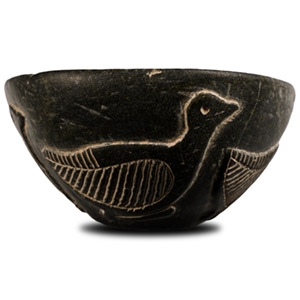
Western Asiatic Stone Bowl with Birds
3rd millennium B.C.Estimate: £3,000 - 4,000 (‡+bp*)
Opening Bid: £1,600
Hemispherical in profile with narrow rim, frieze of perching birds in relief, each with a pellet eye, stub beak, large comma-shaped hatched wing and leg held horizontally beneath the body; rim chipped. 273 grams, 11.2 cm
with Holy Lands House, Israel, 1960s. Private collection, 2005. This lot has been checked against the Interpol Database of stolen works of art and is accompanied by a search certificate no.12595-232195.
The chlorite stone vessels of early Bactria were kidney-shaped vessels with simple geometric decoration or, like our specimen, semi-circular. Small cylindrical vases were used as cosmetic containers, together with chlorite cosmetic flasks. -
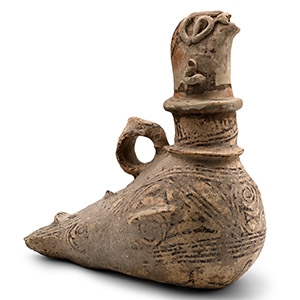
Western Asiatic Terracotta Vessel with Bird Head
8th-9th century A.D.Estimate: £300 - 400 (+bp*)
Opening Bid: £150
Aviform body with loop handle and applied collars and detailing to the neck and head; painted spiral tendril design. 612 grams, 18 cm
UK collection, 1990s. Acquired on the UK art market, before 2000. Private collection, Mr M.V., a London-based businessman. -
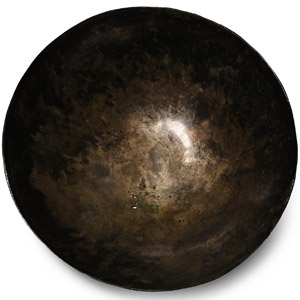
Sasanian Decorated High Tin Bronze Bowl
3rd-7th century A.D.Estimate: £100 - 140 (+bp*)
Opening Bid: £50
Hemispherical in section with rolled rim, incised ring to centre and below rim. 220 grams, 17.5 cm
Acquired 1980-2015. Ex Abelita family collection. This lot has been cleared against the Art Loss Register database, and is accompanied by an illustrated lot declaration signed by the Head of the Antiquities Department, Dr Raffaele D'Amato.
