
Loading, please wait...
LOT 0048
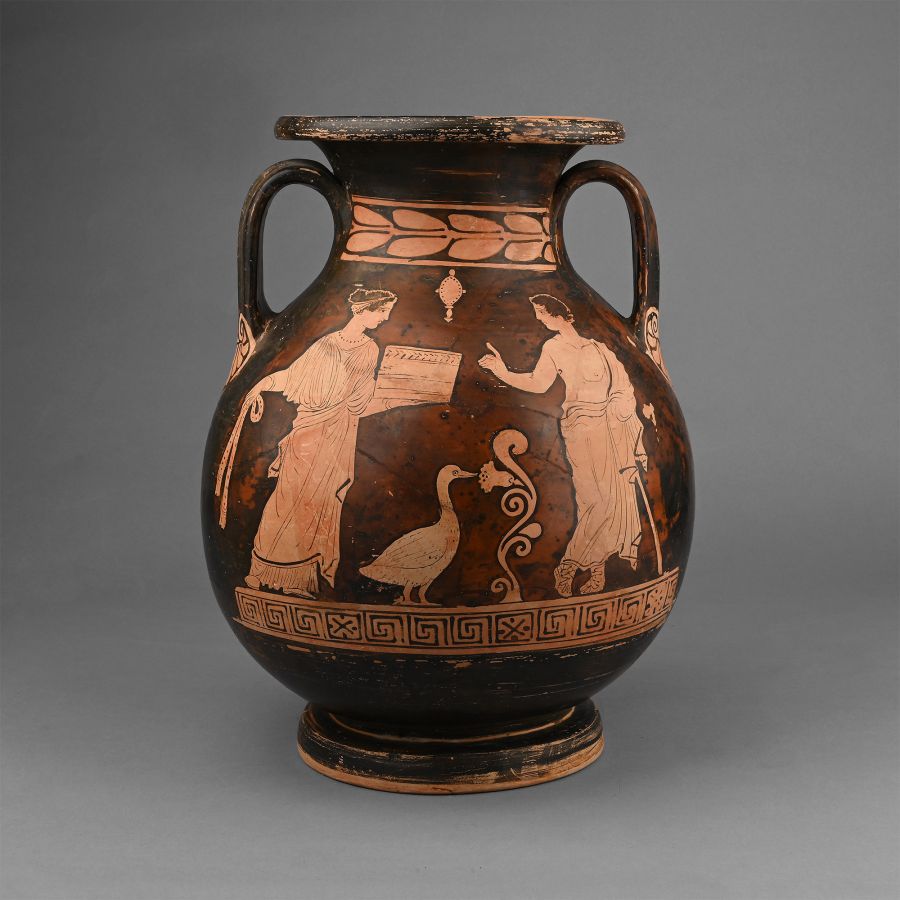
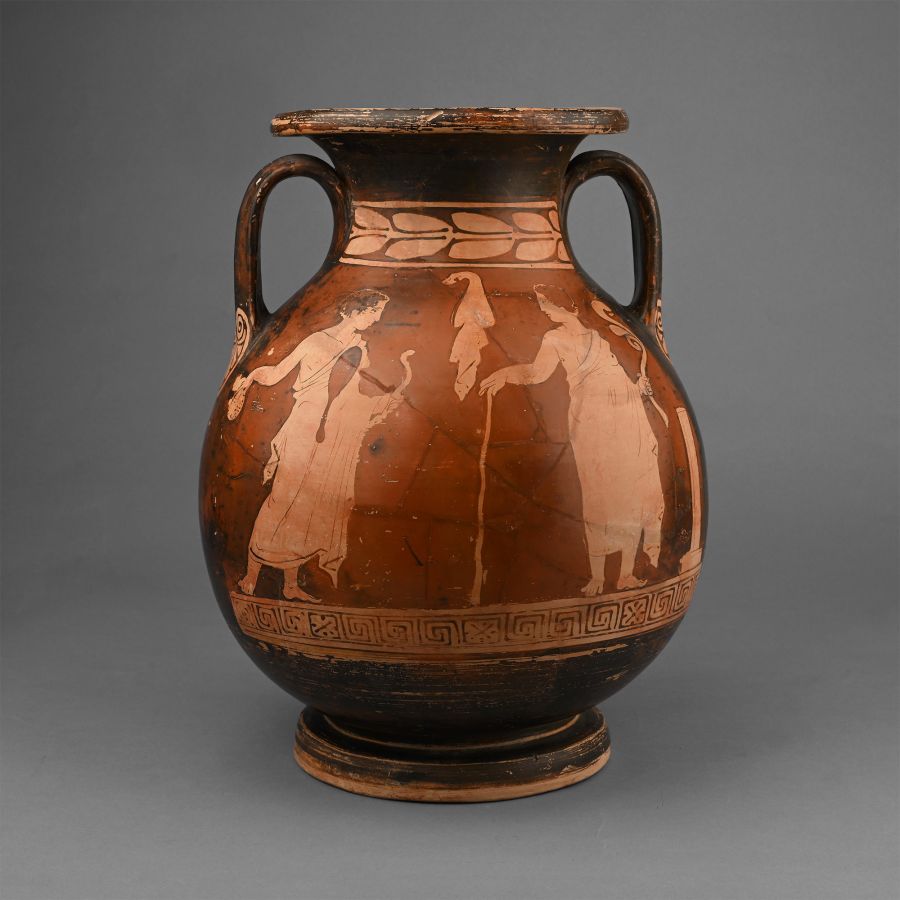
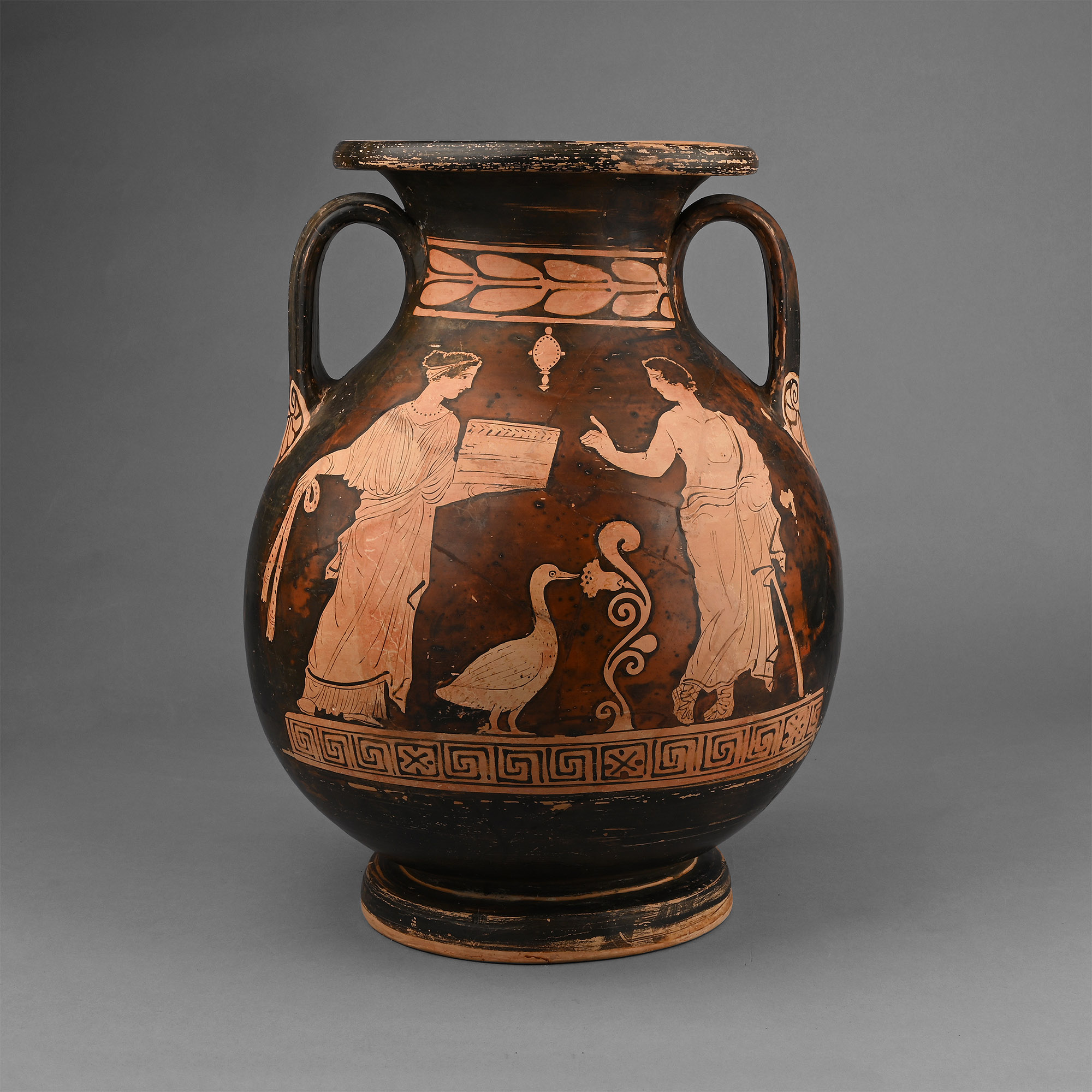
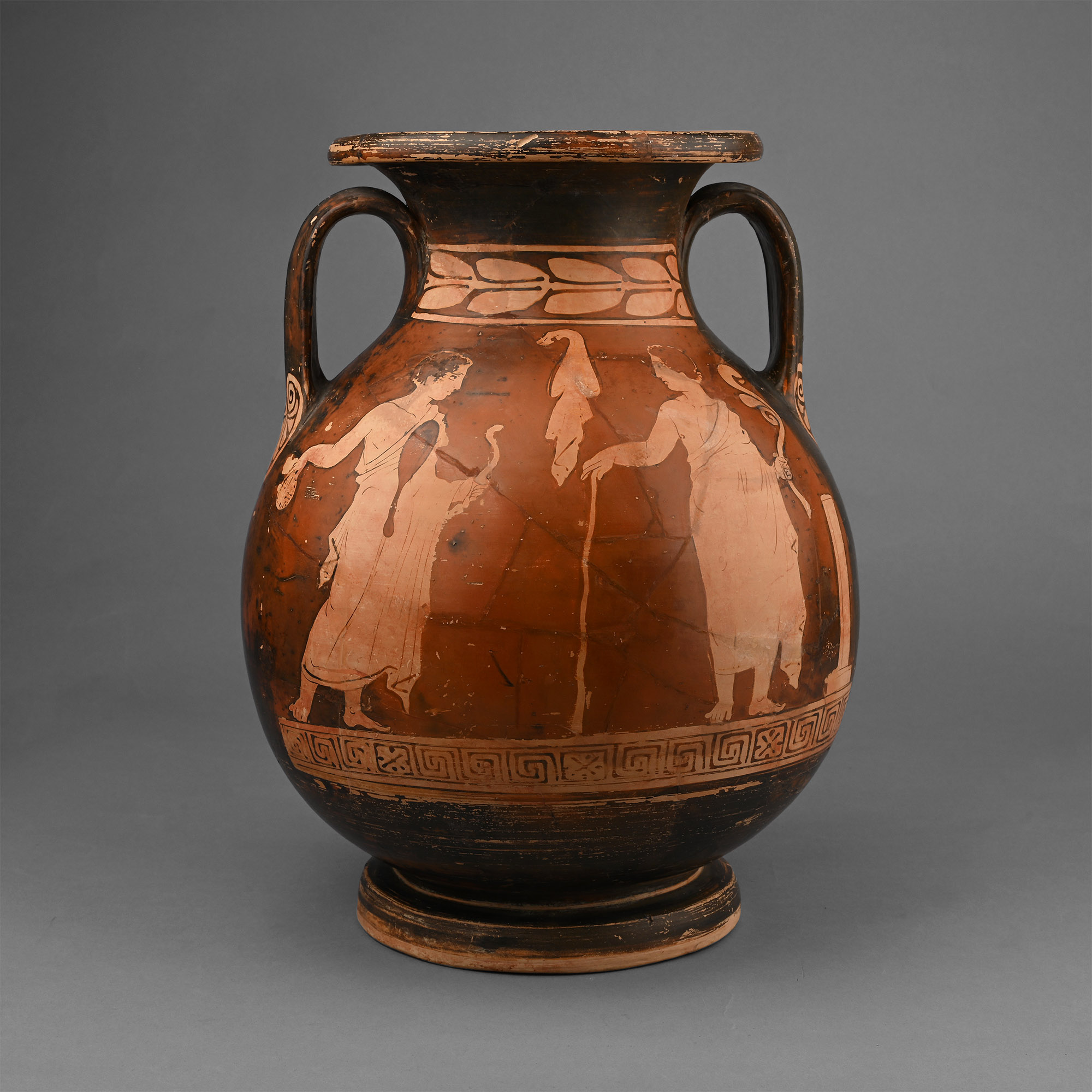
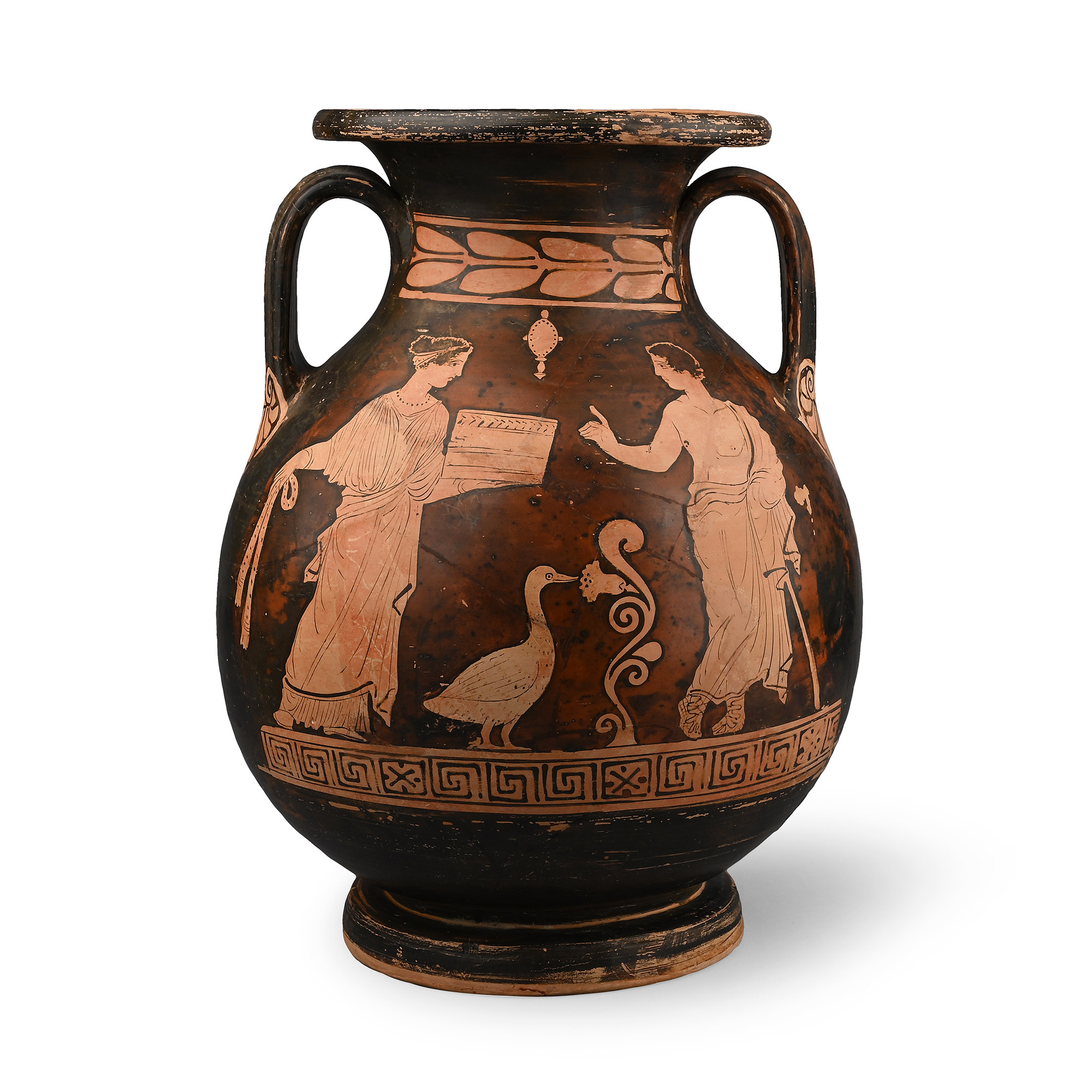
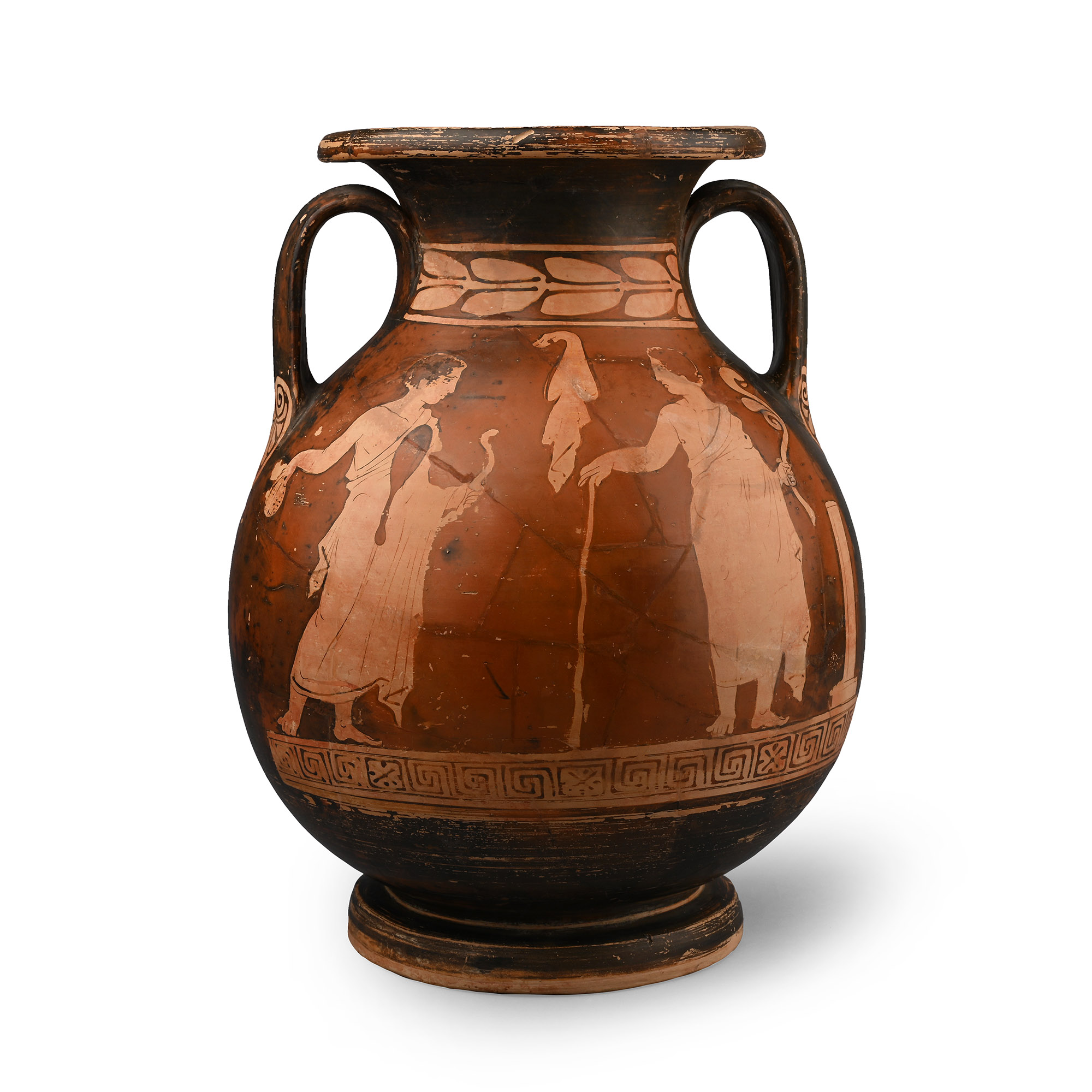
Large Apulian Red-Figure Pelike
EARLY 4TH CENTURY B.C.
13 1/4 in. (2.49 kg, 33.5 cm).
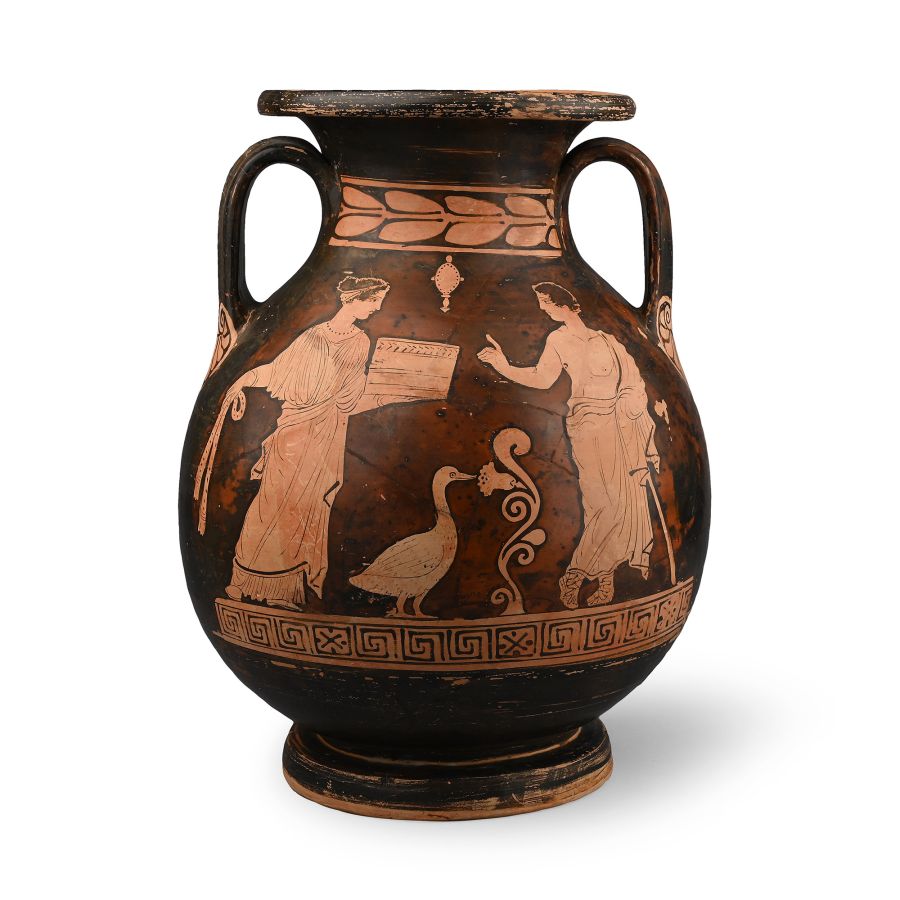
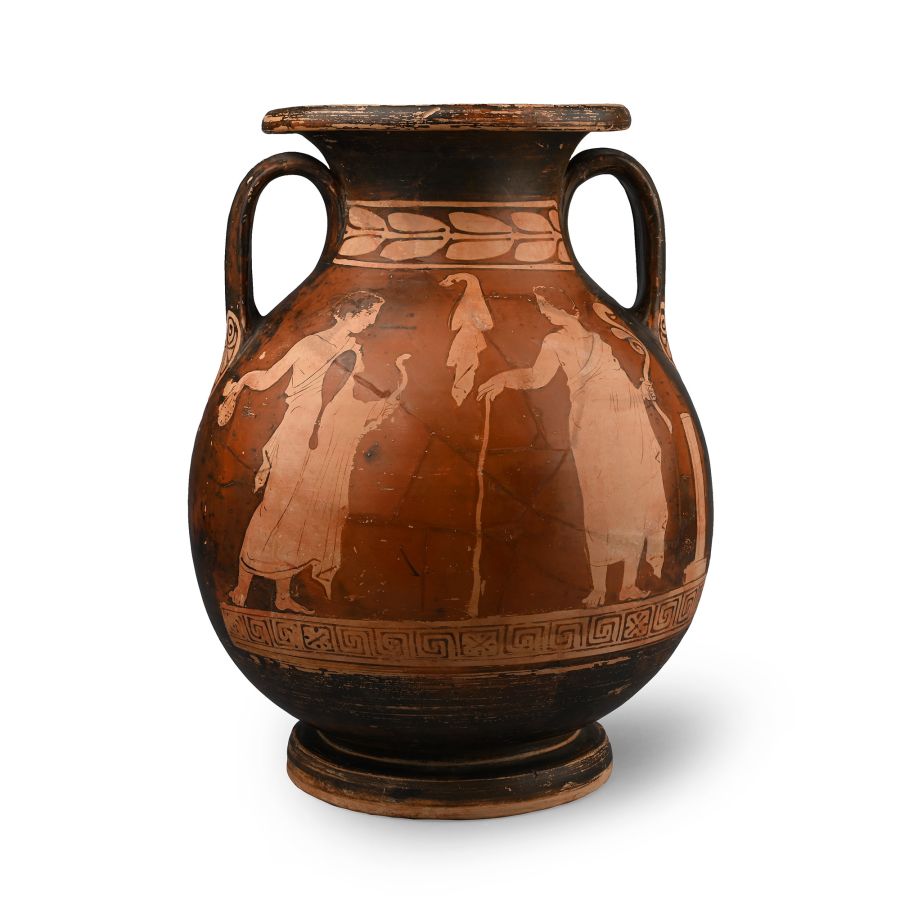
Of Plain Style, comprising a broad mouth and neck with torus rim, vertical handles with central rib, bulbous body, stepped disc foot; laurel wreath on the neck and a meander pattern to the lower body; Side a) a youth wearing a himation and shoes, before him a woman carrying a basket and a fillet, wearing a sleeveless chiton, himation, and a sphendone (a fillet decorated by black dots), between the two figures a standing goose before a large flower, a suspended mirror above the figures; Side b) a draped young boy holding a ball and a strigil, the slightly taller youth dressed in a himation and leaning on a staff, a haunch of meat hanging between the figures.
Provenancewith Bonhams, London, 13 April 2000, no.167.
Private collection, Suffolk.
This lot has been checked against the Interpol Database of stolen works of art and is accompanied by search certificate number no.12903-242647.
Cf. Jentoft-Nilsen, Corpus Vasorum Antiquorum, the J.Paul Getty Museum, Malibu, South Italian Vases, Apulian, Lucanian, Campanian, Sicilian and Paestan Red-Figure, Malibu, 1991, pls.193ff., especially 196, for similar.
FootnotesThe haunch of meat (note the hoof), was a type of 'love gift' seen in Attic vase-painting. It could also refer to honorary shares of sacrificial meat: animal sacrifice had been a central part of Greek religious life since the Prehistoric era.
CONDITIONTimeLine Auctions follows a vetting process to ensure the authenticity and legality of all items, reinforcing our commitment to integrity and responsible trading. Each antiquity, antique, and coin lot undergoes thorough examination by a vetting committee of at least ten external specialists, professional trade association members, scientists, and archaeologists: Our Vetting Process
AUCTIONS:
TimeLine is a leading auction house specialising in antiquities, ancient art, collectables, natural history, coins, medals, and books. Our auctions offer museums, collectors, historians, and enthusiasts the opportunity to acquire unique and historically significant pieces.
-
.jpg)
Greek Terracotta Fragment Group
4th century B.C. and laterSold for (Inc. bp): £52
Including a trumpet-shaped pot lid, D-section model animal and other items. 120 grams total, 39-73 mm
Acquired 1979-1999. London collection of the late Mr S.M., thence by descent. -
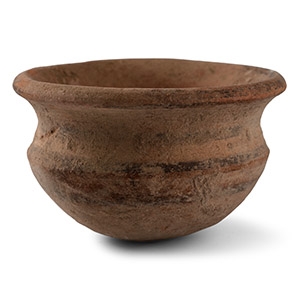
Greek Terracotta Cup
5th-3rd century B.C.Sold for (Inc. bp): £98
Squat in profile with carinated shoulder and everted rim, rounded underside. 128 grams, 87 mm
From an English collection formed in the 1990s. Ex property of an Essex gentleman. From the property of a late Lincolnshire, UK, gentleman. -
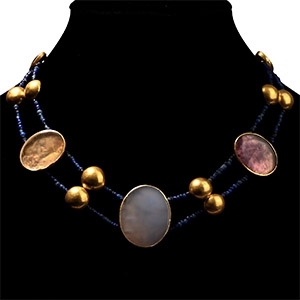
Late Hellenistic-Early Roman Gemstone, Gold and Glass Bead Necklace
Circa 2nd century B.C.-1st century A.D.Estimate: £3,500 - 4,500 (+bp*)
Opening Bid: £1,750
Restrung necklace with oval semi-precious stones and gold-domed appliqués; double strand of Roman spherical blue glass beads, varying in hues and tones, and to the top of each strand a single appliqué with a gold discoid plaque set with a garnet polished stone to the left and a vibrant green aventurine stone to the right; a double-domed appliqué behind each small plaque, and a larger discoid set with crystal on the left and pale amethyst to the right; central prominent chalcedony set discoid. 43 grams total, 44 cm including clasp
Acquired on the UK art market prior to 2000. This lot has been checked against the Interpol Database of stolen works of art and is accompanied by a search certificate number no.12947-246339.
