
Loading, please wait...
LOT 0195
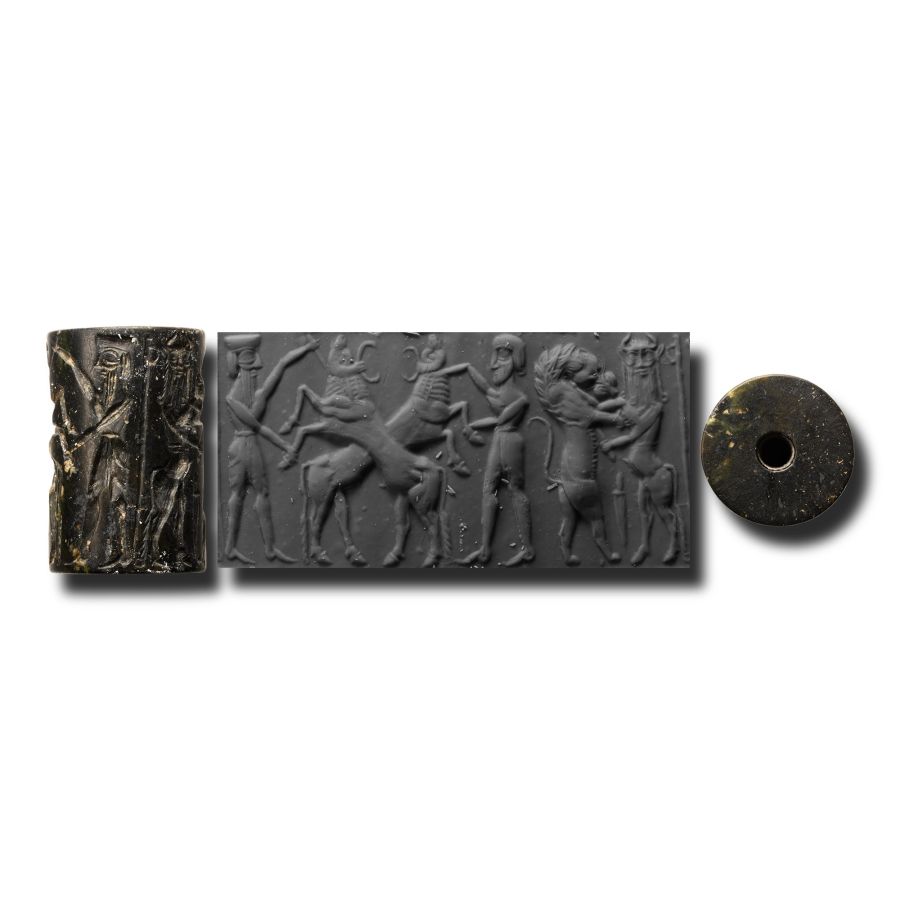
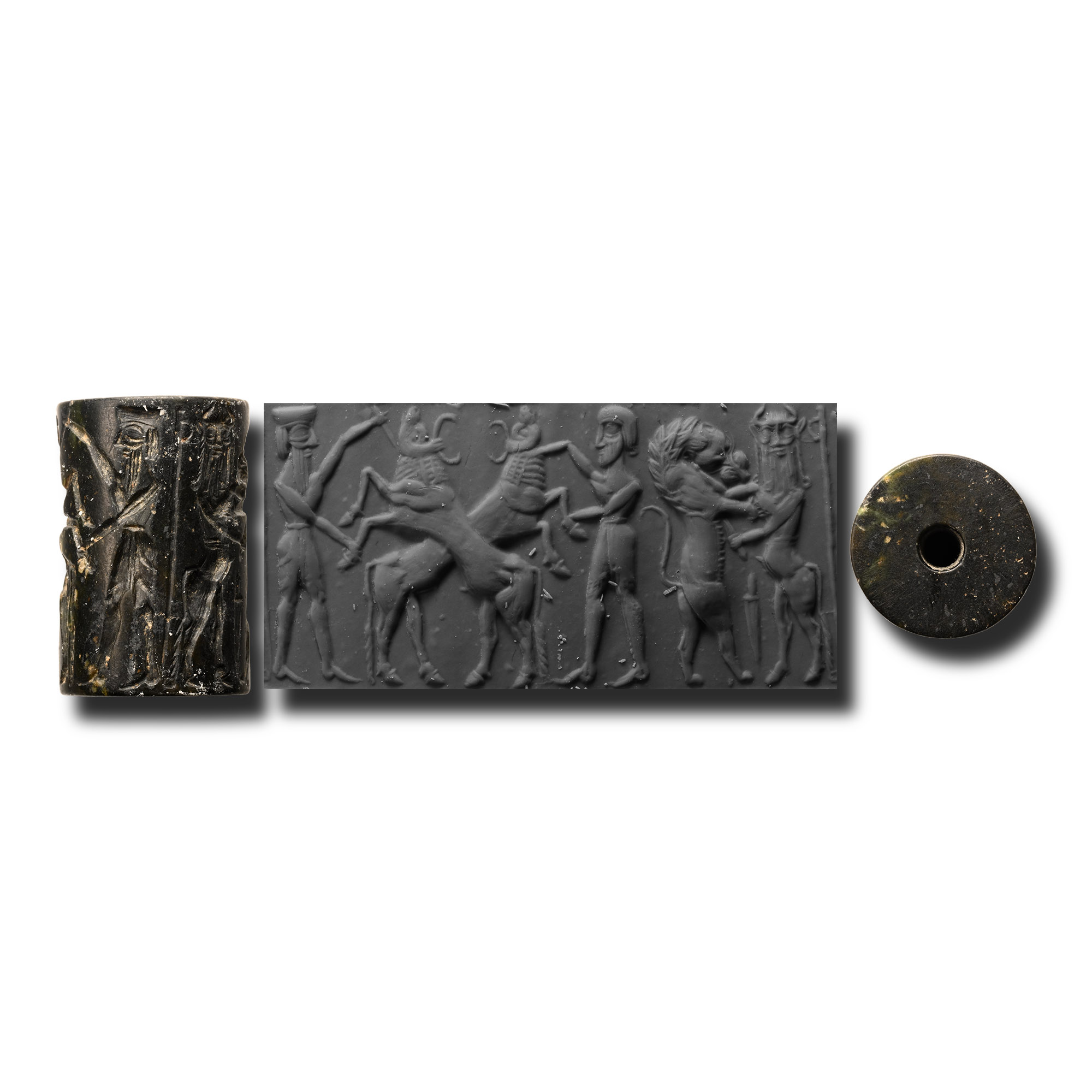
Large Akkadian Cylinder Seal with Contest Scene
2ND MILLENNIUM B.C.
1 1/2 in. (40.5 grams, 37 mm).
Dark green agate with contest scene comprising two rampant animals each being stabbed by a standing male with facing bearded beast-man and another animal to the rear. [No Reserve]
ProvenanceFrom the Rihani family collection, formed 1970-1980s.
From a collection acquired from various auction houses in the UK.
From the estate of Mr R.W., a private Wiltshire, UK, collector; thence by descent.
TimeLine Auctions follows a vetting process to ensure the authenticity and legality of all items, reinforcing our commitment to integrity and responsible trading. Each antiquity, antique, and coin lot undergoes thorough examination by a vetting committee of at least ten external specialists, professional trade association members, scientists, and archaeologists: Our Vetting Process
AUCTIONS:
TimeLine is a leading auction house specialising in antiquities, ancient art, collectables, natural history, coins, medals, and books. Our auctions offer museums, collectors, historians, and enthusiasts the opportunity to acquire unique and historically significant pieces.
-
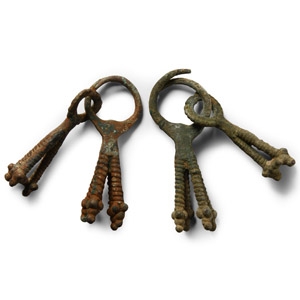
Luristan Bronze Pendant Pair
13th-6th century B.C.Sold for (Inc. bp): £26
Comprising a matched pair of pendants with overlapping loop finials, four ribbed stems radiating from the base, a separate pendant of similar form hanging from the loop. 49 grams total, 57-61 mm
UK private collection before 2000. On the UK art market. Property of a London gentleman. -
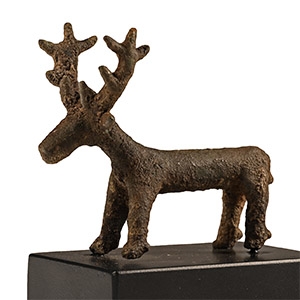
Hittite Bronze Statuette of a Stag
2nd-1st millennium B.C.Sold for (Inc. bp): £390
Modelled in the round, the stag standing with legs firmly set, ears and antlers carefully modelled; mounted on a custom-made display stand. 291 grams total, 88 mm including stand
From a collection acquired on the UK art market from various auction houses and collections mostly before 2000. From an important Cambridgeshire estate; thence by descent.
In Anatolia, cult objects in the form of a deer found in the Royal Cemetery of Alaca Höyük, dating to the 3rd millennium B.C., suggest worship of this animal. This continued during the Hittite period where bronze statuettes of this type were widespread. The cult was widespread in the Mediterranean-Aegean world. Even on the remote island of Sardinia, similar cultic and votive statuettes were made. -
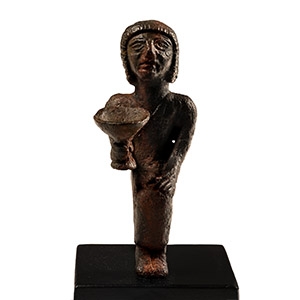
Phoenician Bronze Seated Figure Holding an Offering Cup
Circa 6th century B.C.Sold for (Inc. bp): £1,040
Modelled in the round with tight-fitting robe and carefully detailed tiered hairstyle; right hand raised to support a chalice; peg beneath the feet; mounted on a custom-made display stand. 301 grams total, 11 cm including stand
Acquired on the French art market. From a collection acquired on the UK art market from various auction houses and collections mostly before 2000. From an important Cambridgeshire estate; thence by descent.
Iberian statuettes from 6th century B.C. were produced under the influence of Greeks and Phoenicians. Small votive offerings of priests, priestesses, and deities in bronze, were found everywhere in Spain. The body of these figurines is often reduced to a rectangular plaque, but the head, as in all these types, is of plastic work, a process which reminds the prehistoric terracottas from the Argive Heraeum and elsewhere. The curve of the nose, which gives the face a Semitic appearance, is not accidental, and underlines the Phoenician influence.
