
Loading, please wait...
LOT 2003
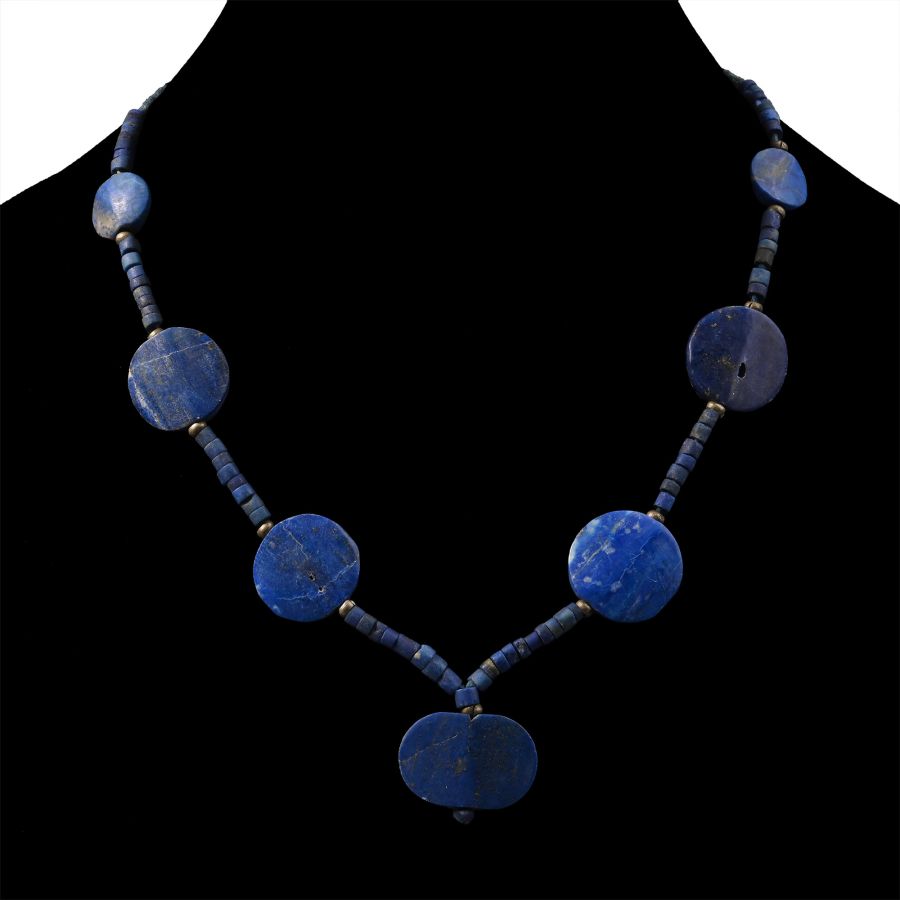
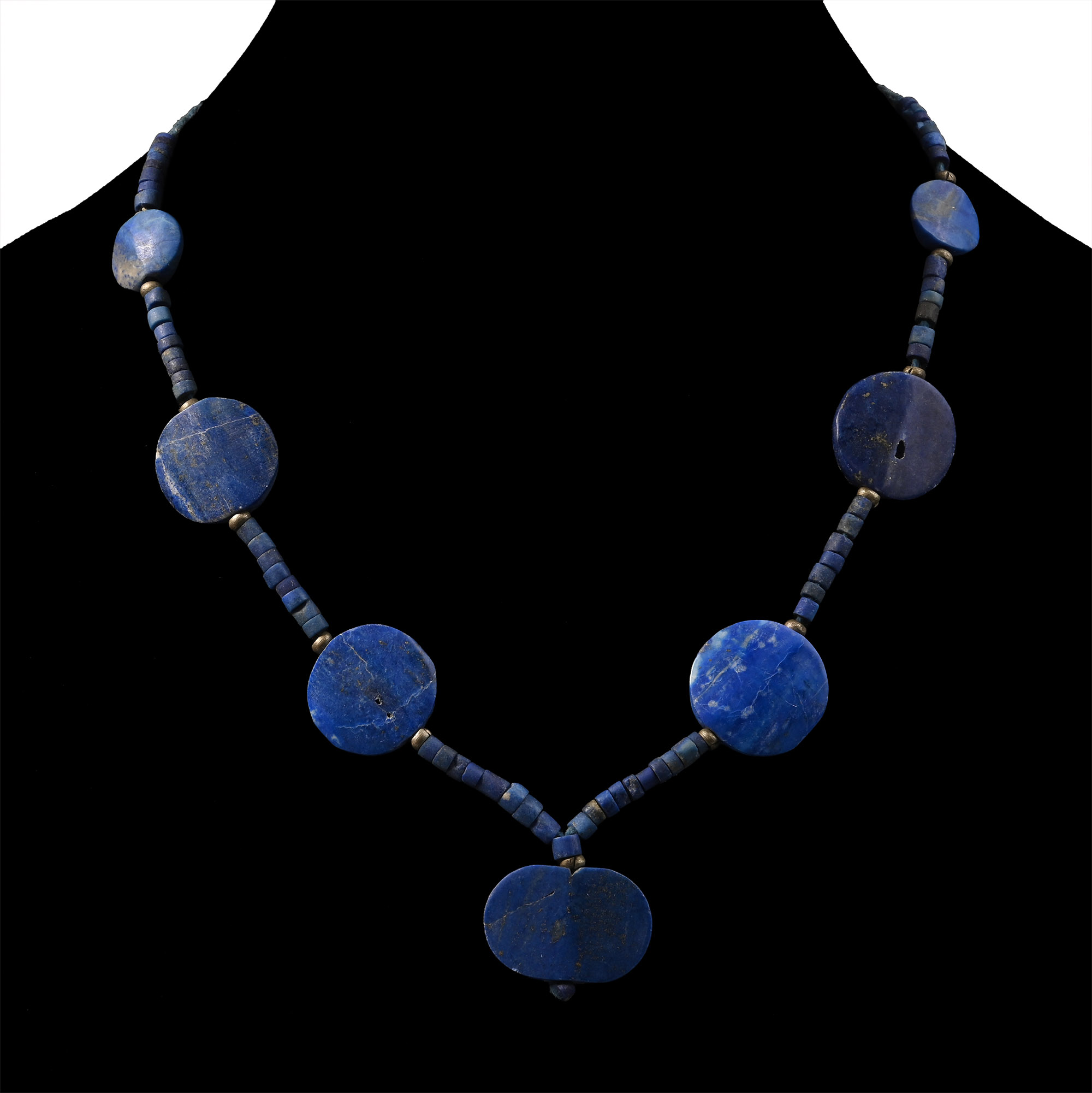
Lapis Lazuli Bead Necklace String
20TH CENTURY A.D.
13 5/8 in. (36 grams, 34.5 cm).
Restrung group of annular and tabular beads. [No Reserve]
ProvenanceLondon, UK, collection, 2000s.
CONDITIONTimeLine Auctions follows a vetting process to ensure the authenticity and legality of all items, reinforcing our commitment to integrity and responsible trading. Each antiquity, antique, and coin lot undergoes thorough examination by a vetting committee of at least ten external specialists, professional trade association members, scientists, and archaeologists: Our Vetting Process
AUCTIONS:
TimeLine is a leading auction house specialising in antiquities, ancient art, collectables, natural history, coins, medals, and books. Our auctions offer museums, collectors, historians, and enthusiasts the opportunity to acquire unique and historically significant pieces.
-
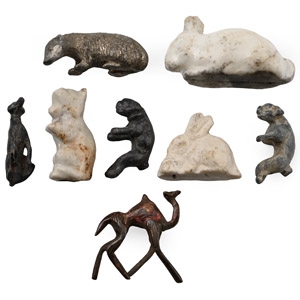
Post Medieval Animal Figure Collection
19th-20th century A.D.Sold for (Inc. bp): £13
A mixed group of animal figures of various materials, including rabbits, dogs, a camel, and a badger. 109 grams total, 27-45 mm
Fair condition.
From Tyne and Wear, UK. -
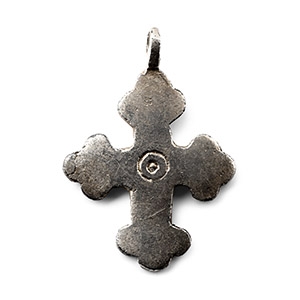
Post Medieval Coptic Silvered Cross Pendant
Ethiopia, 20th century A.D.Sold for (Inc. bp): £20
Cross botonny with suspension loop, ring-and-dot to centre of obverse. 18.3 grams, 50 mm
From an old Lincoln, UK, collection, 1950s-1970s. From the property of a late Lincolnshire, UK, gentleman.
The pectoral cross, also called the neck cross, is much smaller in the Orthodox Ethiopian world (and in general in all Orthodox world) than both the processional and the priests' cross. These crosses, secured by a blue string or cord, adorn the necks of the faithful. Many people receive their pectoral cross at baptism. They are made from a range of materials: bronze, silver, iron, horn, and occasionally gold. The richness of ornaments and the complex structure of Ethiopian crosses give a picture of an extraordinary culture, that of one of the world’s oldest Christian societies. The ornaments and forms of the crosses of Ethiopia are unique and instantly recognisable. -
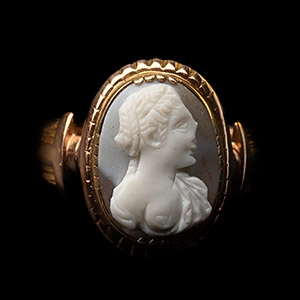
Gold Ring with Renaissance Sardonyx Cameo of a Muse
Italy, 16th century A.D.Estimate: £600 - 800 (+bp*)
Opening Bid: £300
Comprising a wide hoop supporting a large oval bezel with piecrust edge, set with a two-tone sardonyx cameo depicting a profile bust of a female, her hair dressed in elaborate style, garment wrapper over her left shoulder leaving her right breast exposed. 6.05 grams, 26.27 mm overall, 19.10 mm internal diameter (approximate size British S, USA 9, Europe 20, Japan 19)
Private collection, UK.
