
Loading, please wait...
LOT 1464
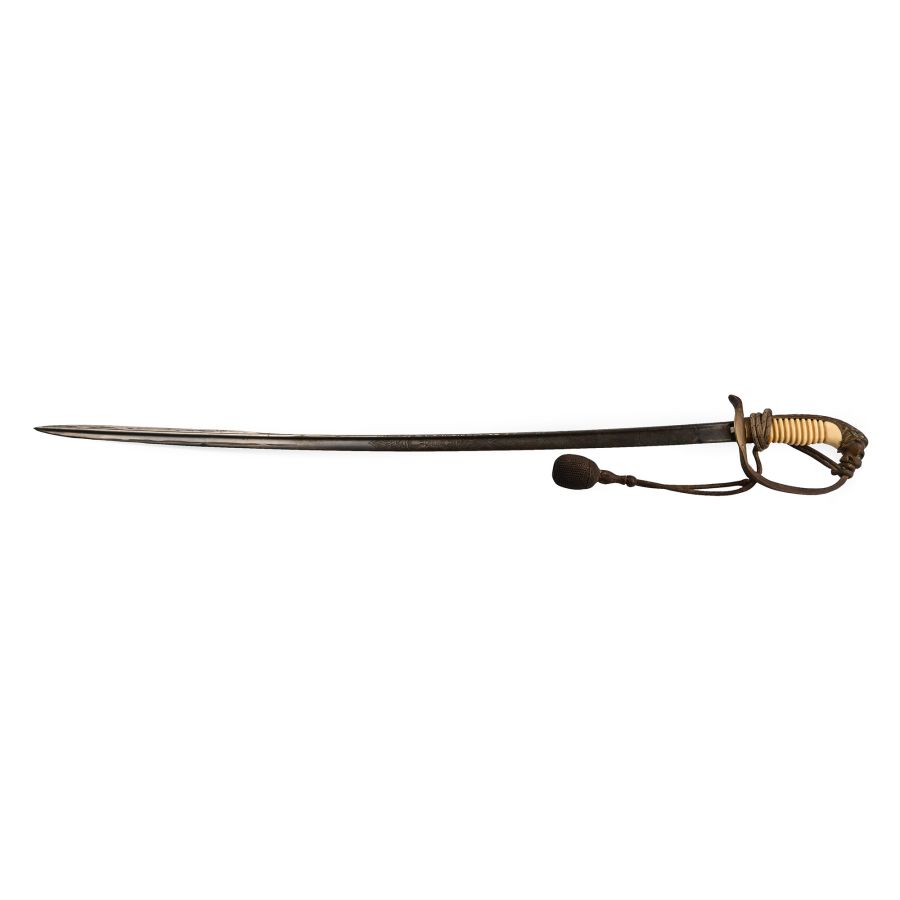
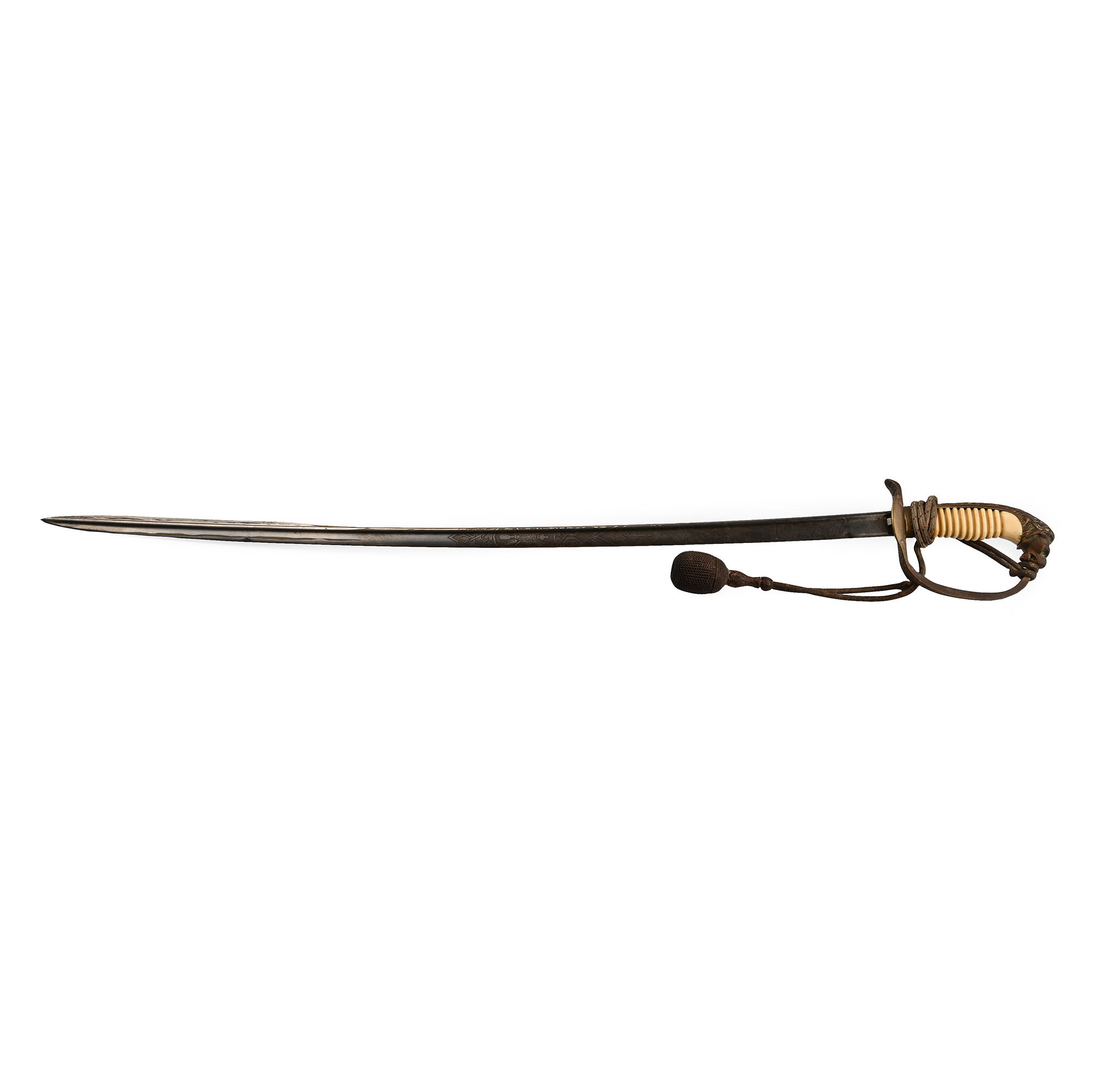
Kriegsmarine WWI German Naval Officer's Sword
EARLY 20TH CENTURY A.D.
34 1/2 in. (728 grams, 87.5 cm).
Comprising a slender single-edged blade with etched maritime design; the hilt composed of a ribbed bone handle, a lion-head pommel, and an ornate guard with a folding edge to one side. [No Reserve]
ProvenanceFrom the private collection of author and historian Dr DeWitt Bailey, one of the global authorities on the confederate army in the US civil war; thence by descent to his grandson.
CONDITIONTimeLine Auctions follows a vetting process to ensure the authenticity and legality of all items, reinforcing our commitment to integrity and responsible trading. Each antiquity, antique, and coin lot undergoes thorough examination by a vetting committee of at least ten external specialists, professional trade association members, scientists, and archaeologists: Our Vetting Process
AUCTIONS:
TimeLine is a leading auction house specialising in antiquities, ancient art, collectables, natural history, coins, medals, and books. Our auctions offer museums, collectors, historians, and enthusiasts the opportunity to acquire unique and historically significant pieces.
-
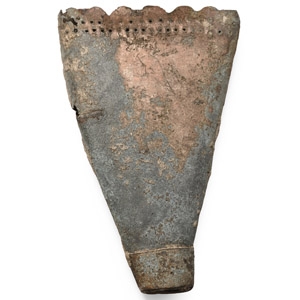
Medieval Bronze Sword Chape
15th-16th century A.D.Sold for (Inc. bp): £20
Scalloped border on the upper edge, sharply tapering body with collar at the narrow end. 16.7 grams, 71 mm
Ex European collection, 1990s. Ex Cambridgeshire, UK, collection. -
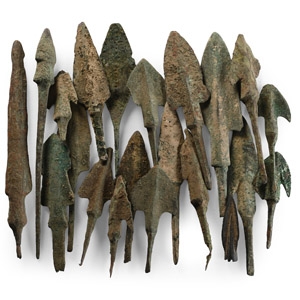
Greek and Luristan Bronze Arrowhead Collection
2nd-1st millennium B.C.Sold for (Inc. bp): £117
Mainly triangular-headed and leaf-shaped tanged types. 168 grams total, 3.9-10.3 cm
Ex London, UK, collection, 1990s. -
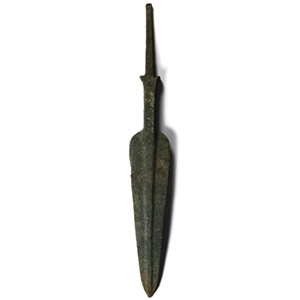
Amlash Type Bronze Spearhead
12th-11th century B.C.Sold for (Inc. bp): £91
Leaf-shaped blade and rectangular-section shank developing from the raised midrib, flared below with a rectangular-section tang. 300 grams, 36.5cm
Ex London art market, 1980-1990s. This lot is accompanied by an illustrated lot declaration signed by the Head of the Antiquities Department, Dr Raffaele D'Amato.
The weapon belongs to the type 1 of the spear-head classification of Khorasani, mainly from Marlik or Amlash areas. Similar pieces have been dated by Stutzinger to 1200-1100 B.C.
