
Loading, please wait...
LOT 1472
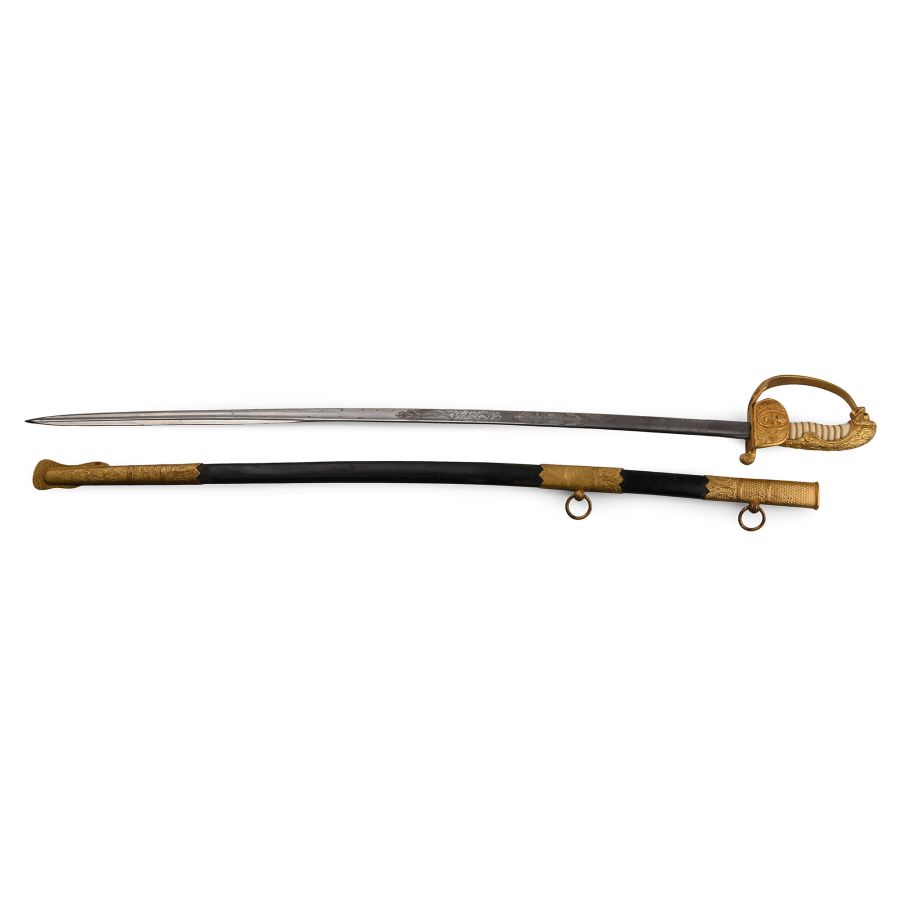
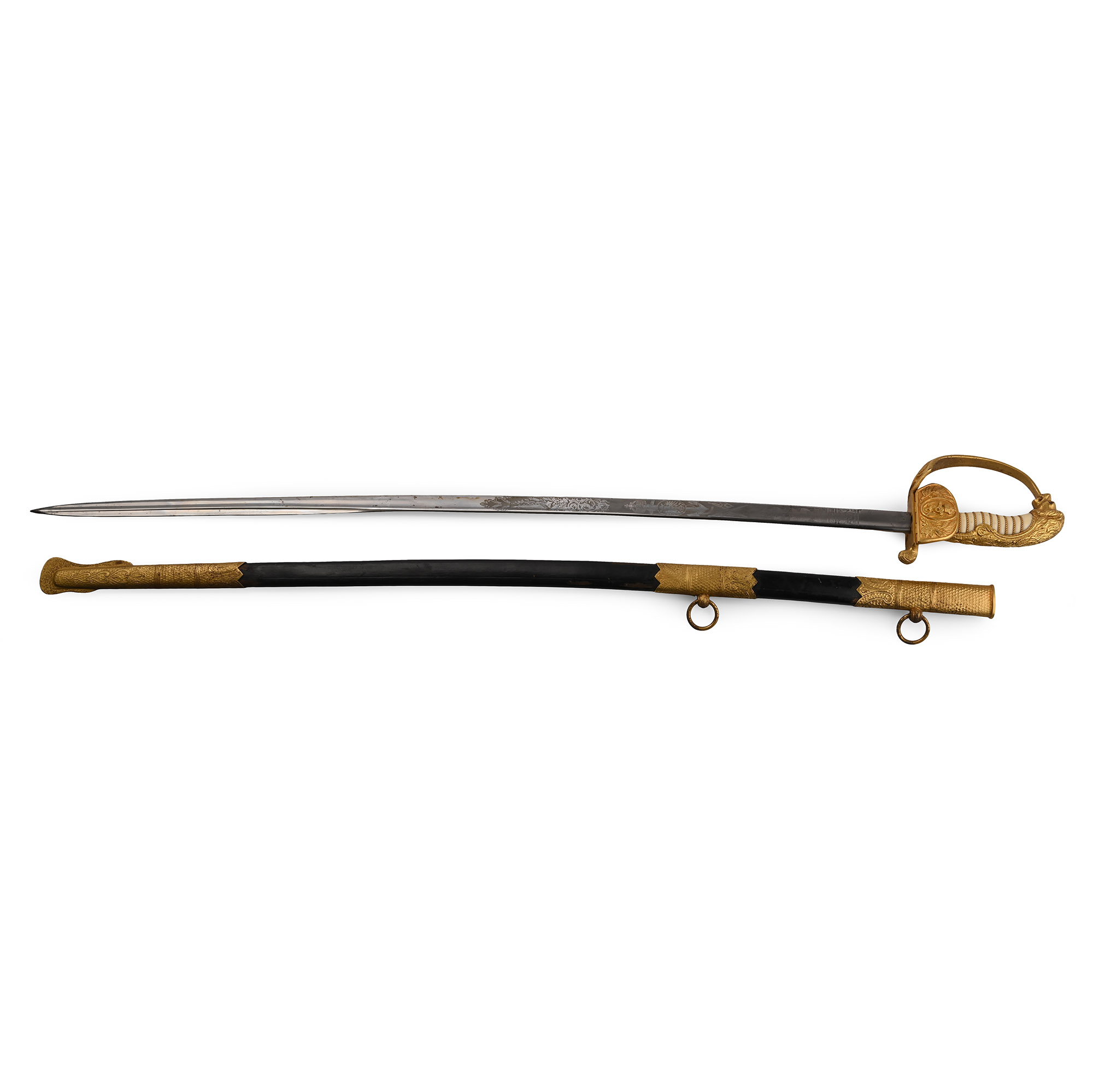
Kriegsmarine WWI German Naval Officer's Sword and Scabbard
EARLY 20TH CENTURY A.D.
36 5/8 in. (847 grams total, 93 cm).
Comprising a slender single-edged blade with etched maritime designs; the hilt composed of a wire-bound ribbed bone handle, a lion-head pommel with inset eyes (one absent), and an ornate guard with folding edges, one side with a socket for securing the scabbard; accompanied by a leather scabbard with ornate metal fittings. [No Reserve]
ProvenanceFrom the private collection of author and historian Dr DeWitt Bailey, one of the global authorities on the confederate army in the US civil war; thence by descent to his grandson.
CONDITIONTimeLine Auctions follows a vetting process to ensure the authenticity and legality of all items, reinforcing our commitment to integrity and responsible trading. Each antiquity, antique, and coin lot undergoes thorough examination by a vetting committee of at least ten external specialists, professional trade association members, scientists, and archaeologists: Our Vetting Process
AUCTIONS:
TimeLine is a leading auction house specialising in antiquities, ancient art, collectables, natural history, coins, medals, and books. Our auctions offer museums, collectors, historians, and enthusiasts the opportunity to acquire unique and historically significant pieces.
LOT 1472
Kriegsmarine WWI German Naval Officer's Sword and Scabbard
Sold for (Inc. bp): £780
-
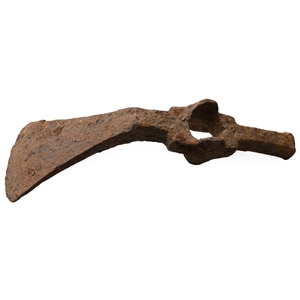
Late Roman Military Iron 'Dolabra' Trenching Tool
7th century A.D.Sold for (Inc. bp): £221
Pickaxe with two narrow, opposite and perpendicular cutting edges, central hole for the wooden handle flanked by two oval protrusions. 757 grams, 25.5 cm
Ex German art market, 2000s. Acquired from an EU collector living in London. From the collection of a Surrey, UK, gentleman.
This tool was used by Eastern Roman soldiers for trenching work, and it was also suitable for clearing stones, clearing rough terrain, and mining. If necessary, it could also be used as a weapon. -
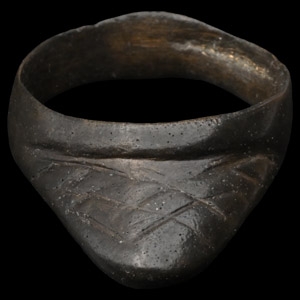
Byzantine Decorated Bronze Archer's Thumb Ring
5th-7th century A.D.Sold for (Inc. bp): £26
With horizontal ribbing, triangular flange extension with hatched detailing. 2.92 grams, 28.41 mm overall, 17.62 x 16.16 mm internal diameter (approximate size British M, USA 6, Europe 12.46, Japan 12)
From a private Tyneside collection, formed since the early 2000s. -
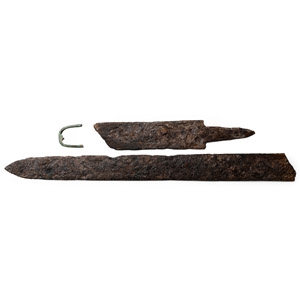
Saxon Sacrificed Iron Spatha with Bronze Chape
5th-6th century A.D.Estimate: £1,500 - 2,000 (+bp*)
Opening Bid: £600
Double-edged long sword (spatha) of type Osterburken-Kemathen; the blade with squared shoulders, broken into two parts for sacrificial reasons, tapering towards the point; sturdy tang partially preserved; wooden traces of the scabbard and hilt still visible; accompanied by a bronze outer rim of a scabbard; restored. 630 grams total, 78 cm long
From the private collection of a London gentleman, from his grandfather's collection formed before the early 1970s.
The deliberate fragmentation of a sword, often into three pieces, was a symbolic act of ‘killing’ the weapon, which was then placed as a grave good or offered in a ceremonial context. This was a Germanic custom already visible in the Vandal Przeworsk culture around the 3rd or 4th century A.D., which continued in Northern European areas until the 5th and the 6th centuries A.D.
