
LOT 3012
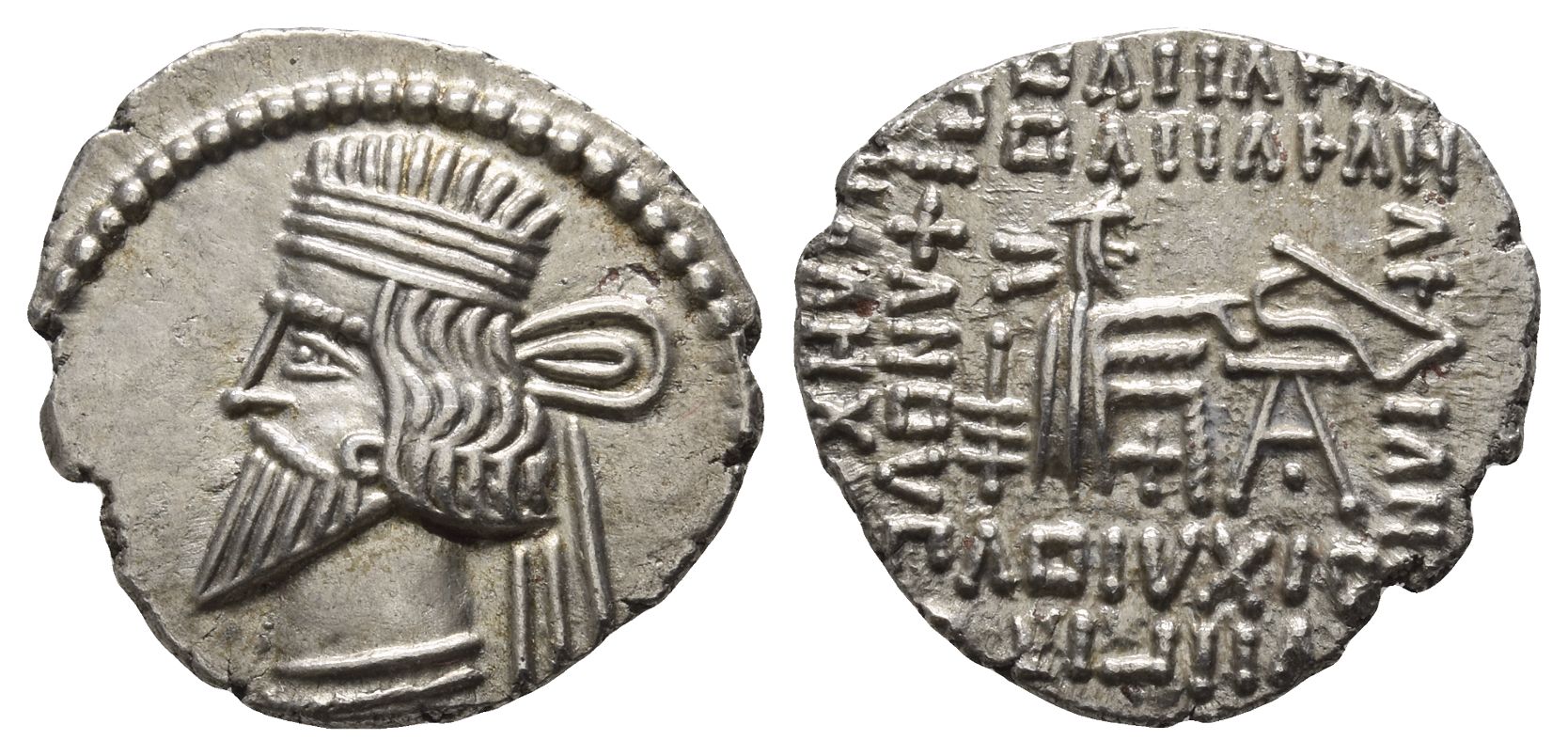
Kings of Parthia, Pakoros I AR Drachm. Circa AD 78-120.
Ekbatana mint. Diademed head to left, with long beard / Archer (Arsakes I) seated to right, no throne base visible, holding bow; monogram beneath bow. Sellwood 78.3 (Vologases III); Shore 413 (safe). Extremely fine.(3.36gr, 20mm, 11h). [No Reserve]
ProvenanceProperty of a Cambridgeshire, UK, dealer.
TimeLine Auctions follows a vetting process to ensure the authenticity and legality of all items, reinforcing our commitment to integrity and responsible trading. Each antiquity, antique, and coin lot undergoes thorough examination by a vetting committee of at least ten external specialists, professional trade association members, scientists, and archaeologists: Our Vetting Process
AUCTIONS:
TimeLine is a leading auction house specialising in antiquities, ancient art, collectables, natural history, coins, medals, and books. Our auctions offer museums, collectors, historians, and enthusiasts the opportunity to acquire unique and historically significant pieces.
-
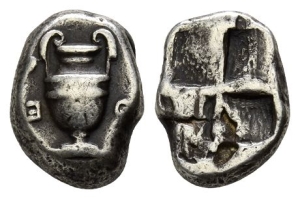
Boeotia, Thebes AR Quarter Stater or Hemidrachm. Circa 458-456 BC.
Sold for (Inc. bp): £364
Struck after the battle of Oenophyta 457 BC. Aeginetic Standard. Volute krater decorated with parallel circle lines, Ǝ-Θ flanking / Quadripartite incuse square. Unpublished in the most references; for a similar specimen see Traité III, p.220, 205 / pl.CXCIX, 1 (diobol). 3.09gr, 14mm
Very Fine. Toned. The only known issue of this short period of Theban coinage and possibly unique.
Property of a North London, UK, gentleman.
This very special coin struck during the short period after the end of the Persian Wars (478 BC) and up to the Battle of Oenophyta (457 BC), when after the conflict between the Thebans and the Athenians, the latter managed to regain control of Boeotia and Phocis. This was the period of transition of Theban coinage from the early period, when the multiple variations of the incuse on the reverse were replaced by the krater depiction, characteristic for all the denominations. Abandoned is the local use of the initial Theta ⴲ in its classical form ϴ. The only known similar example of Traité depicts a krater with the leaf of an ivy, a symbol of Dionysian worship, hanging from its left handle. Its incuse in the form of a swastika reminds those of the archaic coinage of Corinth and probably dates earlier than our example. -
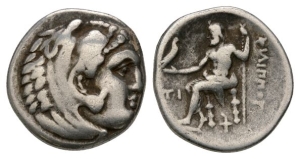
Kingdom of Macedon, Philip III Arrhidaios AR Drachm. 323-317 BC.
Sold for (Inc. bp): £33
Sardeis mint; struck under Menander or Kleitos, circa 322-319 BC. In the types of Alexander III. Head of Herakles to right, wearing lion skin headdress, paws tied beneath chin / ΦΙΛΙΠΠΟΥ, Zeus seated to left on backless throne, right leg drawn back, his feet resting on a low foot rest, holding long sceptre in his left hand and, in his right, eagle standing to right with closed wings; to left, TI; beneath throne, torch. Price P96. 4.11gr, 17mm, 12h
Near Very Fine. Very Rare.
Acquired on the UK art market; Property of an Essex, UK, gentleman. -
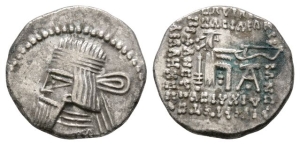
Kings of Parthia, Artabanos V AR Drachm. Circa AD 79/80-circa 85.
Sold for (Inc. bp): £26
Ekbatana mint. Diademed and draped bust to left / Archer (Arsakes I) seated to right on throne, holding bow; monogram beneath bow. Sellwood 74.6 (Artabanos III); Sunrise 442; Shore 404 (same). 3.76gr, 19mm, 12h
Good Very Fine. Some green deposits on reverse.
Acquired on the UK market before 2000; Property of a London, UK, gentleman.
