
Loading, please wait...
LOT 1834
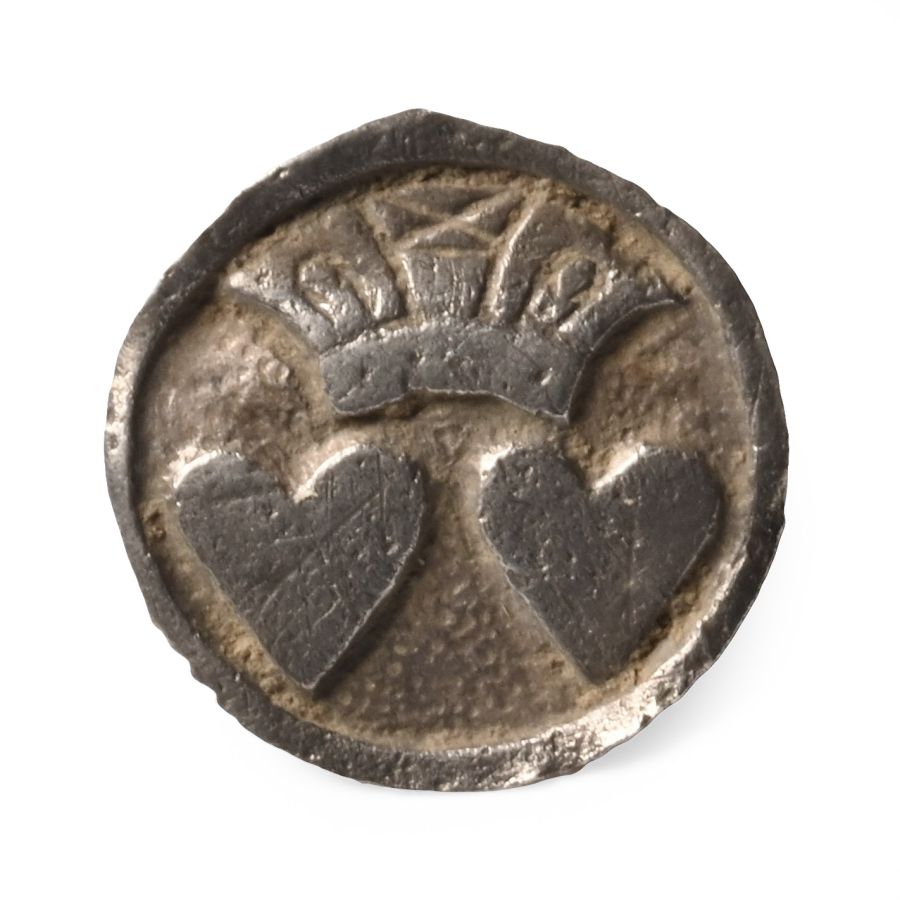
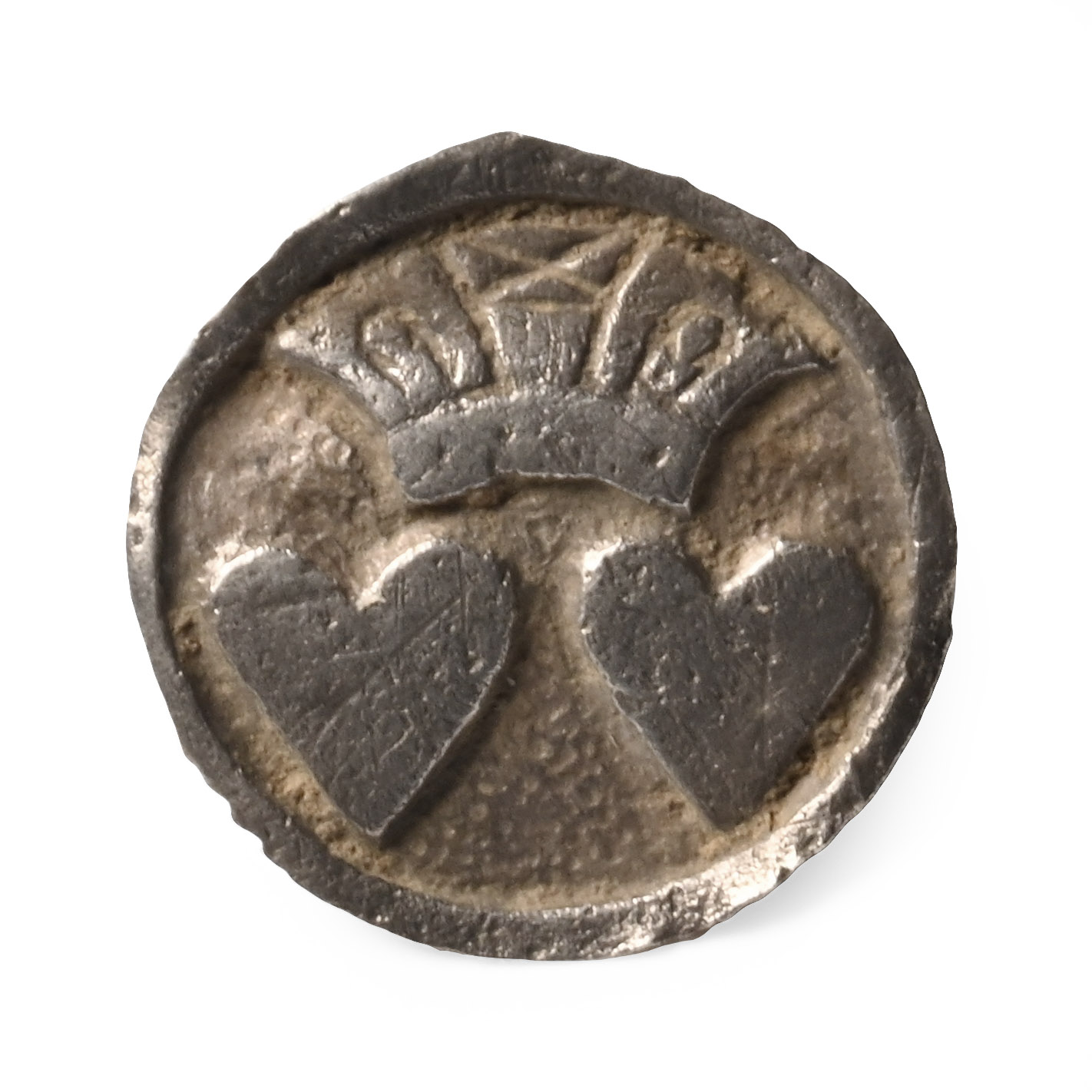
King Charles II and Queen Catherine Commemorative Silver Button
17TH CENTURY A.D.
1/2 in. (0.5 grams, 11 mm).
Discoid with two low-relief hearts with a crown above, loop to the reverse; a button or a cufflink element. [No Reserve]
ProvenanceEx Manchester, UK, collection, 1990s.
This lot is accompanied by an illustrated lot declaration signed by the Head of the Antiquities Department, Dr Raffaele D'Amato.
Cufflinks and other dress fittings such as buttons featuring the hearts design were originally conceived to commemorate the marriage of King Charles II of England to Catherine of Braganza in 1662, although various designs continued as a general symbol of love and/or marriage.
CONDITIONTimeLine Auctions follows a vetting process to ensure the authenticity and legality of all items, reinforcing our commitment to integrity and responsible trading. Each antiquity, antique, and coin lot undergoes thorough examination by a vetting committee of at least ten external specialists, professional trade association members, scientists, and archaeologists: Our Vetting Process
AUCTIONS:
TimeLine is a leading auction house specialising in antiquities, ancient art, collectables, natural history, coins, medals, and books. Our auctions offer museums, collectors, historians, and enthusiasts the opportunity to acquire unique and historically significant pieces.
LOT 1834
King Charles II and Queen Catherine Commemorative Silver Button
Sold for (Inc. bp): £286
-
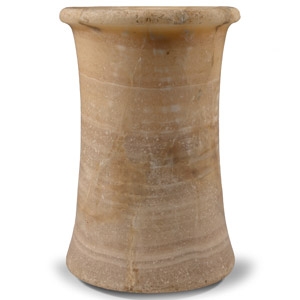
Western Asiatic Style Alabaster Vessel
20th century A.D.Sold for (Inc. bp): £72
Tubular in form with flared base, rolled rim. 4.1 kg, 25 cm
From a West London, UK, collection. Property of a North London, UK, gentleman. This lot is accompanied by an illustrated lot declaration signed by the Head of the Antiquities Department, Dr Raffaele D'Amato. -
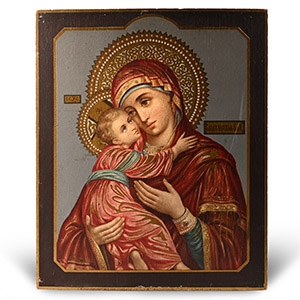
Russian Wooden Orthodox Icon of Mother of God Kazanskaya
Late 20th century A.D.Sold for (Inc. bp): £52
Showing the infant Jesus gazing tenderly towards his mother, Mary dressed in elaborate robe with pearl-embroidered cuffs; 'ICXC' above the infant's halo, and Cyrillic inscription on the opposite side; printed on wood. 638 grams, 26.7 x 22.2 cm
Ian Wilkinson collection, Nottinghamshire, UK, formed since 1985. This lot is accompanied by an illustrated lot declaration signed by the Head of the Antiquities Department, Dr Raffaele D'Amato. -
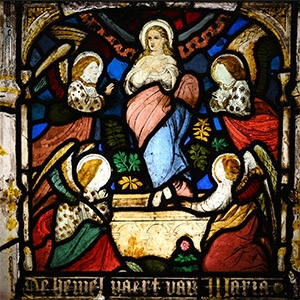
Stained Glass Panel with the Assumption of Mary
Flemish, 19th century A.D. or earlierSold for (Inc. bp): £1,300
In late 15th century style, Mary ascending to Heaven in the foreground with her arms crossed, dressed in a white and blue garment, wrapped in a red cloak; surrounded by four angels in white embroidered robes, covered by red, green and gold mantles; on the background the grave of Mary surrounded by vegetal ornaments; inscription at the bottom in medieval Flemish ‘DE HEMELVAART VAN MARIA’ (the Assumption of Mary) in uncial letters; some restoration. 4.5 kg, 65 x 53.5 cm
Some restoration.
From a war-damaged church in Belgium. Ex property of a late Northumberland collector. From a private collection, Derbyshire, UK. This lot is accompanied by an illustrated lot declaration signed by the Head of the Antiquities Department, Dr Raffaele D'Amato.
The Assumption of Mary into Heaven is a dogma of faith of the Roman Catholic Church, according to which Mary at the end of her earthly life went to Heaven in body and soul. According to the Eastern Orthodox tradition, the Assumption of Mary was preceded by a deep sleep (Dormitio Virginis): but the Dormition of Mary is not the object of dogma, while her glorification in body and soul is an integral part of the faith of the Catholic Church.
