
Loading, please wait...
LOT 1312
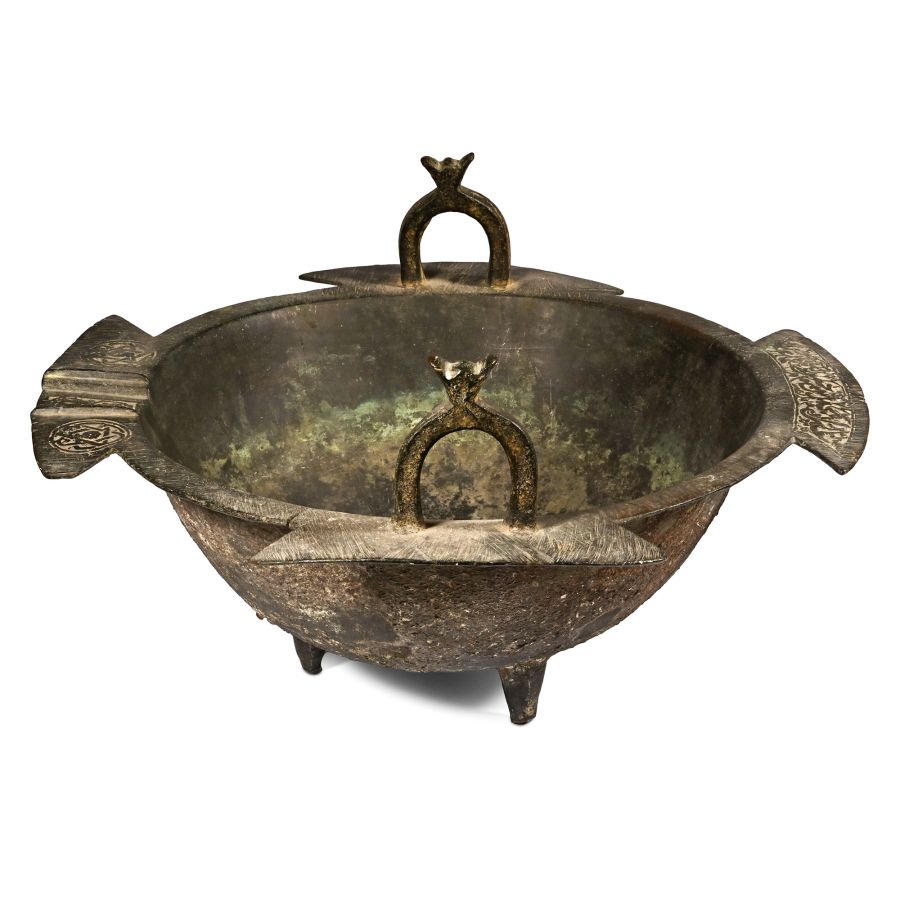
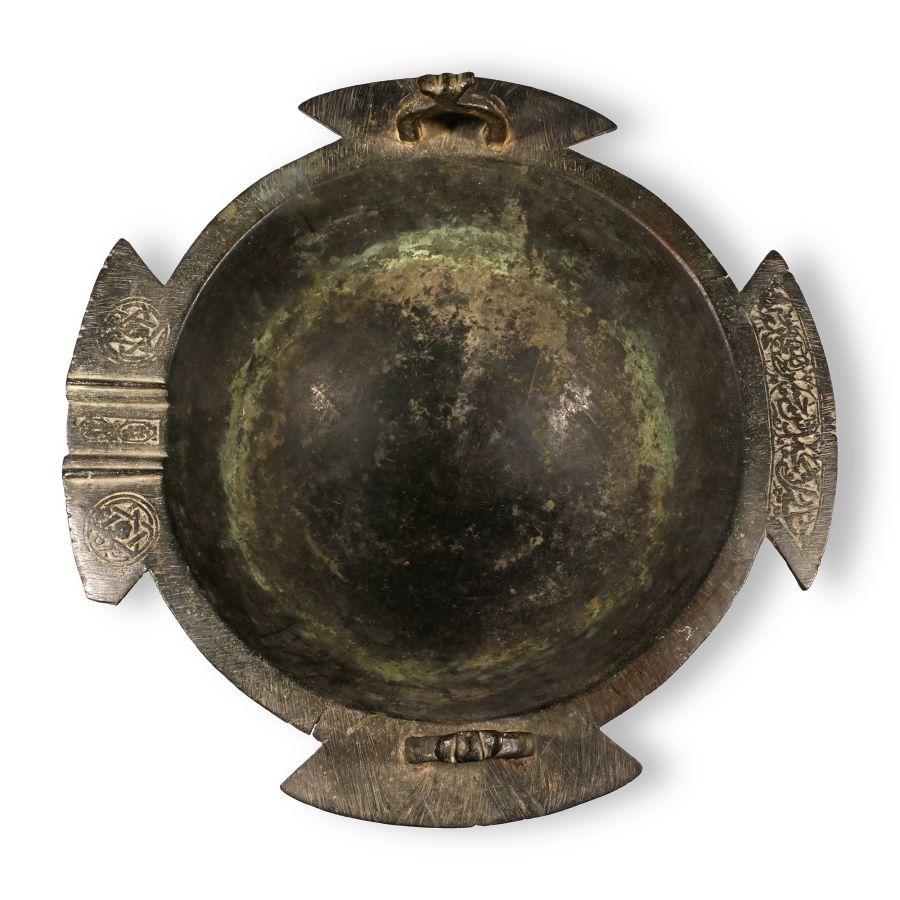
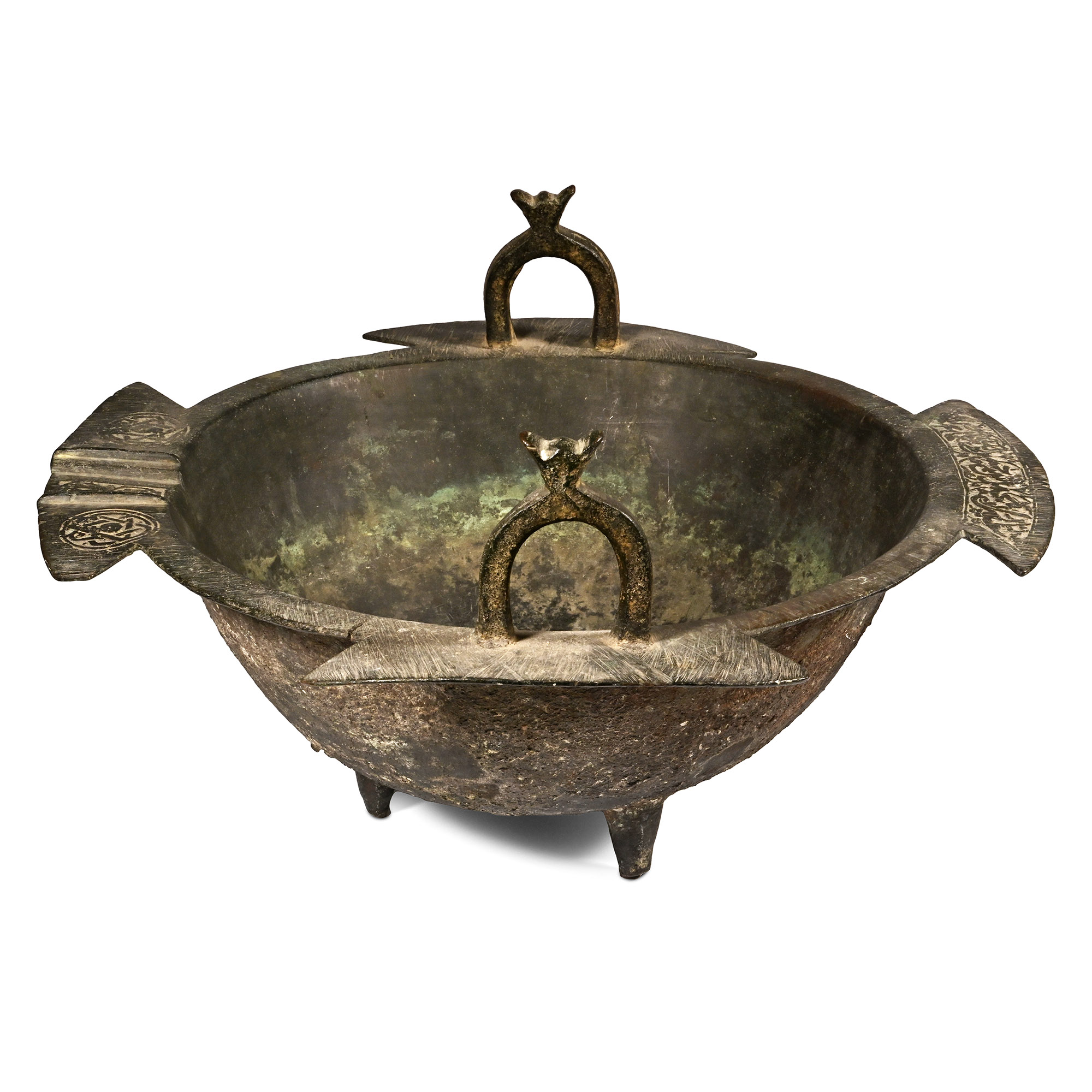
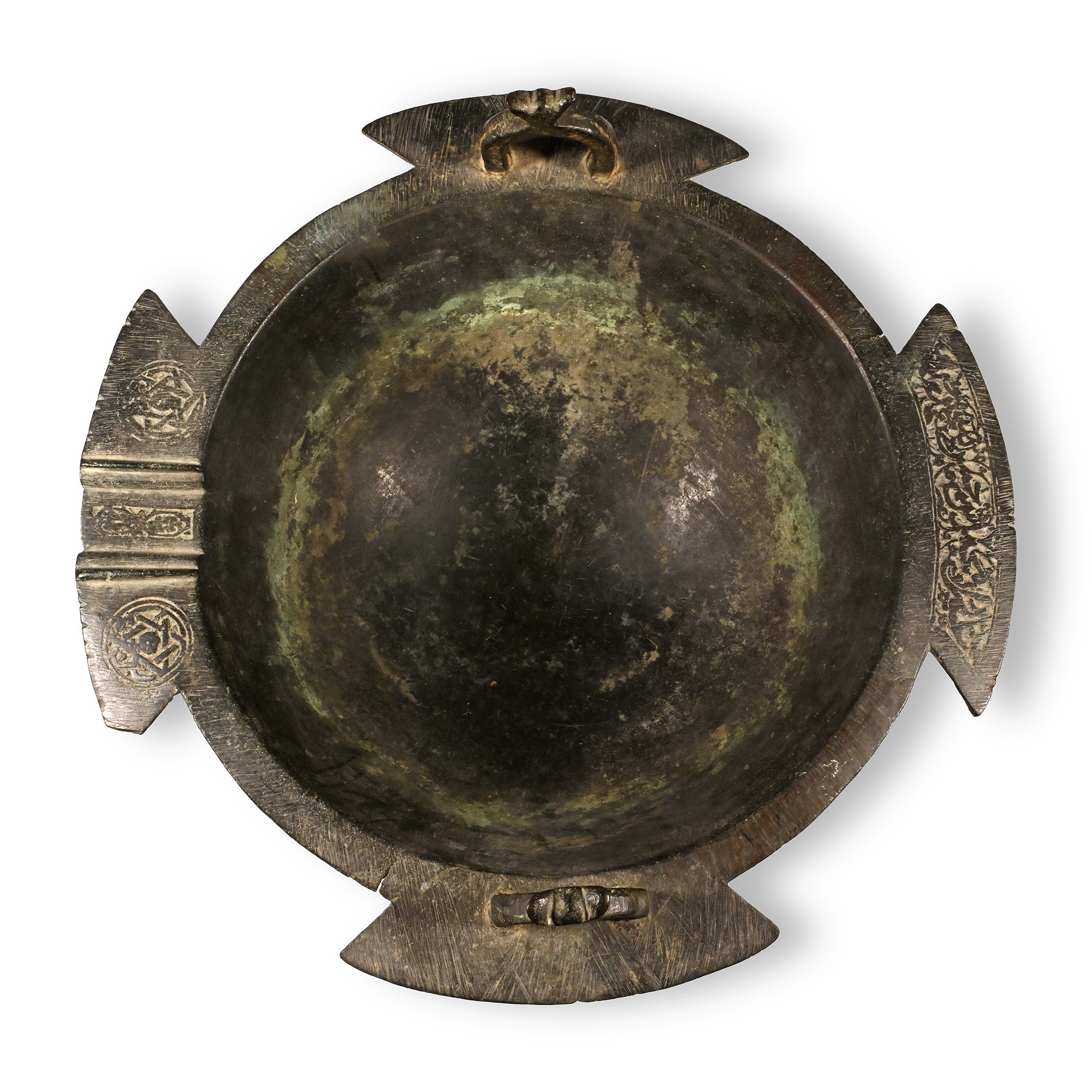
Khorasan 'Muhammad Bin Husayn' Bronze Cauldron
11TH-12TH CENTURY A.D.
17 1/8 in. (5.75 kg, 43.5 cm).
With a deep hemispherical bowl and three stub feet, two lateral trapezoidal flanges to the rim, each with an arched handle; similar flange to forward edge with reserved panel of scrolled foliage; to the rear, flange with shallow median socket decorated with scrolled tendrils, two lateral discs each with a star of intersecting triangles; signed by Muhammad Bin Husayn.
Provenancewith Christie's, South Kensington, Art & Textiles of The Islamic & Indian Worlds, 8 April 2011, no.150.
Private collection, UK.
TimeLine Auctions follows a vetting process to ensure the authenticity and legality of all items, reinforcing our commitment to integrity and responsible trading. Each antiquity, antique, and coin lot undergoes thorough examination by a vetting committee of at least ten external specialists, professional trade association members, scientists, and archaeologists: Our Vetting Process
AUCTIONS:
TimeLine is a leading auction house specialising in antiquities, ancient art, collectables, natural history, coins, medals, and books. Our auctions offer museums, collectors, historians, and enthusiasts the opportunity to acquire unique and historically significant pieces.
LOT 1312
Khorasan 'Muhammad Bin Husayn' Bronze Cauldron
Estimate £500 - 700€580 - 810 (for guidance only)$680 - 950 (for guidance only)
-
Amlash Painted Terracotta Vessel with Spout
1st millennium B.C.Sold for (Inc. bp): £208
With rounded body and narrow base, tubular spout with everted rim; the body with intersecting linear decoration. 252 grams, 14.6 cm
with Galerie Rhéa, Zurich, Switzerland. -
Luristan Bronze Ram Statuette
1st millennium B.C.Sold for (Inc. bp): £117
Modelled in the round with lateral piercing at the shoulders, thick pendulous horns. 26 grams, 41 mm
Ex London, UK, collection, early 2000s. -
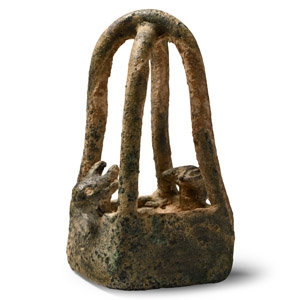
Western Asiatic Bronze Cage Weight
2nd-1st millennium B.C.Estimate: £600 - 800 (+bp*)
Opening Bid: £300
Comprising a rectangular basket with two overlapping U-shaped handles, two bull heads resting on the edge of the basket. 198 grams, 74 mm
From the collection of a gentleman, acquired on the London art market in the 1990s.
