
Loading, please wait...
LOT 1043
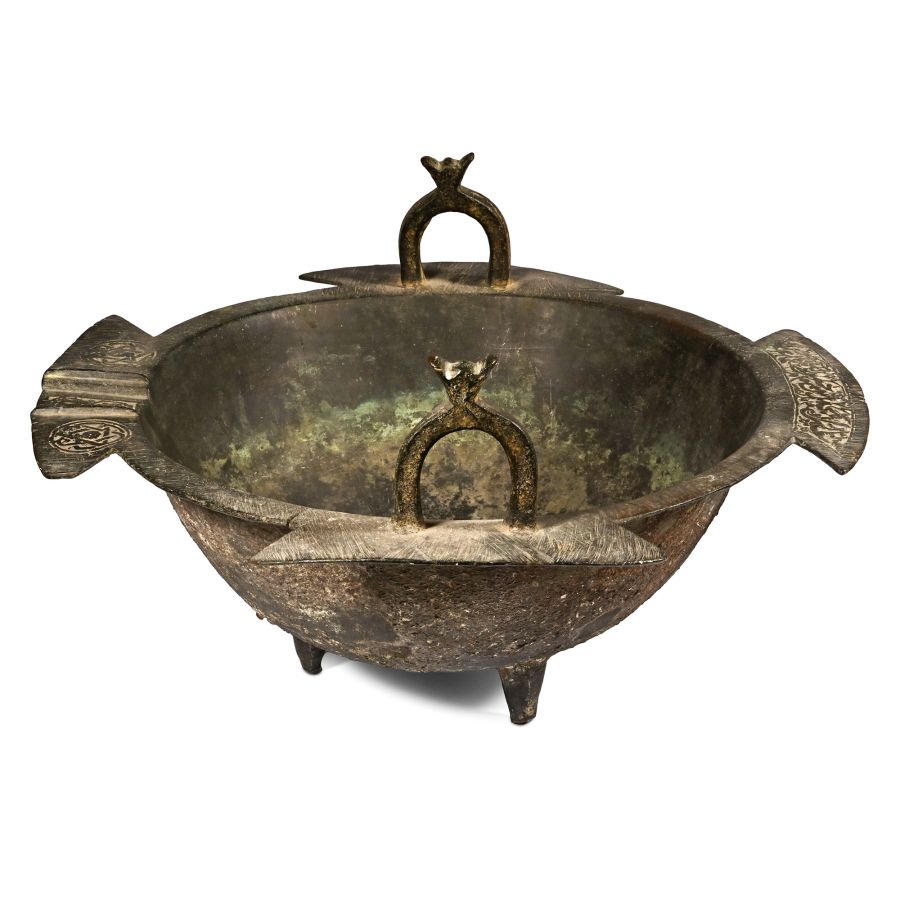
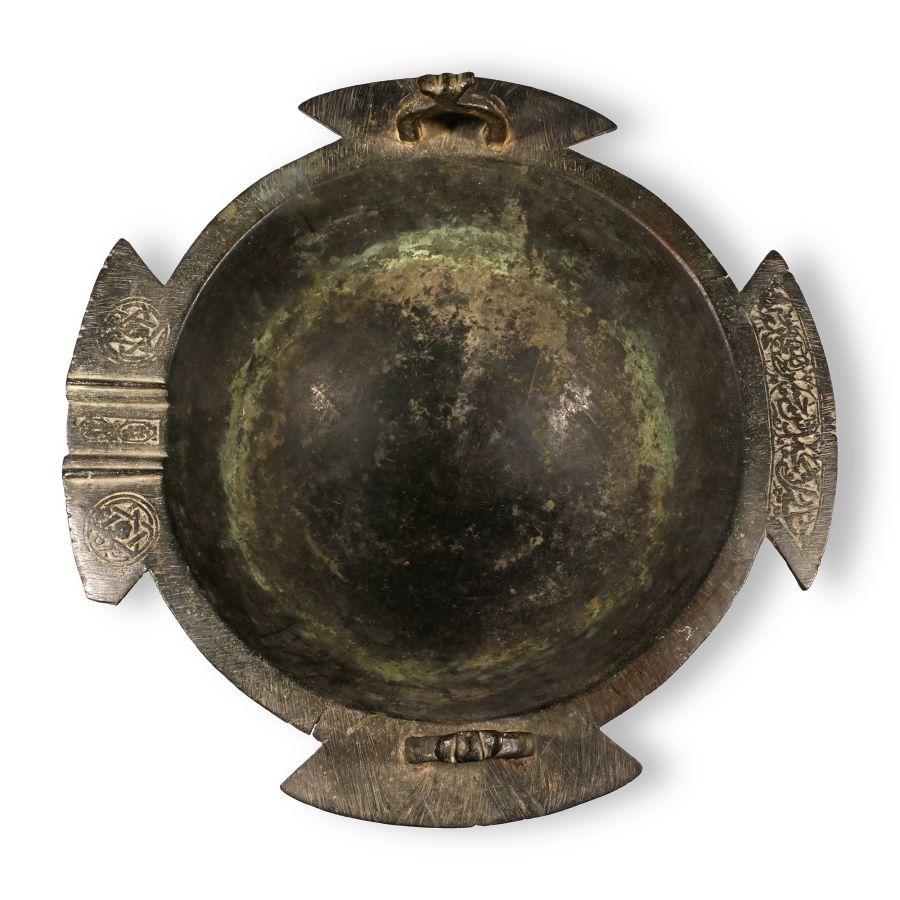
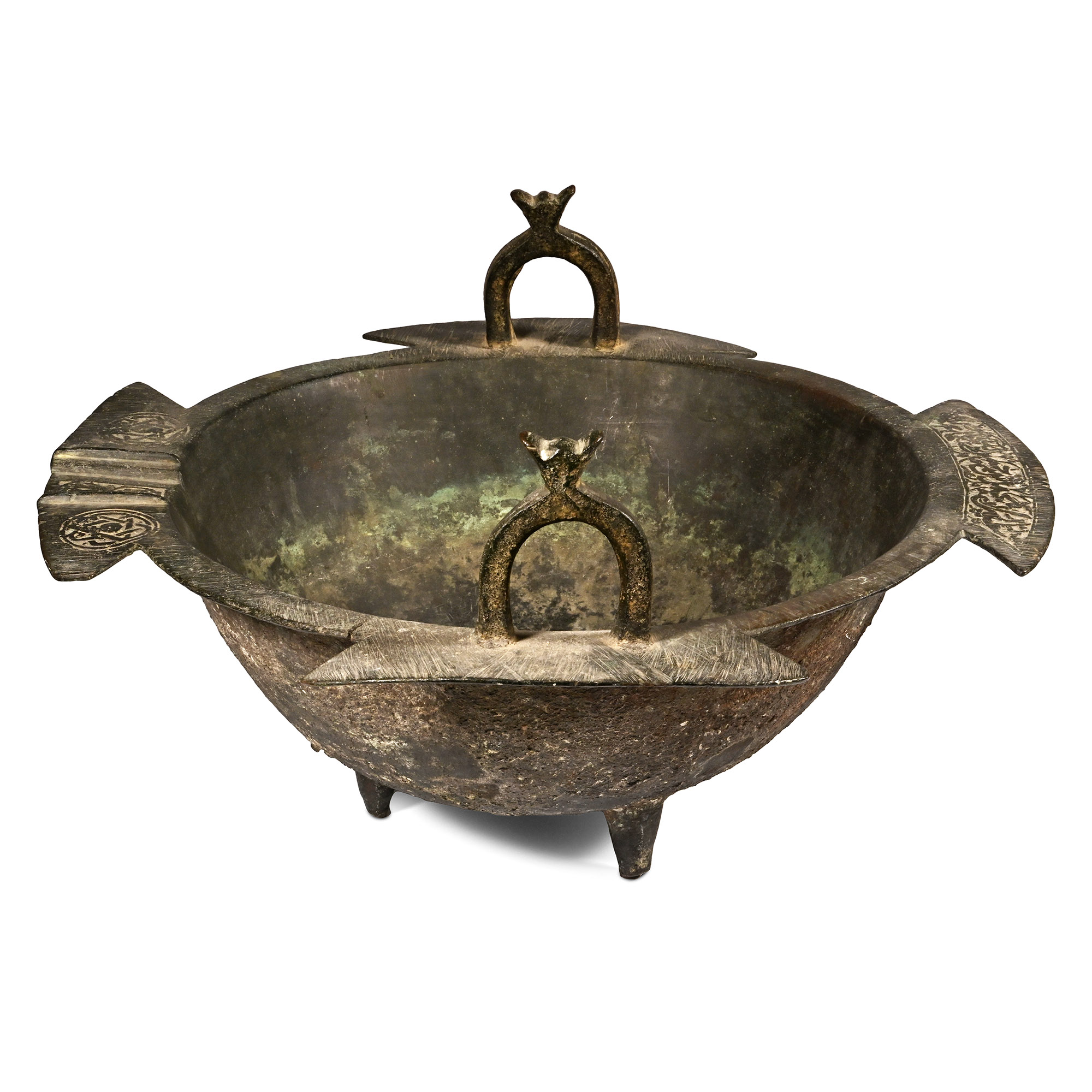
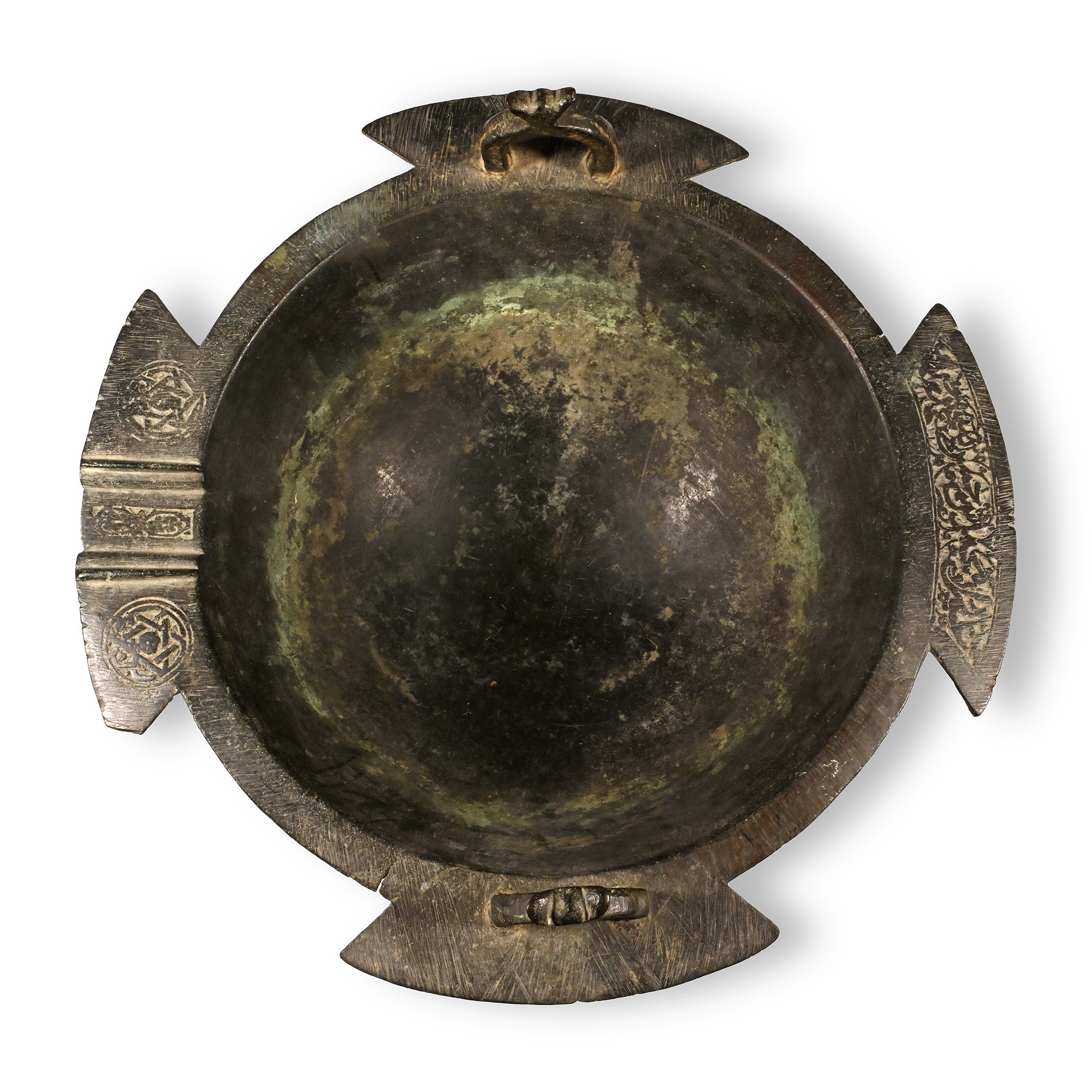
Khorasan 'Muhammad Bin Husayn' Bronze Cauldron
11TH-12TH CENTURY A.D.
17 1/8 in. (5.75 kg, 43.5 cm).
With deep hemispherical bowl and three stub feet, two lateral trapezoidal flanges to the rim each with an arched handle; similar flange to forward edge with reserved panel of scrolled foliage; to the rear, flange with shallow median socket decorated with scrolled tendrils, two lateral discs each with a star of intersecting triangles; signed by Muhammad Bin Husayn
Provenancewith Christie's, South Kensington, Art & Textiles of The Islamic & Indian Worlds, 8 April 2011, no.150.
Private collection, UK.
This lot has been cleared against the Art Loss Register database, and is accompanied by an illustrated lot declaration signed by the Head of the Antiquities Department, Dr Raffaele D'Amato.
TimeLine Auctions follows a vetting process to ensure the authenticity and legality of all items, reinforcing our commitment to integrity and responsible trading. Each antiquity, antique, and coin lot undergoes thorough examination by a vetting committee of at least ten external specialists, professional trade association members, scientists, and archaeologists: Our Vetting Process
AUCTIONS:
TimeLine is a leading auction house specialising in antiquities, ancient art, collectables, natural history, coins, medals, and books. Our auctions offer museums, collectors, historians, and enthusiasts the opportunity to acquire unique and historically significant pieces.
LOT 1043
Khorasan 'Muhammad Bin Husayn' Bronze Cauldron
Estimate £700 - 900€810 - 1,040 (for guidance only)$950 - 1,220 (for guidance only)
-
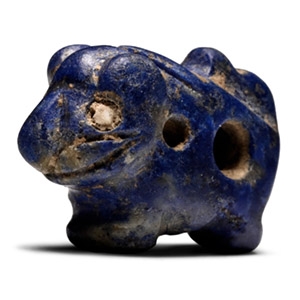
Western Asiatic Lapis Lazuli Animal Bead
1st millennium B.C.Sold for (Inc. bp): £468
Modelled in the round with transverse piercing behind the shoulder. 2.72 grams, 17 mm
Acquired before 1983. Ex London gallery, 1990s. This lot has been cleared against the Art Loss Register database, and is accompanied by an illustrated lot declaration signed by the Head of the Antiquities Department, Dr Raffaele D'Amato. -
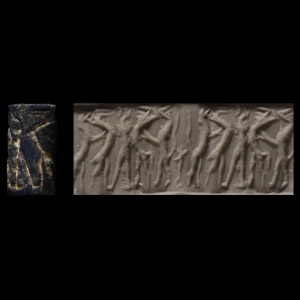
Old Babylonian Lapis Lazuli Cylinder Seal with Animals
2200-2000 B.C.Sold for (Inc. bp): £211
With frieze of leaping and rearing ibexes; supplied with a museum-quality impression. 1.45 grams, 13.9 mm
Acquired in the 1996. Private collection, Switzerland, thence by descent. Private collection, since the late 1990s. This lot has been cleared against the Art Loss Register database, and is accompanied by an illustrated lot declaration signed by the Head of the Antiquities Department, Dr Raffaele D'Amato. -
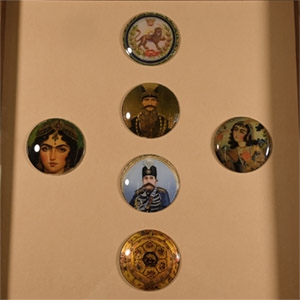
Painted Enamelled Plaques of The Iranian Royal Family
19th century A.D.Sold for (Inc. bp): £975
Group of portrait miniatures on glass discs including two males in military uniform, a close-up female face, female bust in three-quarter view, Iranian royal badge of an advancing lion wielding a sword with the rising sun on its back, and cinquefoil with lion-and-sun motif to the centre; mounted in a glazed wooden frame with gilt edging. 3 kg total, 50.5 x 49 cm
Private collection, London, UK. This lot has been cleared against the Art Loss Register database, and is accompanied by an illustrated lot declaration signed by the Head of the Antiquities Department, Dr Raffaele D'Amato.
