
Loading, please wait...
LOT 1163
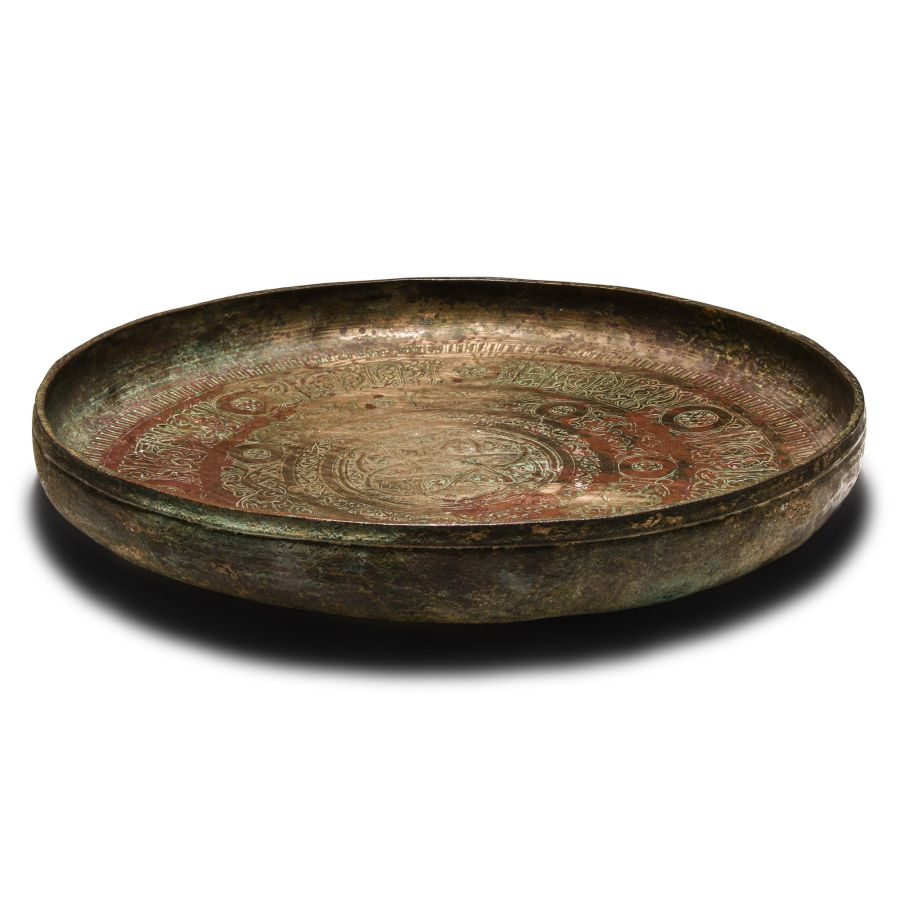
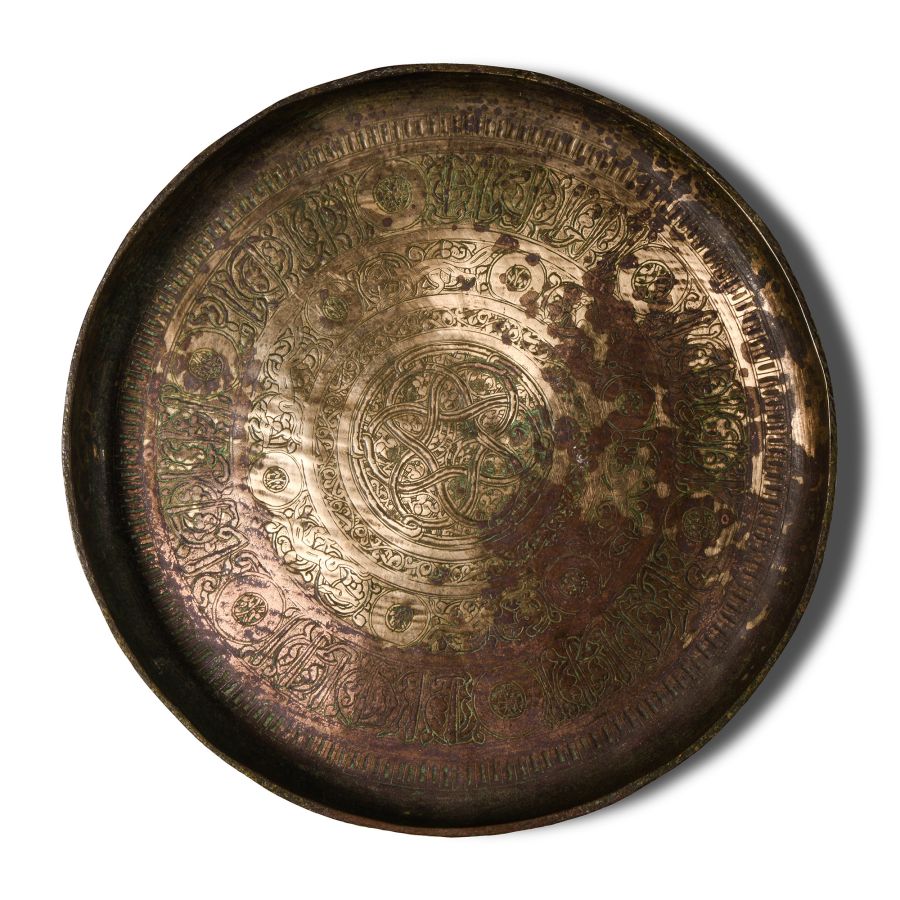
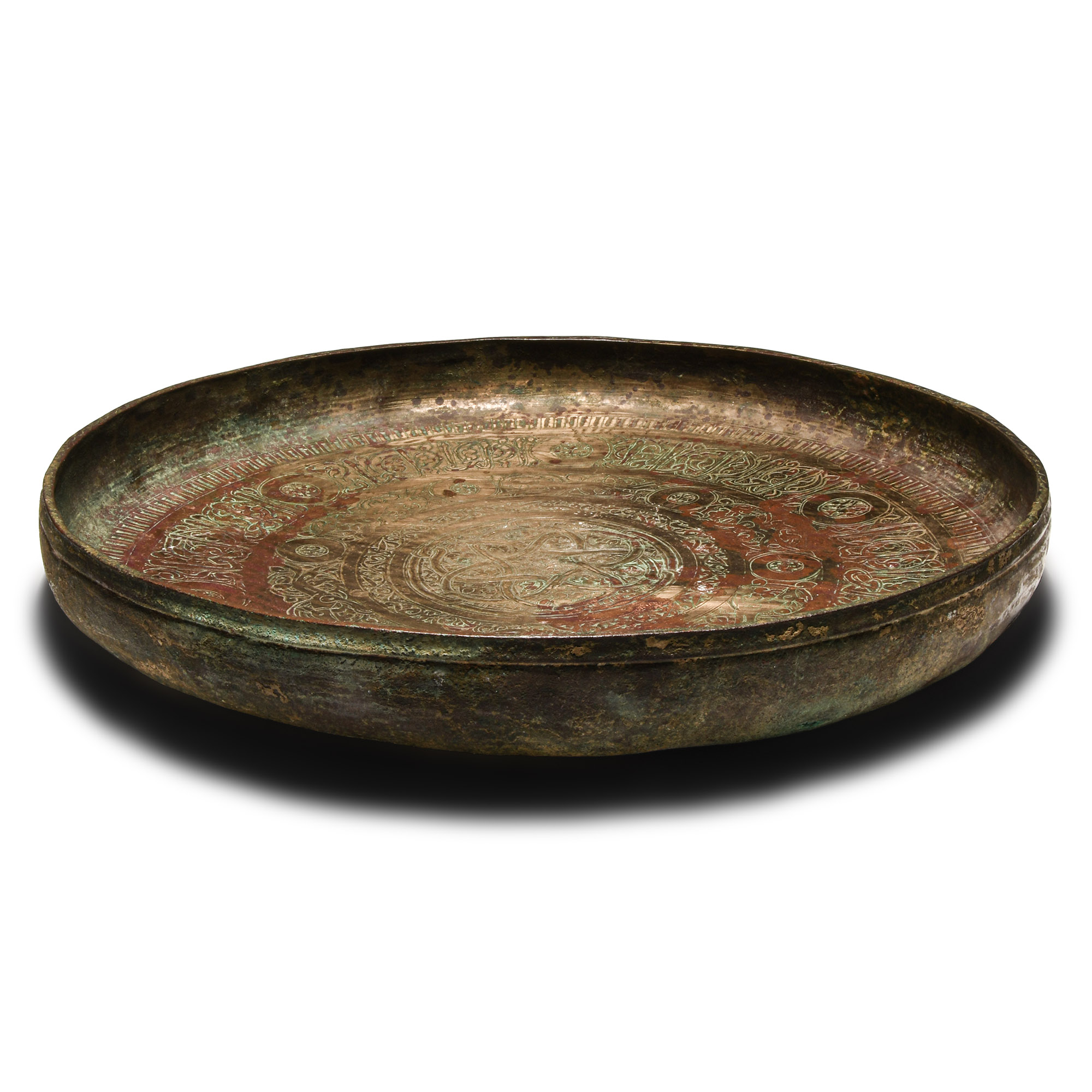
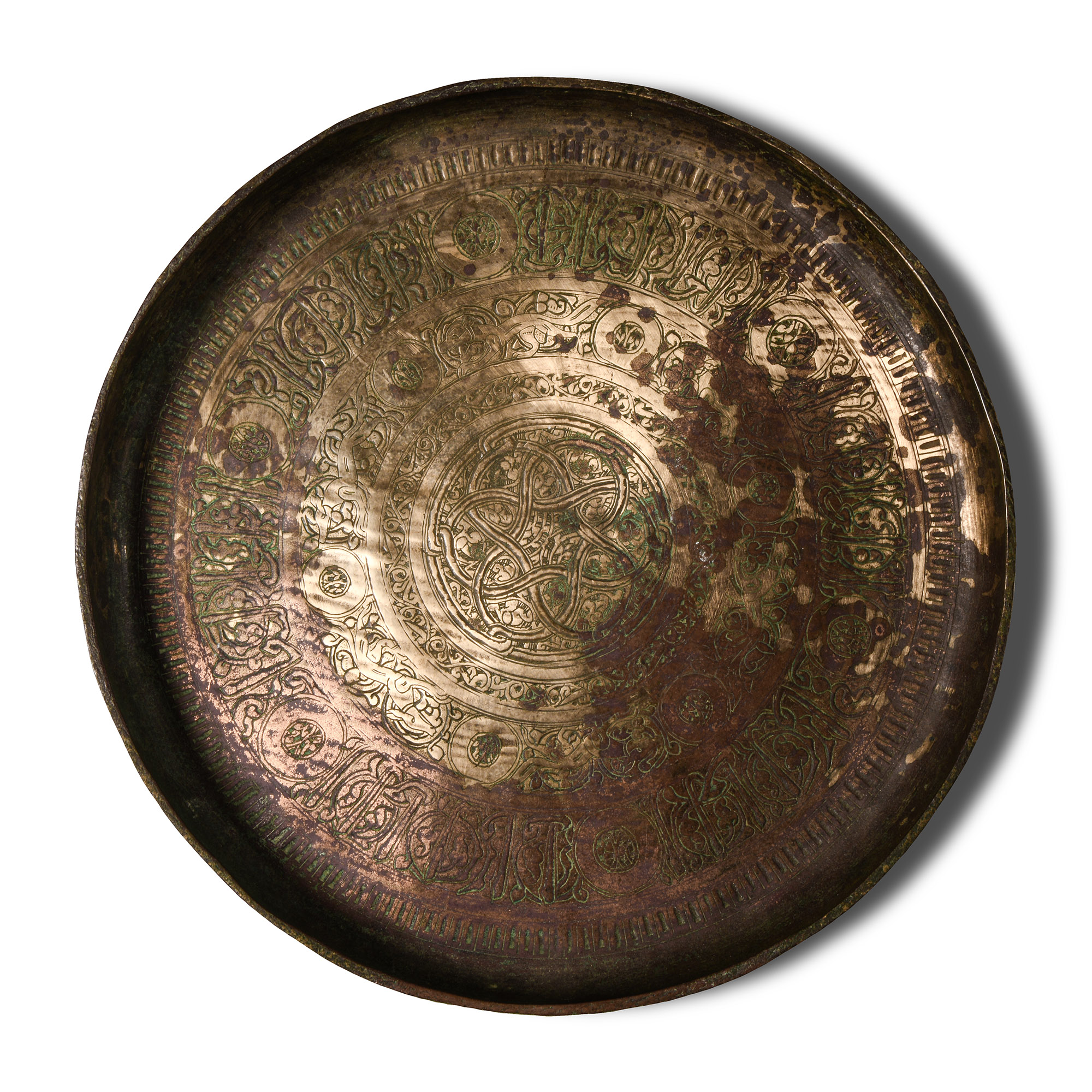
Khorasan Bronze Dish with Foxes
12TH CENTURY A.D.
10 5/8 in. (845 grams, 27 cm).
Squat dish or shallow bowl with raised rim; central looped interlace motif on a hatched foliage field, concentric decorative rings including running tendrils, frieze of running foxes, calligraphic text, radiating billets. [No Reserve]
ProvenanceAcquired on the UK art market, October 2000.
Ex central London gallery.
Cf. von Gladiss, A., Glanz und Substanz. Metallarbeitung in der Sammlung des Museums für Islamische Kunst, Berlin, 2012, item 2, for type.
CONDITIONTimeLine Auctions follows a vetting process to ensure the authenticity and legality of all items, reinforcing our commitment to integrity and responsible trading. Each antiquity, antique, and coin lot undergoes thorough examination by a vetting committee of at least ten external specialists, professional trade association members, scientists, and archaeologists: Our Vetting Process
AUCTIONS:
TimeLine is a leading auction house specialising in antiquities, ancient art, collectables, natural history, coins, medals, and books. Our auctions offer museums, collectors, historians, and enthusiasts the opportunity to acquire unique and historically significant pieces.
-
Western Asiatic Marble Ibex Head with Painted Eyes and Remains of Original Pigment
Mid 1st millennium B.C.Sold for (Inc. bp): £7,150
Carved in the round with fine facial detailing; flaring nostrils and deep-set mouth, beard beneath the chin; inlaid eyes with raised black lids framing the large pupils, curving horns with ribbed detailing picked out in black pigment; mounted on a custom-made display stand. 1.4 kg total, 23.2 cm high including stand
Acquired on the London art market, 1993. Property of a gentleman. This lot has been checked against the Interpol Database of stolen works of art and is accompanied by search certificate no.12069-214290.
In Mesopotamian art, wild sheep, ibexes, gazelles, antelopes, and goats of various species are frequently represented in art from the earliest times until the Parthian period. -
Western Asiatic Turquoise Blue Glass Bead Necklace String
1st millennium B.C. and laterSold for (Inc. bp): £52
Restrung using mainly oblate beads. 5.16 grams, 44 cm long
UK gallery, early 2000s.
Turquoise has been known since prehistoric times, and it is widely used in jewellery in the Middle East (Egypt and Persia), the Far East (Tibet, Mongolia and China) and even by native North Americans. Turquoise was very fashionable also in Europe, especially during the 18th and 19th centuries. -
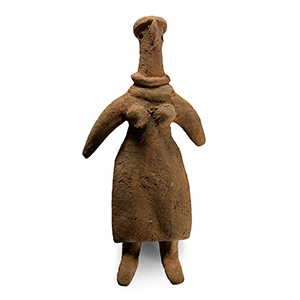
Chalcolithic Terracotta Figure
Circa 3rd millennium B.C.Estimate: £800 - 1,000 (+bp*)
Opening Bid: £400
Modelled in the round with columnar head and neck, pinched and impressed facial details, applied headdress, collar and calf-length skirt, stub arms. 173 grams, 17.5 cm high
From the property of the late Mr SM, London, UK, 1969-1999. Accompanied by a thermoluminescence analysis report no.N122k33 from Oxford Authentication.
