
Loading, please wait...
LOT 1137
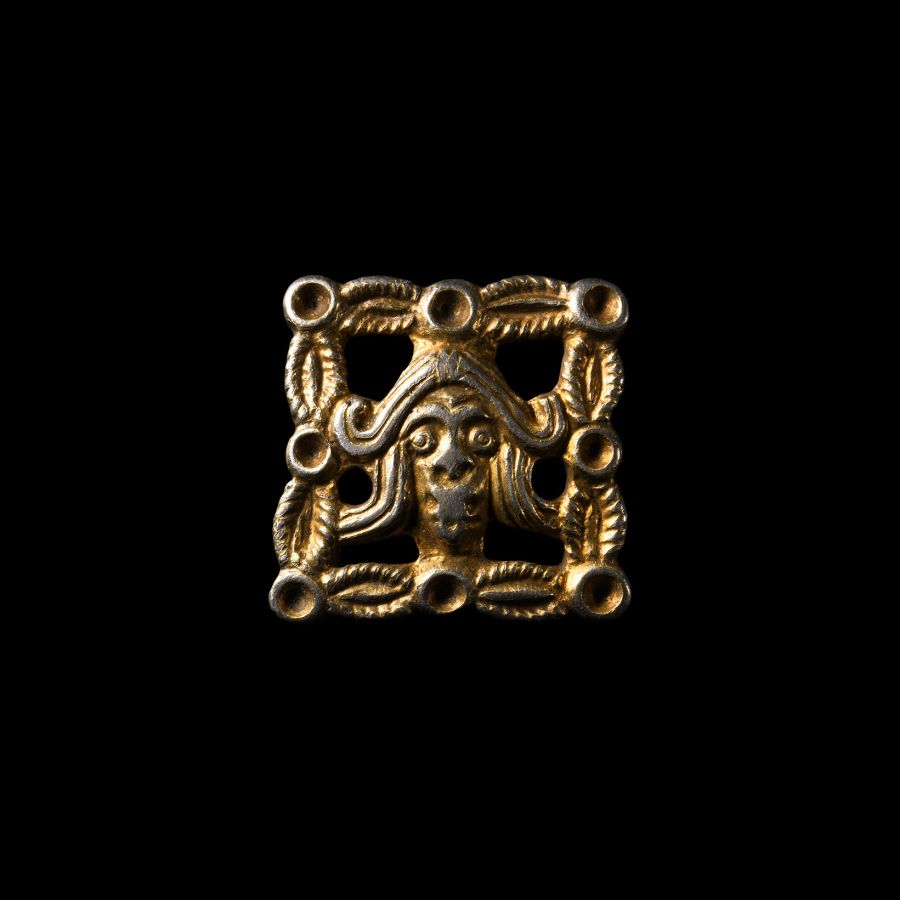
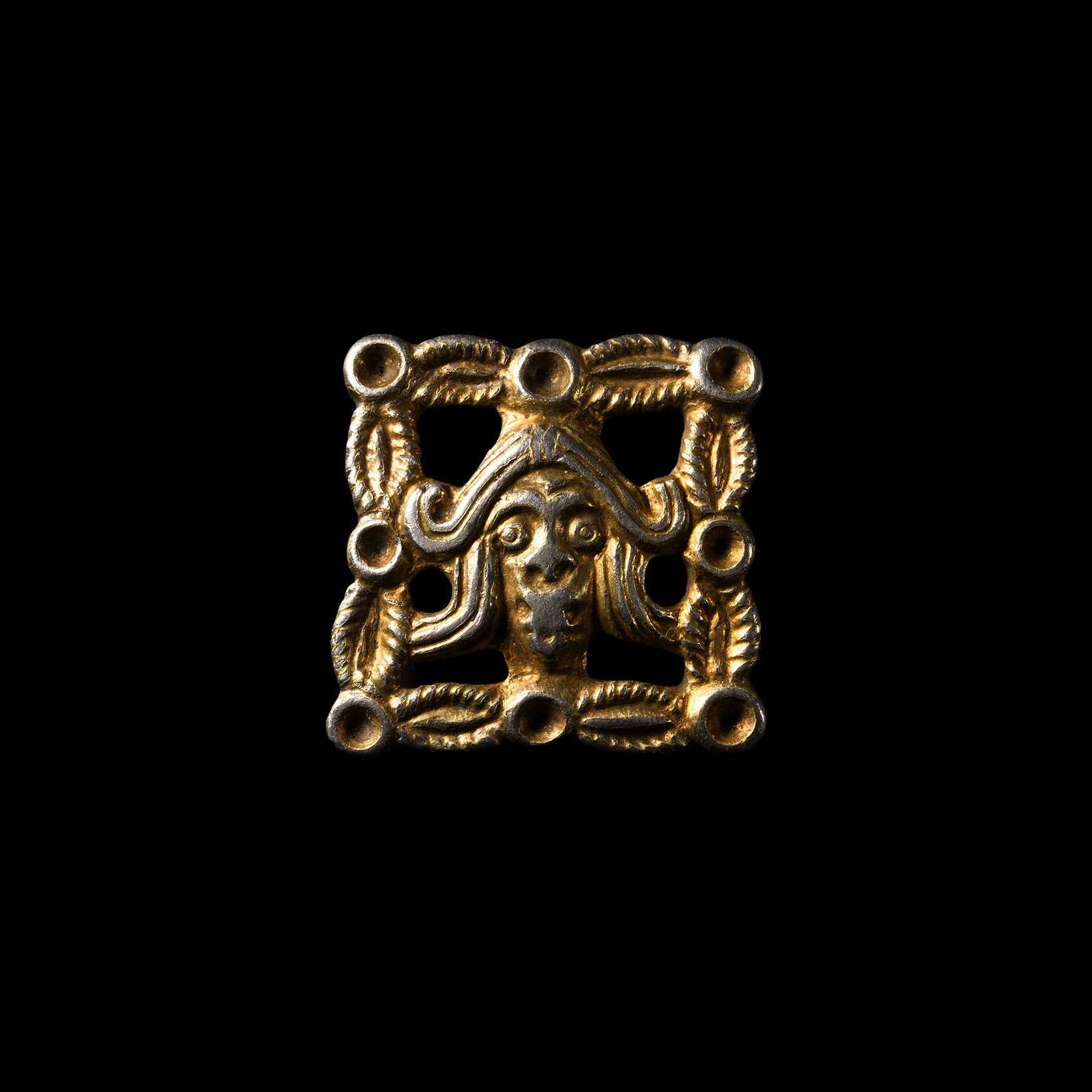
Khazar Silver-Gilt Sword Belt Mount with Warrior
9TH-10TH CENTURY A.D.
7/8 in. (8.27 grams, 22 mm).
Square in plan with a slightly convex openwork panel composed of alternating circular cells and leaf-like ovals, central male head with long hair and stylised facial features, possibly wearing a helmet; attachment loop to each corner on the reverse.
ProvenanceAcquired in the 1980s-1990s.
Ex an important central London gallery, London W1.
TimeLine Auctions follows a vetting process to ensure the authenticity and legality of all items, reinforcing our commitment to integrity and responsible trading. Each antiquity, antique, and coin lot undergoes thorough examination by a vetting committee of at least ten external specialists, professional trade association members, scientists, and archaeologists: Our Vetting Process
AUCTIONS:
TimeLine is a leading auction house specialising in antiquities, ancient art, collectables, natural history, coins, medals, and books. Our auctions offer museums, collectors, historians, and enthusiasts the opportunity to acquire unique and historically significant pieces.
-
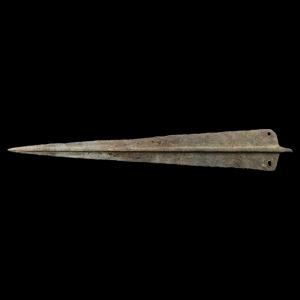
Luristan Bronze Blade
Late 2nd- early 1st millennium B.C.Sold for (Inc. bp): £140
Sharply pointed with raised midrib to each face, square shoulders pierced to accept the fixings for the hilt, stub tang. 217 grams, 35.5 cm
Ex German collection, Cologne, 1980-1990s.
The two holes on the shoulders of the blade provided attachment for a separate hilt. This could have been a penannular grip, which can be seen on some swords from Sangtarashan; or in north-west Iranian blades with rectangular guard and flanged hilt, where the guard was rivetted to the blade, like in some swords in the Axel Guttmann collection. -
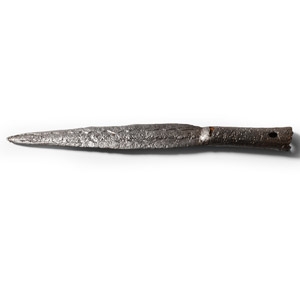
Viking Socketted Spearhead
10th-14th century A.D.Sold for (Inc. bp): £91
The leaf-shaped head with full-length midrib to both faces, tapering round-section socket with piercing for attachment to an organic shaft. 70 grams, 22 cm
Ex Surrey collection, formed 1990-2000. Acquired from TimeLine Auctions 2016, lot 162 (part). The Kusmirek Collection, UK. -
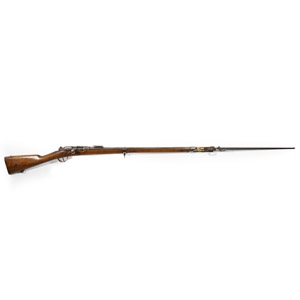
1866/74 Model Gras Rifle and Bayonet
Dated 1868 A.D.Estimate: £500 - 700 (+bp*)
Opening Bid: £222
Round rifled 90cm (35½") barrel of 11mm calibre with folding rear sight (without slide), bolt action with serial no.52431 to breech; fitted with full wood stock with steel butt cap, trigger guard, sling swivels and fore-end, steel cleaning rod; with correct Gras bayonet inscribed 'M[--] d'Armes de St Etienne 8bre 1878' to back and steel scabbard. 4.8 kg, 1.84 m
Acquired from Czerny's Auctions, Italy, 2019. The Kusmirek Collection, UK. Accompanied by a copy of Czerny's invoice and listing.
Sold as an exempt item under Section 58 (2) of the Firearms Act, 1968, to be held as a curiosity or ornament. No license required but buyer must be over 18 years of age. Overseas bidders should note that, due to UK regulations governing export of all firearms, overseas buyers will need to make arrangements for shipping this lot out of the UK directly, by air freight, with a specialist company or agent.
