
Loading, please wait...
LOT 1085
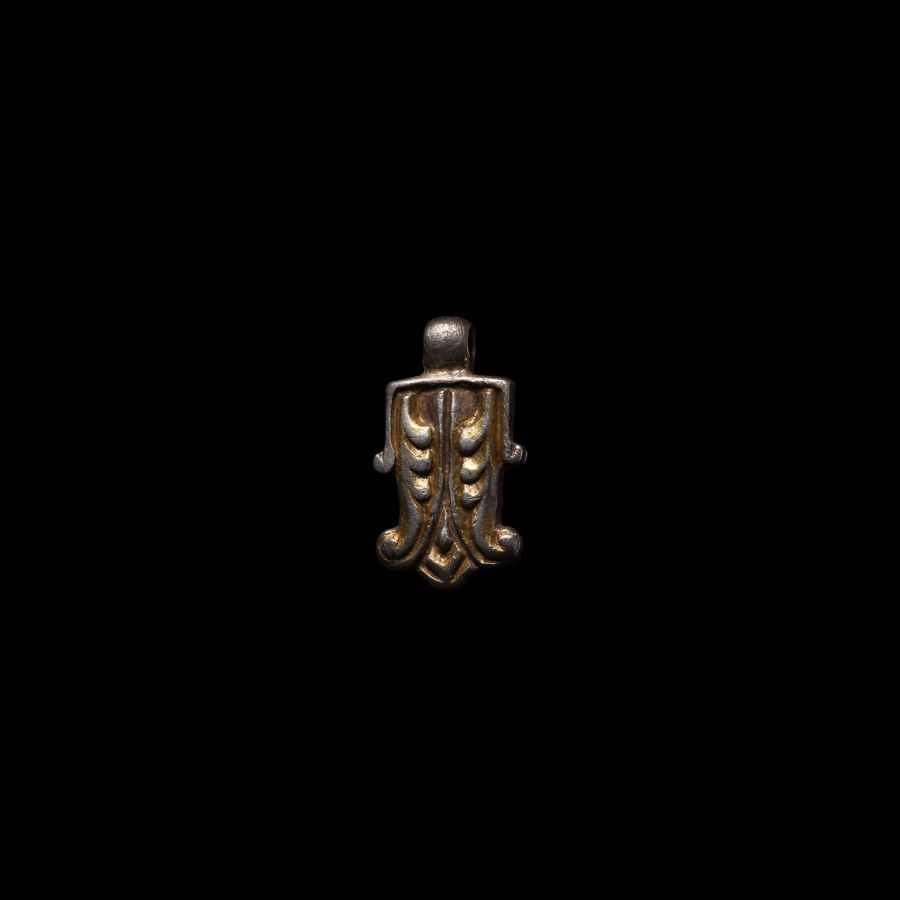
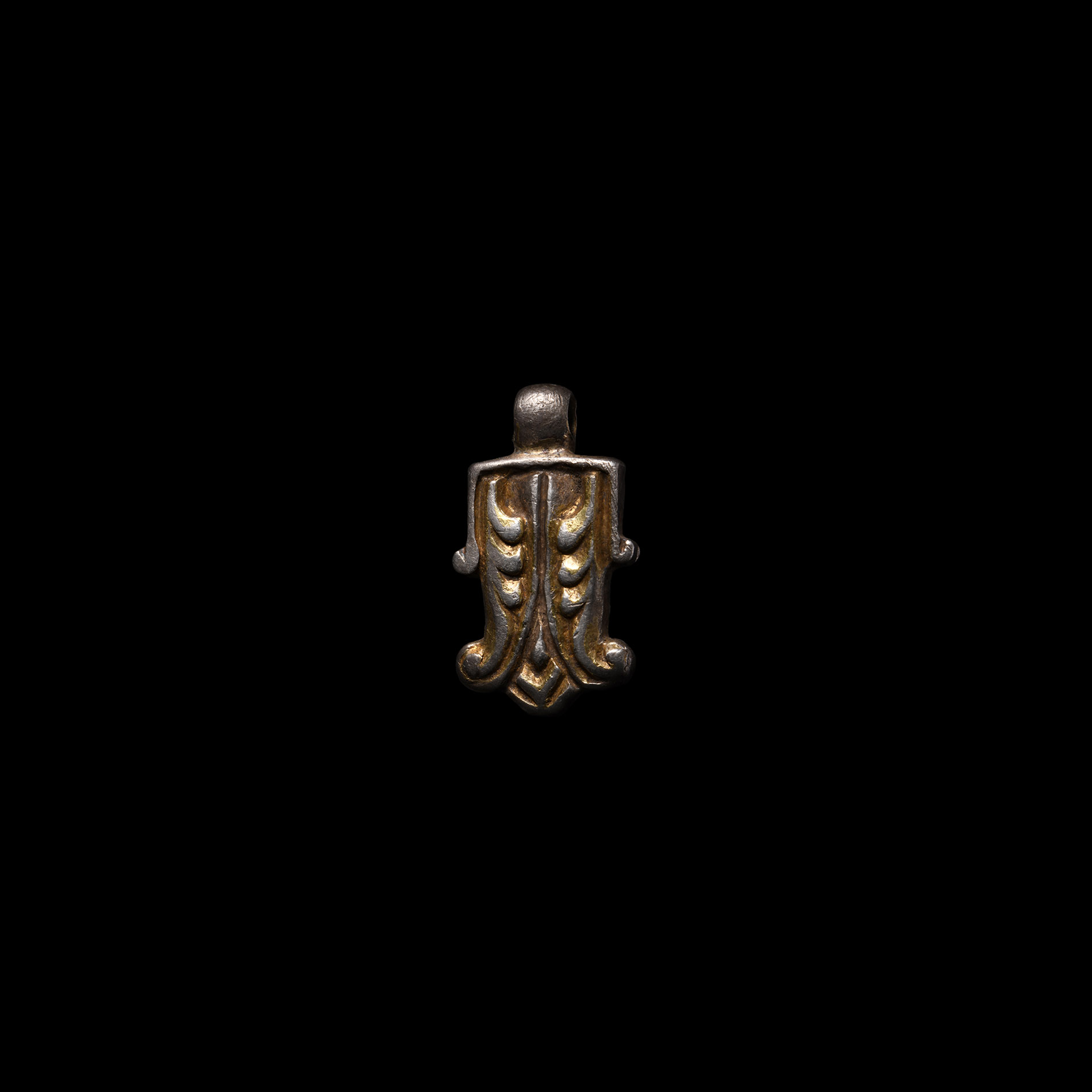
Khazar Silver-Gilt Sword Belt Hanger
7TH-8TH CENTURY A.D.
1 in. (6.03 grams, 27 mm).
Formed as leaves or a flower bud with volutes emerging from a rectangular frame at the upper end, also with volutes, integral loop above; two mounting lugs to the reverse.
ProvenanceAcquired in the 1980s-1990s.
Ex an important central London gallery, London W1.
See Ivanov, A.A., 'Finds of belt sets from burial mounds of the Khazar time of the Lower Don and the Volga-Don interfluve (in Russian)' in Cultures of the steppes of Eurasia in the second half of the 1st millennium AD. (from the history of the costume), T. 2. Samara, 2001, pp.118-131.
FootnotesIn the development of the Seversky Donets basin, together with the Alans and other bearers of the cremation rite, archaeology confirms the presence of tribes who practiced inhumation funeral rite with the eastern orientation of the dead (Netailovsky ground burial). Elements of belt sets, typical for this period, were found in these graves. Elements of the belt set similar to those found in the burials of the Netailovsky burial ground mainly come from the so-called ‘under-barrow burials with ditches’ of the 7th - first half of the 8th centuries, identified with the Khazars proper. Floral decoration of the belt elements, like this one, can be regarded as evidence of intensive contacts between the Khazars and Byzantium.
CONDITIONTimeLine Auctions follows a vetting process to ensure the authenticity and legality of all items, reinforcing our commitment to integrity and responsible trading. Each antiquity, antique, and coin lot undergoes thorough examination by a vetting committee of at least ten external specialists, professional trade association members, scientists, and archaeologists: Our Vetting Process
AUCTIONS:
TimeLine is a leading auction house specialising in antiquities, ancient art, collectables, natural history, coins, medals, and books. Our auctions offer museums, collectors, historians, and enthusiasts the opportunity to acquire unique and historically significant pieces.
-
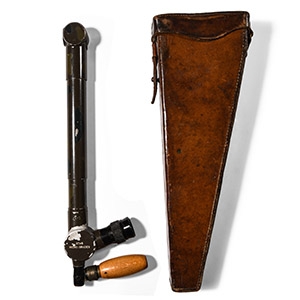
French WWII Trench Periscope
1940s A.D.Estimate: £100 - 140 (+bp*)
Opening Bid: £33
Aluminium rotating bodied vertical trench periscope with camouflage finish, marked 'GT=6 / MICRO:GRADES' to one side and M.G. / No.34185' to other, fitted with hinged wood handle; including original leather case with loops for belt/webbing. 1.36 kg, 40 cm
The Kusmirek Collection, UK. -
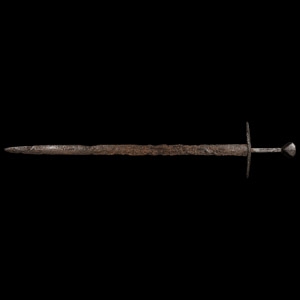
Medieval Iron Hand-And-A-Half Sword
Circa 14th-15th century A.D.Sold for (Inc. bp): £1,820
Of Oakeshott type XVIIIa or b with a strongly tapering blade of flattened diamond-section without fullers; the lower guard gently curving towards the blade, long grip; pommel of style T1 in the form of a truncated wedge. 1.35 kg, 1.07 m
Acquired 1971-1972. From the collection of the vendor's father. Property of a London, UK, collector. Accompanied by an academic report by Dr Raffaele D'Amato. This lot has been checked against the Interpol Database of stolen works of art and is accompanied by searcher certificate number no.11759-202773. -
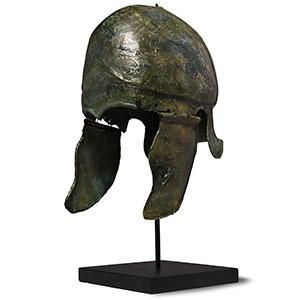
Greek Bronze Chalcidian Helmet
5th-4th century B.C.Estimate: £4,000 - 6,000 (+bp*)
Opening Bid: £1,667
Of Kunze Group VII, formed from two curved segments, each with a flared rim, nasal, raised panels to the upper section of the bowl, repoussé ridge forming curved brows, a recess for the ear to each side; star-shaped attachment to the top with slot for plumes; restored and with replica cheek pieces. 2.7 kg total, 42.5 cm high including stand
Restored, but in general good condition, rare details
Acquired in the 1970s. Ex private Austrian collection. The Kusmirek Collection, UK Accompanied by an academic report by Dr Raffaele D'Amato. Accompanied by a report of metallurgical analytical results, written by metallurgist Dr Brian Gilmour of the Research Laboratory for Archaeology and History of Art, University of Oxford. This lot has been checked against the Interpol Database of stolen works of art and is accompanied by search certificate number no.11763-203979.
Among the Chalcidian helmet types, the fifth and last typology, corresponding to the Kunze group VII (Pflug, 1988, p.138), was characterised by the presence of detached cheek-guards. By the end of the 5th century BC, the fixed cheek-pieces had been entirely abandoned on the Chalcidian helmets for the more versatile hinged cheek pieces. As is the case with most of the Greek helmets in 5th and 4th century B.C., very few originals have been found on the Greek continent. Several district regional workshops produced such helmets by the 5th century B.C.: mainland Greece, the Black Sea Coast, Thrace, Southern Italy and Iberia.
