
Loading, please wait...
LOT 1066
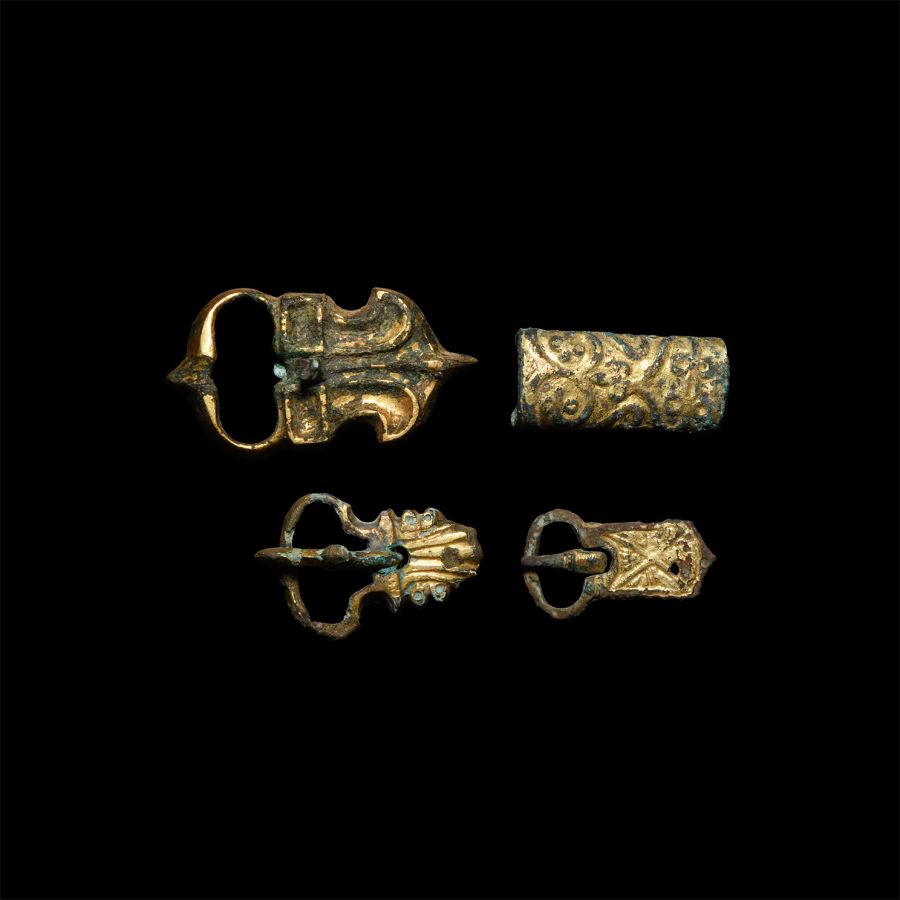
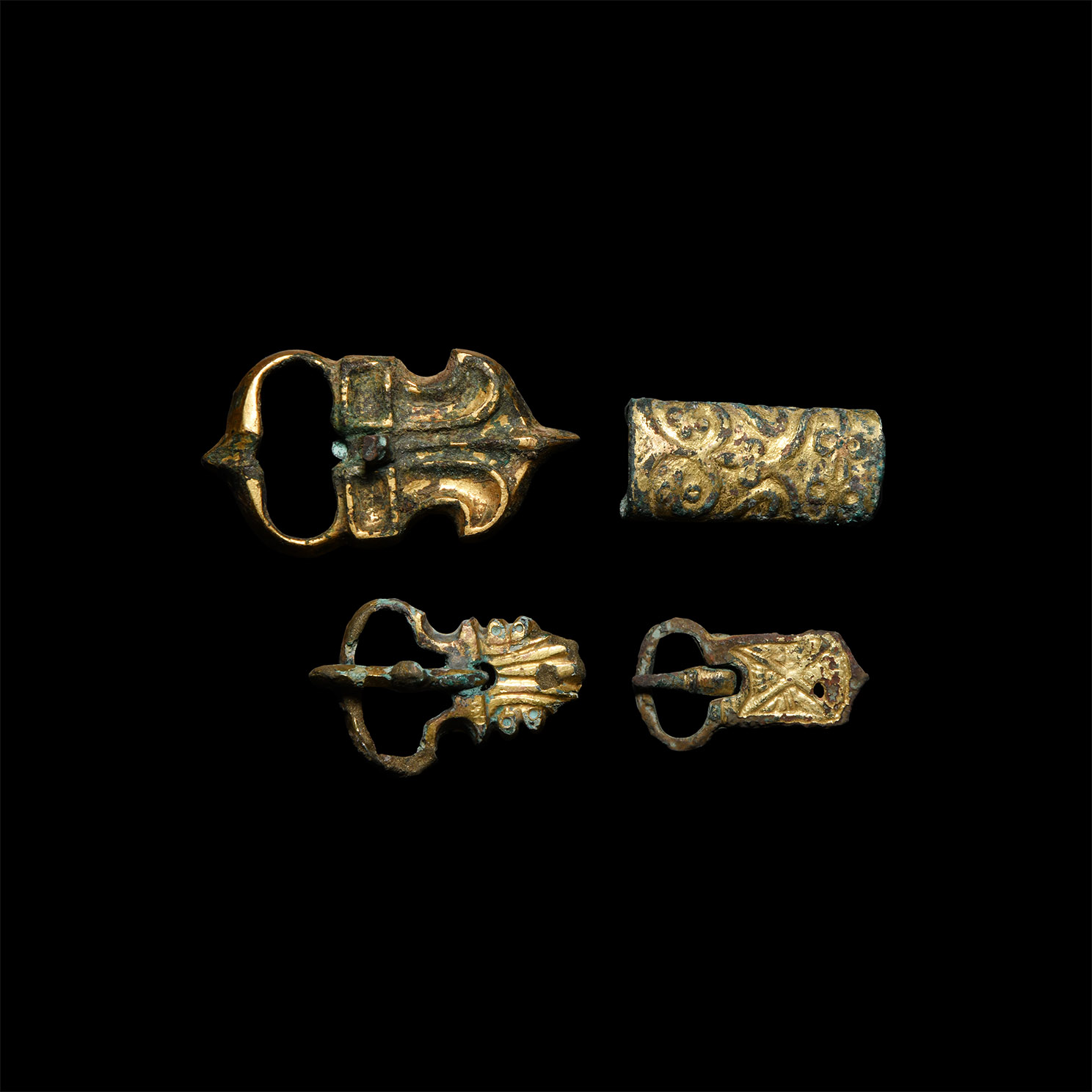
Khazar Gilt Sword Belt Buckle and Mount Group
9TH-10TH CENTURY A.D.
1 1/2 - 2 3/8 in. (67 grams total, 37-59 mm).
Comprising four gilt copper-alloy sword belt fittings: a large buckle plate with ogival head and trefoil plate; a buckle with roughly D-shaped loop and shell-style plate, triangular-section tongue; a buckle composed of an oval head and roughly rectangular plate decorated with an X-motif and enigmatic forms in each quarter, articulate tongue; a C-section mount displaying raised floral vines. [4, No Reserve]
ProvenanceAcquired in the 1980s-1990s.
Ex an important central London gallery, London W1.
Cf. Zakharow, A., Arendt, W., Studia Levedica, Archaeologischer Beitrag zur Geschichte der Altungarn im IX JH., Budapest, 1935, fig.12, p.24 (buckle), for a nearly identical specimen.
FootnotesThese wonderful fittings show similarities with examples from the Caucasus and Kuban regions. They show parallels with specimens from the Verchne-Szaltovo area, for example a bronze buckle from the catacomb grave no.11.
CONDITIONTimeLine Auctions follows a vetting process to ensure the authenticity and legality of all items, reinforcing our commitment to integrity and responsible trading. Each antiquity, antique, and coin lot undergoes thorough examination by a vetting committee of at least ten external specialists, professional trade association members, scientists, and archaeologists: Our Vetting Process
AUCTIONS:
TimeLine is a leading auction house specialising in antiquities, ancient art, collectables, natural history, coins, medals, and books. Our auctions offer museums, collectors, historians, and enthusiasts the opportunity to acquire unique and historically significant pieces.
-
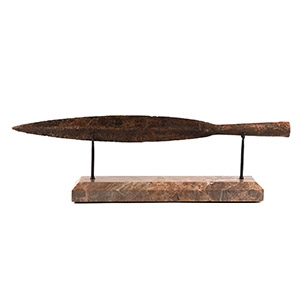
Large Viking Iron Socketted Spearhead
9th-11th century A.D.Sold for (Inc. bp): £442
Comprising a leaf-shaped blade with lozenge cross-section, raised midrib, closed tubular socket; accompanied by a custom-made display stand. 1.76 kg total, 43.5 cm including stand
Acquired 1971-1972. From the collection of the vendor's father. Property of a London, UK, collector.
The spear belongs to the type A of the first main group of Viking spears, the so-called Frankish spearheads, which occur between 750 and 950 A.D., but mainly in the 8th and 9th centuries. The Mediterranean influence is still evident on the foliate shape of the blade. -
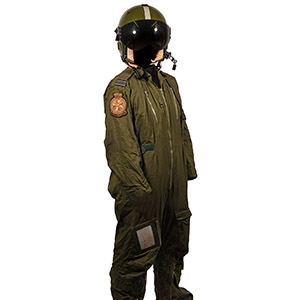
Mk3C Fighter Flying Helmet and Suit
1980s A.D.Sold for (Inc. bp): £572
Including MK 9 flying suit coveralls (for height 162-172cm, weight greater than 72.64 kg, size 4) with insignia to 825 Squadron (Fleet Air Arm) on shoulder and sewn cleaning and user instruction labels to the interior, shoulders with Flt Lieutenant Officer rank slides; MK3C flying helmet with clear and smoked visors, pig skin and blue velvet lining with electrical headset and adjustable microphone with radio lead and plug; Air Ministry label to interior reading 'Serial number 26396 Large Mk 3C' and AM 'crow's foot'. 2.9 kg, 29 cm
Acquired from J C Militaria, UK. The Kusmirek Collection, UK. Accompanied by a copy of JCM listing details and brief squadron research.
825 Squadron was originally formed in 1934 and served during WWII; it was reformed on the outbreak of the Falklands War in 1982 and equipped with ten Sea King helicopters; the squadron was disbanded in September 1982. -
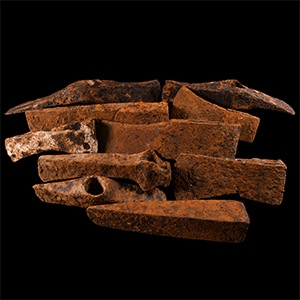
Viking Age and Later Iron Axehead Group
10th-18th century A.D.Sold for (Inc. bp): £208
Mainly comprising socketted axeheads, adze-axes, wedges and other items; some stamped with maker's marks. 11.7 kg total, 14-27.5 cm
Acquired 1990s-early 2000s. East Anglian private collection.
