
Loading, please wait...
LOT 1265
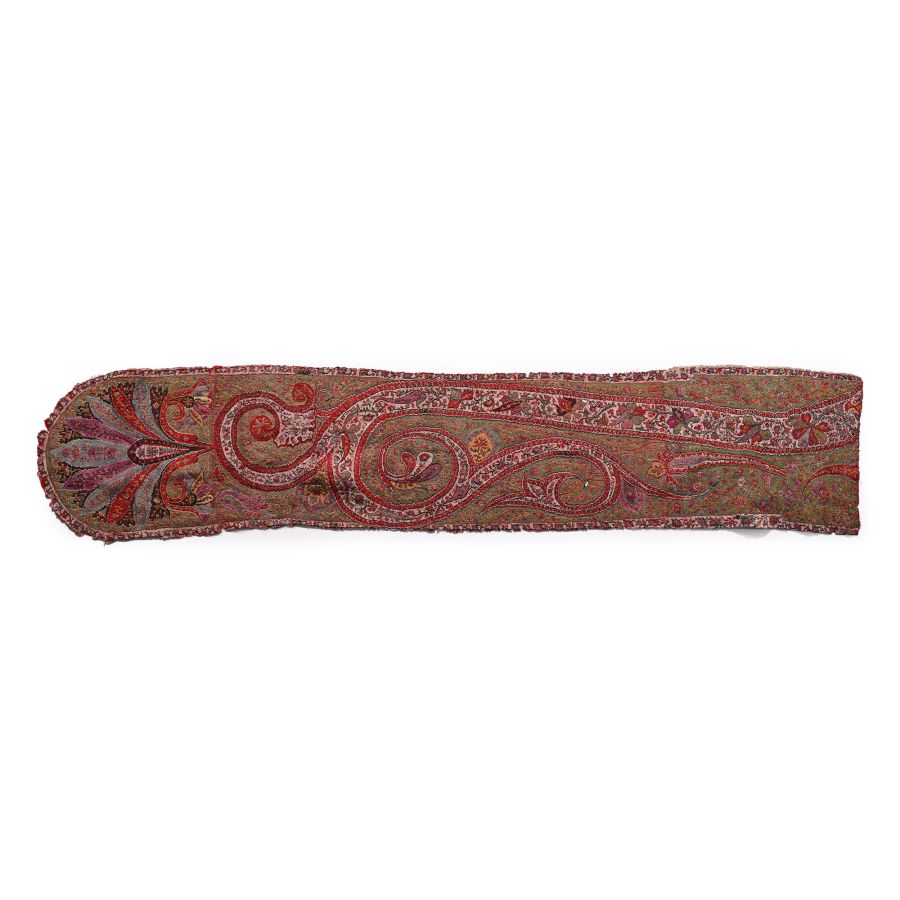
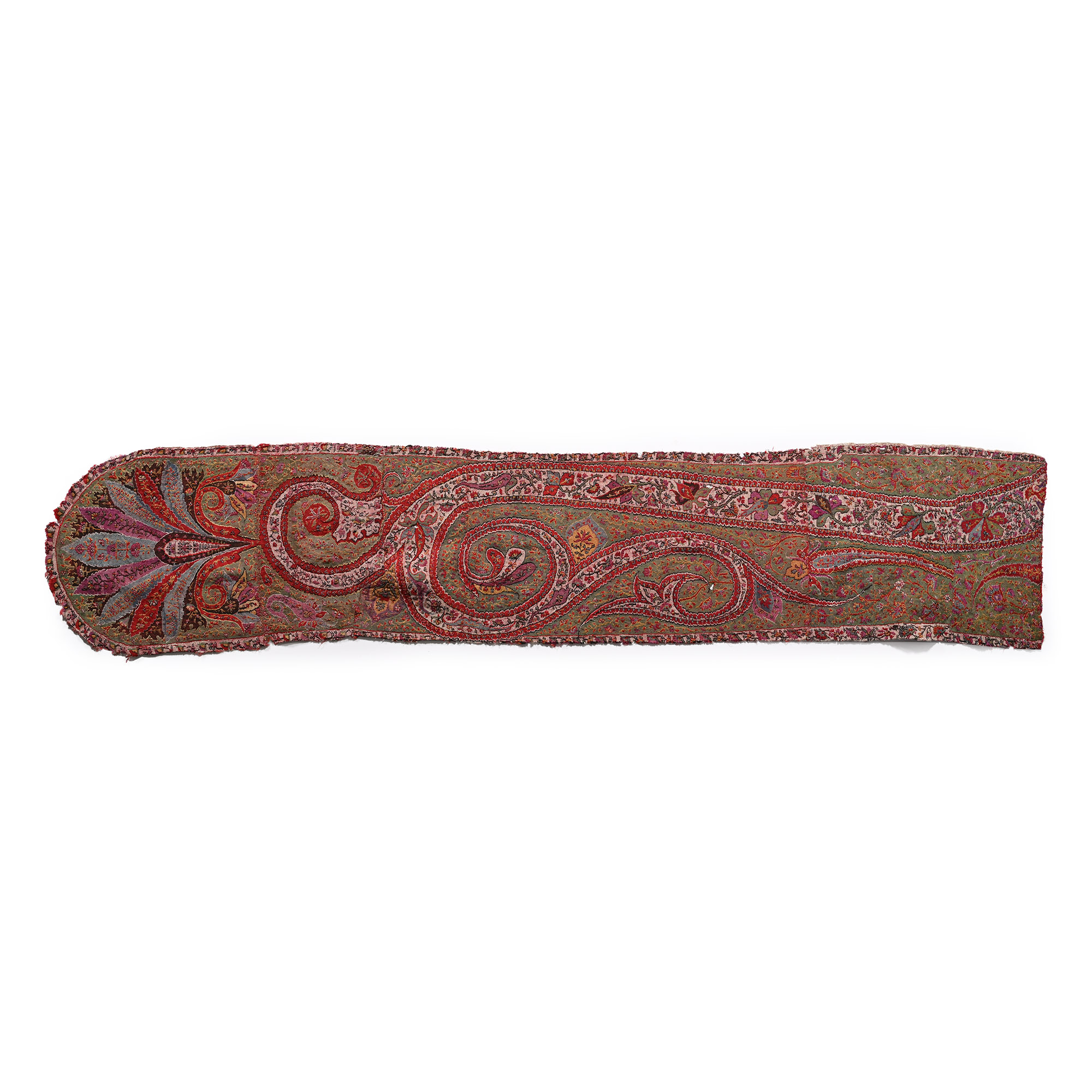
Kashmir Textile
19TH CENTURY A.D.
40 1/2 in. (67 grams, 103 cm).
A tongue-shaped woven panel with elaborate floral and tendril decoration. [No Reserve]
ProvenancePrivate collection, London.
This lot has been cleared against the Art Loss Register database, and is accompanied by an illustrated lot declaration signed by the Head of the Antiquities Department, Dr Raffaele D'Amato.
TimeLine Auctions follows a vetting process to ensure the authenticity and legality of all items, reinforcing our commitment to integrity and responsible trading. Each antiquity, antique, and coin lot undergoes thorough examination by a vetting committee of at least ten external specialists, professional trade association members, scientists, and archaeologists: Our Vetting Process
AUCTIONS:
TimeLine is a leading auction house specialising in antiquities, ancient art, collectables, natural history, coins, medals, and books. Our auctions offer museums, collectors, historians, and enthusiasts the opportunity to acquire unique and historically significant pieces.
-
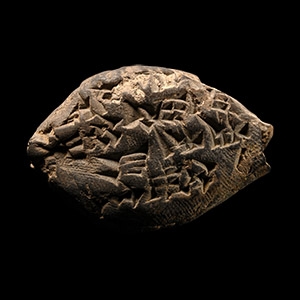
Old Babylonian Terracotta Cuneiform Tag Recording the Delivery of Sheep Carcasses
2000-1600 B.C.Sold for (Inc. bp): £468
Almond-shaped with columns of cuneiform text to one broad face and one edge. 14.55 grams, 37.4 mm
Private collection, Jerusalem, assembled in the 1970s-1980s. European private collection, acquired in 1998. This lot has been cleared against the Art Loss Register database, and is accompanied by an illustrated lot declaration signed by the Head of the Antiquities Department, Dr Raffaele D'Amato. -
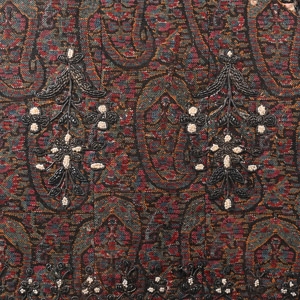
Qajar Textile with Pearls
19th century A.D.Sold for (Inc. bp): £65
Formed of nine rectangular pieces sown together with suspension loops above, embroidered floral motifs to the centre and a decorative embroidered border above; mounted in a display frame. 1.21 kg, 32.8 x 34 cm
Private collection, London. This lot has been cleared against the Art Loss Register database, and is accompanied by an illustrated lot declaration signed by the Head of the Antiquities Department, Dr Raffaele D'Amato. -
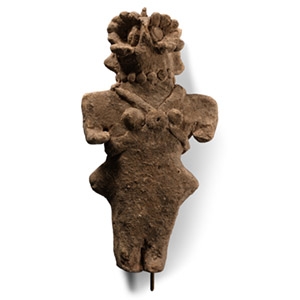
Amorite Terracotta Idol of a Standing Woman
3rd-2nd millennium B.C.Estimate: £600 - 800 (‡+bp*)
Opening Bid: £270
Modelled in the round female figure standing with stub arms, applied breasts and pectoral cross-straps with central disc; applied collar of discs and mask with segmented detailing to eyes and reverse; mounted on a custom-made stand. 153 grams, 13.8 cm
Acquired in 1993. Private collection, Switzerland, thence by descent. Private collection, since the late 1990s. Accompanied by a copy of an Art Loss register certificate, no.S00027857. This lot has been cleared against the Art Loss Register database, and is accompanied by an illustrated lot declaration signed by the Head of the Antiquities Department, Dr Raffaele D'Amato.
