
Loading, please wait...
LOT 1858
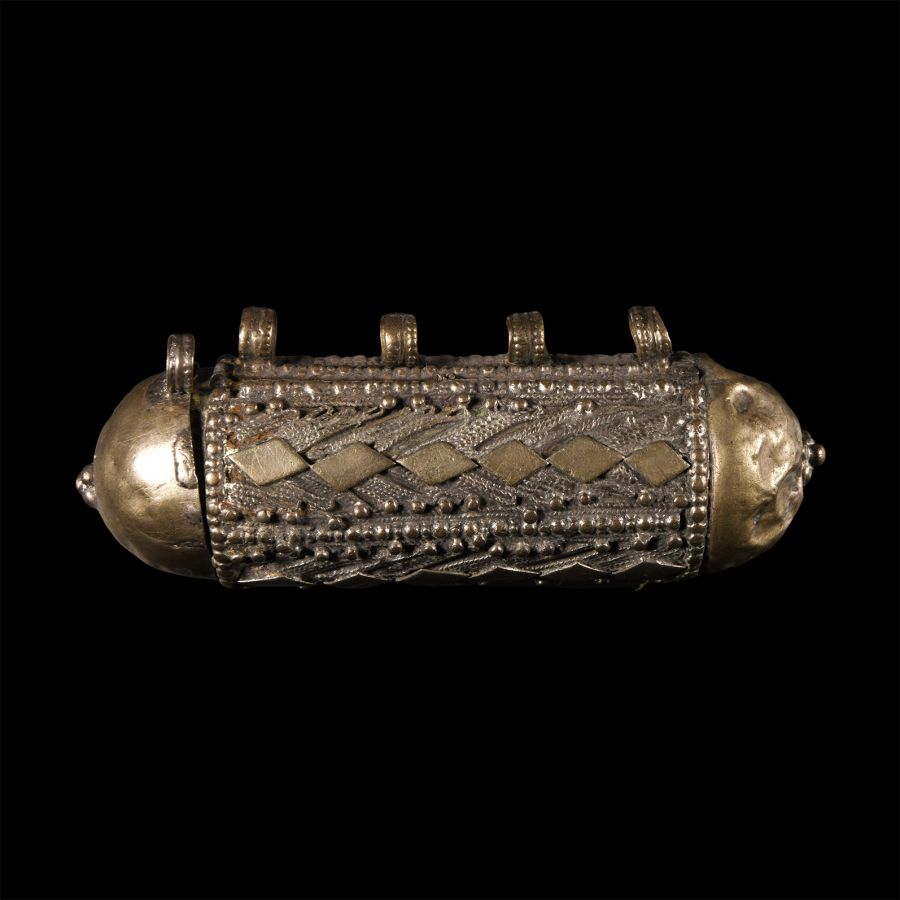
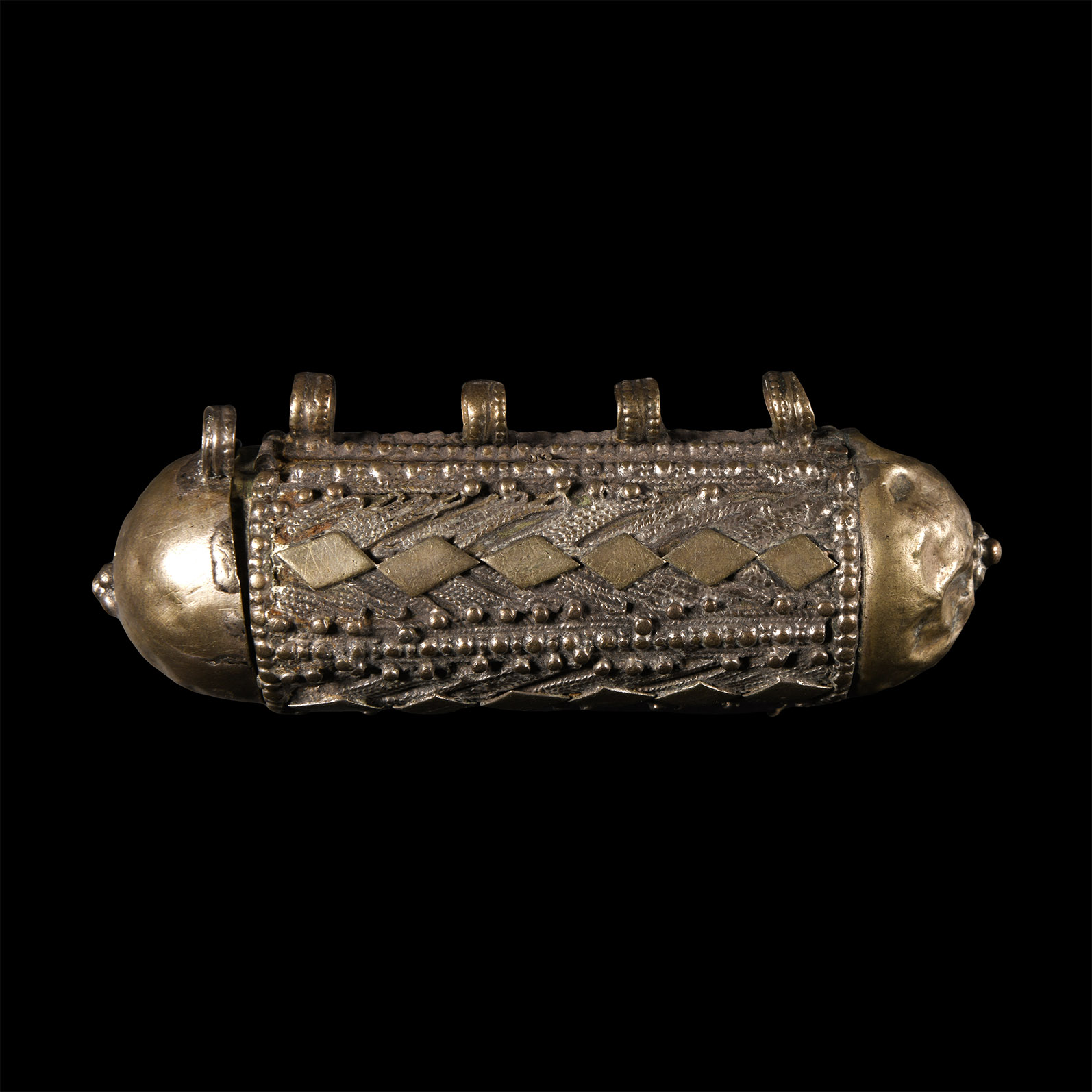
Judaic or Arabic Hirzbaase Silver Amulet Case
CIRCA 19TH CENTURY A.D.
4 1/8 in. (87 grams, 10.4 cm).
Cylindrical with domed terminals with apex granules, ridge of suspension loops, body adorned with filigree wire, pellets and lozengiform plaques; one removeable terminal; hollow-formed. [No Reserve]
ProvenanceFrom the private collection of the late Mr S.M., London, UK, thence by descent.
CONDITIONTimeLine Auctions follows a vetting process to ensure the authenticity and legality of all items, reinforcing our commitment to integrity and responsible trading. Each antiquity, antique, and coin lot undergoes thorough examination by a vetting committee of at least ten external specialists, professional trade association members, scientists, and archaeologists: Our Vetting Process
AUCTIONS:
TimeLine is a leading auction house specialising in antiquities, ancient art, collectables, natural history, coins, medals, and books. Our auctions offer museums, collectors, historians, and enthusiasts the opportunity to acquire unique and historically significant pieces.
-
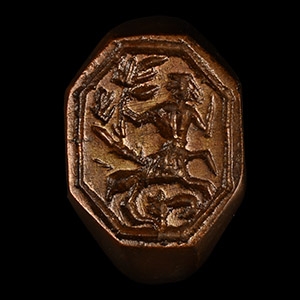
Tudor Period Bronze Ring with Centaur
16th-17th century A.D.Sold for (Inc. bp): £91
The hoop expanding at the shoulders to an octagonal bezel, engraved with a centaur advancing right, looking left, holding a branch, within a linear border. 10.65 grams, 24.21 mm overall, 19.57 mm internal diameter (approximate size British T, USA 9 1/2, Europe 21.26, Japan 20)
London art market before 2000. Property of an Essex gentleman. -
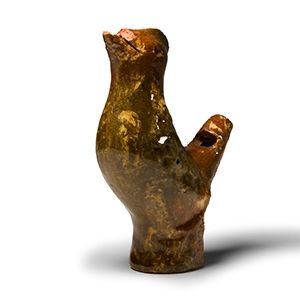
Post Medieval Glazed Ceramic Bird Whistle
18th century A.D.Sold for (Inc. bp): £26
Possibly in the form of a hen or other bird with crest, with feather detailing; chip to beak. 80 grams, 95 mm
Acquired 1960s-1990s. Late Alison Barker collection, a retired London barrister. -
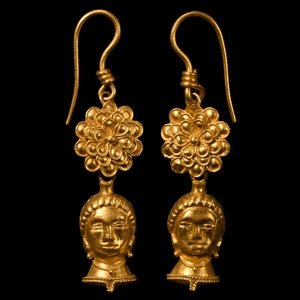
Greek Style Gold Earring Pair
20th century A.D.Sold for (Inc. bp): £156
Each composed of a rosette plaque with pendant dangle in the form of a female bust wearing necklace and earrings; curved wire hook. 5.47 grams total, 44 mm each
From the collection of H.B., a Sussex, UK, lady.
