
Loading, please wait...
LOT 1169
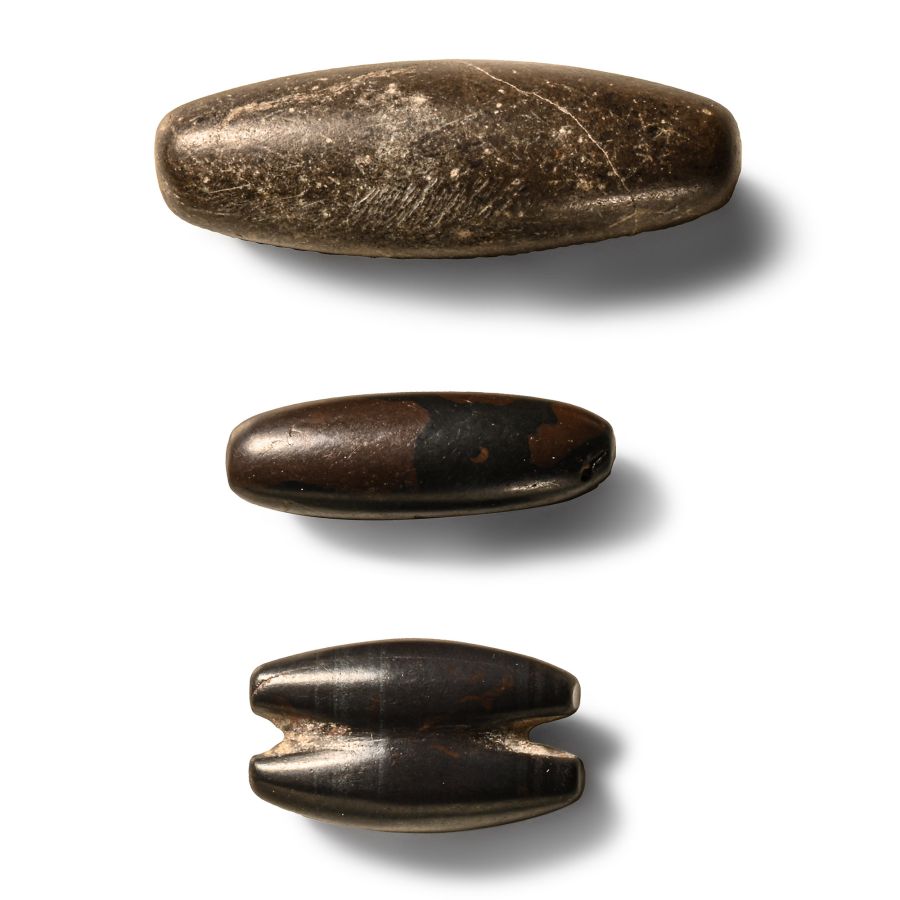
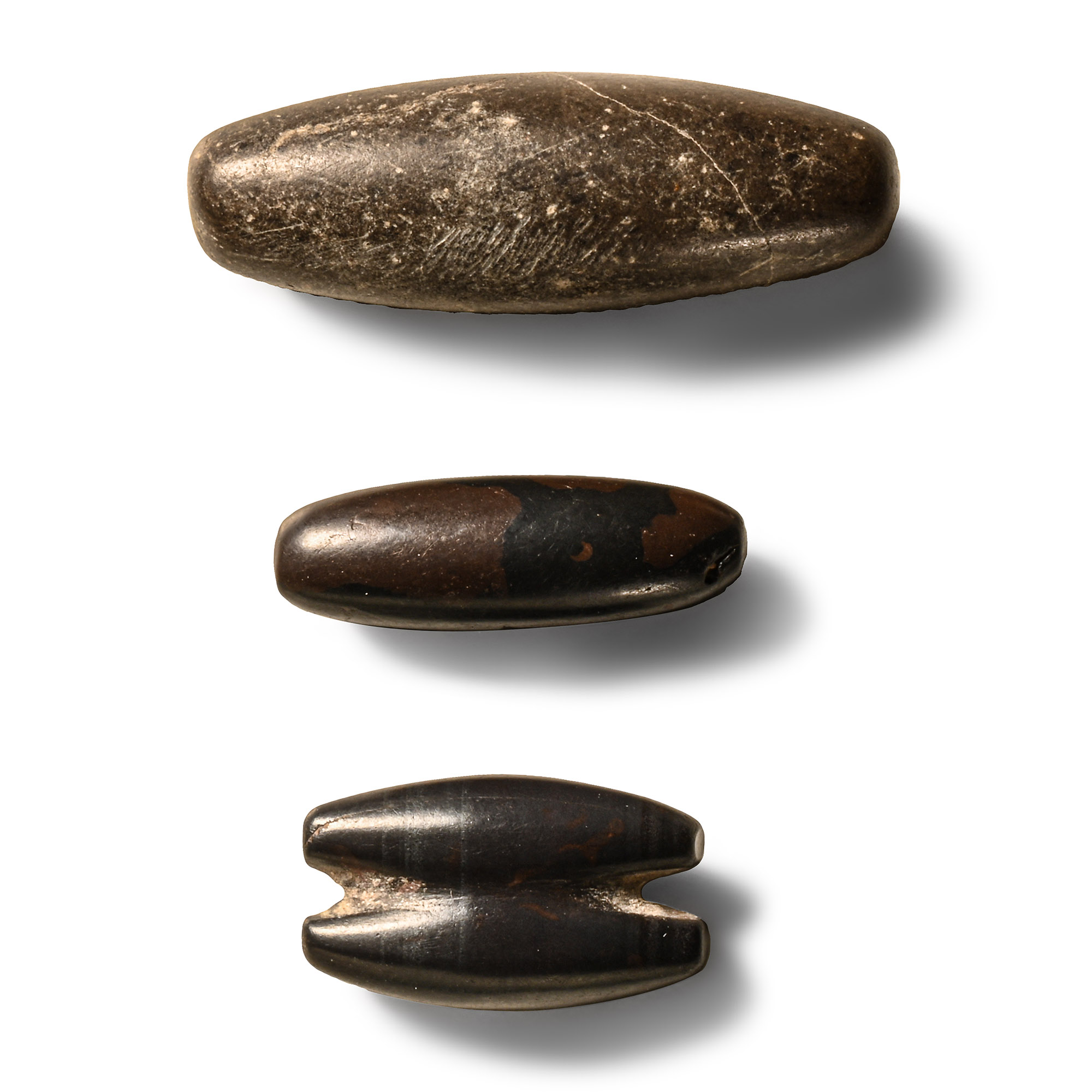
Judaeo-Phoenician Stone Weight Group
1ST MILLENNIUM B.C.
3/4 - 1 1/4 in. (12.7 grams total, 19-33 mm).
Comprising: two biconical weights, one in haematite, the other in grey stone; a haematite weight composed of two adjoining biconical bodies. [3]
ProvenanceCollected from 1969-1999.
From the collection of the late Mr S.M., London, UK.
TimeLine Auctions follows a vetting process to ensure the authenticity and legality of all items, reinforcing our commitment to integrity and responsible trading. Each antiquity, antique, and coin lot undergoes thorough examination by a vetting committee of at least ten external specialists, professional trade association members, scientists, and archaeologists: Our Vetting Process
AUCTIONS:
TimeLine is a leading auction house specialising in antiquities, ancient art, collectables, natural history, coins, medals, and books. Our auctions offer museums, collectors, historians, and enthusiasts the opportunity to acquire unique and historically significant pieces.
-
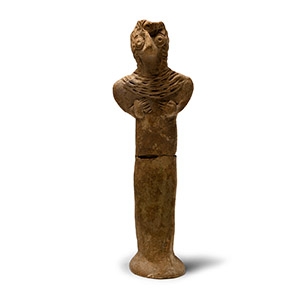
Western Asiatic Terracotta Idol
3rd-2nd millennium B.C.Estimate: £400 - 600 (‡+bp*)
Opening Bid: £200
Freestanding, with a pinched face, elaborate applied hairstyle, circular eyes and prick-decorated collar, hand clasped with palms to chest; repaired. 69 grams, 15 cm high
Acquired in the 1970s. Ex European private collection. -
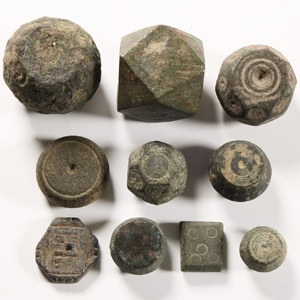
Western Asiatic Bronze Weight Collection
Circa 8th-12th century A.D.Sold for (Inc. bp): £78
Including polyhedral, barrel-shaped, tabular and other types, most with impressed markings. 216 grams total, 9-24 mm
Ex Simmons gallery, London, UK. Ex North London collection, 1990s. -
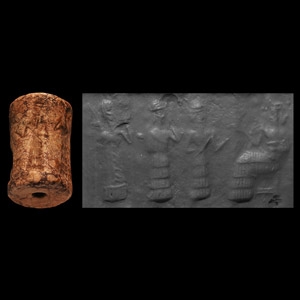
Western Asiatic Marble Cylinder Seal with Worship Scene
Late 3rd-2nd millennium B.C.Sold for (Inc. bp): £520
Bearing a worship scene composed of a procession of robed human figures advancing left, towards a seated figure; pierced vertically for suspension. 34.6 grams, 36 mm
Fine condition.
Private family collection formed in London, mid 1980s to early 1990s.
