
LOT 2768
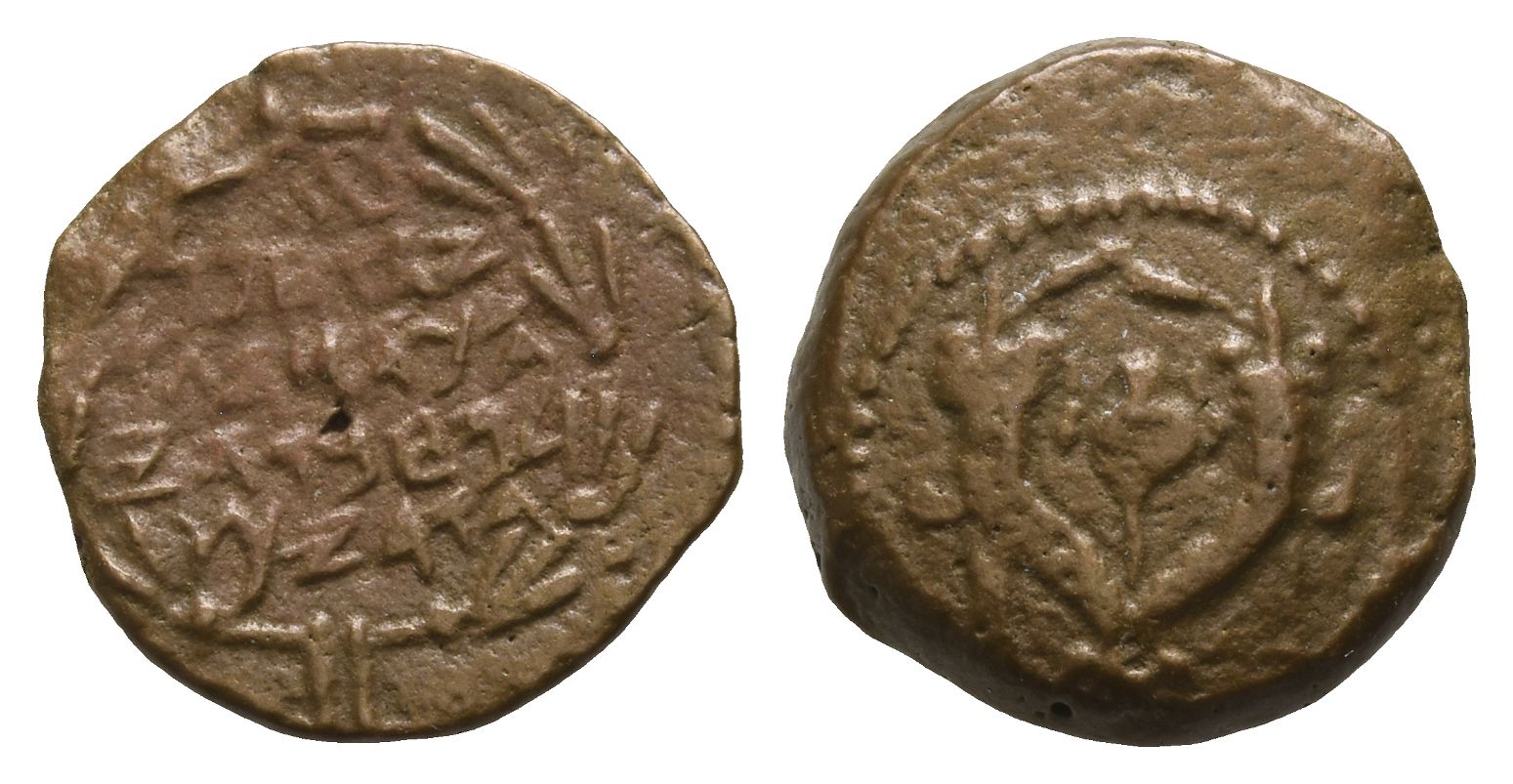
Judaea, John Hyrcanus I AE Prutah. 135-104 BCE.
Jerusalem mint. A over "Yehohanan the High Priest and head of the Council of the Jews" in paleo-Hebrew within wreath / Two cornucopiae splayed outward, adorned with ribbons; pomegranate/poppy between. Hendin 6171; TJC A; Sofaer 6-29. Good Very Fine. Fully centred inscription. Rare in this condition.(1.67gr, 14mm, 12h.).
ProvenanceProperty of a North London, UK, gentleman.
TimeLine Auctions follows a vetting process to ensure the authenticity and legality of all items, reinforcing our commitment to integrity and responsible trading. Each antiquity, antique, and coin lot undergoes thorough examination by a vetting committee of at least ten external specialists, professional trade association members, scientists, and archaeologists: Our Vetting Process
AUCTIONS:
TimeLine is a leading auction house specialising in antiquities, ancient art, collectables, natural history, coins, medals, and books. Our auctions offer museums, collectors, historians, and enthusiasts the opportunity to acquire unique and historically significant pieces.
-
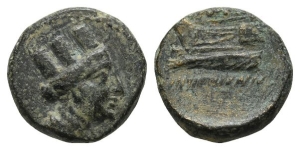
Phoenicia, Arados AE 15mm. Circa 206-176 BC.
Sold for (Inc. bp): £31
Dated CY 69 (191-190 BC). Turreted head of Tyche to right / Prow of galley to left, [civic monogram] above, III III III NNN (date) in Phoenician below. HGC 10, 87. 3.37gr, 15mm, 12h.
Very Fine. Extremely rare dated type.
Private collection, acquired 1980–1985. -
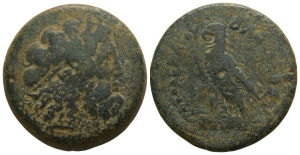
Ptolemaic Kingdom of Egypt, Ptolemy IV Philopator AE Drachm. 222-205/4 BC.
Sold for (Inc. bp): £39
Tyre mint; struck circa 217-204 BC. Horned head of Zeus-Ammon to right, wearing tainia with basileion / ΠΤΟΛΕΜΑΙΟΥ ΒΑΣΙΛΕΩΣ, eagle with wings closed standing to left on thunderbolt; club to left, ΔI between legs. CPE B542; Svoronos 1129; SNG Copenhagen -. 73.00gr, 42mm, 12h.
Near Very Fine.
Private collection, acquired 1980–1985. -
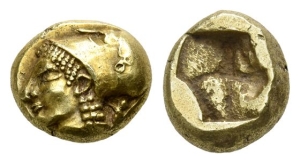
Ionia, Phokaia EL 1/6 of Stater or Hekte. Circa 521-478 BC.
Estimate: £1,500 - 2,000 (‡+bp*)
Opening Bid: £675
Head of Athena wearing Corinthian helmet to left; behind neck, seal swimming upwards / Quadripartite incuse square. BMFA 1906; Bodenstedt 32; SNG von Aulock -. 2.61gr, 9mm.
Extremely Fine.
Ex Roma Numismatics Ltd, E-Sale 25, 27 February 2016, lot 81 (since professionally cleaned). Ex Nomos AG, Auction 20, 10 July 2020, lot 217 (company's ticket included).
