
LOT 2791
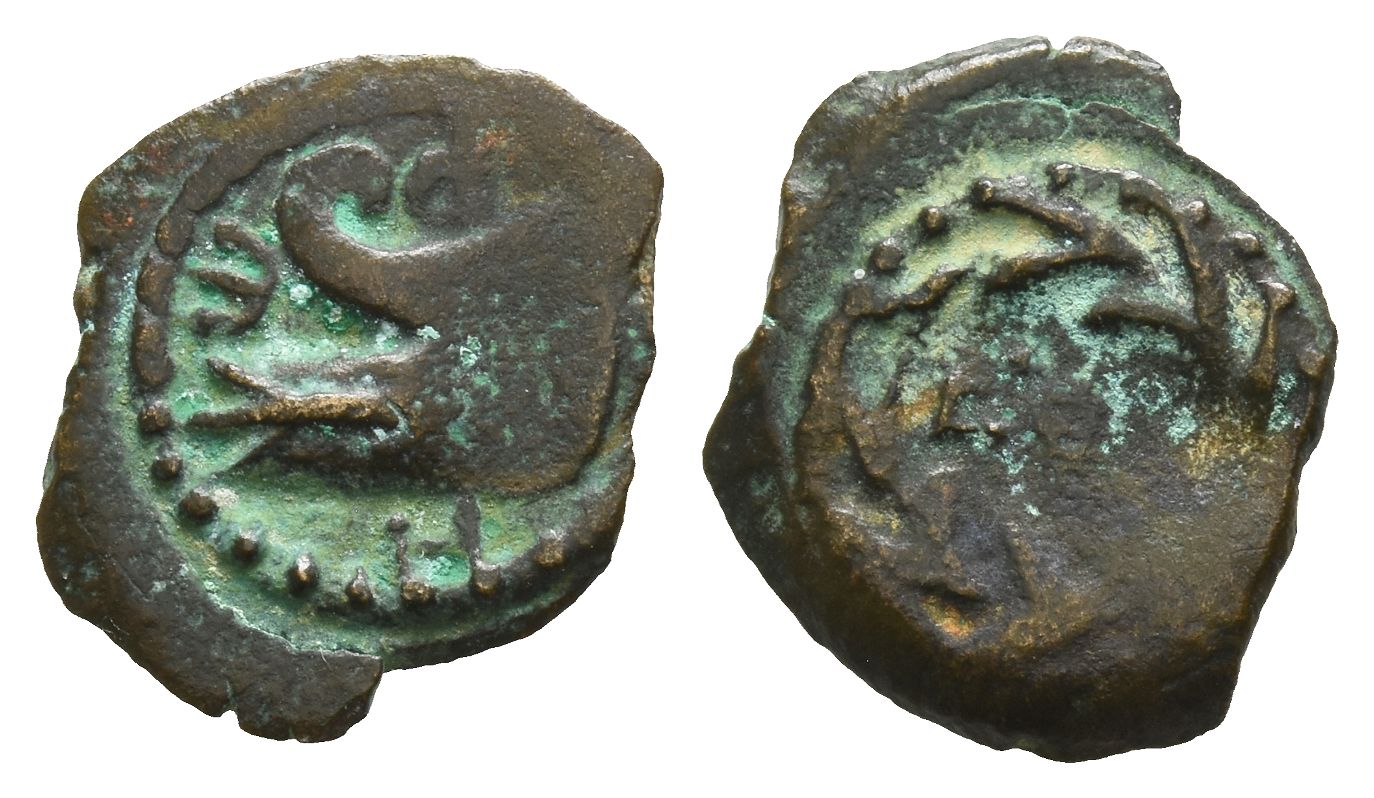
Judaea. Herodians, Herod II Archelaus AE Half Prutah. 4 BCE-6 CE.
Jerusalem mint. Prow to left; H-P-ധ anticlockwise around / ЄΘ[N] within wreath. RPC I 4916; TJC 72; Hendin 1197. Near Very Fine.(1.15gr, 15mm, 7h.).
ProvenanceProperty of a North London, UK, gentleman.
TimeLine Auctions follows a vetting process to ensure the authenticity and legality of all items, reinforcing our commitment to integrity and responsible trading. Each antiquity, antique, and coin lot undergoes thorough examination by a vetting committee of at least ten external specialists, professional trade association members, scientists, and archaeologists: Our Vetting Process
AUCTIONS:
TimeLine is a leading auction house specialising in antiquities, ancient art, collectables, natural history, coins, medals, and books. Our auctions offer museums, collectors, historians, and enthusiasts the opportunity to acquire unique and historically significant pieces.
-
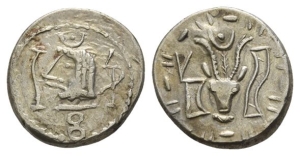
South Arabia, Himyar AR Unit. 2nd-3rd century AD.
Sold for (Inc. bp): £46
'Bucranium Series'. Diademed male head to left; curved symbol of Almaqah to left, symbol of Athtar to right; disc-crescent of Dhat-Hamim above / Head of antelope facing; monogram to left, curved symbol of Almaqah to right; disc-crescent of Dhat-Hamim above. CAF -; Huth 304; BMC -; SNG ANS -. 2.51gr, 15mm, 12h.
Near Very Fine. Rare.
Private collection, acquired 1980–1985. -
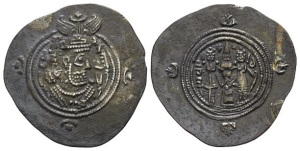
Sasanian Kingdom, Husrav (Khosrau) II AR Drachm. AD 590-628.
Sold for (Inc. bp): £46
PR (Furat-i-Meshan) mint. Dated RY 31 (AD 621/2). Draped bust to right, wearing mural crown with two wings and star set on crescent; star-in-crescent before; all within double border with star-in-crescents in margin / Fire altar with ribbons flanked by attendants; star and crescent flanking flames, date to left, mint to right; all within triple border with star-in-crescents in margin. Göbl II/3; cf. SNS 644-645. 3.96gr, 33mm, 9h.
Good Very Fine. Exceptionally rare mint of Furat-i-Meshan in Iraq.
Ex property of a UK gallery, early 2000s. -
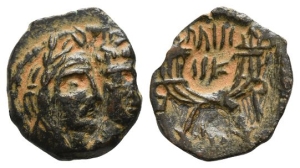
Nabataea, Aretas IV, with Shaqilat AE 17mm. 9 BC-AD 40.
Sold for (Inc. bp): £26
Petra mint; struck AD 20-40. Jugate busts of Aretas and Shaqilat to right; [H-F?] in Aramaic across fields / Crossed cornucopiae; legend in Aramaic between and below. Cf. Meshorer, Nabataea 114. 3.01gr, 17mm, 12h.
Very Fine.
From the collection of a gentleman, acquired on the London art market in the 1990s.
