
LOT 2787
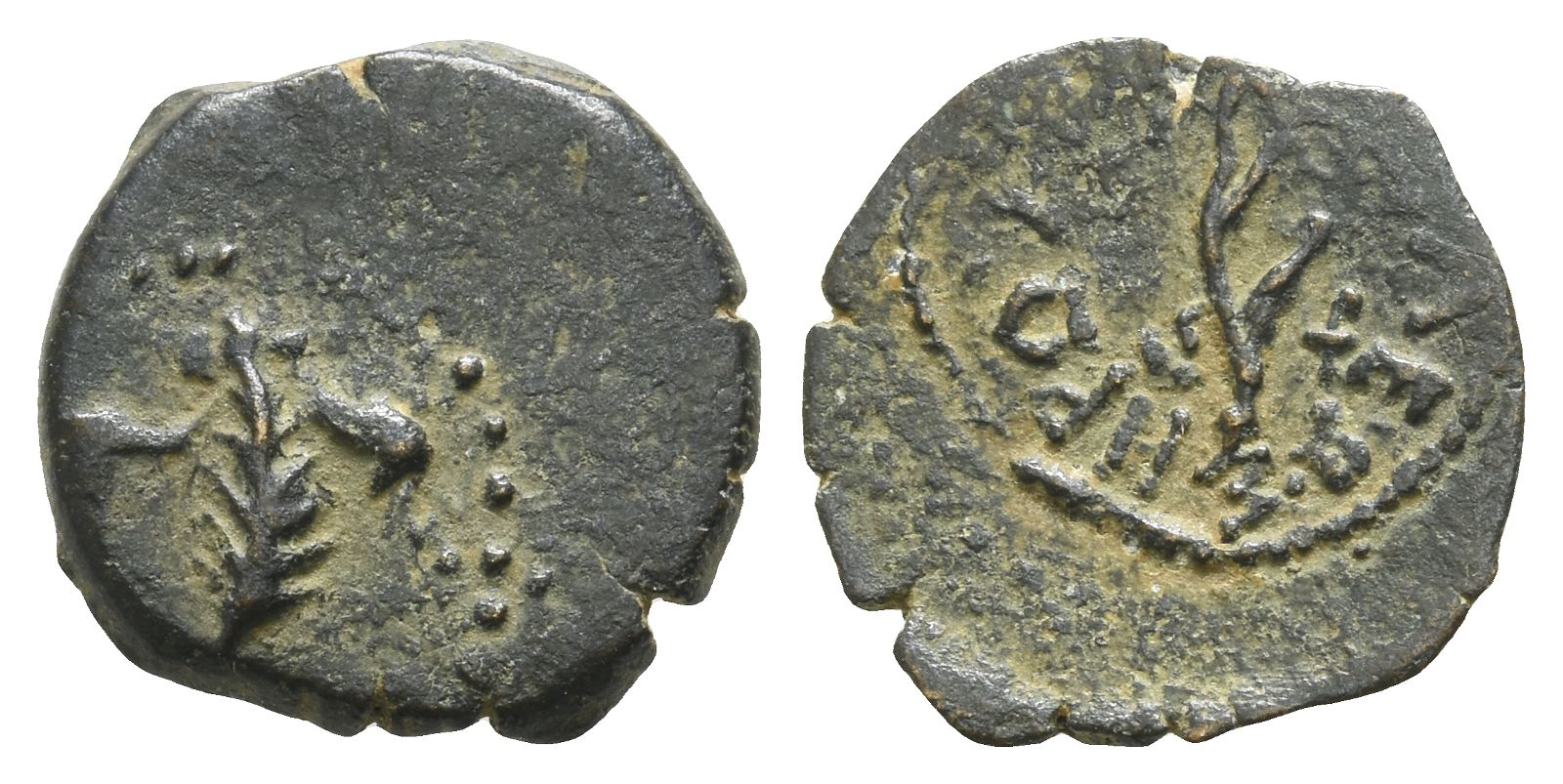
Judaea. Herodians, Herod I AE Prutah. 40-4 BCE.
Mint in Samaria (Sebaste?). Dated RY 3 (38/7 BCE). Palm branch; leaf to left and right / ΗΡΩΔ[ΟΥ ΒΑΣΙ]ΛЄΩΣ, aphlaston; L Γ (date) to left, monogram to right. TJC 47; Hendin GBC 6, 6207; Hendin GBC 5, 1172; RPC I 4904; HGC 10, 655; DCA 807. Very Fine.(1.34gr, 14mm, 12h.).
ProvenanceFrom the collection of a gentleman, acquired on the London art market in the 1990s.
TimeLine Auctions follows a vetting process to ensure the authenticity and legality of all items, reinforcing our commitment to integrity and responsible trading. Each antiquity, antique, and coin lot undergoes thorough examination by a vetting committee of at least ten external specialists, professional trade association members, scientists, and archaeologists: Our Vetting Process
AUCTIONS:
TimeLine is a leading auction house specialising in antiquities, ancient art, collectables, natural history, coins, medals, and books. Our auctions offer museums, collectors, historians, and enthusiasts the opportunity to acquire unique and historically significant pieces.
-
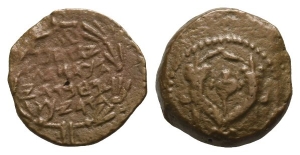
Judaea, John Hyrcanus I AE Prutah. 135-104 BCE.
Sold for (Inc. bp): £59
Jerusalem mint. A over "Yehohanan the High Priest and head of the Council of the Jews" in paleo-Hebrew within wreath / Two cornucopiae splayed outward, adorned with ribbons; pomegranate/poppy between. Hendin 6171; TJC A; Sofaer 6-29. 1.67gr, 14mm, 12h.
Good Very Fine. Fully centred inscription. Rare in this condition.
Property of a North London, UK, gentleman. -
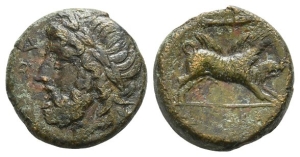
Apulia, Arpi AE 20mm. Circa 3rd century BC.
Sold for (Inc. bp): £65
Laureate head of Zeus to left; [ΔAI]OY before, [thunderbolt behind] / Boar running to right; spearhead above, APΠAN[ΩN] in exergue. HN Italy 642; SNG ANS 635-9; HGC 1, 534. 6.68gr, 20mm, 10h.
Very Fine.
Acquired on the UK market before 2000. Property of a London, UK, gentleman. -
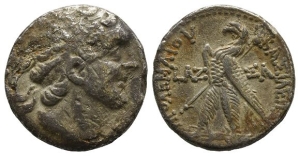
Ptolemaic Kingdom of Egypt, Ptolemy VIII Euergetes II (Physcon) AR Tetradrachm. 145-116 BC.
Sold for (Inc. bp): £65
Salamis mint. Dated RY 37 (134/3 BC). Diademed head of Ptolemy I to right, wearing aegis / ΠΤΟΛΕΜΑΙΟΥ ΒΑΣΙΛΕΩΣ, eagle standing to left on thunderbolt; transverse sceptre in background, L ΛZ (date) to left, ΣA to right. Svoronos 1550; BMC 27; SNG Copenhagen -. 11.52gr, 25mm, 12h.
Near Very Fine. Very rare date. No other examples on CoinArchives.
UK private collection before 2000. Acquired on the UK art market. Private collection, London.
