
Loading, please wait...
LOT 1277
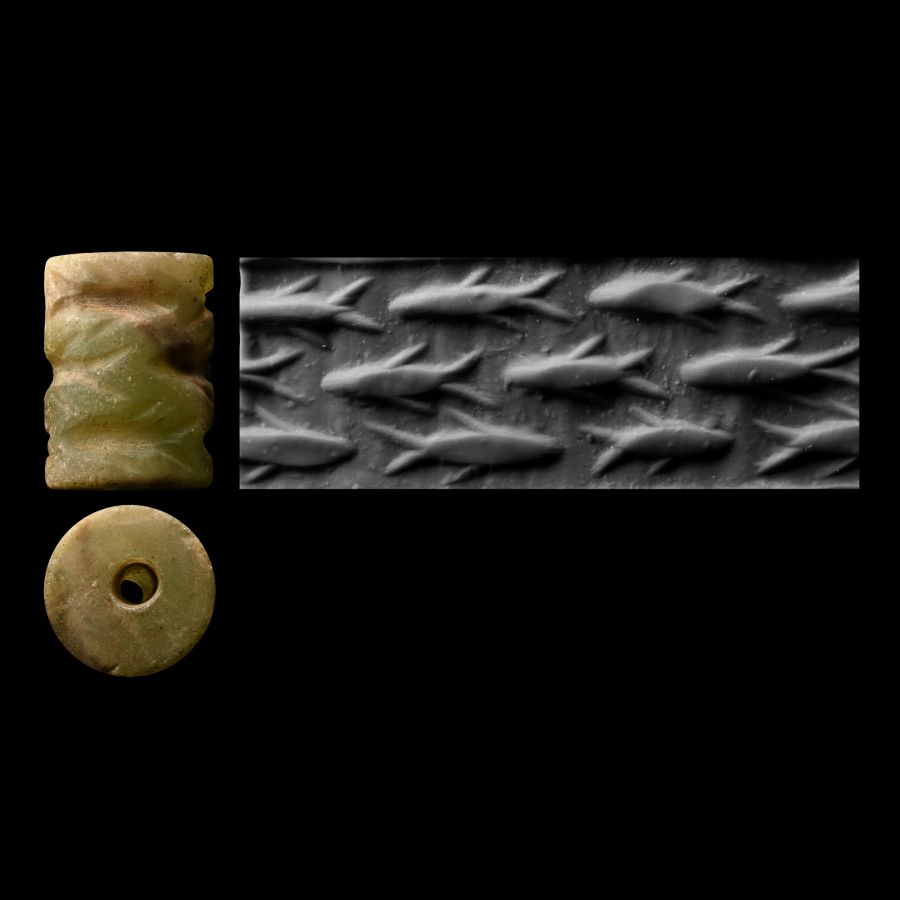
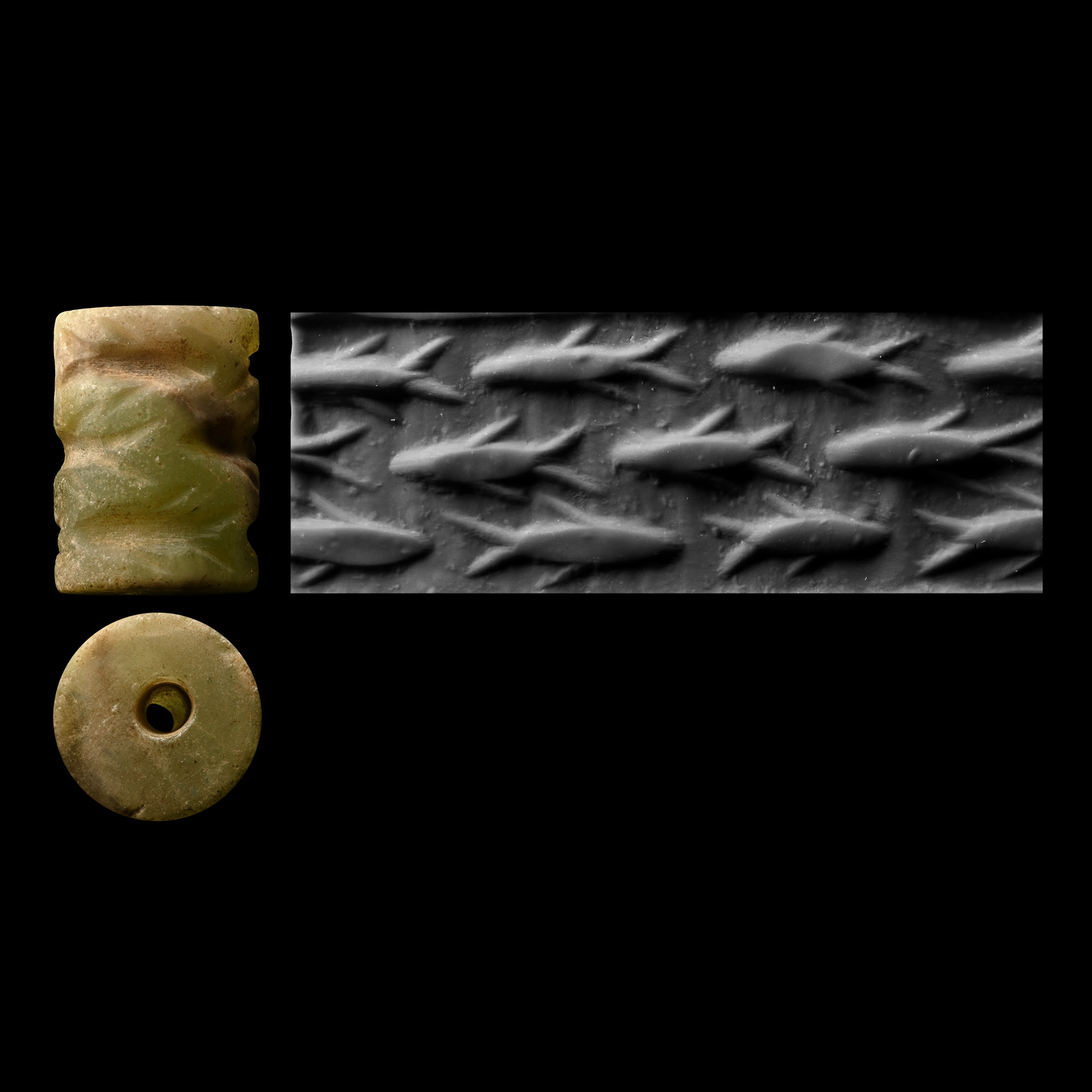
Jemdet Nasr Type Green Stone Cylinder Seal
CIRCA 3000 B.C.
1 1/8 in. (22.7 grams, 28 mm).
Cylinder with cord and bead handles; accompanied by a copy of an old scholarly note, typed and signed by W.G. Lambert, late Professor of Assyriology, University of Birmingham, 1970-1993, which states: 'Cylinder Seal of Translucent Green Stone 28 x 21 mm. The design consists of three rows of three fish, two rows moving in one direction, one row moving in the other direction. Tis is a seal in the Jemdet Nasr Style, dating to c. 3000 B.C., from Sumer or south west Iran. the design is deeply cut and the seal is in very good state of preservation. The fish is probably a symbol of the god Enki god of the waters below the earth, and in later periods of art often associated with fish.'; supplied with a museum-quality impression. [No Reserve]
ProvenanceUK private collection, acquired 1980-1983.
Accompanied by a copy of a scholarly note, typed and signed by Professor Wilfrid George Lambert in May 1992.
This lot has been cleared against the Art Loss Register database, and is accompanied by an illustrated lot declaration signed by the Head of the Antiquities Department, Dr Raffaele D'Amato.
TimeLine Auctions follows a vetting process to ensure the authenticity and legality of all items, reinforcing our commitment to integrity and responsible trading. Each antiquity, antique, and coin lot undergoes thorough examination by a vetting committee of at least ten external specialists, professional trade association members, scientists, and archaeologists: Our Vetting Process
AUCTIONS:
TimeLine is a leading auction house specialising in antiquities, ancient art, collectables, natural history, coins, medals, and books. Our auctions offer museums, collectors, historians, and enthusiasts the opportunity to acquire unique and historically significant pieces.
-
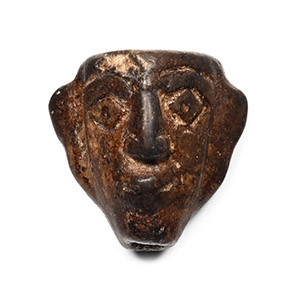
Sumerian Black Stone Face Amulet
Uruk/Jemdet Nasr Period, circa 3500-2900 B.C. or laterEstimate: £250 - 350 (+bp*)
Opening Bid: £125
Carved in the half-round with large eyes and ears; drilled depression above the head and beneath the chin. 4.6 grams, 19 mm
From the 'S' collection, acquired 1970-1990s. Accompanied by a description from Peter Gert Van der Veen, senior lecturer of Levantine Archaeology, Johannes Gutenberg-Universität, Mainz. This lot has been cleared against the Art Loss Register database, and is accompanied by an illustrated lot declaration signed by the Head of the Antiquities Department, Dr Raffaele D'Amato. -
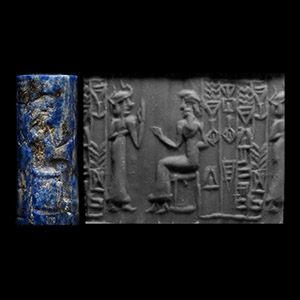
Ur II Period Lapis Lazuli Cylinder Seal with Dedicatory 'Gutua to Inka' Inscription
2200-2000 B.C.Sold for (Inc. bp): £1,820
With frieze depicting a standing figure addressing a seated figure and four columns of cuneiform text, reading 'Gutua to Inka, his Sister / Lady, He Gave (This Seal)'; supplied with a museum-quality impression. 2.96 grams, 20 mm
Acquired in 1995. Private collection, Switzerland, thence by descent. Private collection, since the late 1990s. This lot has been cleared against the Art Loss Register database, and is accompanied by an illustrated lot declaration signed by the Head of the Antiquities Department, Dr Raffaele D'Amato. -
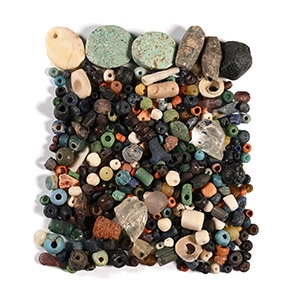
Western Asiatic Mixed Bead Group
1st millennium B.C. and laterSold for (Inc. bp): £20
Including tubular, fusiform, annular and other beads. 76 grams total, 2-20 mm
Ex London, UK, collection, 1990s. This lot has been cleared against the Art Loss Register database, and is accompanied by an illustrated lot declaration signed by the Head of the Antiquities Department, Dr Raffaele D'Amato.
