
Loading, please wait...
_900x900.jpg "Jemdet Nasr Red Jasper Cylinder Seal")
_200x200.jpg "Jemdet Nasr Red Jasper Cylinder Seal")
.jpg "Jemdet Nasr Red Jasper Cylinder Seal")
LOT 1169
Jemdet Nasr Red Jasper Cylinder Seal
3100-2850 B.C.
1 1/4 in. (6.3 grams, 32 mm).
With incised linear ornament and drilled pellets. [No Reserve]
ProvenanceAcquired 1970s-1996.
Property of a North American collector; collection no.22.
London collection, 2016.
Cf. Teissier, B., Ancient Near Eastern Cylinder Seals in the Marcopoli Collection, Berkeley, 1984, item 23, for type.
CONDITIONTimeLine Auctions follows a vetting process to ensure the authenticity and legality of all items, reinforcing our commitment to integrity and responsible trading. Each antiquity, antique, and coin lot undergoes thorough examination by a vetting committee of at least ten external specialists, professional trade association members, scientists, and archaeologists: Our Vetting Process
AUCTIONS:
TimeLine is a leading auction house specialising in antiquities, ancient art, collectables, natural history, coins, medals, and books. Our auctions offer museums, collectors, historians, and enthusiasts the opportunity to acquire unique and historically significant pieces.
-
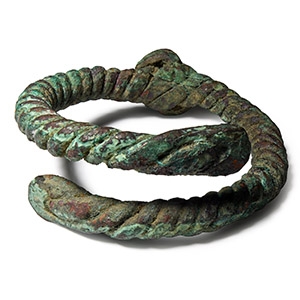
Luristan Bronze Twisted Arm Ring
17th-13th century B.C.Sold for (Inc. bp): £59
Formed as two bronze rods twisted about their own axis and looped at the ends, knotted forming the centrepiece. 334 grams, 10 cm
Private UK collection. Acquired in the 1980s. Property of a Cambridgeshire gentleman. -
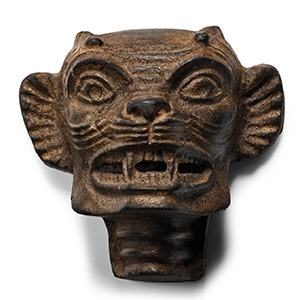
Neo Assyrian Pazuzu Head with Lamashtu
1st millennium B.C.Estimate: £3,000 - 4,000 (+bp*)
Opening Bid: £1,500
Modelled in the half-round with grotesque features and fierce teeth exposed; reverse with low-relief engraved image of Lamashtu advancing holding a trident. 26 grams, 36 mm
From an important collection formed before 1988, London and Geneva. This lot has been checked against the Interpol Database of stolen works of art and is accompanied by search certificate number no.12253-221916. -
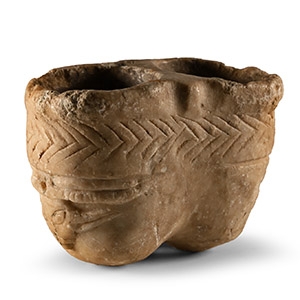
Mesopotamian Stone Double Kohl Pot with Animal Motifs
3rd millennium B.C.Estimate: £500 - 700 (+bp*)
Opening Bid: £250
Herringbone border beneath the thickened rim, one side with a stylised ibex head in low relief, the opposite side with a larger, more elaborate ibex motif. 138 grams, 71 mm
From an important London, UK, collection, 1970-1990s.
