
Loading, please wait...
LOT 1226
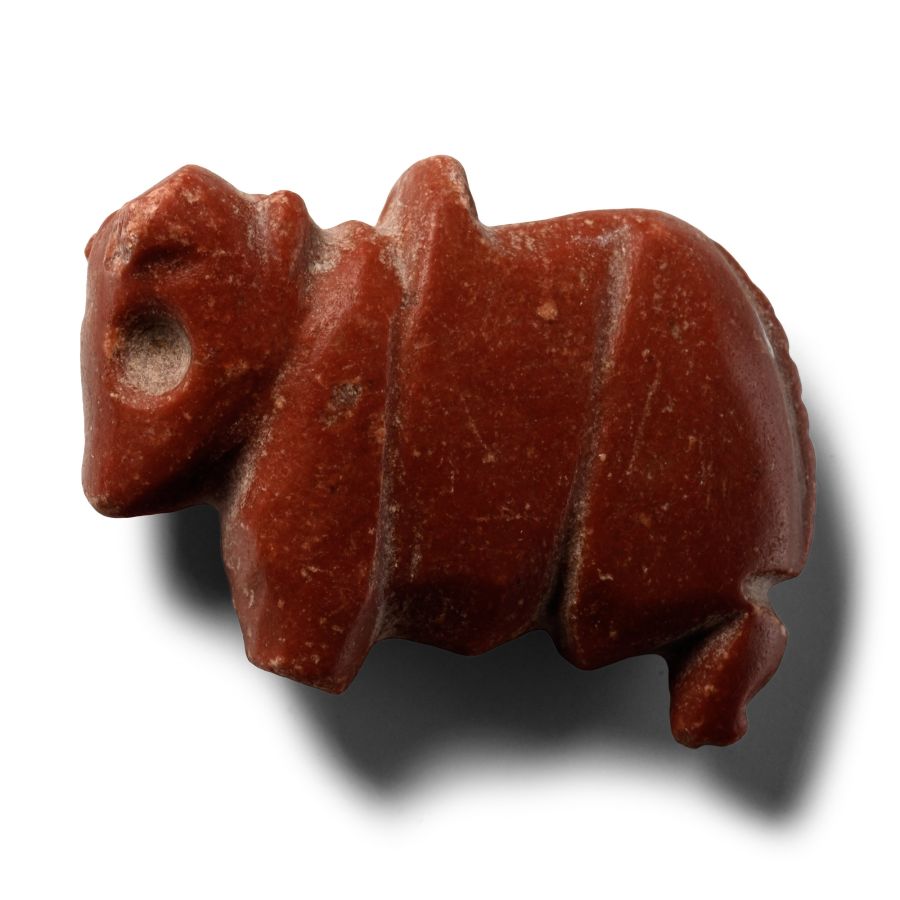
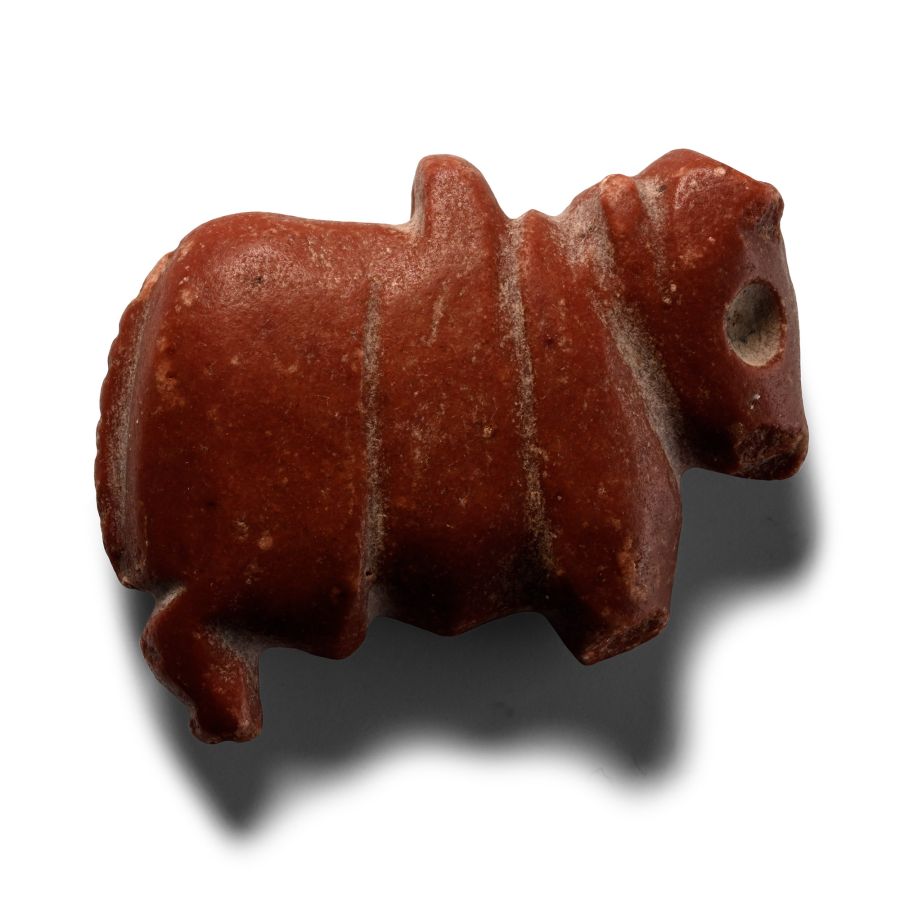
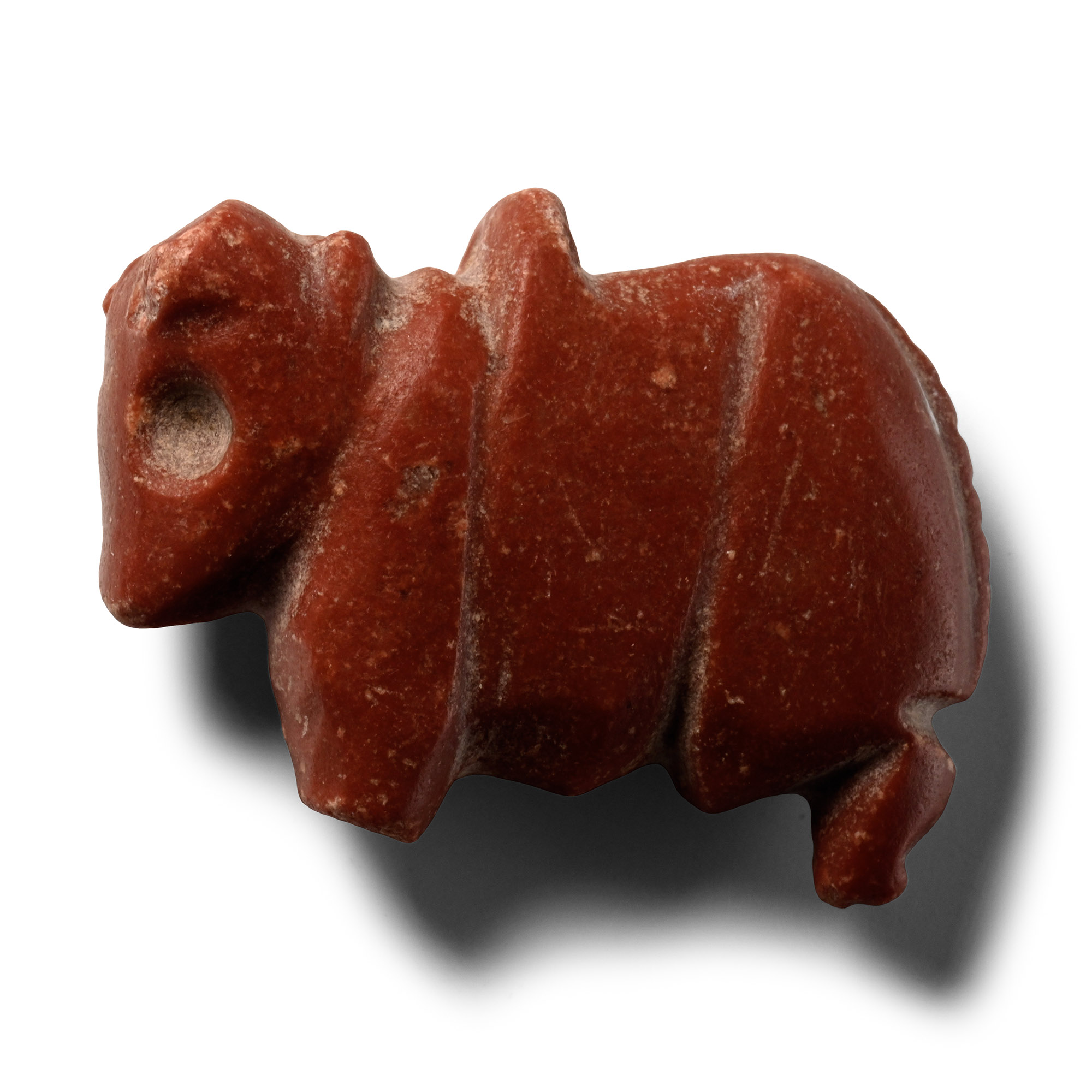
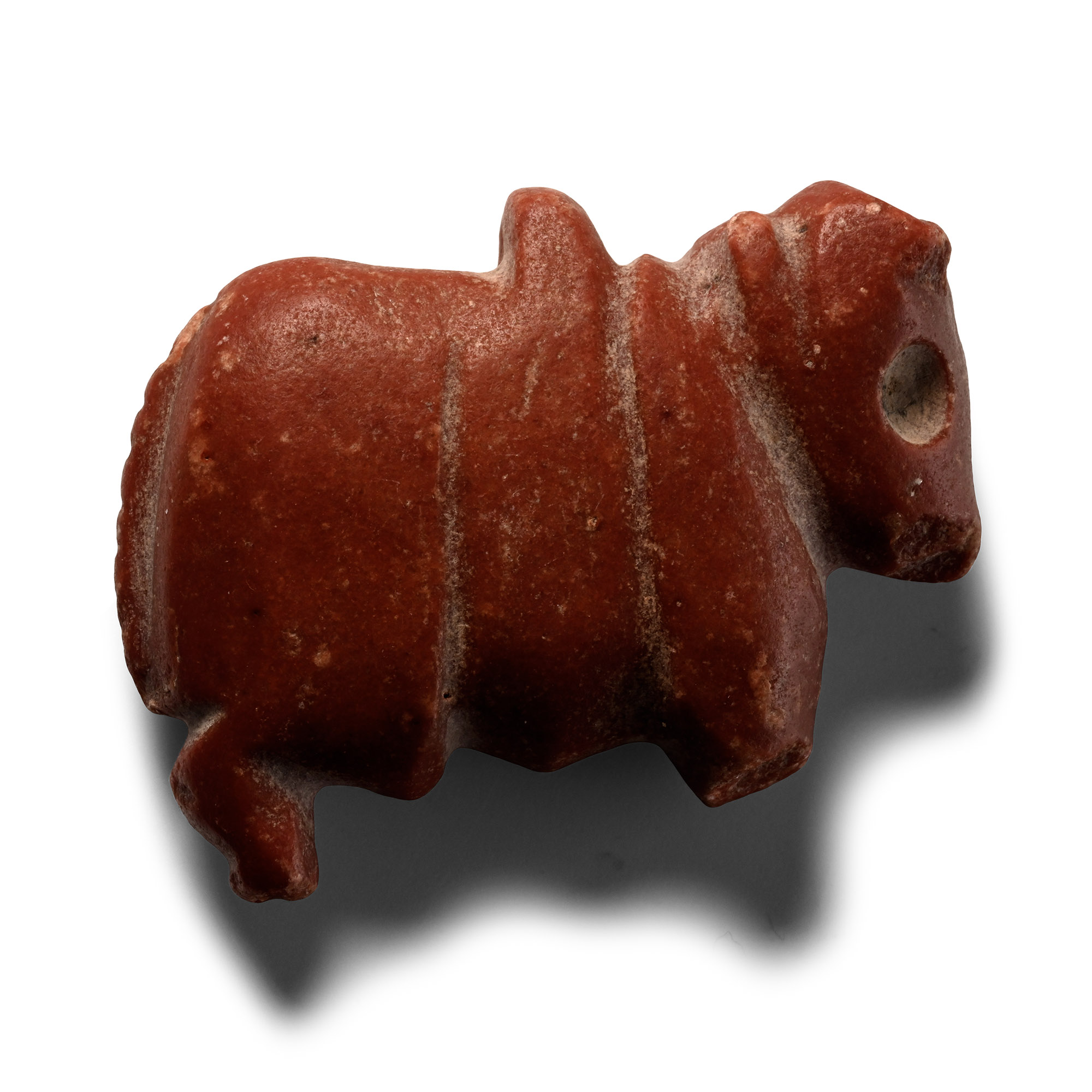
Jemdet Nasr Period Red Jasper Animal Amulet
3RD MILLENNIUM B.C.
1 3/4 in. (30.9 grams, 44 mm).
Carved in the round zebu with transverse piercing to the dorsal hump, shallow sockets at the eyes to accept inlay in contrasting colour. [No Reserve]
ProvenanceAcquired 1970s-1996.
Property of a North American collector.
London collection, 2016.
TimeLine Auctions follows a vetting process to ensure the authenticity and legality of all items, reinforcing our commitment to integrity and responsible trading. Each antiquity, antique, and coin lot undergoes thorough examination by a vetting committee of at least ten external specialists, professional trade association members, scientists, and archaeologists: Our Vetting Process
AUCTIONS:
TimeLine is a leading auction house specialising in antiquities, ancient art, collectables, natural history, coins, medals, and books. Our auctions offer museums, collectors, historians, and enthusiasts the opportunity to acquire unique and historically significant pieces.
-
Western Asiatic Mixed Gold Bead Collection
1st millennium B.C.Sold for (Inc. bp): £845
Comprising beads of various shapes and sizes, including some granulated examples. 9.82 grams total, 7-13 mm
Ex property of a late Japanese collector, 1970s. Accompanied by a previous typed cataloguing card. This lot has been cleared against the Art Loss Register database, and is accompanied by an illustrated lot declaration signed by the Head of the Antiquities Department, Dr Raffaele D'Amato. -
Western Asiatic Stone and Faience Cylinder Seal Group
2nd-1st millennium B.C.Sold for (Inc. bp): £585
Comprising: a faience cylinder seal with a standing figure and two opposing stags; a black stone cylinder seal with a standing figure; a hematite cylinder seal with worshipping scene; a black stone cylinder seal with contest(?) scene; a green stone cylinder seal with an ibex and two bird figures; a large fragment of a grey stone cylinder seal. 55 grams total, 19-41 mm
From the collection of a gentleman, acquired on the London art market in the 1990s. -
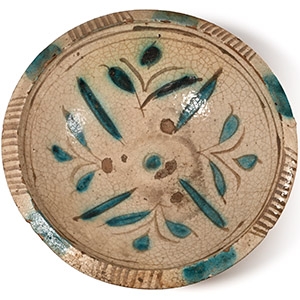
Western Asiatic Ceramic Bowl with Blue Leaf Design
12th-15th century A.D.Estimate: £250 - 350 (‡+bp*)
Opening Bid: £120
Broad bowl with carinated inner edge to the and chamfered rim, law basal ring; upper face glazed with floral design picked out in blue and grey, circumferential rings below the rim and panels of radiating stripes and blue glaze. 710 grams, 24.6 cm
S. Morad collection. From the collection of M. Hugues Rosset, Switzerland. Private Swiss collection, acquired from M. Hugues Rosset in 1998.
