
Loading, please wait...
_900x900.jpg "Jemdet Nasr Haematite Cylinder Seal")
_200x200.jpg "Jemdet Nasr Haematite Cylinder Seal")
.jpg "Jemdet Nasr Haematite Cylinder Seal")
LOT 1187
Jemdet Nasr Haematite Cylinder Seal
CIRCA 3100-2850 B.C.
1 1/4 in. (5.7 grams, 32 mm).
With drilled and incised geometric design. [No Reserve]
ProvenanceAcquired 1970s-1996.
Property of a North American collector, collection no.12.
London collection, 2016.
Cf. Collon, D., Near Eastern Seals, London, 1990, item 25, for type.
CONDITIONTimeLine Auctions follows a vetting process to ensure the authenticity and legality of all items, reinforcing our commitment to integrity and responsible trading. Each antiquity, antique, and coin lot undergoes thorough examination by a vetting committee of at least ten external specialists, professional trade association members, scientists, and archaeologists: Our Vetting Process
AUCTIONS:
TimeLine is a leading auction house specialising in antiquities, ancient art, collectables, natural history, coins, medals, and books. Our auctions offer museums, collectors, historians, and enthusiasts the opportunity to acquire unique and historically significant pieces.
-
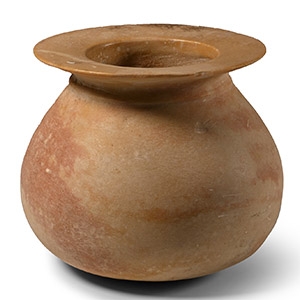
Mesopotamian Marble Vase
4rd-3rd millennium B.C.Estimate: £1,800 - 2,400 (‡+bp*)
Opening Bid: £1,000
Squat-bodied with a broad, rounded shoulder and base, short neck and flat everted rim. 1.95 kg, 13.7 cm
with Gerhard Hirsch Nachf, Germany, Auction 238|239, February 2005, no.107. Acquired by the present owner from the above. This lot has been checked against the Interpol Database of stolen works of art and is accompanied by search certificate number no.12256-222173. -
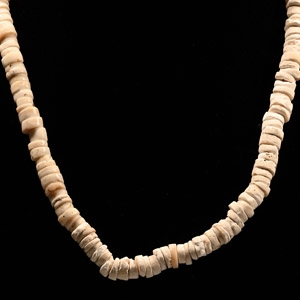
Sumerian Shell Bead Necklace String
4th-2nd millennium B.C.Sold for (Inc. bp): £33
Restrung necklace of graduated marine shell discs. 125 grams, 58 cm
Ex H.Norry collection, 1980s-1990s. -
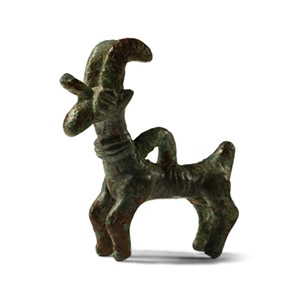
Luristan Bronze Ibex Pendant
8th-7th century B.C.Sold for (Inc. bp): £156
With bands to the joints, collar to the neck and loop. 29 grams, 46 mm
From a North Yorkshire, UK, private collection. Acquired from Adam Partridge Auctioneers, Macclesfield, UK. Property of Mr A.B., an American collector.
Pendants in the form of animals, mostly goats or mouflons, but also horses or other equids, are quite common among the corpus of the Luristan pendants.
