
Loading, please wait...
LOT 0181
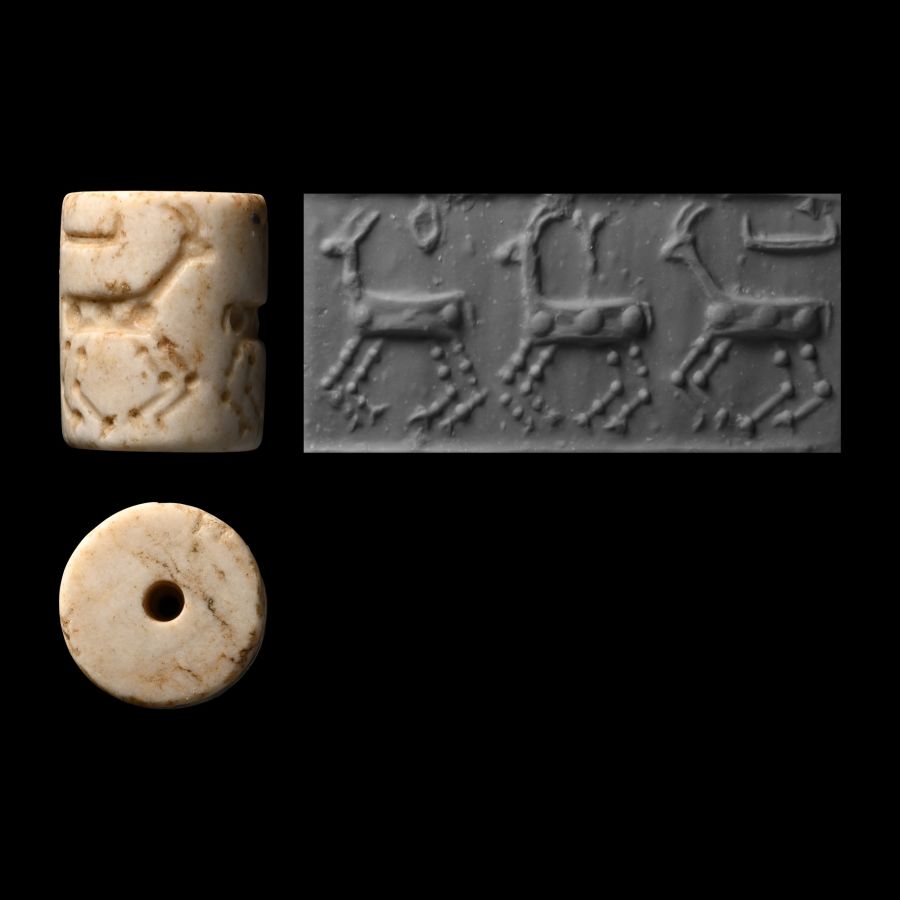
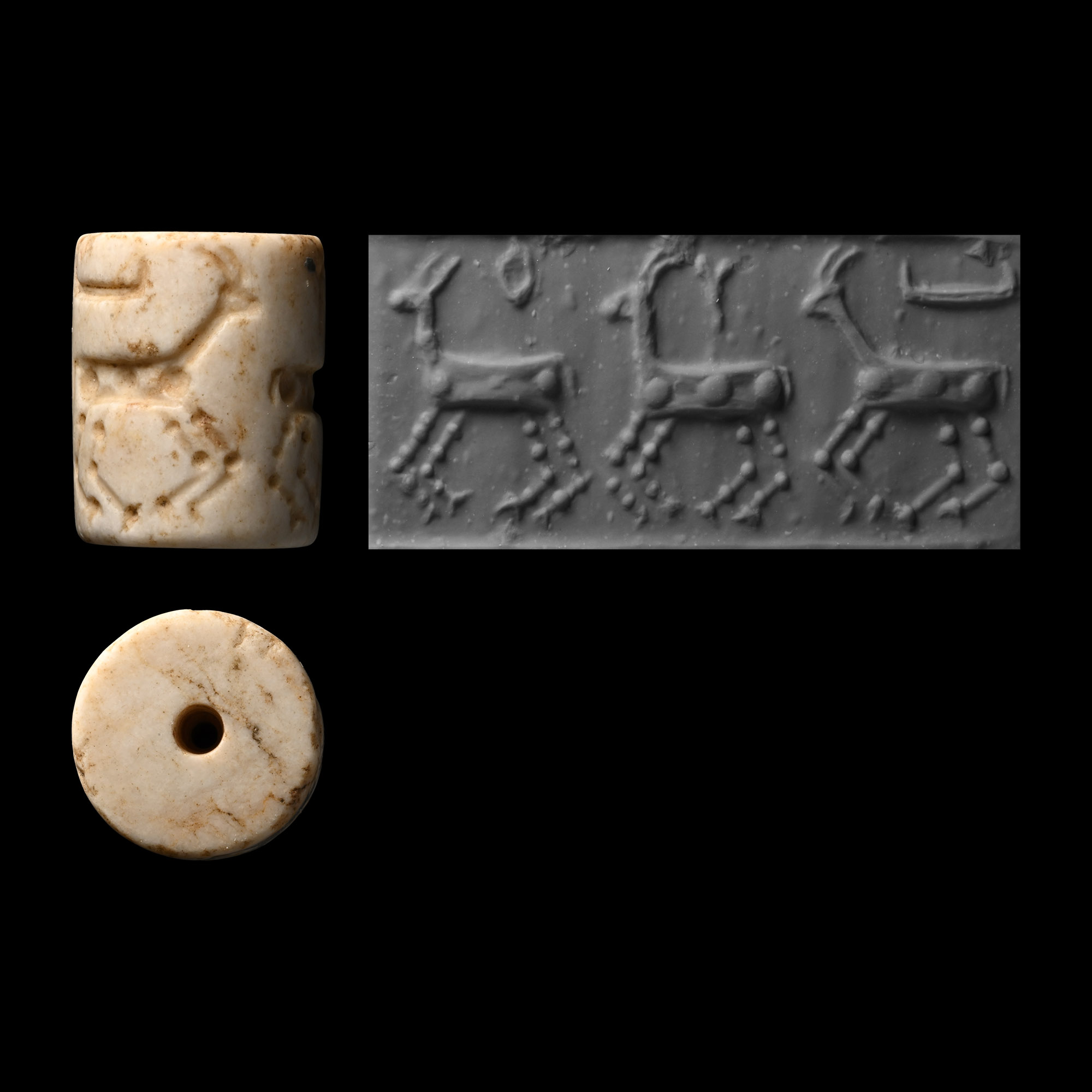
Jemdet Nasr Cylinder Seal with Horned Quadrupeds
CIRCA 3000 B.C.
1 3/8 in. (63.5 grams, 36 mm).
With three horned quadrupeds; accompanied by a museum quality impression and a copy of an old scholarly note, typed and signed by W.G. Lambert, late Professor of Assyriology, University of Birmingham, 1970-1993, which states: 'Cylinder Seal of Alabaster, 27 x 16 mm. The design consists of three prancing horned quadrupeds. All are cut largely with the drill, save for some hand work on the bodies, necks, heads and tails. Above each animal's back is a device, apparently a symbol. [...] The animals were from temple herds, and the prized possessions of the communities, since sheep and goats were the normal domestic animals of the time.' [No Reserve]
Provenancewith Bonhams, Fine Antiquities 20th May, 1992, no.68.
Accompanied by a copy of a scholarly note, typed and signed by Professor Wilfrid George Lambert in 1992.
Seals were the working signatures of the ancient Near East. Pressed or rolled into wet clay, they secured jars, bags, doors and tablets, and left a distinct impression that identified the owner, authorised a transaction, and showed whether a container had been opened. Stamp seals (pressed once to leave a single emblem) appear from the 7th–4th millennia BC and continue throughout later periods; cylinder seals (rolled to create a repeating frieze) developed in Mesopotamia in the late 4th millennium BC and are used into the 1st millennium BC. Beyond administration, seals were miniature artworks and amulets. Their images—gods and worshippers, royal hunts, banquets, heroes and mythic beasts—broadcast rank, piety and profession, and were believed to protect the owner. Materials range from soft stones to hard chalcedonies, haematite and lapis, worked with drills and abrasives to achieve crisp intaglio cutting. Many were worn on cords or rings and followed their owners through life, sometimes into the grave. Seals matter because they underpin the earliest systems of record-keeping and trade. Impressions on tablets and bullae are primary documents for ancient law, economy and religion; the seals themselves preserve that imagery in the round. For collectors, well-cut examples with sharp impressions, good polish and honest ancient wear are especially desirable, and pieces with early collection histories are keenly sought.
CONDITIONTimeLine Auctions follows a vetting process to ensure the authenticity and legality of all items, reinforcing our commitment to integrity and responsible trading. Each antiquity, antique, and coin lot undergoes thorough examination by a vetting committee of at least ten external specialists, professional trade association members, scientists, and archaeologists: Our Vetting Process
AUCTIONS:
TimeLine is a leading auction house specialising in antiquities, ancient art, collectables, natural history, coins, medals, and books. Our auctions offer museums, collectors, historians, and enthusiasts the opportunity to acquire unique and historically significant pieces.
-
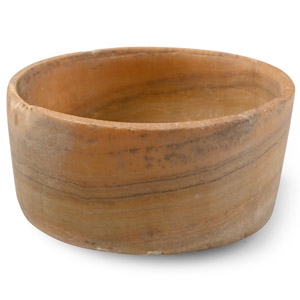
Mesopotamian Stone Vessel
1st millennium B.C.Sold for (Inc. bp): £117
Squat in profile with slightly rounded base, low sidewall, rounded rim. 192 grams, 85 mm
Ex Mayfair, London, UK, gallery, 2000s. -
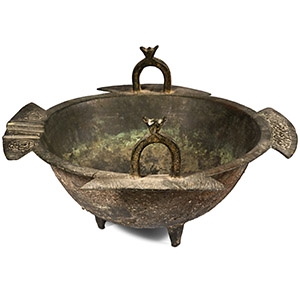
Khorasan 'Muhammad Bin Husayn' Bronze Cauldron
11th-12th century A.D.Estimate: £500 - 700 (+bp*)
Opening Bid: £200
With a deep hemispherical bowl and three stub feet, two lateral trapezoidal flanges to the rim, each with an arched handle; similar flange to forward edge with reserved panel of scrolled foliage; to the rear, flange with shallow median socket decorated with scrolled tendrils, two lateral discs each with a star of intersecting triangles; signed by Muhammad Bin Husayn. 5.75 kg, 43.5 cm
with Christie's, South Kensington, Art & Textiles of The Islamic & Indian Worlds, 8 April 2011, no.150. Private collection, UK. -
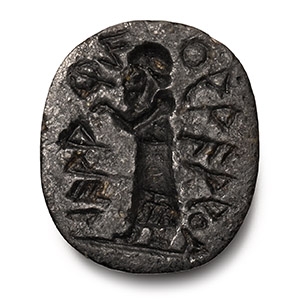
Judean Gemstone with Aramaic Inscription
800-600 B.C.Sold for (Inc. bp): £1,300
With incuse standing robed figure in profile, surrounded by Aramaic text. 1.84 grams, 16 mm
Ex late London, UK, gentleman, 1970s. This lot has been cleared against the Art Loss Register database, and is accompanied by an illustrated lot declaration signed by the Head of the Antiquities Department, Dr Raffaele D'Amato.
