
Loading, please wait...
LOT 1818
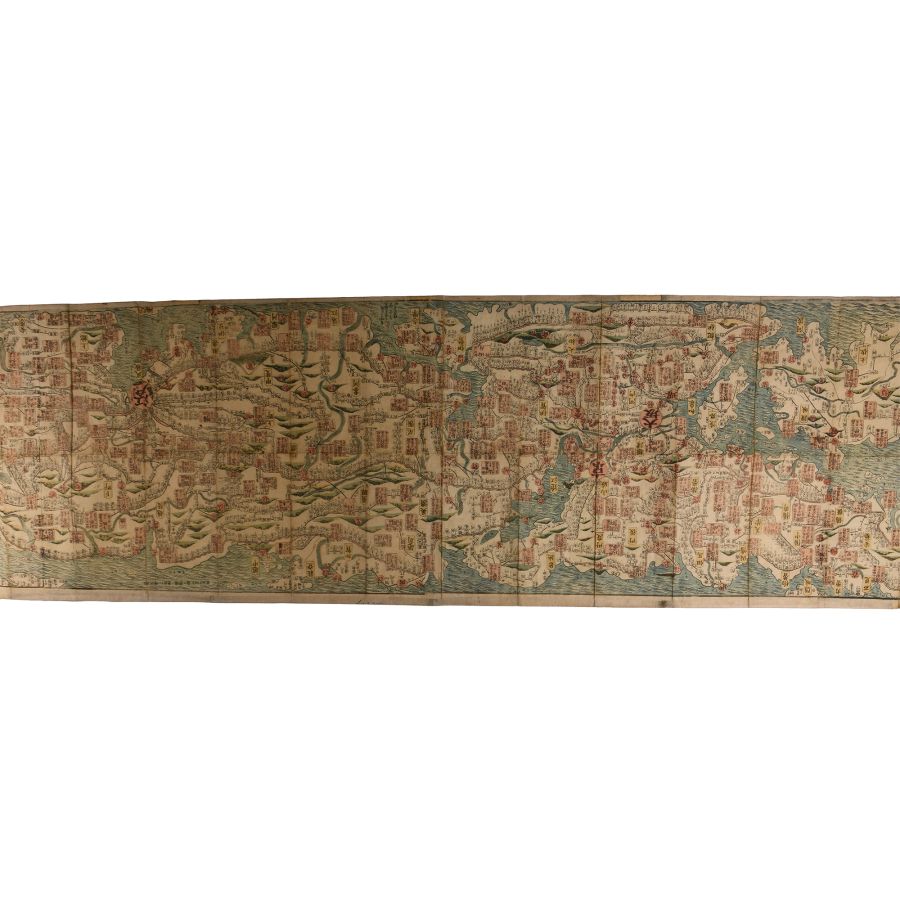
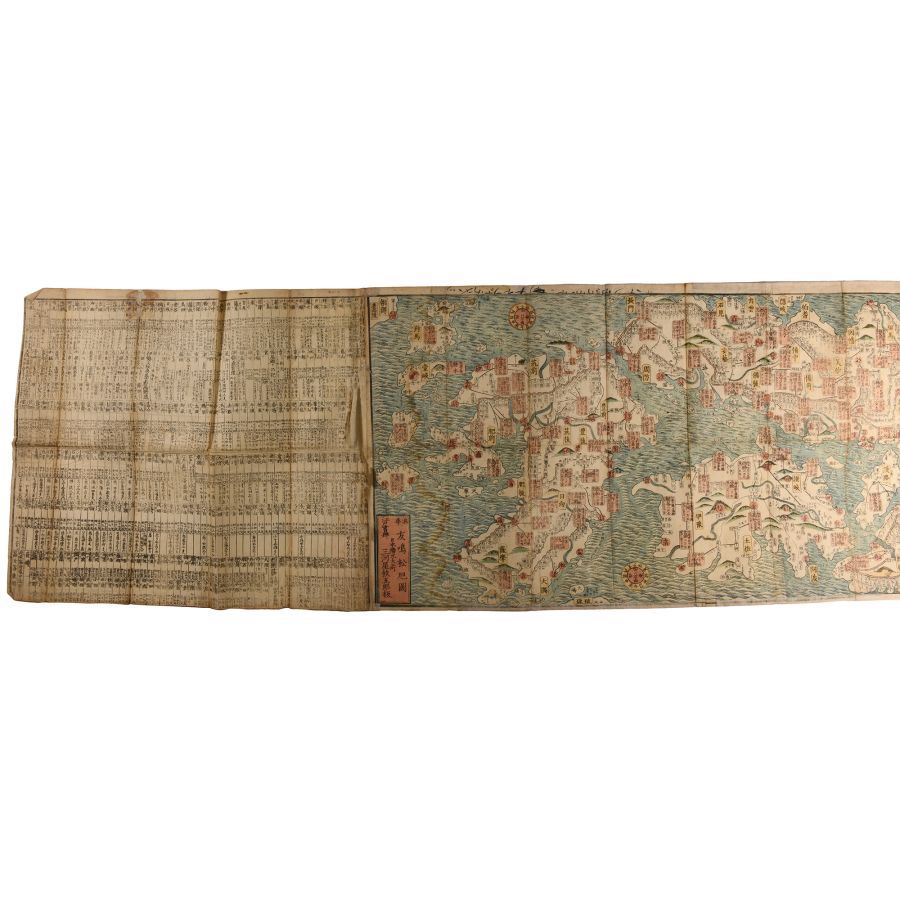
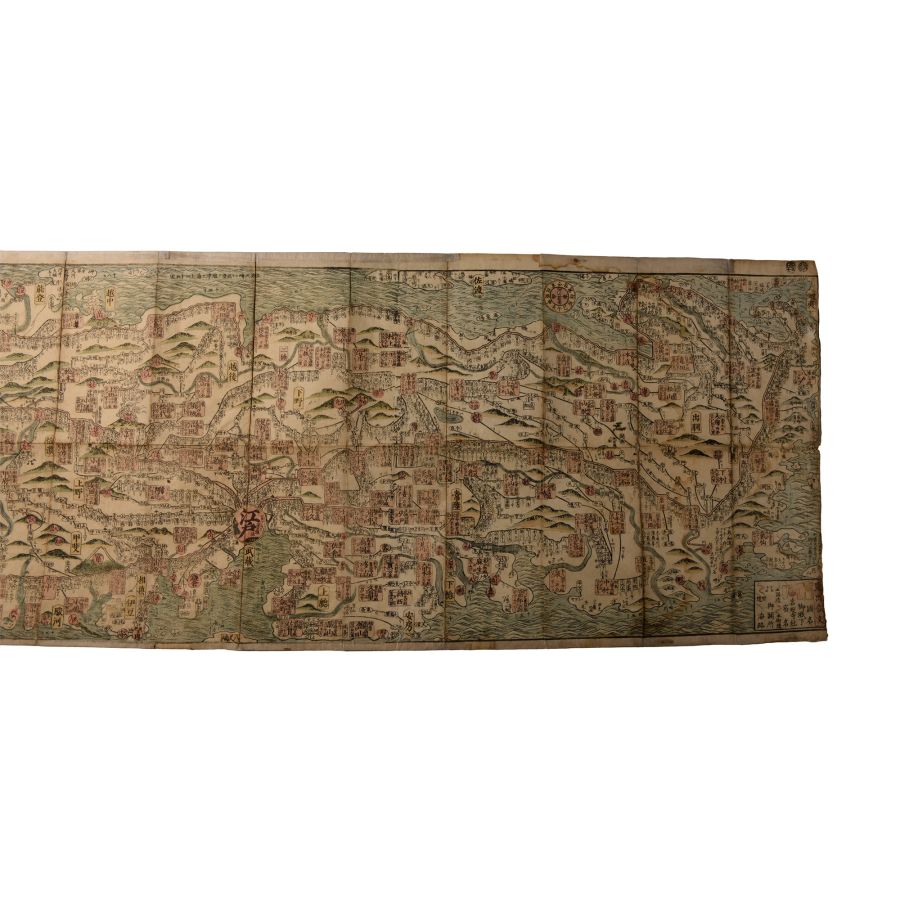
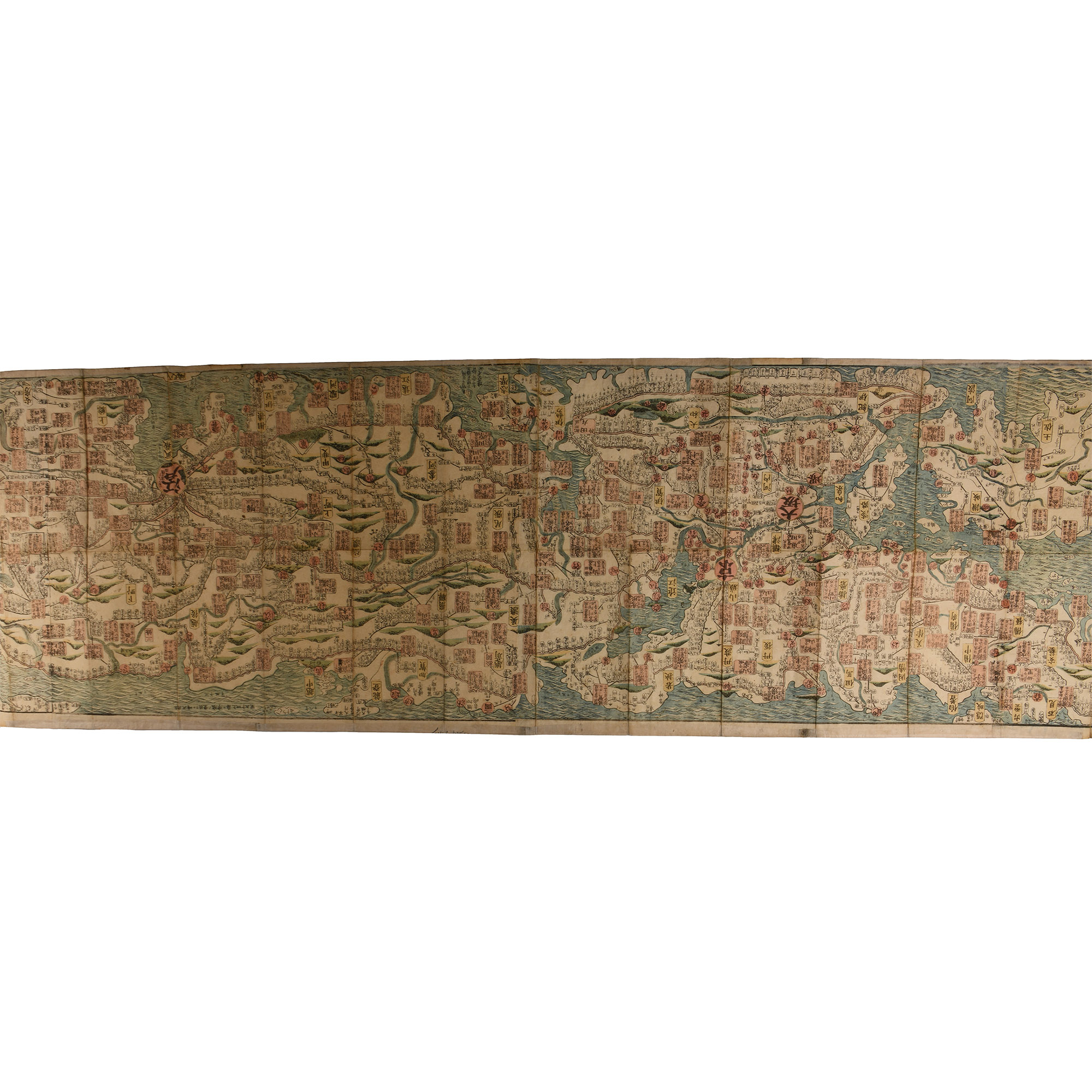
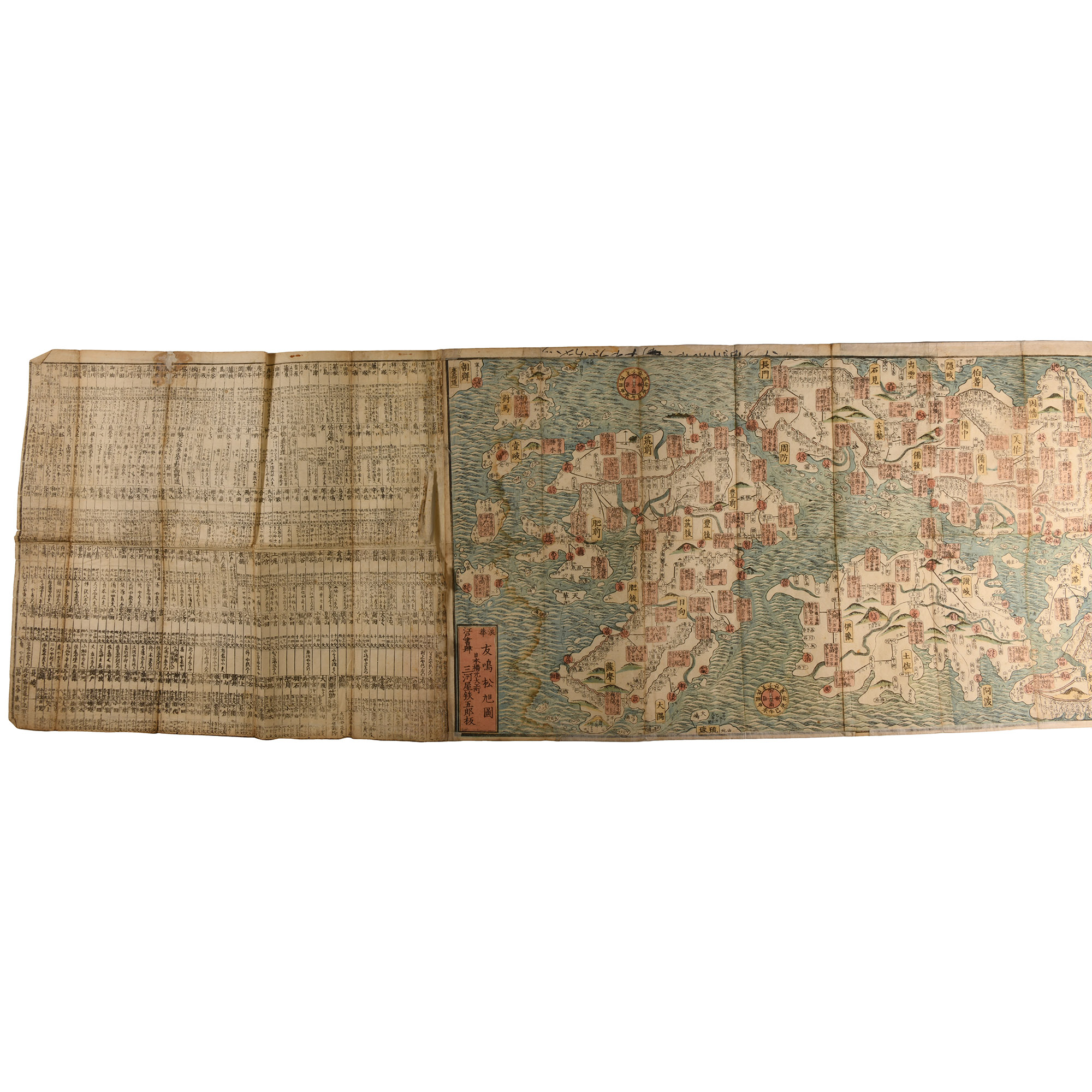
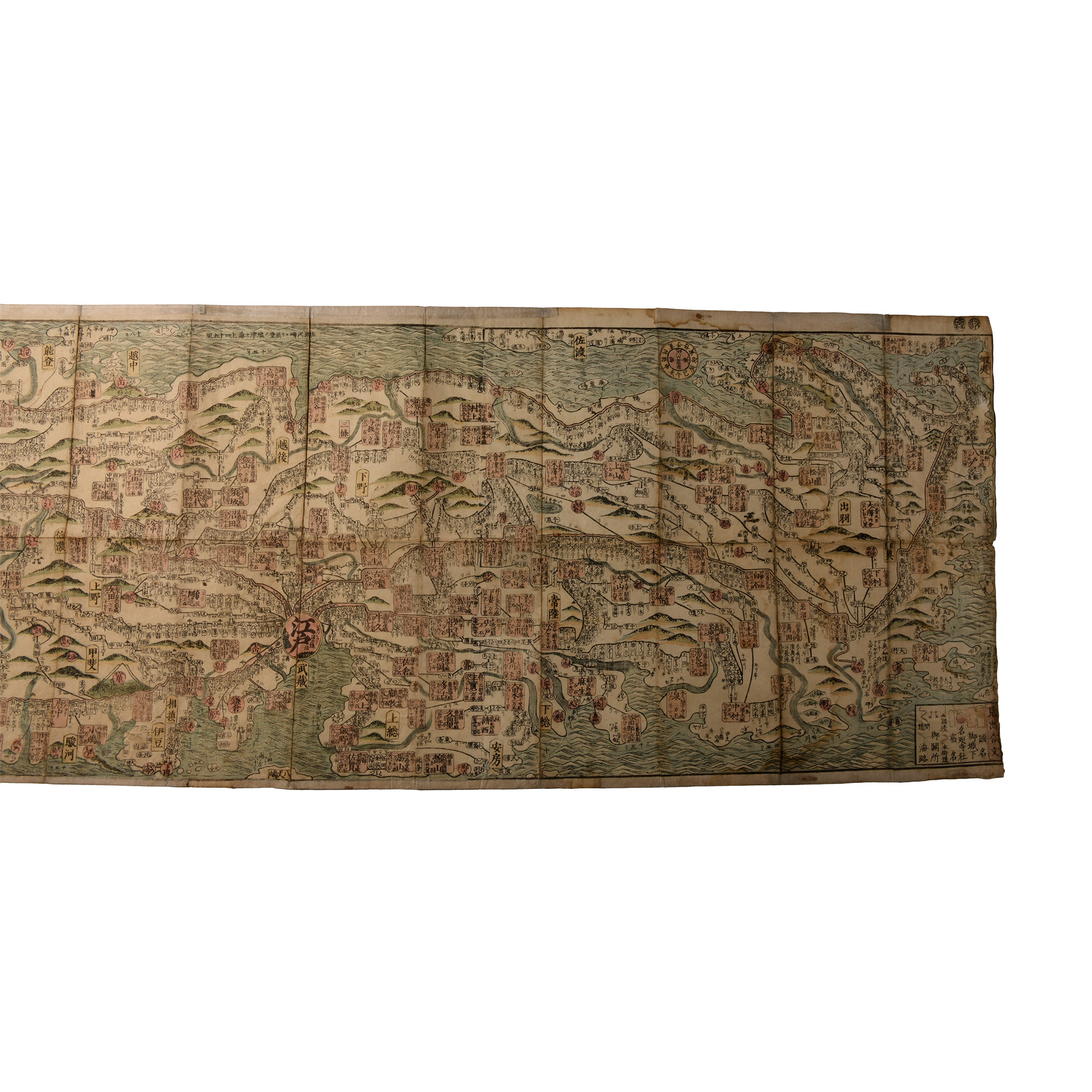
Japanese Woodcut Map of the Japanese Islands
CIRCA 1840 A.D.
86 1/4 x 14 1/8 in. (41 grams total, 219 x 36 cm).
Antique woodcut map of lower Japanese islands (Kyushu, Shikoku, Honshu) with very extensive detail depicting towns, villages, temples; coloured, and with an extensive key; some water stains, frayed edges.
ProvenanceAcquired from the UK art market.
Private Scottish collection.
TimeLine Auctions follows a vetting process to ensure the authenticity and legality of all items, reinforcing our commitment to integrity and responsible trading. Each antiquity, antique, and coin lot undergoes thorough examination by a vetting committee of at least ten external specialists, professional trade association members, scientists, and archaeologists: Our Vetting Process
AUCTIONS:
TimeLine is a leading auction house specialising in antiquities, ancient art, collectables, natural history, coins, medals, and books. Our auctions offer museums, collectors, historians, and enthusiasts the opportunity to acquire unique and historically significant pieces.
-
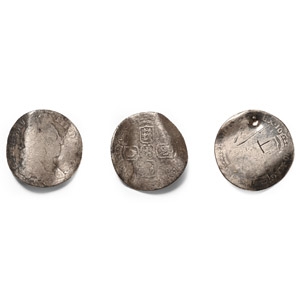
William III Silver Love Token Group
1694-1702 A.D.Sold for (Inc. bp): £39
Group of three love tokens, each a sixpence coin bent into a double-curved profile; one pierced and with initials to each face. 7.45 grams total, 20 mm each
Acquired on the UK art market. Property of an Essex, UK, gentleman.
The custom of giving a bent coin as a love-token is known from the 17th century in England. The coins were usually smoothed to obliterate the monarch’s head and then bent twice; sometimes they were engraved with initials or symbols such as hearts or knots. If the sweetheart accepted the youth's advances, she kept the token; if not, she disposed of the coin. The tradition is referred to in the children's rhyme "There was a crooked man, and he walked a crooked mile, he found a crooked sixpence on a crooked stile." -
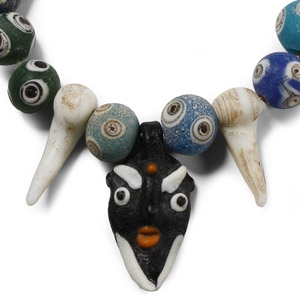
Phoenician Style Glass Bead and Pendant Necklace
20th century A.D.Sold for (Inc. bp): £33
Mixed group including tubular and spherical beads, claw-shaped pendants and a mask with applied detailing. 80.5 grams, 22 cm long
From an old English deceased estate. Acquired on the London art market in the early 1990s. Property of a London, UK, collector. -
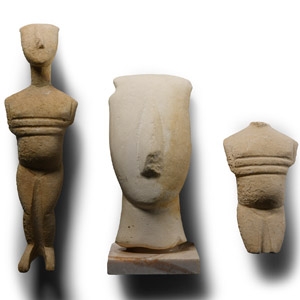
Cycladic Idol Group
20th century A.D.Sold for (Inc. bp): £390
Comprising three reproduction items, a carved 'stargazer' idol and fragments; the head with old labels to the reverse: 'No 2265' and 'Ex Goulandris Collection'. 366 grams total, 7.6-14.5 cm
From a collection acquired on the UK art market from various auction houses and collections mostly before 2000. From an important Cambridgeshire estate; thence by descent.
