
Loading, please wait...
LOT 1456
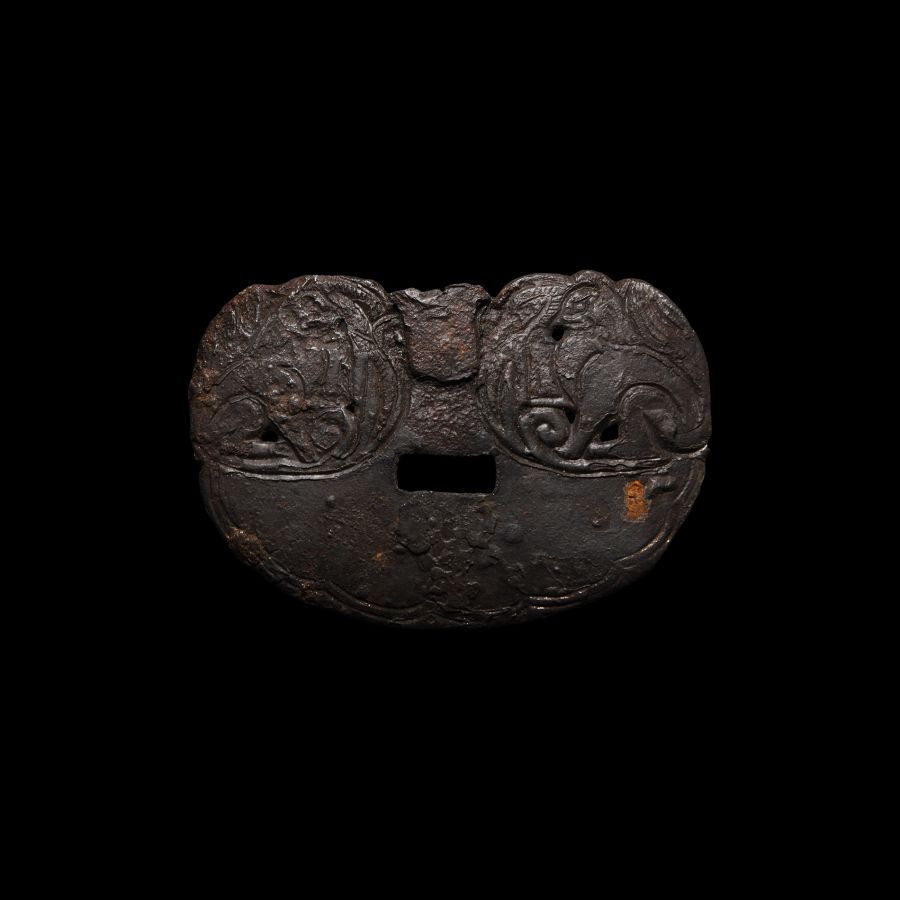
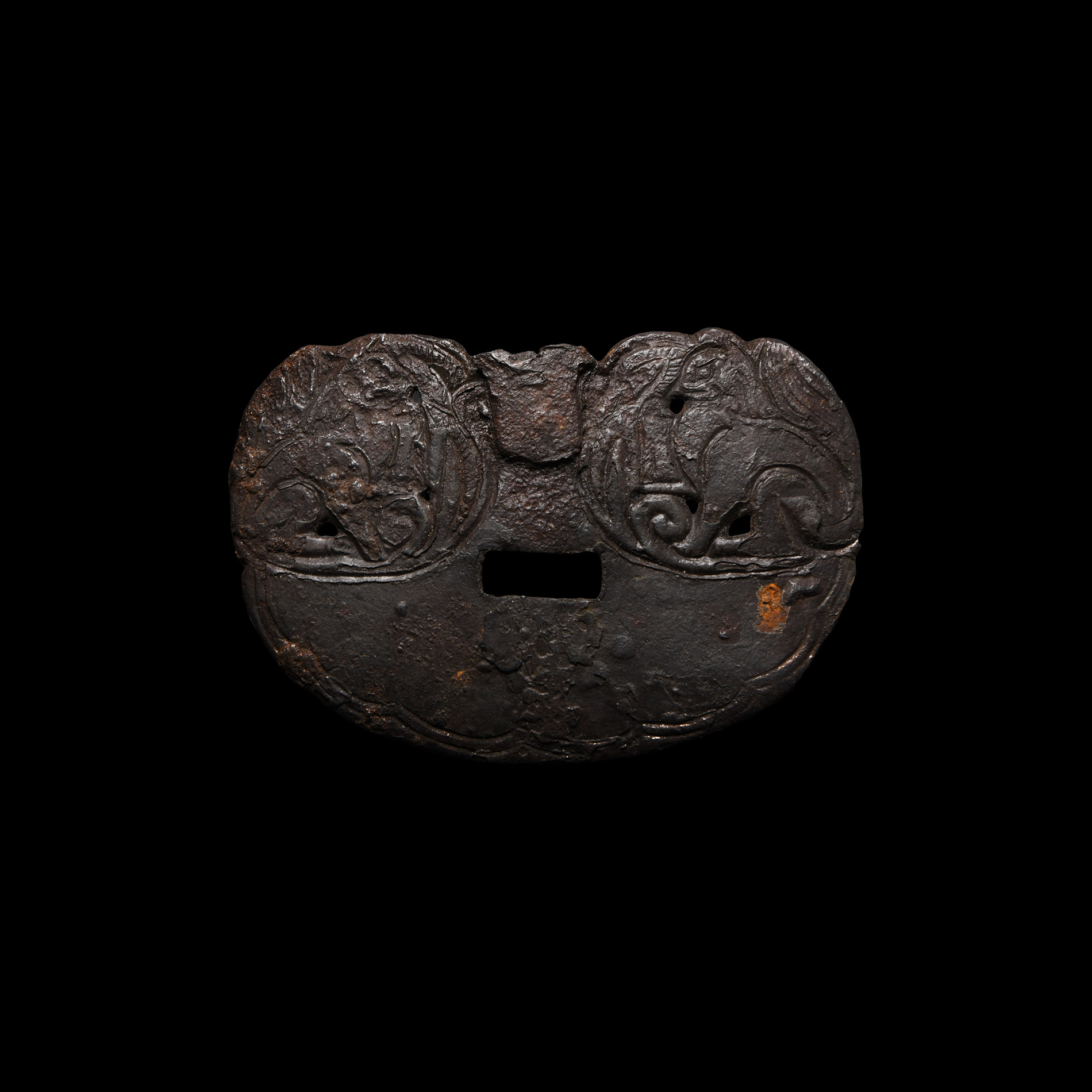
Japanese Bronze Sword Guard with Seated Beasts
16TH-17TH CENTURY A.D.
3 3/4 in. (46 grams, 97 mm).
Facing each other in relief, incised scallops below.
ProvenanceFrom the collection of a North American gentleman, formed in the 1990s.
CONDITIONTimeLine Auctions follows a vetting process to ensure the authenticity and legality of all items, reinforcing our commitment to integrity and responsible trading. Each antiquity, antique, and coin lot undergoes thorough examination by a vetting committee of at least ten external specialists, professional trade association members, scientists, and archaeologists: Our Vetting Process
AUCTIONS:
TimeLine is a leading auction house specialising in antiquities, ancient art, collectables, natural history, coins, medals, and books. Our auctions offer museums, collectors, historians, and enthusiasts the opportunity to acquire unique and historically significant pieces.
LOT 1456
Japanese Bronze Sword Guard with Seated Beasts
Estimate £180 - 240€210 - 280 (for guidance only)$240 - 320 (for guidance only)
-
Roman Iron Spatha Sword
2nd-4th century A.D.Sold for (Inc. bp): £2,340
A double-edged blade of Lauriacum Hromówka typology with blood channels running down most of its length on both sides, parallel cutting edges tapering towards the triangular point, massive tapering tang with a bronze nail for the fastening of the pommel, and an ancient repair at the base of the tang with a flattened domed rivet. 468 grams, 70.1 cm
From the private collection of a London gentleman, from his grandfather's collection formed before the early 1970s. Accompanied by an academic report by Dr Raffaele D’Amato. This lot has been checked against the Interpol Database of stolen works of art and is accompanied by a search certificate number no.12917-245171.
Although in Latin literature the late Roman sword was often still conventionally called gladius (Ammianus Marcellinus, Historiae, XIX, 6; Passio SS. Rogatiani et Donatiani, 1859, p.323), the main kind of blade of the 3rd and 4th century Roman soldier belongs to the type so-called spatha (Scriptores Historia Augusta, Divus Claudius, XXV,7,5; 8,5) which directly derived from the long cutting Celtic sword of the La Tène III period, already used by the cavalrymen and auxilia of the previous ages. The great spatha (spathì) of the Roman heavy infantryman was considered by Julius Africanus (Fragm., I, 1, 53) as the main weapon of the armoured legionary of Alexander Severus. The frequent clashes with Germanic warriors armed with long swords and the increased recruitment of them in the Roman army quickened a more intensive use of the spathae by the milites legionarii. These longer swords slowly replaced the shorter gladius, the double-edged sword of the imperial infantry, for all types of troops. -
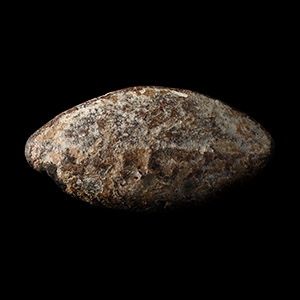
Greek Lead Slingshot
3rd-1st century B.C.Sold for (Inc. bp): £78
Biconical in profile with casting seam and reserved legend 'ΛY-P-N' = maybe ΛYKOΦ-PONO = Lykophronos (name). 25.6 grams, 31 mm
Acquired on the German art market before 2000. Private collection, Munich, Germany.
The leaden bullets, which were thrown from slings, were called in Greek molivdainai (μολύβδαιναι), and in Latin glandes; the former indicating the material ‘lead’, the latter the shape ‘acorns’. These bullets were cast in a mould and bore letters or devices, or both, on two sides or on only one. In form they were more like an almond than an acorn, but many are pointed at both ends. -
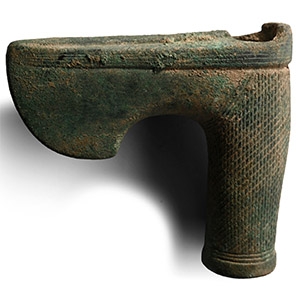
Elamite Decorated Bronze Axehead
2nd-1st millennium B.C.Sold for (Inc. bp): £1,430
With a short socketted shaft with hatched panel, triangular-section blade with reeded upper edge, broadening towards the cutting edge. 390 grams, 96 mm
French collection, 1980s. Acquired on the London art market. Private collection, London, UK.
