
Loading, please wait...
LOT 0040
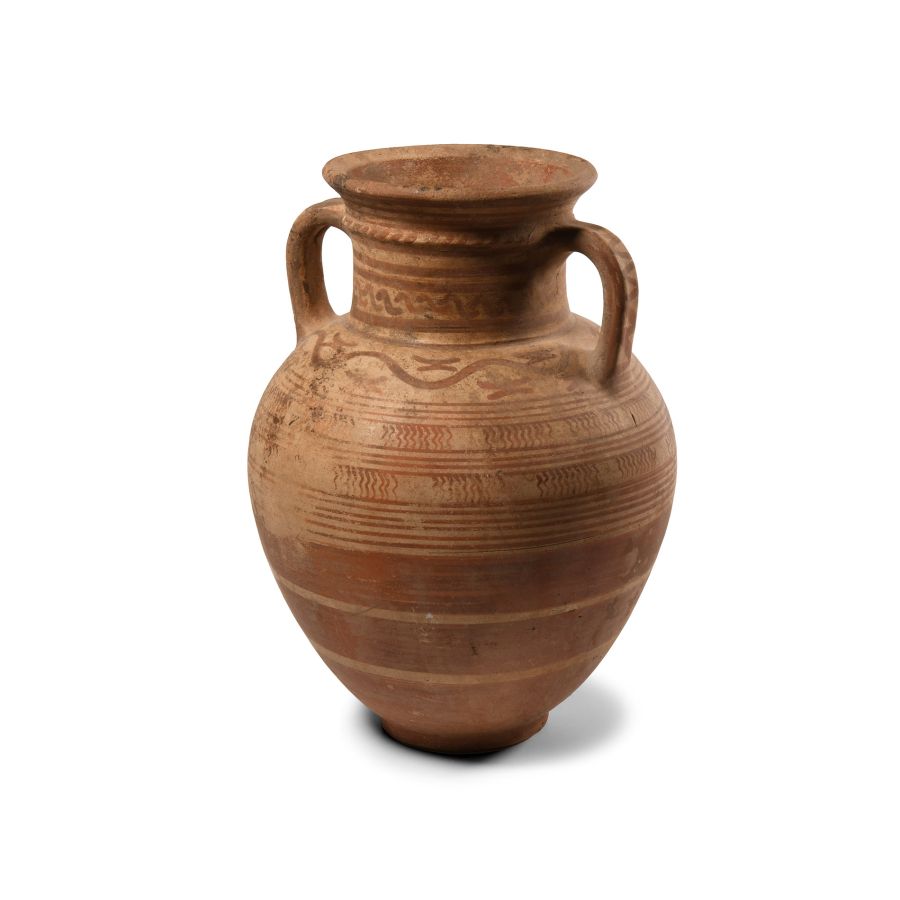
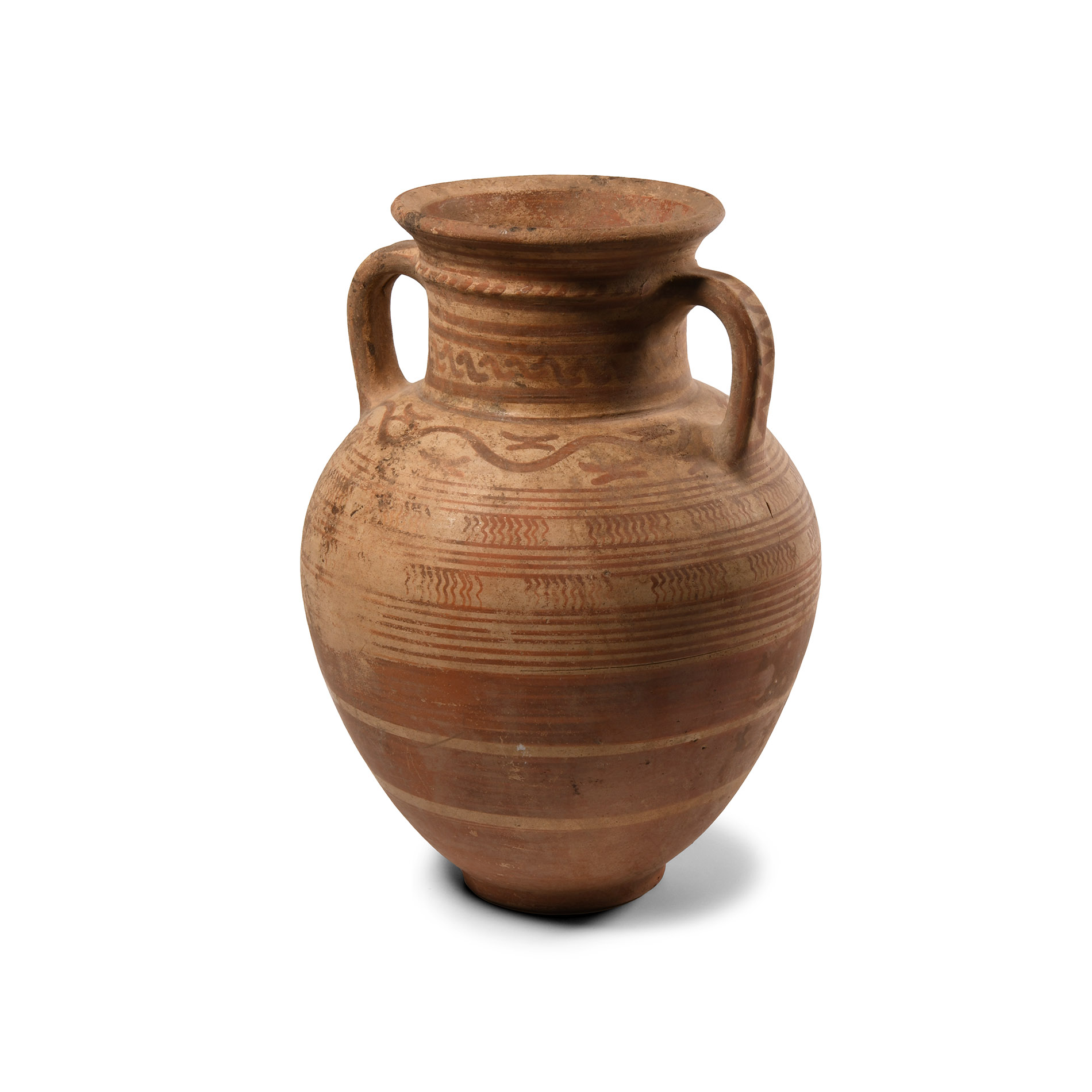
Italo-Geometric Painted Terracotta Amphora
CIRCA 7TH-6TH CENTURY B.C.
10 5/8 in. (1.2 kg, 27 cm high).
Decorated in red with geometric motifs including encircling bands, a horizontal wavy band with motifs at the shoulder, with two rows of vertical wavy linear panels below.
ProvenanceFrom a New Mexico private collection, acquired before 1991.
with Bonhams, 3 July 2019, lot 53, (£1,500-£2,500).
Accompanied by a copy of a previous collector's catalogue pages with inventory number 20.13.
TimeLine Auctions follows a vetting process to ensure the authenticity and legality of all items, reinforcing our commitment to integrity and responsible trading. Each antiquity, antique, and coin lot undergoes thorough examination by a vetting committee of at least ten external specialists, professional trade association members, scientists, and archaeologists: Our Vetting Process
AUCTIONS:
TimeLine is a leading auction house specialising in antiquities, ancient art, collectables, natural history, coins, medals, and books. Our auctions offer museums, collectors, historians, and enthusiasts the opportunity to acquire unique and historically significant pieces.
-
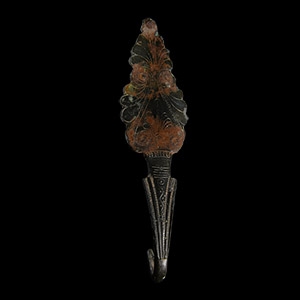
Etruscan Tinned Bronze Armoured Belt Hook
6th-5th century B.C.Sold for (Inc. bp): £46
Composed of a scalloped foliate plate and tapering neck, displaying geometric and foliate detailing. 26 grams, 11.7 cm
Acquired in the 1970s. Private collection of a London antiquarian. -
.jpg)
Eastern Greek Carnelian Scarab Seal
6th-5th century B.C.Sold for (Inc. bp): £5,200
Modelled with semi-naturalistic anatomical detailing, the base displaying a battle showing a mature and muscular naked man grappling with a winged gryphon; drilled for suspension. 2.29 grams, 16 mm
Ex F.A., Brussels, 1980. Private collection of a London antiquarian.
Combat between a man and gryphon is a well-attested subject matter on Greek scarabs. A faience factory was found in Naukratis by Flinders-Petrie, with innumerable faience and discarded moulds. The motifs on the bottom surface are repetitive and hurriedly worked. They depict lucky symbols or representative subjects (lions with sun disc, ibex, Horus falcons, lotus flowers); such motifs had already been adopted into Greek art but are generally considered typically Egyptian. Here the subject of a fight against a gryphon is Greek, although the style of the fighting character seems Phoenician, which points to Eastern Mediterranean workmanship, possibly on the Island of Rhodes. -
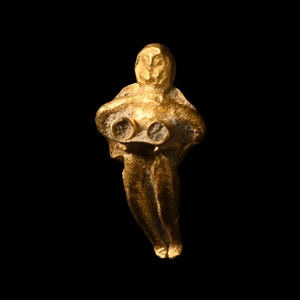
Greek Gold Eros Figure
3rd-1st century B.C.Estimate: £120 - 170 (+bp*)
Opening Bid: £60
Formed with a curved profile, the figure holding a tray or other object before him, his wings part-spread. 0.72 grams, 12 mm
Acquired 1970-2010. Collection of a late Japanese gentleman.
