
Loading, please wait...
LOT 1089
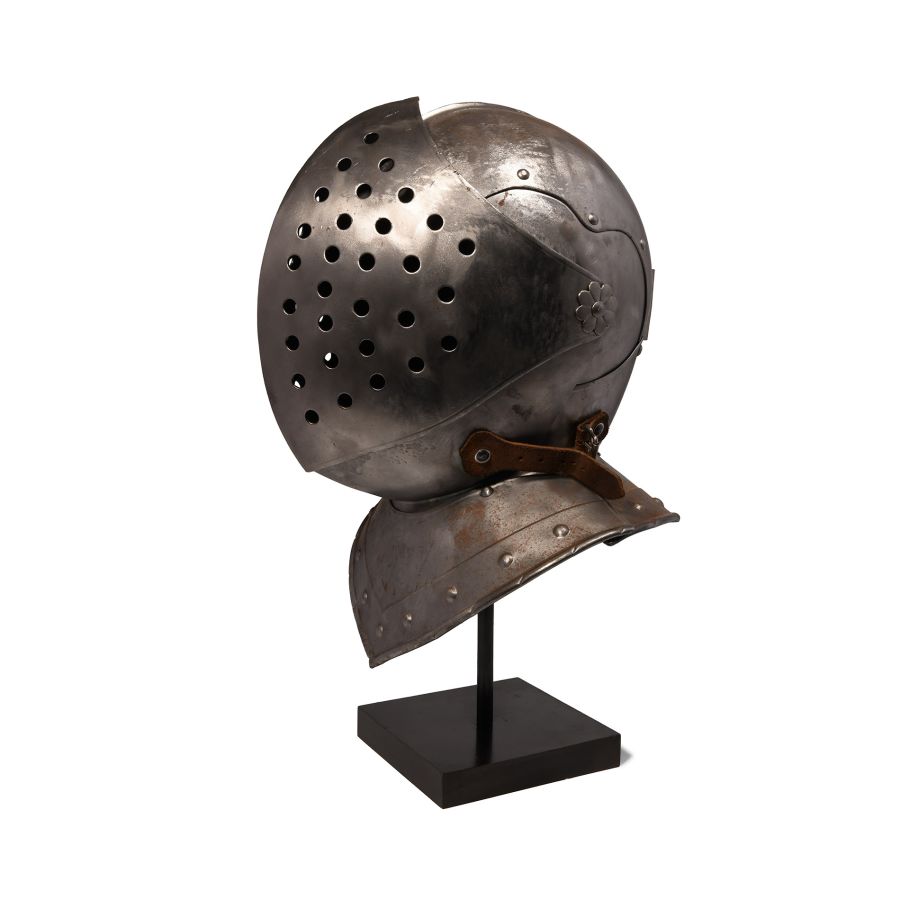
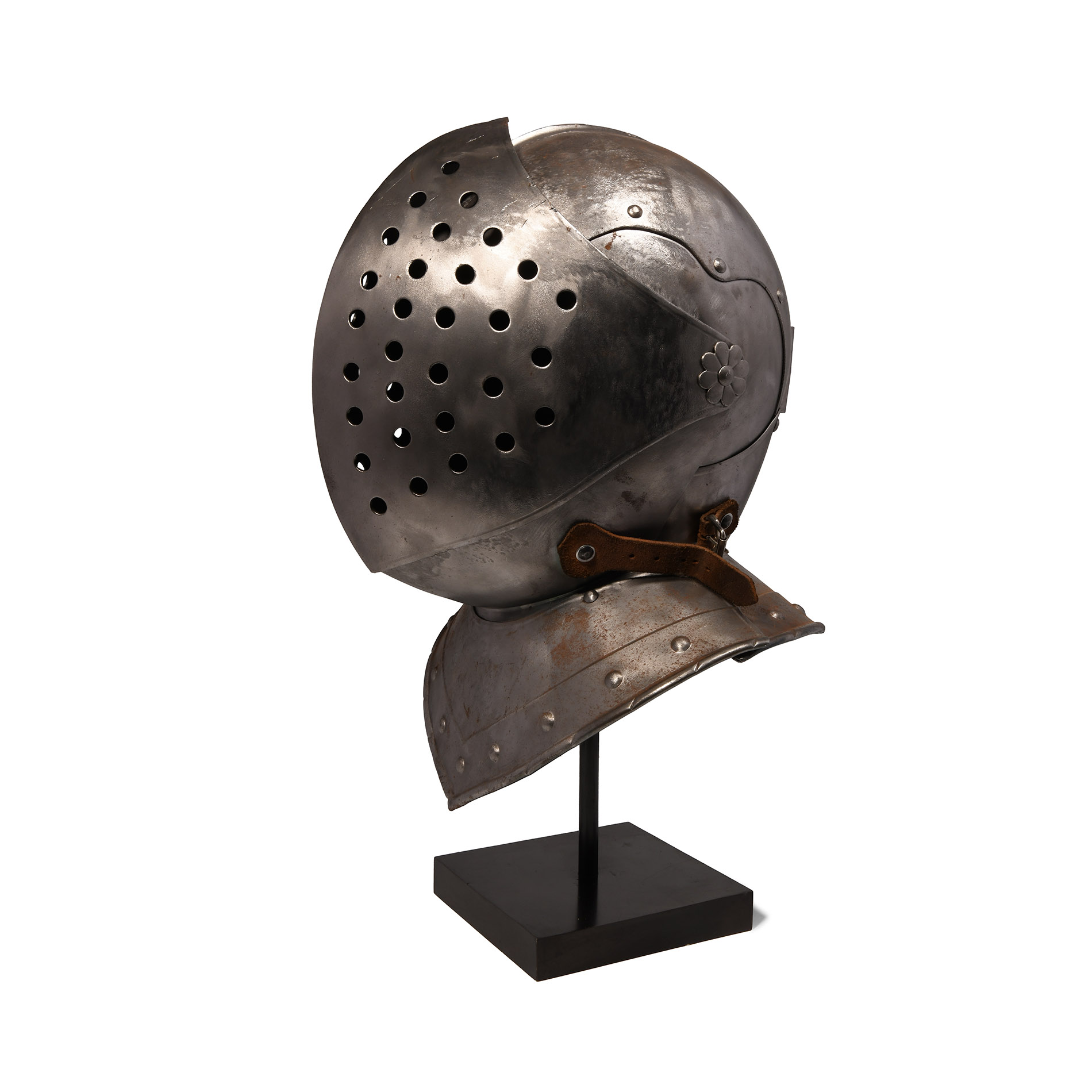
Italian Foot-Combat Helm
21ST CENTURY A.D.
14 1/2 in. (3.9 kg, 37 cm high).
Comprising a pivoting visor, one piece skull raising to a small medial comb and fitted at the nape with a plume holder, flower-shaped pivots, front and rear gorget formed of a single plate.
ProvenanceThe Kusmirek Collection, UK.
LiteratureCf. a similar combat helm in Pyhrr, S.W., Of Arms and men, Arms and Armour at the Metropolitan 1912-2012, New York, 2012, fig,6.
FootnotesThe helmet is a reproduction of a foot-combat helm, or great bascinet, used between the end of 15th and the first half of 16th century in the battles and tournaments. A similar helmet is that of Sir Giles Capel (1485-1556), a prominent figure at Henry VIII's court. These helmets were characterised by a unique rounded pierced visor with (here 60) slots for sight and ventilation. Helmets of this massive size and distinctive type were intended for foot-combat, a sporting contest fought by two fully armoured warriors armed with poleaxes, spears or swords. However, in this reproduction the visor has been mounted upon a separated collar.
CONDITIONTimeLine Auctions follows a vetting process to ensure the authenticity and legality of all items, reinforcing our commitment to integrity and responsible trading. Each antiquity, antique, and coin lot undergoes thorough examination by a vetting committee of at least ten external specialists, professional trade association members, scientists, and archaeologists: Our Vetting Process
AUCTIONS:
TimeLine is a leading auction house specialising in antiquities, ancient art, collectables, natural history, coins, medals, and books. Our auctions offer museums, collectors, historians, and enthusiasts the opportunity to acquire unique and historically significant pieces.
-
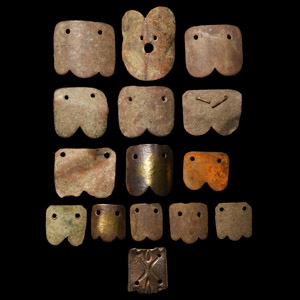
Post Roman Squama Armour
5th-9th century A.D.Sold for (Inc. bp): £65
Each scale B-shaped, slightly convex sides, two equally spaced circular holes along the straight edge. 55 grams total, 19-38 mm
The Kusmirek Collection, UK.
This object is not typical of 'squama' which usually has scales that are rectangular with one rounded end, and numerous attachment holes at the square end in pairs. However, it can be a type widespread in the post Roman age, with various specimens found in Britain (PAS SWYOR-CA6BBB, BM-95F434 and NCL-34BE90. -
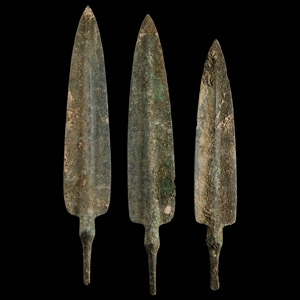
Western Asiatic Bronze Arrowhead Group
1st millennium B.C.Sold for (Inc. bp): £117
The tanged trio with leaf-shaped heads and raised midrib to both faces. 112 grams total, 13.7-15.3 cm
Ex private collection, 1980s. Acquired on the UK art market in the 1990s. -
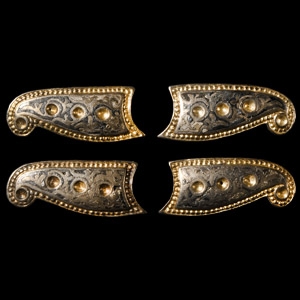
Mongol Silver Belt Mount Group
13th century A.D.Estimate: £200 - 300 (+bp*)
Opening Bid: £89
Each with a broader scooped edge tapering to a volute flourish, pellets adorning the perimeter, three medial circular dimples, fourth dimple to the scrolled end, against a field of foliate scrolls and niello fill; each with a set of mounting lugs to the reverse. 25.7 grams total, 40-41 mm
Fine condition.
Acquired in the 1980s-1990s. Ex an important central London gallery, London W1.
Similar plaques have been found in the burial graves of Mongol commanders and their wives, probably once part of a waist belt from which the sabre and other weapons were hanging. They were found together with arms, unique elements of the costume of fabric and leather, and splendid jewellery of gold and silver.
