
Loading, please wait...
LOT 1035
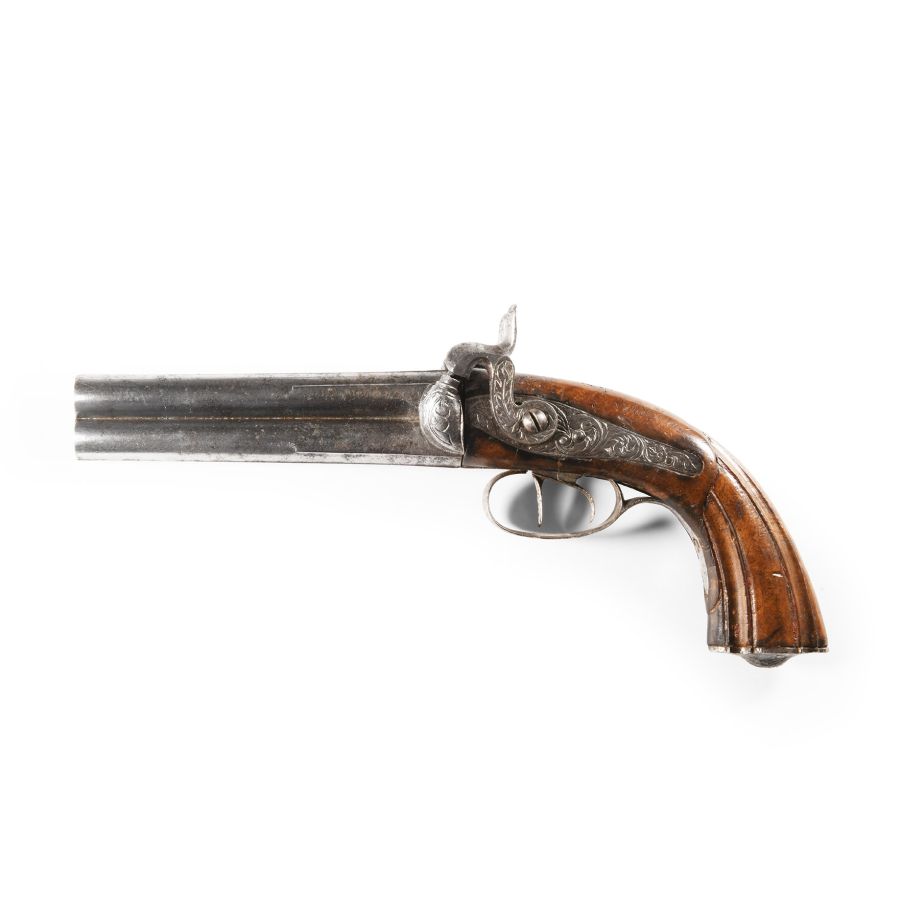
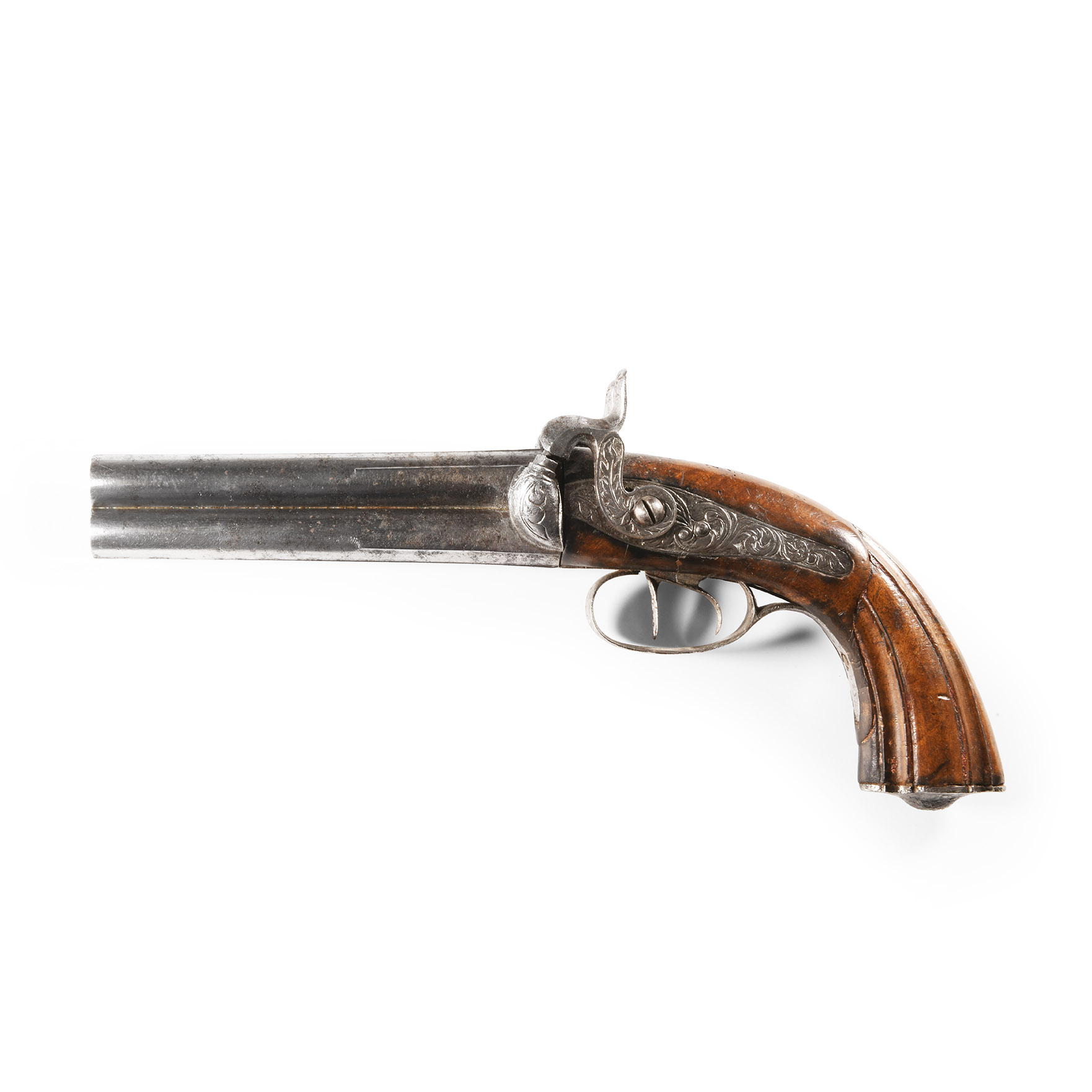
Italian Double-Barrelled Percussion Pistol
19TH CENTURY A.D.
10 1/4 in. (445 grams, 26 cm).
Double-barrelled, single action 9mm calibre smooth bored pistol with 13cm twin 'over-and-under' barrels fitted with twin hammers and triggers with guard, with floriate engraving; fitted with fluted wood stock and iron butt plate; action working.
ProvenanceAcquired from Czerny's Auctions, Italy, 2016, lot 15.
The Kusmirek Collection, UK.
Accompanied by copies of the Czerny's paperwork.
Sold as an exempt item under Section 58 (2) of the Firearms Act, 1968, to be held as a curiosity or ornament. No license required but buyer must be over 18 years of age. Overseas bidders should note that, due to UK regulations governing export of all firearms, overseas buyers will need to make arrangements for shipping this lot out of the UK directly, by air freight, with a specialist company or agent.
CONDITIONTimeLine Auctions follows a vetting process to ensure the authenticity and legality of all items, reinforcing our commitment to integrity and responsible trading. Each antiquity, antique, and coin lot undergoes thorough examination by a vetting committee of at least ten external specialists, professional trade association members, scientists, and archaeologists: Our Vetting Process
AUCTIONS:
TimeLine is a leading auction house specialising in antiquities, ancient art, collectables, natural history, coins, medals, and books. Our auctions offer museums, collectors, historians, and enthusiasts the opportunity to acquire unique and historically significant pieces.
-
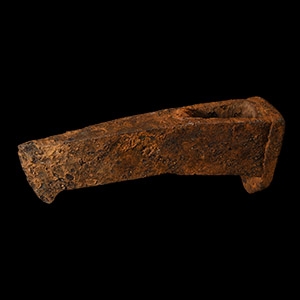
Post Medieval Iron Axehead with Maker's Marks
16th-17th century A.D.Sold for (Inc. bp): £7
Stamped to one cheek; triangular socket, hammer-shaped back. 2.1 kg, 23 cm
Acquired 1990s-early 2000s. East Anglian private collection. -
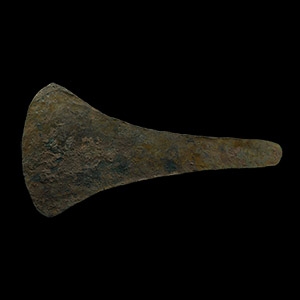
Western Asiatic Bronze Flat Axe
Circa 2nd millennium B.C.Sold for (Inc. bp): £78
Featuring wedge-shaped cheeks, a convex cutting edge and rounded terminal. 106 grams, 18.6 cm
UK private collection formed before 2000. Ex North London, UK, gallery.
The flat axe belongs to Type 1, sub-type a.4 of the Çetin-Bilgi classification of flat axes. They have concave-sided blade, rectangular in section, a splayed cutting edge and a narrow butt. The first examples of axe-type weapons appear in the last phase of the Late Chalcolithic Age in the Middle East and Anatolia. -
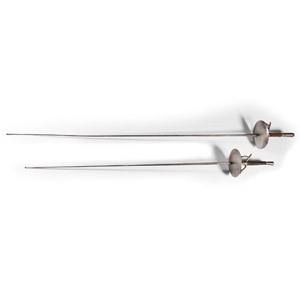
Post Medieval Fencing Foil Pair
Circa 1900 A.D.Sold for (Inc. bp): £33
Each with a long and narrow blade, the longer of square section, the shorter rectangular, each fitted with traditional slender, straight hilt, guard and finger-ring. 657 grams total, 85-106 cm
Acquired from Czerny's Auctions, Italy, 2016, lot 280. The Kusmirek Collection, UK. Accompanied by a copy of Czerny's invoice and listing.
