
Loading, please wait...




LOT 0281
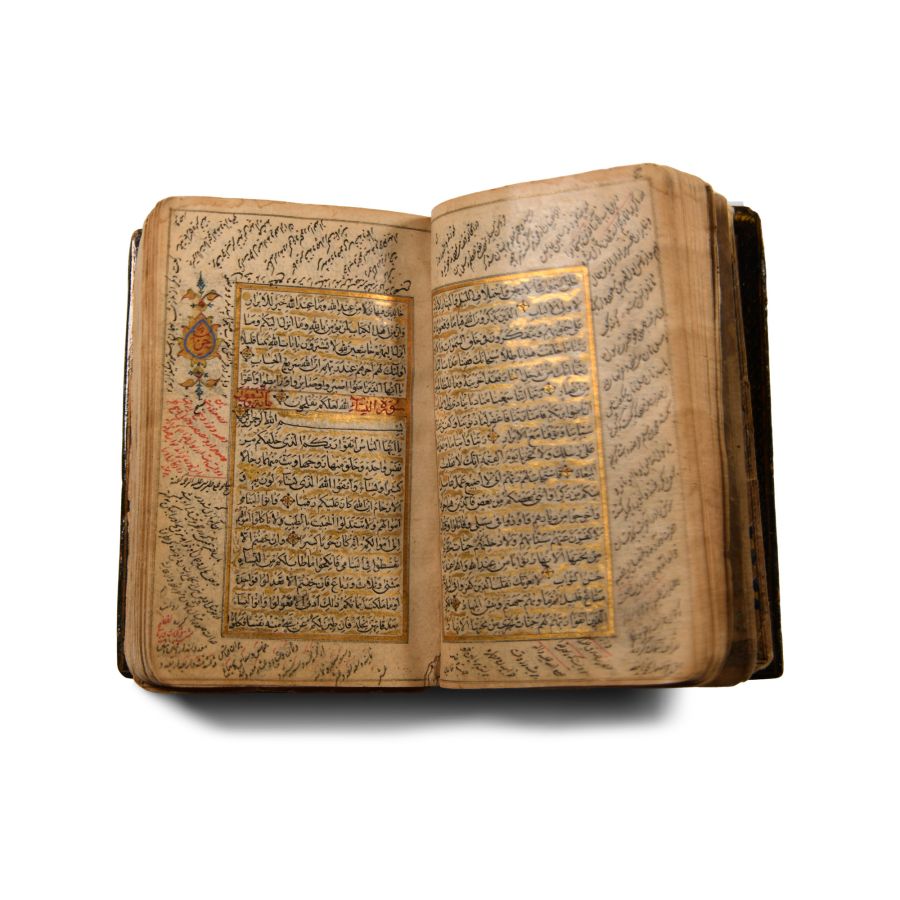
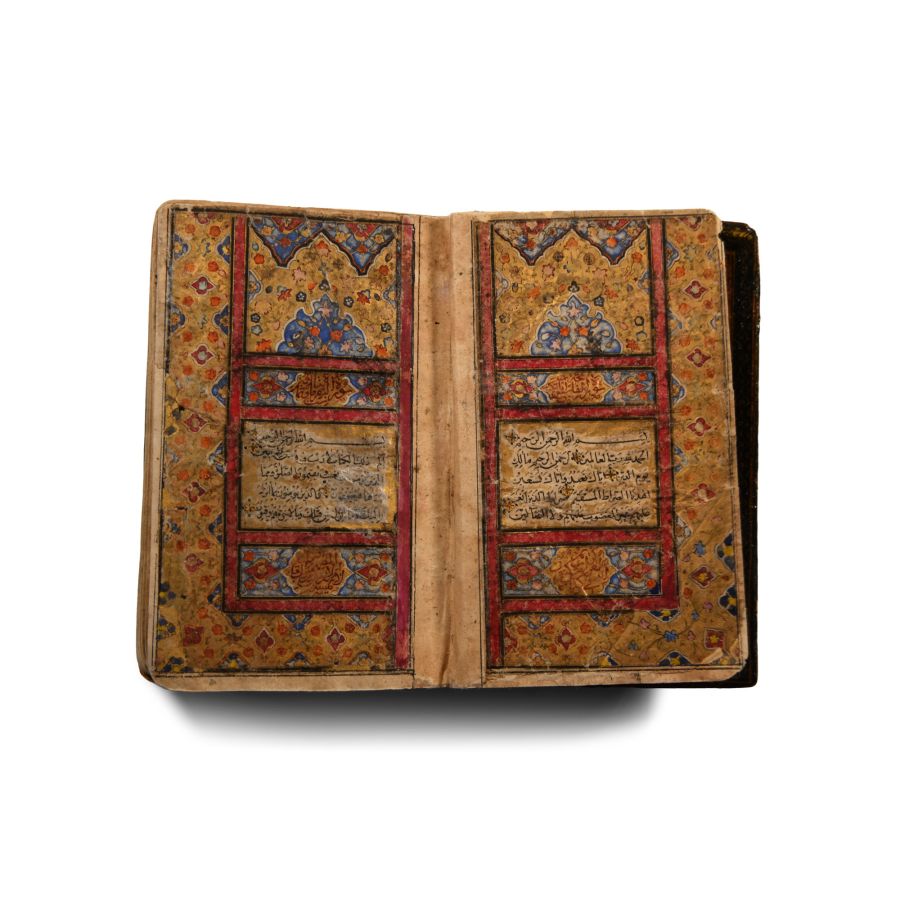
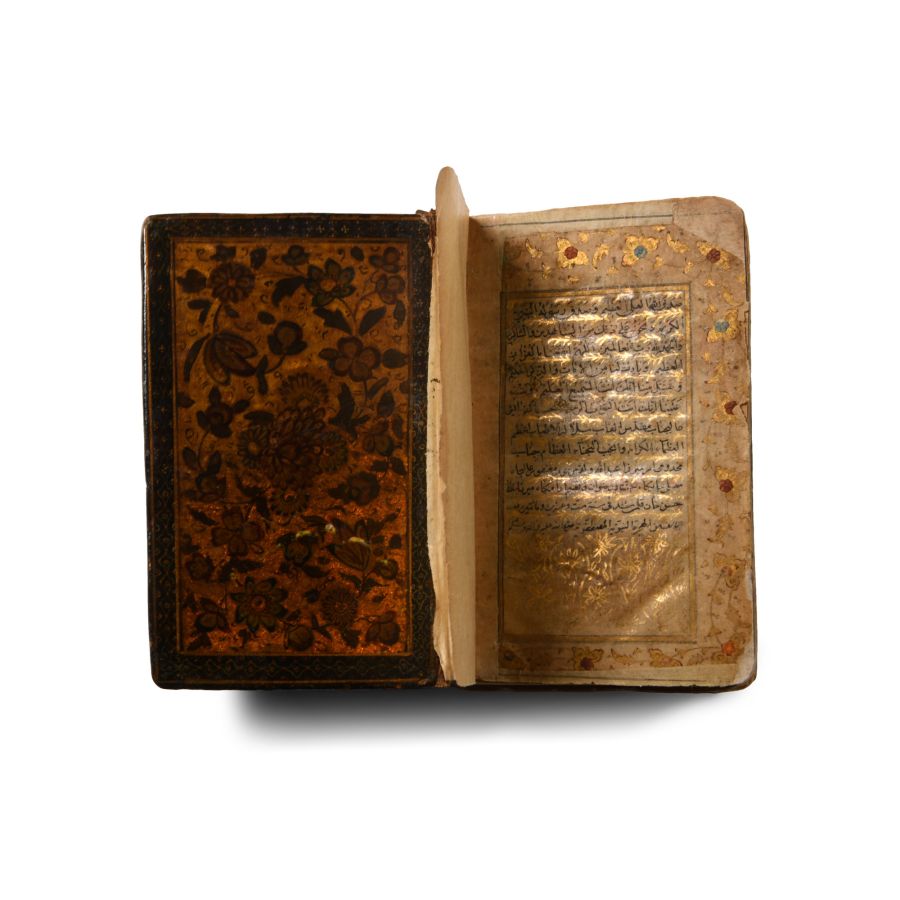
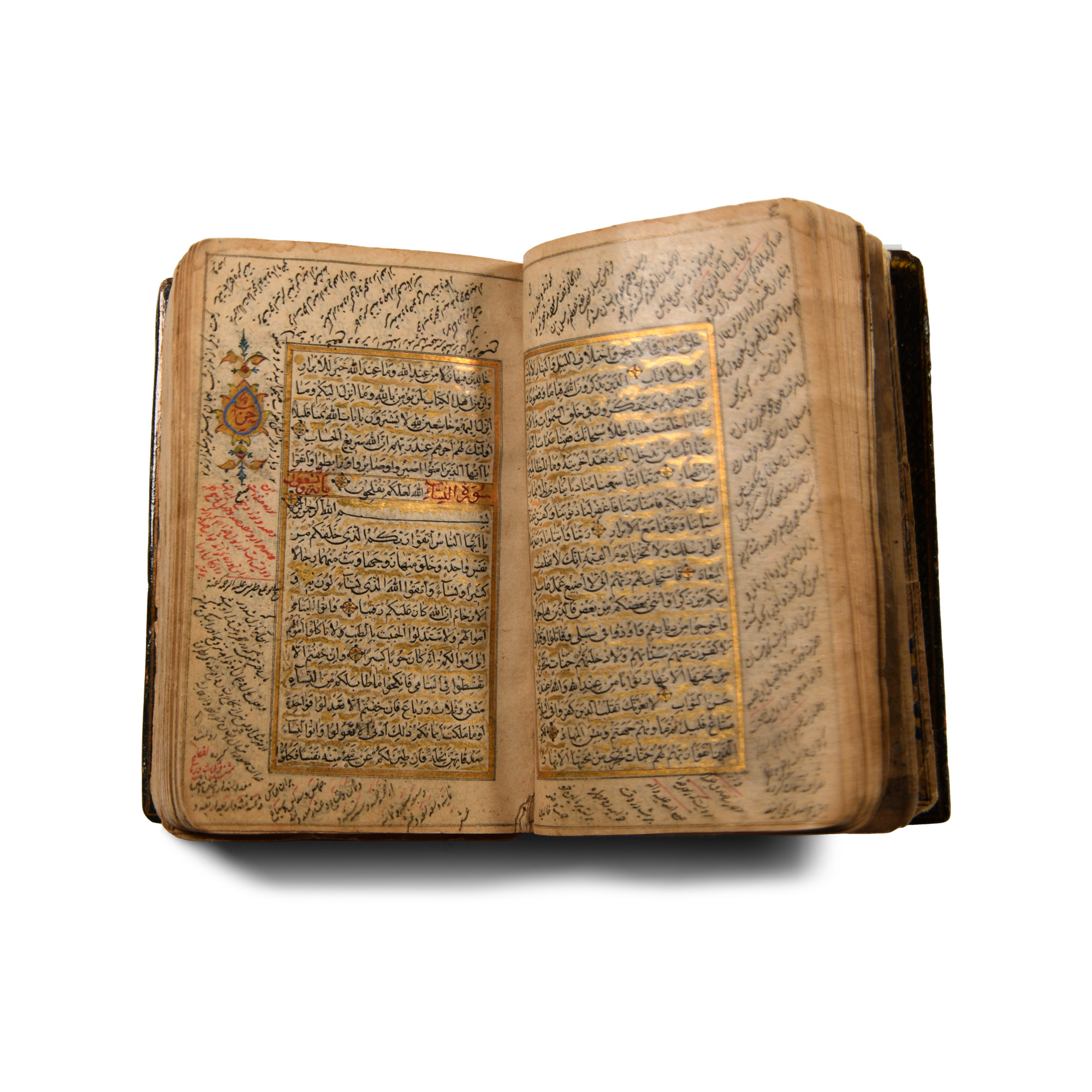
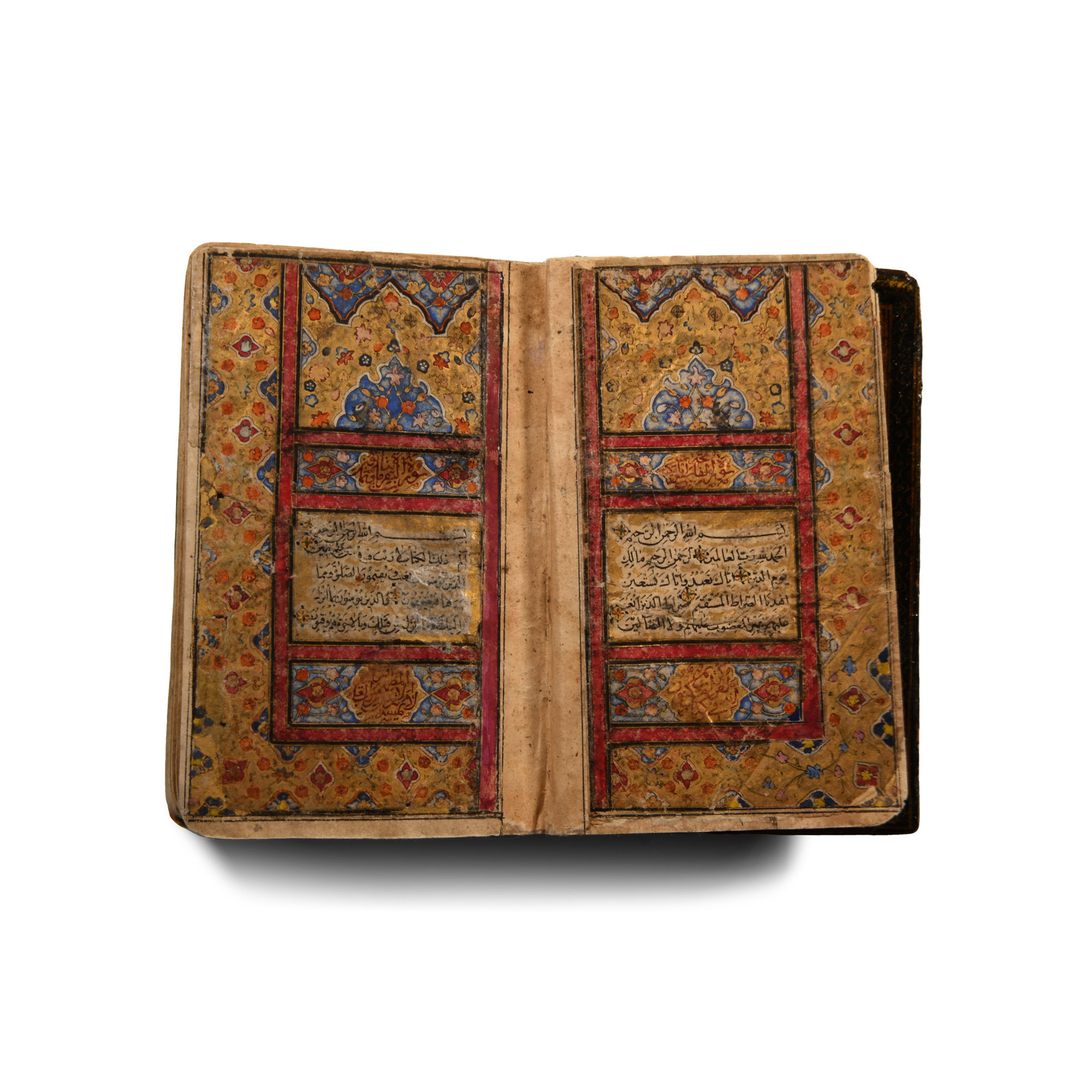
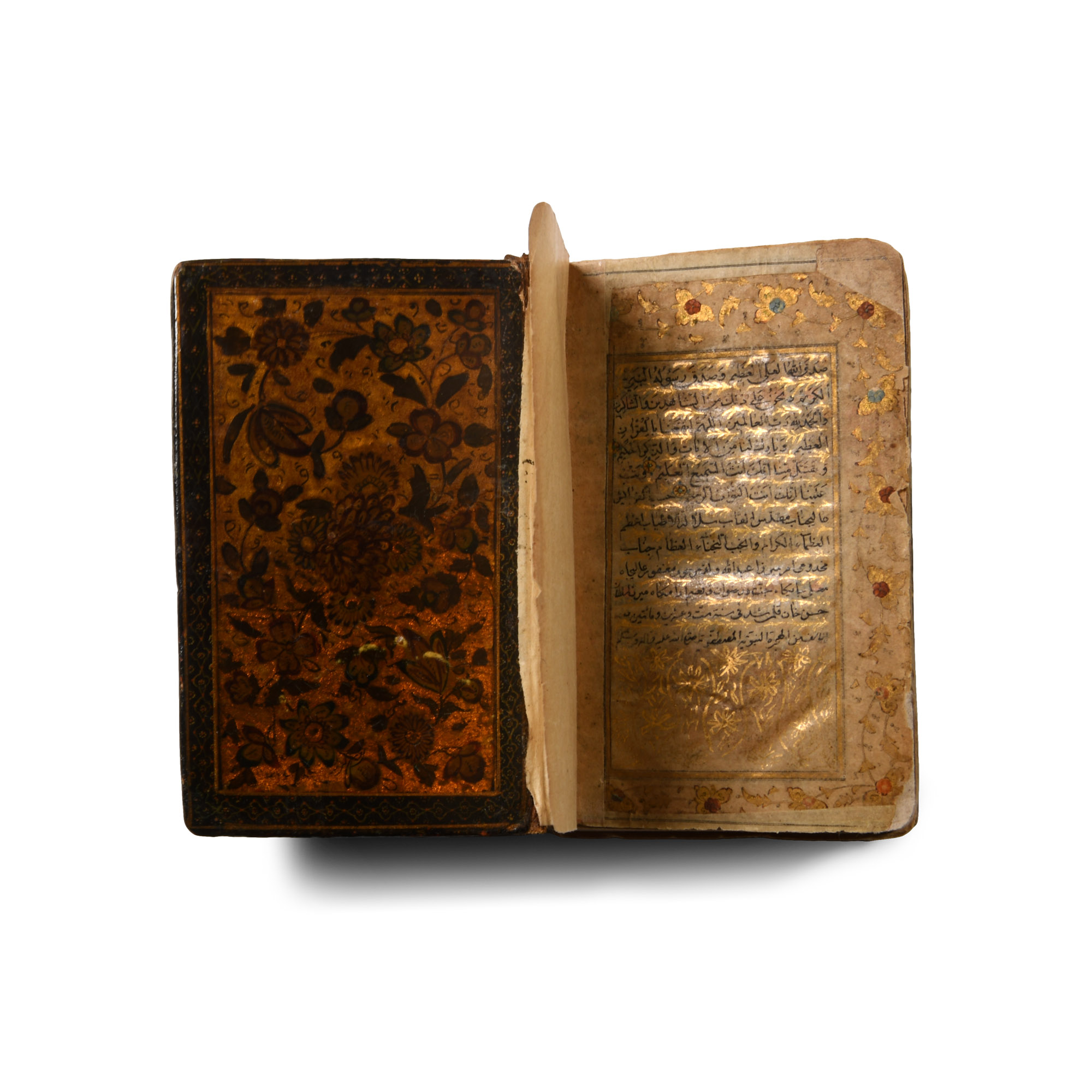
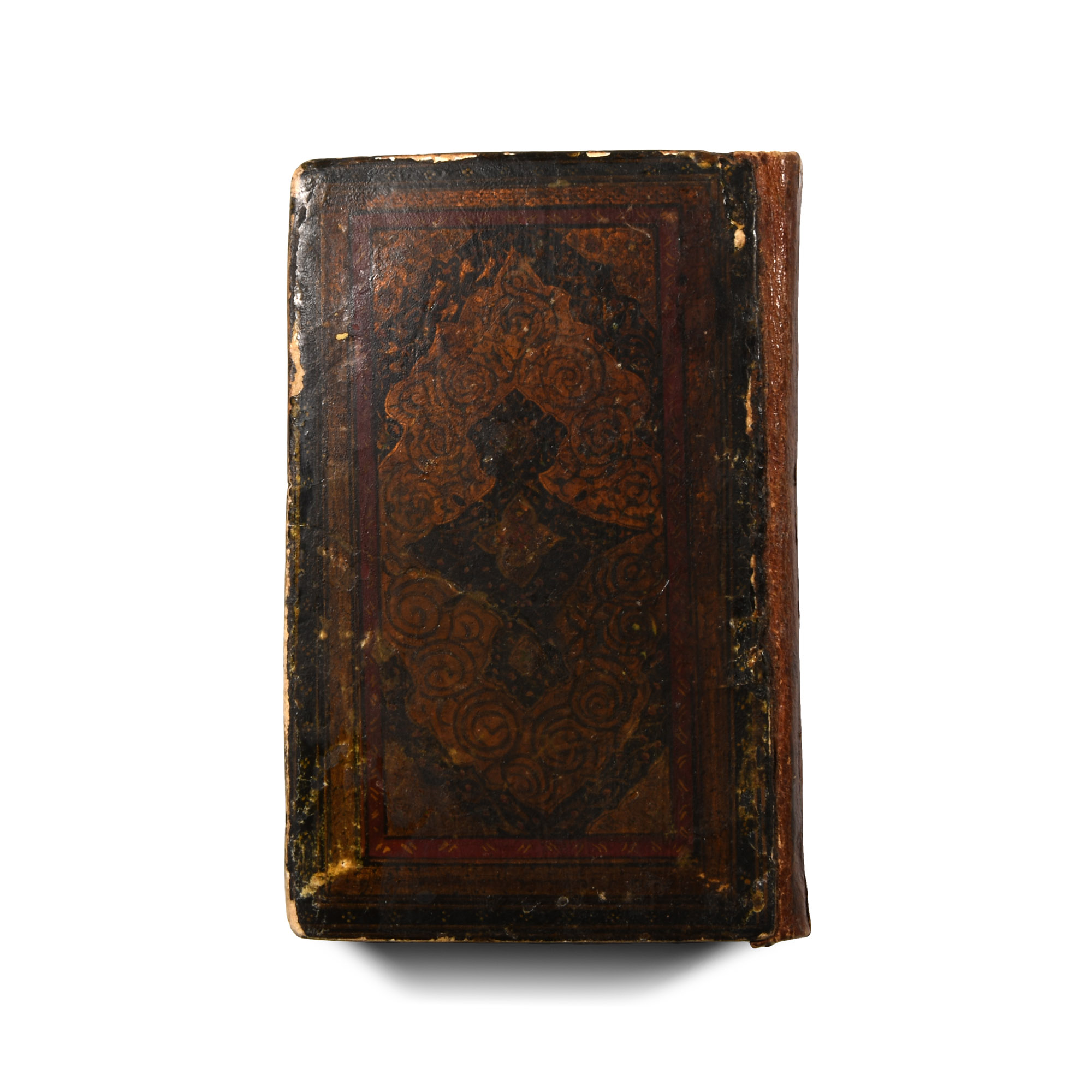
Islamic Leather Bound Complete Qur'an by Mirza Hassan
1226 A.H. (1811 A.D.)
2 5/8 x 4 in. (145 grams, 6.7 x 10.4 cm).
Hardback with full leather binding, block borders to covers and central arabesque foliage panel; inner covers with floral motifs and foliage on a gold field; title pages with rectangular panels outlined in red, red and black calligraphic text on a liquid gold field with red and blue detailing; text pages with liquid gold frame and fronds in the field, black text with floral motifs and extensive marginal notes; end pages with gold transverse bars with red and blue geometric and floral motifs, red marginal notes; some conservation and repair.
ProvenanceFrom an important family collection started in the late 1950s.
Property of a West London, UK, gentleman.
This lot has been checked against the Interpol Database of stolen works of art and is accompanied by a search certificate number no.12277-220402.
TimeLine Auctions follows a vetting process to ensure the authenticity and legality of all items, reinforcing our commitment to integrity and responsible trading. Each antiquity, antique, and coin lot undergoes thorough examination by a vetting committee of at least ten external specialists, professional trade association members, scientists, and archaeologists: Our Vetting Process
AUCTIONS:
TimeLine is a leading auction house specialising in antiquities, ancient art, collectables, natural history, coins, medals, and books. Our auctions offer museums, collectors, historians, and enthusiasts the opportunity to acquire unique and historically significant pieces.
LOT 0281
Islamic Leather Bound Complete Qur'an by Mirza Hassan
Estimate £2,500 - 3,500€2,900 - 4,060 (for guidance only)$3,380 - 4,730 (for guidance only)
-
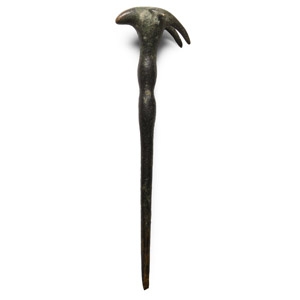
Hasanlu Bronze Pin with Ram's Head Finial
9th-8th century B.C.Sold for (Inc. bp): £130
With a tapering round-section shank, finial topped with a ram's head. 110 grams, 16.5 cm
From the collection of late George Withers, UK. Acquired from Dore and Rees, UK. Property of Mr A.B., an American collector.
The corpus of pins from Hasanlu includes simple plain pins, pins with lion's head and other zoomorphic pins. The zoomorphic pins were either cast onto a bronze shank or the pin was inserted into a hollow of the head. A third category was that of the pins cast in one piece, like our specimen, representing a goat or mouflon, an animal often depicted in the North-West Persian material culture. -
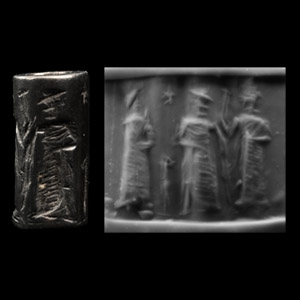
Old Babylonian Haematite Cylinder Seal
Early 2nd millennium B.C.Estimate: £300 - 400 (+bp*)
Opening Bid: £150
With frieze of three standing figures wearing floor-length robes with starburst and post between. 1.98 grams, 14 mm
Acquired 1980-2015. Ex Abelita family collection. -
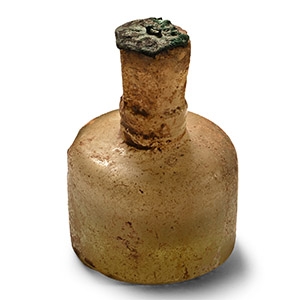
Post Sassanian Cut Glass Bottle with Bronze Lid
6th-7th century A.D.Estimate: £600 - 800 (+bp*)
Opening Bid: £200
Squat in profile with drum-shaped body, broad shoulder and six facets to the flared neck; bronze lid with dipper. 137 grams, 73 mm
UK private collection before 2000. Acquired on the UK art market. Property of a London gentleman.
