
Loading, please wait...
LOT 2001
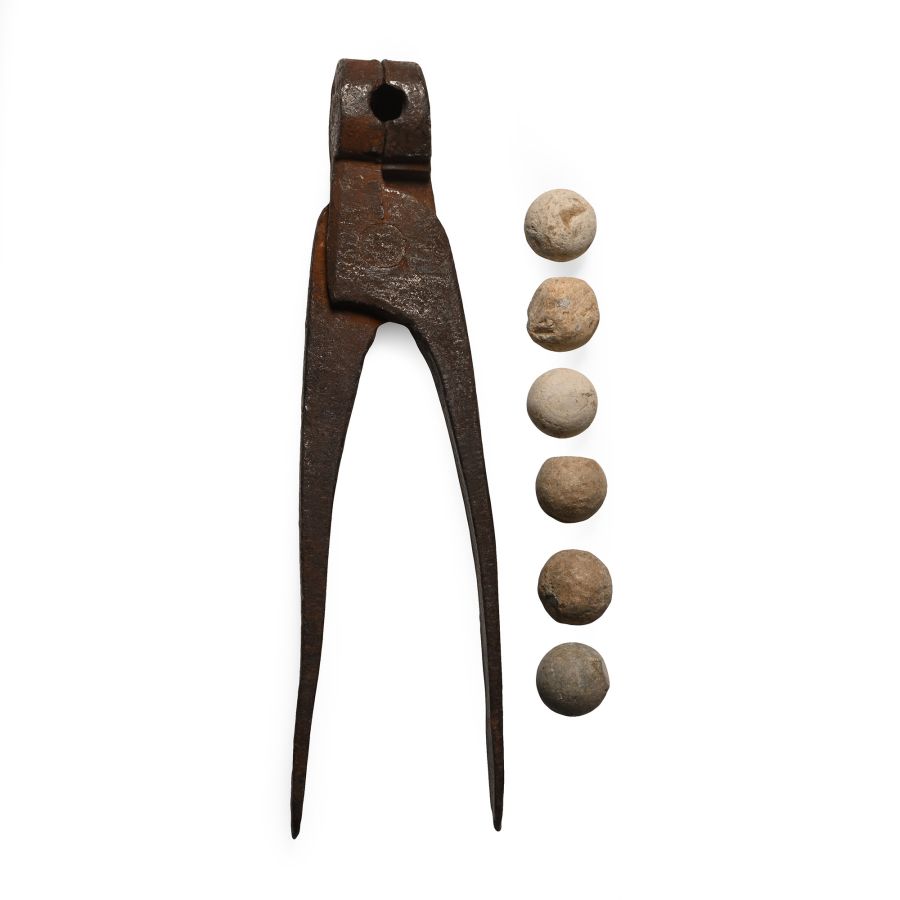
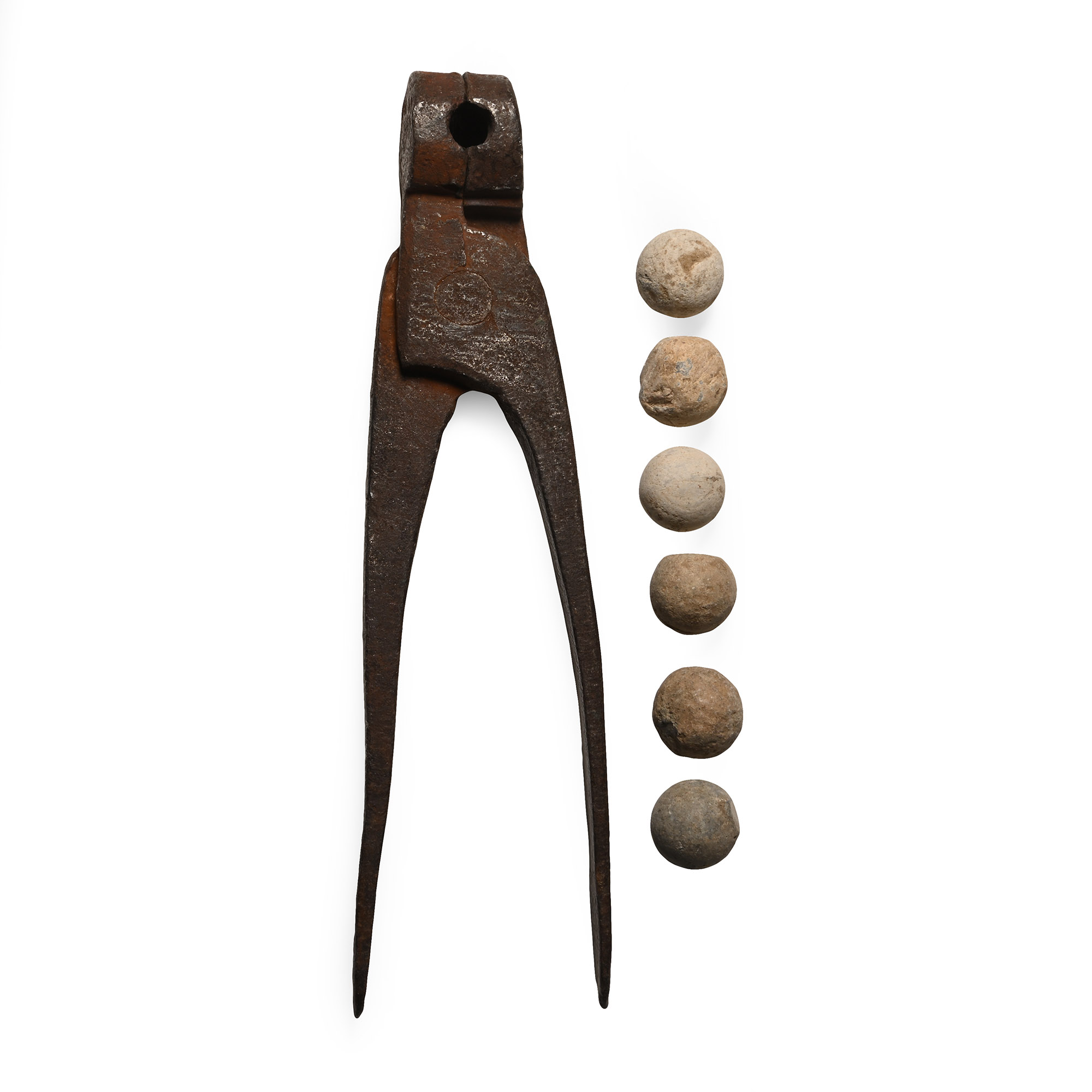
Iron Musket Ball Scissor Mould and Musket Balls
18TH-19TH CENTURY A.D.
3/8 - 5 1/8 in. (140 grams total, 1.1-13 cm).
Comprising a two-part mould with pivoting handles and six lead musket balls. [7, No Reserve]
ProvenanceFrom a private Tyneside collection, formed since the early 2000s.
CONDITIONTimeLine Auctions follows a vetting process to ensure the authenticity and legality of all items, reinforcing our commitment to integrity and responsible trading. Each antiquity, antique, and coin lot undergoes thorough examination by a vetting committee of at least ten external specialists, professional trade association members, scientists, and archaeologists: Our Vetting Process
AUCTIONS:
TimeLine is a leading auction house specialising in antiquities, ancient art, collectables, natural history, coins, medals, and books. Our auctions offer museums, collectors, historians, and enthusiasts the opportunity to acquire unique and historically significant pieces.
-
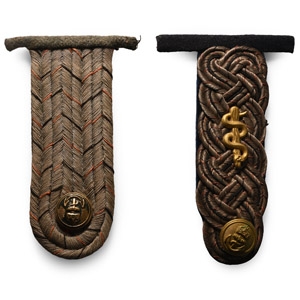
Imperial German Kriegsmarine Medical Officers Shoulder Board and Another
19th century A.D.Sold for (Inc. bp): £20
Group of two shoulder boards, one for a medical officer with applied caduceus badge and interlaced ribbons, the other for an officer (no device attached). 49 grams total, 10.7-11.3 cm
From the private collection of author and historian Dr DeWitt Bailey, one of the global authorities on the confederate army in the US civil war; thence by descent to his grandson. -
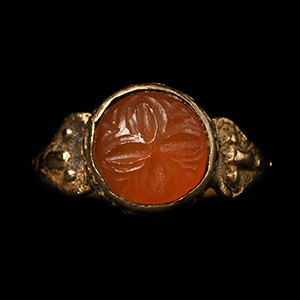
Post Medieval Silver-Gilt Ring with Cross Gemstone
16th-18th century A.D.Sold for (Inc. bp): £104
Raised pellets to the hoop and shoulder, drum-shaped bezel with inset carnelian cabochon, incuse quatrefoil motif. 4.83 grams, 28.24 mm overall, 20.33 mm internal diameter (approximate size British T 1/2, USA 9 3/4, Europe 21.89, Japan 21)
S. Hadida collection, North London, UK. From the property of a late Lincolnshire, UK, gentleman. -
.jpg)
Post Medieval Memento Mori Coffin Pendant with a Skeleton
17th-19th century A.D.Sold for (Inc. bp): £3,900
Rectangular in plan with staple and ring to short edge; hinged lid with chequy border, engraved skull in profile, winged hourglass, crossed long-bones and heart; legend to the edge 'VIVAMVS MI[.] ORIENTIVM EST' (for 'Vivamus, moriendum est' -we should live [now] for we must die [in time]'); hatched chequy pattern to underside; inner chamber with reserved skeleton on an enamelled field. 11.67 grams, 28 mm
Private collection, UK. This lot has been checked against the Interpol Database of stolen works of art and is accompanied by search certificate number no.12999-246015.
